

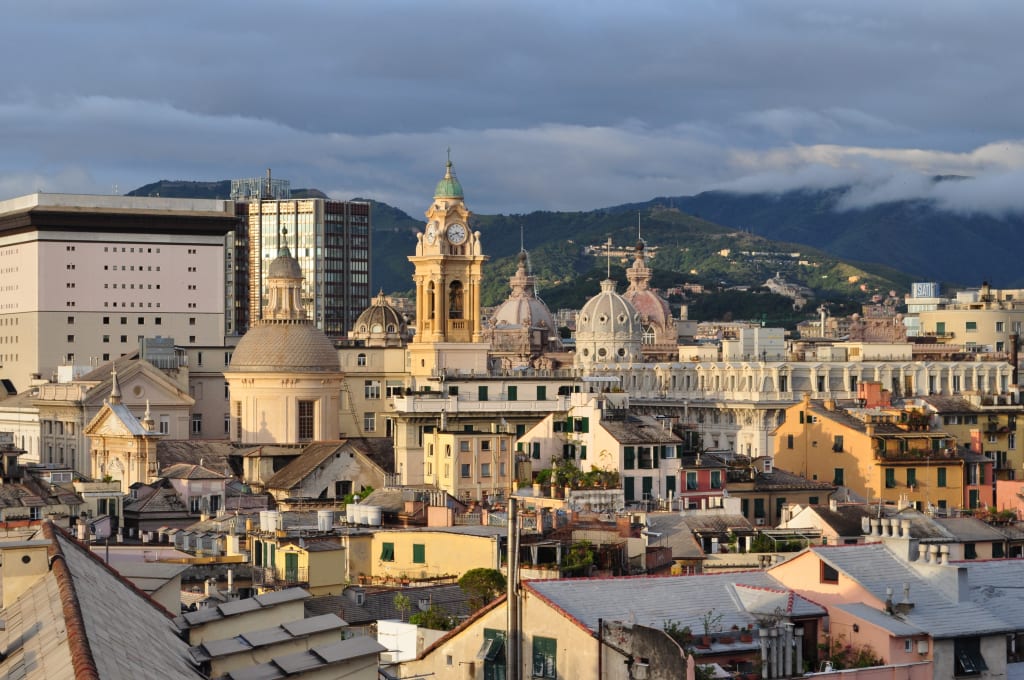
The city of Genoa in Italy is a sprawling port with many treasures to uncover. There are palaces of splendor, museums with impressive works of art, and narrow, twisting lanes that can lead you back into history. The Old Town is most interesting with lots to explore. Genoa is home to the largest aquarium in Europe and has the best maritime museum.
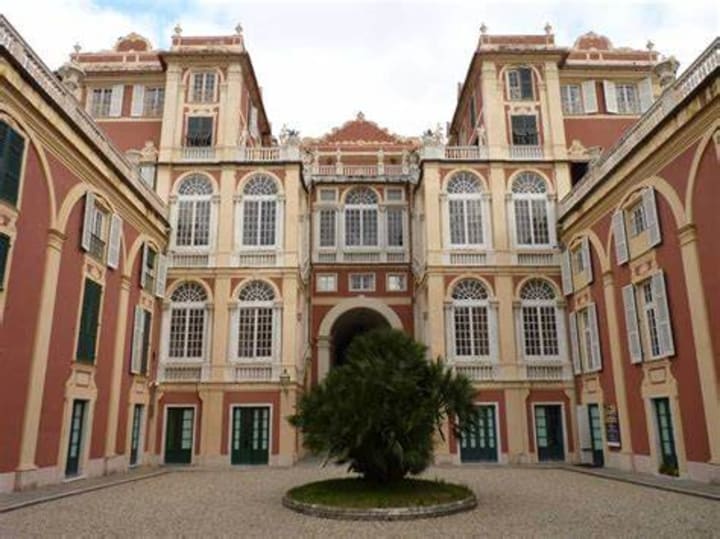
The incredible Palazzo Reale is well worth a visit with its terraced gardens, exquisite furnishings, and a fine Renaissance art collection. Don’t pass by the gilded Hall of Mirrors. There are many frescoes, stuccoes, and other artifacts to admire as well.
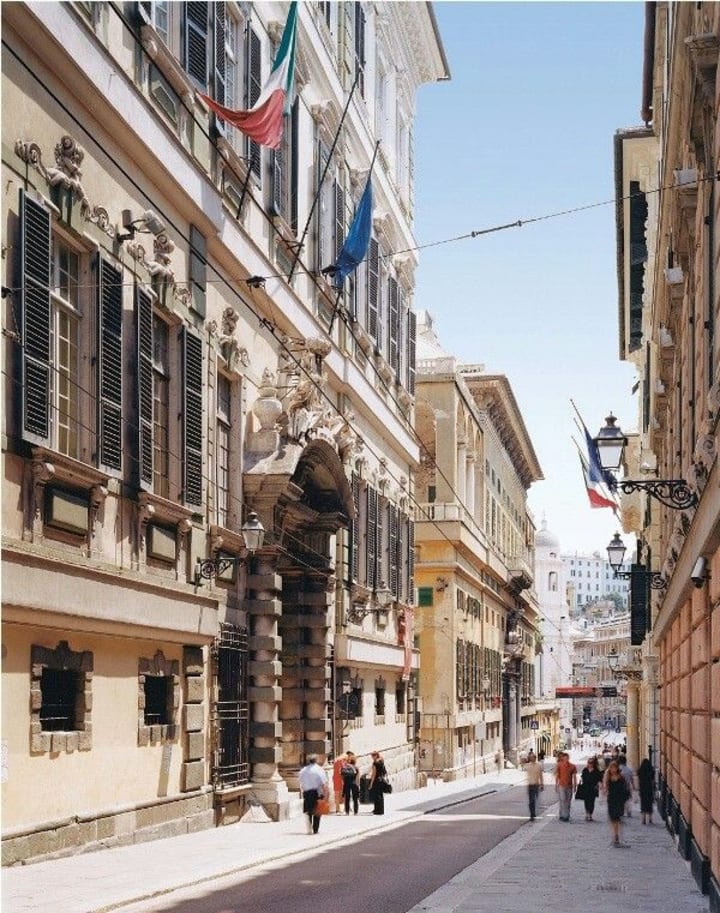
At the northern edge of what was once the city's limits, you’ll find the pedestrian street known as Via Garibaldi. It was planned by Galeazzo Alessi in the 16th century. At one time this was the city’s best area and its wealthy citizens built their castles here.
Well worth the trip is to see the Strada Nuova Museum which is housed in three palazzi or castles - Rosso, Bianco, and Doria Tursi. Here is the best collection of artworks by the old masters.
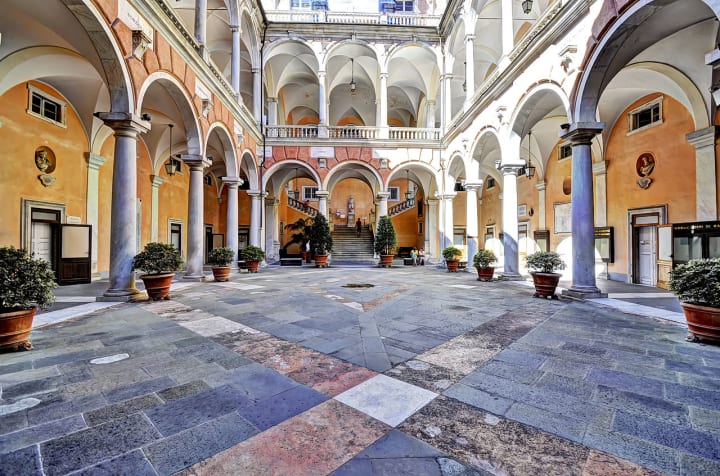
Tickets must be purchased at the bookshop in Palazzo Doria-Tursi. The palace’s highlight is the Sala Paganiniana showcasing a collection of the personal effects of legendary violinist Niccolo Paganini. There are also collections of ceramics and coins.
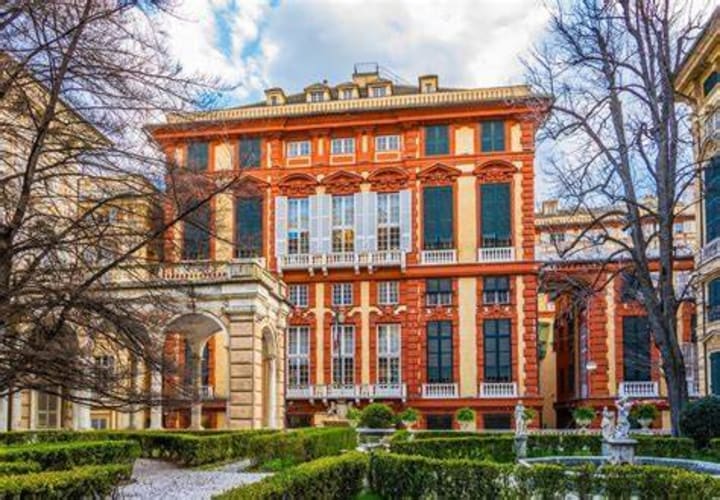
In Palazzo Rosso, you’ll find portraits by Van Dyck of the local Brignole-Sale family. As well as the impressive San Sebastiano by Guido Reni and La Morte di Cleopatra or The Death of Cleopatra by Guercino. Other art works by Veronese, Durer and Bernardo Strozzi.
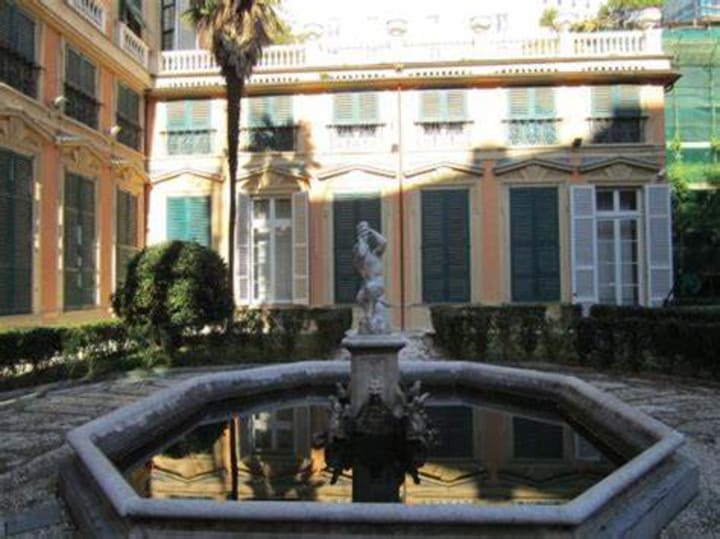
In Palazzo Bianco are artworks by Flemish, Spanish and Italian artists. Among the highlights are Venus and Mars by Ruben and Vertumna e Pomona by Van Dyck. Other featured artists include Hans Memling, Filippino Lippi, and Spanish masters Murillo and Zurbaran.
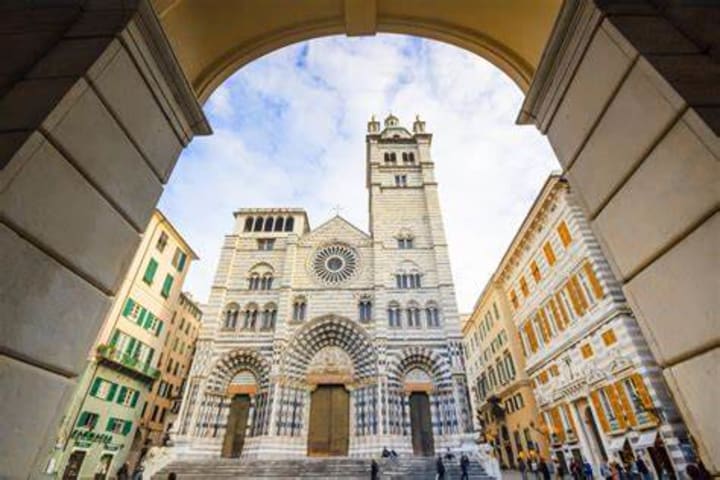
The zebra-striped Gothic-Romanesque San Lorenzo Cathedral was saved when a bomb set by the British during WWII didn’t ignite there. This bomb can still be seen sitting on the right side of the nave. At the front of the cathedral are three arched portals, twisting columns, and crouching lions. It was first consecrated in 1118. In the 16th century, two bell towers and a cupola were added. Above the central doorway, you can see the huge painting of the Last Judgment the artwork of an anonymous Byzantine painter in the early 14th century. You’ll find the Museo del Tesoro in the sacristy and it has various holy relics among them the medieval Sacro Catino, a glass vessel thought to be the Holy Grail. Other artifacts include the polished quartz platter upon which the head of John the Baptist was presented to Salome and a fragment of the True Cross.
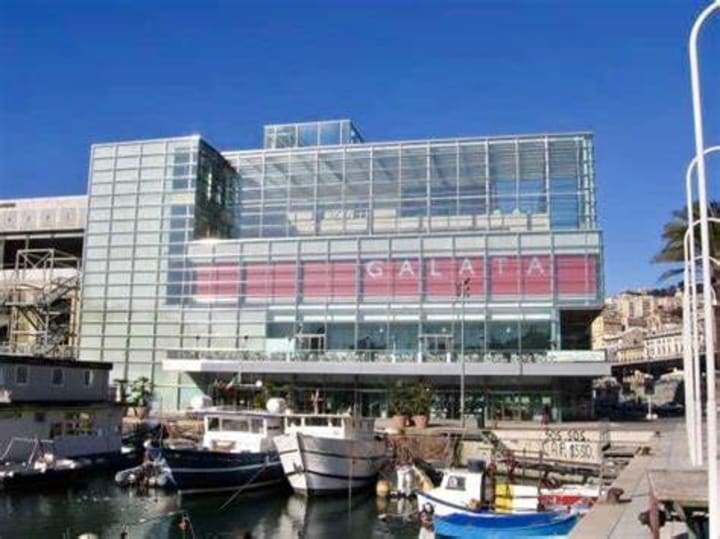
At the Museum of the Sea, the history of seafaring from Genoa’s reign as Europe’s greatest dockyard to the sail and steam age is traced. On the ground floor is an exhibition dedicated to Christopher Columbus. On the second floor you’ll find valuable collections of globes and old maps and on the third floor has an expose of Italian emigration. Head up to the top floor to get a fantastic view of Genoa.
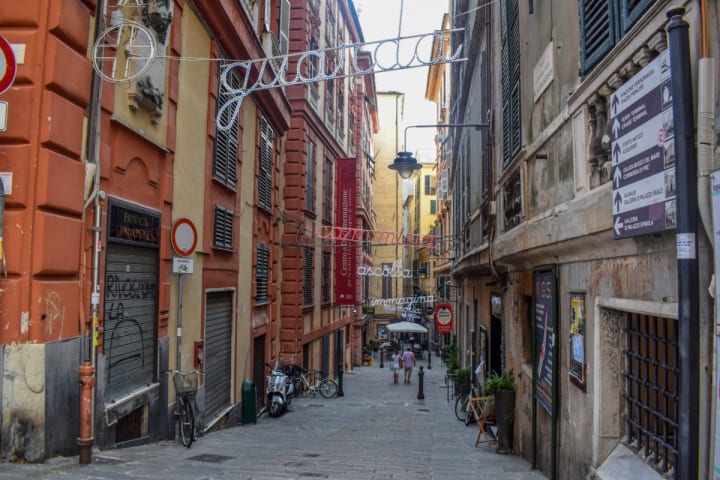
The Old City was the heart of medieval Genoa and its surrounded by Porta dei Vacca, the streets of Via Cairoli, Via Garibaldi, and Via XXV Aprile, and Porta Soprana, which is well known for its narrow lanes. It is fascinating to explore these lanes and alleyways which are mostly residential but there are some shops, cafes, and bars. Market stalls are located east of the piazza in Via Orefici.
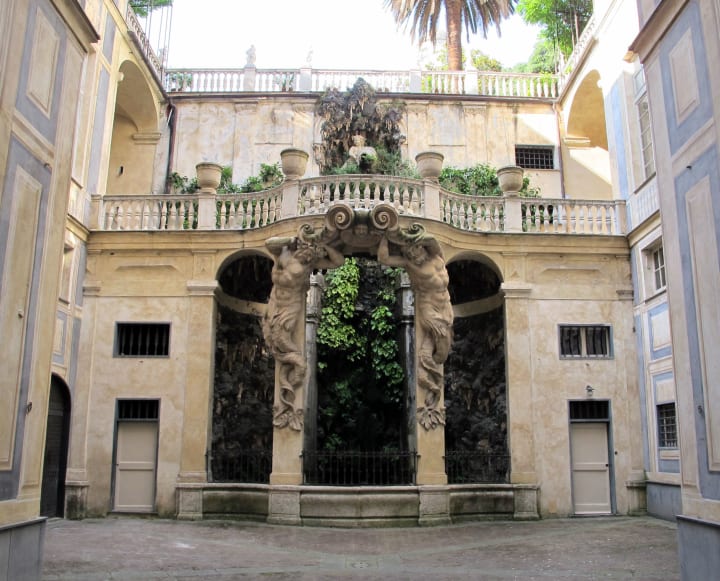
Palazzo Lomellino has a most elaborate facade. The building dates back to 1563 and has a gray-blue exterior with stucco adornments. In the inner courtyard is an 18th-century monument to the nymphs. Upstairs you can see 17th-century frescoes by Bernardo Strozzi. These depict allegories of the New World, in homage to the one-time owners of the palace, the Centurione family, who financed the voyages of Columbus.
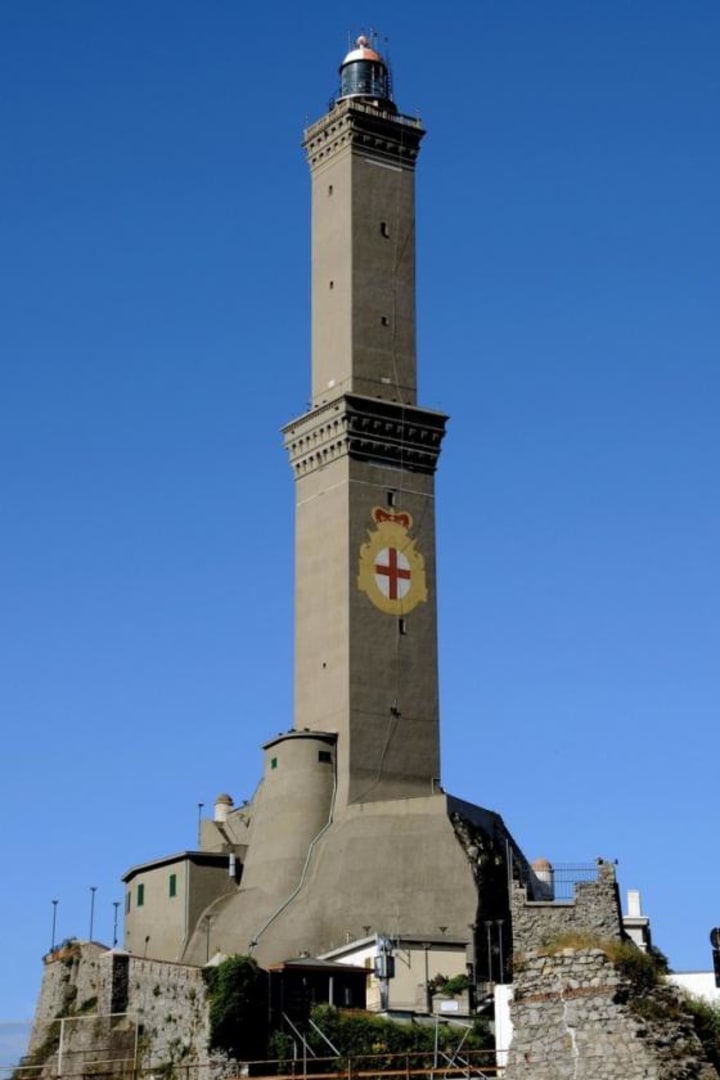
La Laterna is the world’s tallest and oldest lighthouse and it still works beaming out a light for more than 50km. You can get to it along a special 800m walking trail. Then there is a 172-step climb for a fantastic bird’s eye view. Don’t forget to stop at the museum where you can see lamps, lenses, and related history. The lighthouse is surrounded by a lovely park.
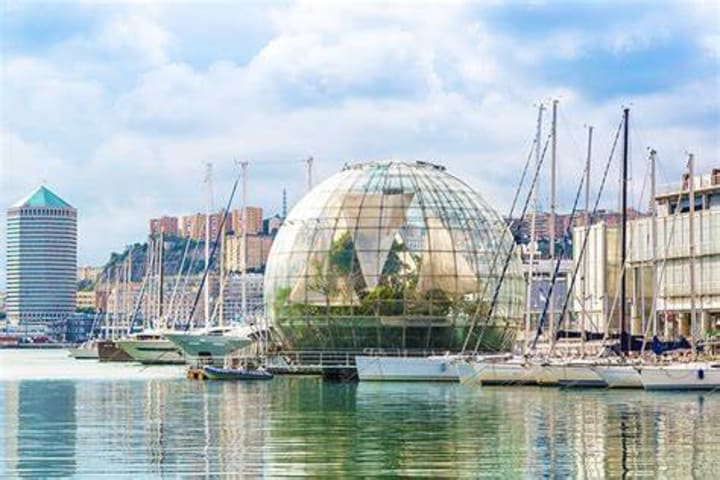
The Aquarium of Genoa is one of the largest in Europe. It is home to 12,000 creatures of the sea among them sharks that swim in six million liters of water. There are tanks that hold 400 different species.
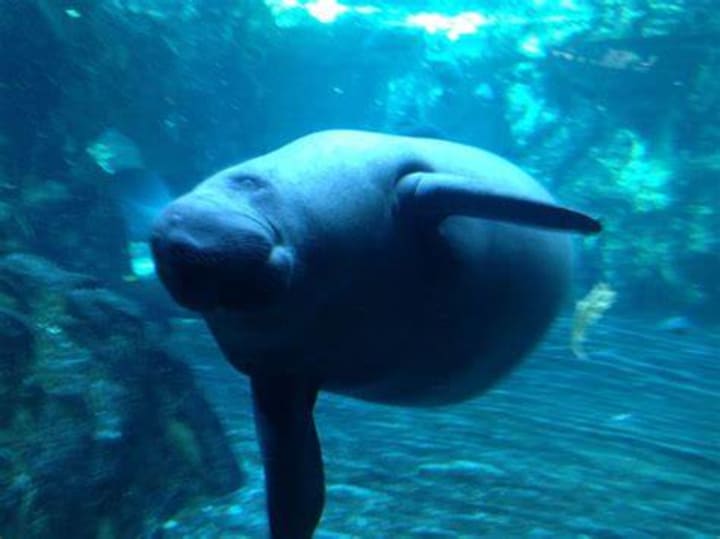
Among them are dolphins, sea cows, sharks, seals, rays, boas, jellyfish, and penguins.
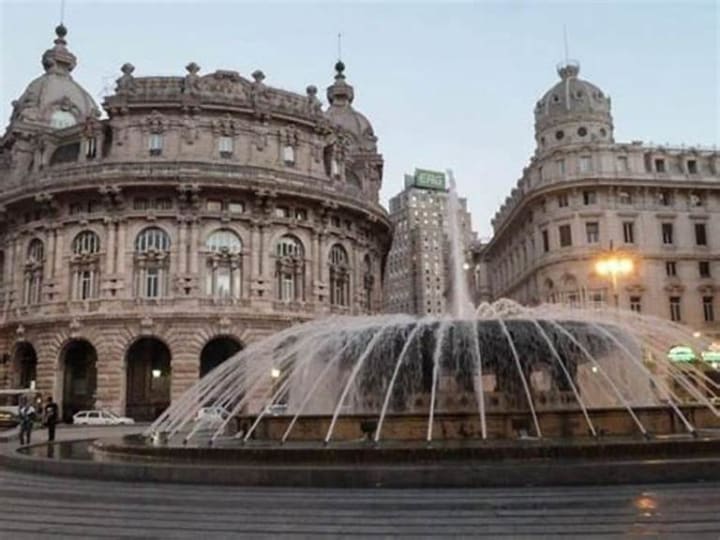
After you have wandered through the narrow lanes of the Old City you come upon the wide space of Ferrari Square surrounded by magnificent buildings and a marvelous fountain in the center.
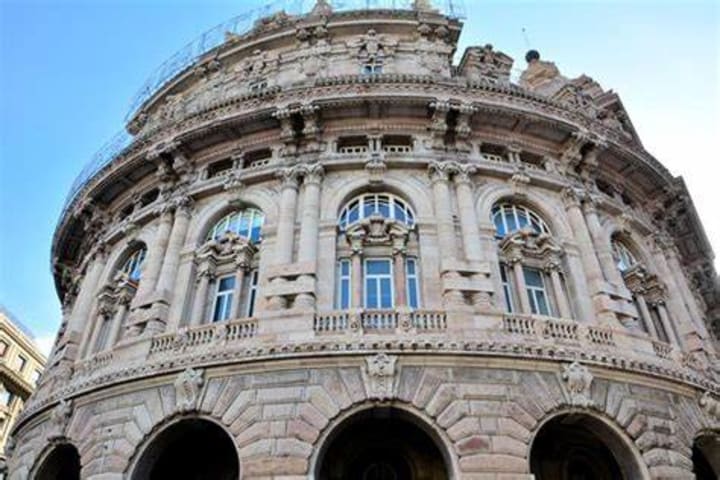
There is the Art Nouveau of Palazzo della Borsa, now housing offices.
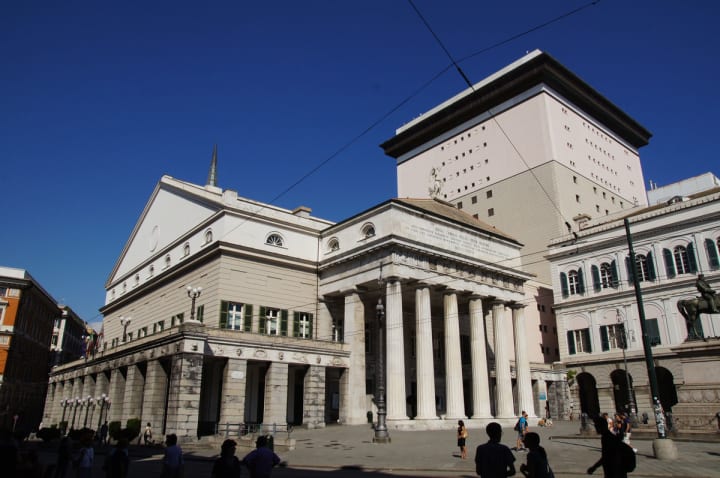
The hybrid neo-Classical-modernist Teatro Carlo Felice was bombed in WWII and then rebuilt in 1991.
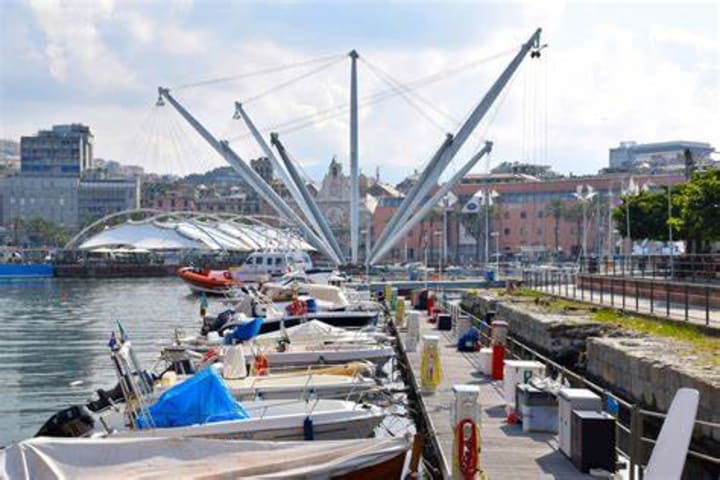
Both residents and visitors enjoy evening strolls at Porto Antico. Here you can get great views of the sea and this is the place where you’ll find the futuristic Bigo (lookout) and a pirate ship – II Galeone Neptune.
Genoa has many wide, open green spaces for people to stroll in, relax, and even picnic. At one time some of these green spaces were attached to the estates of the wealthiest families and are now open to the public.
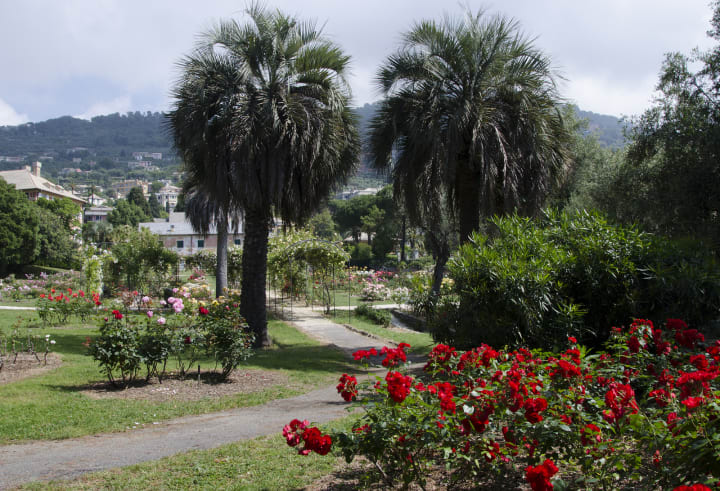
Parchi Di Nervi is a public park that is a combination of three Genovese villas. Today it is the largest green space in Genoa offering English lawns, palm trees, fountains, and a rose garden. In the summertime, the park hosts Genoa’s highly acclaimed International Ballet Festival.
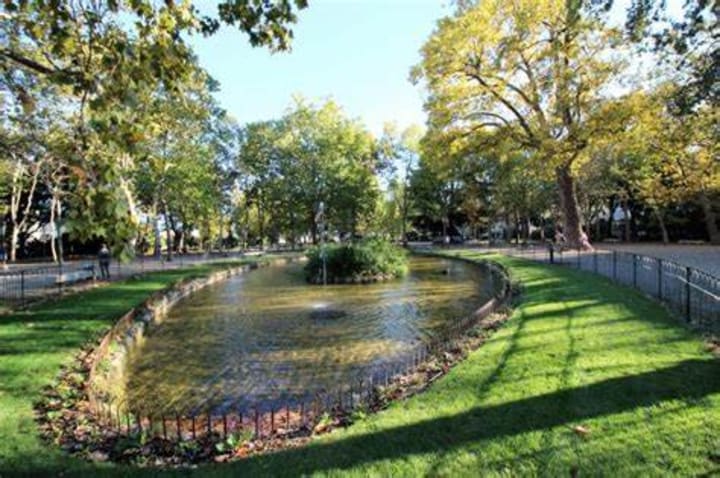
Parco Dell’Acquasola is a lovely 19th-century park created upon Genoa’s ancient fortifications and atop of thousands of plague victims that were buried on this spot in the 1600s. There are tree-lined pathways and a lake, a children’s playground, areas for skaters, cyclists, football pitches, bowling greens, and an athletic track.
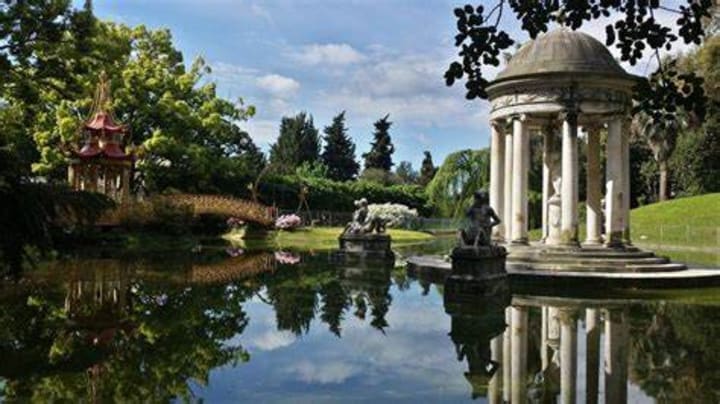
Orto Botanico is Genoa’s famed Botanical Gardens. They were established in the 19th century by the University of Genoa. In the gardens, you can see around 300 species of exotic plants and trees, among them aquatic plants, tropical plants, and other succulents.
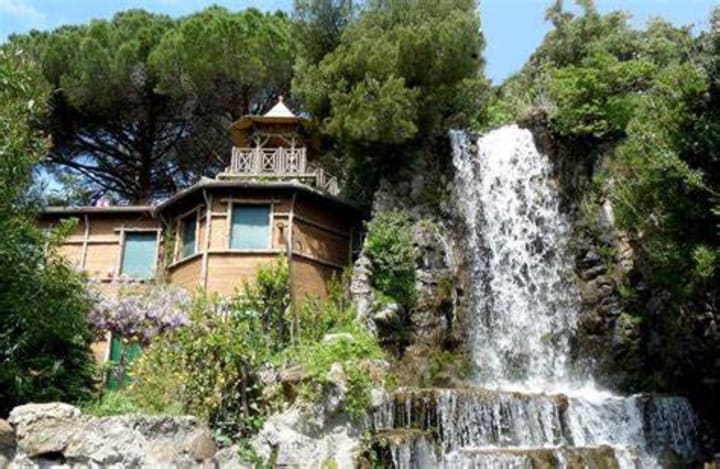
Parco Della Villetta Di Negro was built on land that once belonged to the city’s grandest villas. Today this is a wonderful park with exotic plants and trees, lakes and fountains, a waterfall, and manmade grottoes and bird aviaries. At the park’s highest point, you can get a breathtaking view of Genoa.
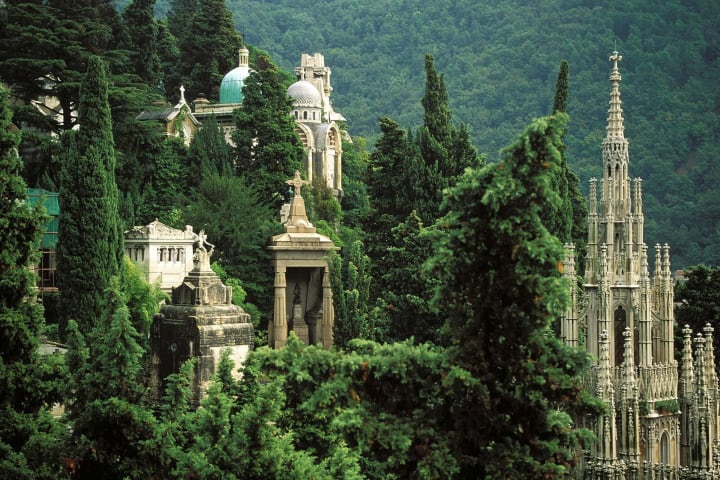
Monumentale Distaglieno Cemetery is Genoa’s main cemetery and was created in the mid-19th century. The cemetery is dominated by the Chapel of the Intercession which is also known as The Pantheon. There are wonderful tree-lined avenues that have fascinating sculptures and monuments well worth taking a look at.
About the Creator
Rasma Raisters
My passions are writing and creating poetry. I write for several sites online and have four themed blogs on Wordpress. Please follow me on Twitter.
Keep reading
More stories from Rasma Raisters and writers in Wander and other communities.
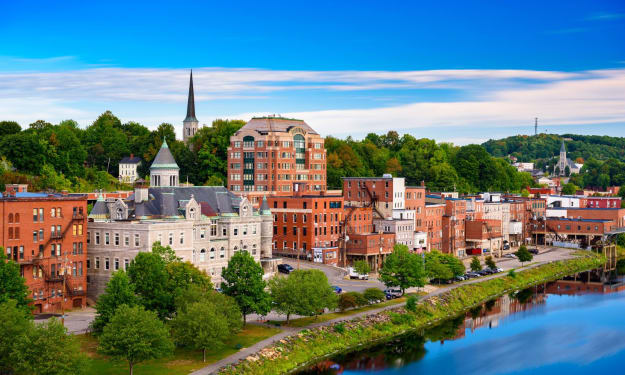
Augusta on the Kennebec River
Augusta the capital of Maine is the ninth-largest city in the state. It stretches along the Kennebec River. Among the highlights in the city are the historic Blaine House which is the official residence of the Governor of Maine, the Lithgow Public Library, the Maine State Museum, the Capitol Building, and the Holocaust and Human Rights Center of Maine located at the University of Maine at Augusta.
By Rasma Raisters3 years ago in Wander
Weather in Morocco in August By Morocco Family Vacation
When I first planned our summer trip to Morocco in August, I had mixed feelings. I knew Morocco was hot in the summer, but I wasn’t sure how my kids would handle the heat. Traveling with two children my 7-year-old and 10-year-old means considering naps, hydration, sun protection, and activity pacing more than anything else. I wanted an adventure, but I also wanted it to be safe and enjoyable for them.
By Ariel Cohen2 days ago in Wander


Comments
There are no comments for this story
Be the first to respond and start the conversation.