
The Absurd Liturgy of Digital Humans
Voluntary Slaves in the Pixel Kingdom

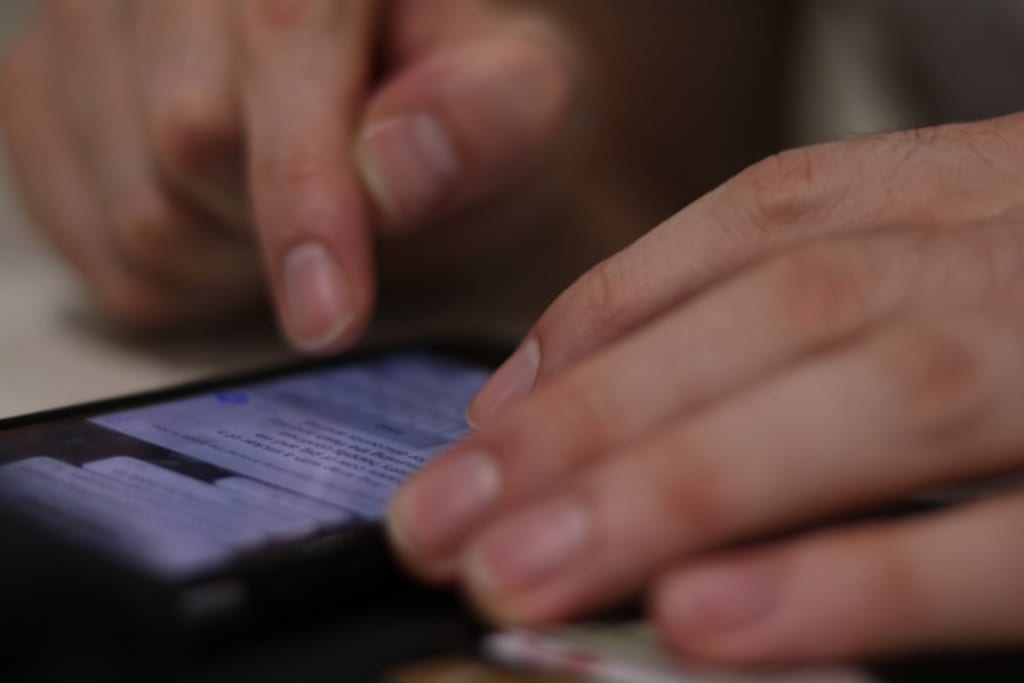
No one asked me to speak, yet here I am. A nameless figure at the edge of the crowd, muttering at the digital parade. If you must imagine me, picture a man in a worn coat that never fits the season, with a face both forgettable and inconvenient. I am less a person than a leftover thought: the aftertaste of civilization once it has swallowed itself whole.
Let us talk about you—the citizens of the great glowing rectangle. You wake, not by the call of birds or the warmth of sunlight, but by an alarm that shrieks from a device you cradle more intimately than your own children. Before your eyes have even adjusted to daylight, you are already thumbing through your notifications, your desperate fingers searching for proof that you exist. Perhaps someone liked your photograph of a coffee cup. Perhaps an algorithm, like a ghostly god, has decided you are worthy of attention. Congratulations: you are alive for another hour.
Technology, you say, has connected the world. Nonsense. It has stitched together the planet in the way Frankenstein stitched together his monster—veins mismatched, nerves miswired, a lumbering creature desperate for approval. You are connected, yes, but like rats tangled in the same electric wire. The internet is not a network; it is a nervous breakdown with Wi-Fi.
You ask me, “But doesn’t technology make life easier?” Easier for whom? For the corporations, certainly. For the advertisers who know what brand of toothpaste you prefer before you do, absolutely. But you—poor little flesh-puppet—have never been more harassed, never more surveilled, never more willingly enslaved. You whisper your secrets into microphones disguised as smart assistants, and then are surprised when the walls seem to answer back.
The absurdity lies in how you defend your captivity. You queue overnight for the privilege of buying the latest version of the same glowing brick, a brick that spies on you better than the last. You tell yourself it is progress. Progress to where? You no longer walk anywhere without a map application holding your hand like a toddler. Should the servers collapse tomorrow, half the population would vanish into parking lots, circling forever like lost spirits, unable to locate their own front doors.
You call it the “information age.” But what you have is not information; it is a landfill. You shovel data into your heads like junk food, mistaking the sensation of fullness for nourishment. You binge on headlines stripped of context, memes that sterilize thought, and opinion pieces written by unpaid interns who mistake provocation for wisdom. You are, all of you, intellectual tourists wandering through a carnival of noise.
I am not nostalgic. Do not mistake me for one of those trembling romantics who wish to return to the candlelit past. The past was no better—only differently absurd. Men once worshiped kings, now they worship influencers; the stupidity is consistent, only the costumes change. But at least in the past, a man might know his own voice. Today your speech patterns are borrowed from trending hashtags, your desires assembled from marketing surveys. You speak like an echo and feel like an advertisement.
And what of your bodies, these strange containers you seem so embarrassed by? You strap devices to your wrists to remind you to walk, to breathe, to sleep—functions that even a lizard accomplishes without prompting. You track your steps obsessively, as if salvation depends on crossing some magic threshold. Ten thousand steps and perhaps heaven will unlock like a fitness achievement. How many steps, I wonder, until you step back into yourselves?
But let me not sound merely grim. There is comedy here too, exquisite comedy, as rich as any theater could stage. Watch a subway full of commuters, heads bowed not in prayer but in synchronized servitude to their phones, their faces illuminated like saints before a glowing altar. Watch the couples at dinner, photographing the meal they are too distracted to taste. Watch the child swiping at a glass screen before it can form words, already more fluent in the language of touchscreens than in the language of touch. The laughter catches in the throat, yes, but it is laughter nonetheless.
You may ask: if I despise this world so much, why do I remain within it? Ah, but there is no outside anymore. Technology is not something you use; it is something you are. Try to discard it and you become an outcast, a lunatic mumbling on street corners. Even I, the mysterious critic, speak through a digital medium, my words carried by servers humming in sterile rooms where no human hand will ever touch them. To reject technology now is to vanish entirely, and vanishing is the one sin civilization cannot forgive.
So I offer no solution, no clean exit. I am not a prophet. I am only an observer at the far edge of reason, muttering that the emperor’s new clothes are not only invisible but sponsored, manufactured, and constantly upgraded to version 2.0. My role is not to lead you out of the labyrinth but merely to remind you that you are in one—and that the walls are made of screens.
Perhaps the most honest future is not salvation but collapse. Systems built on absurdity eventually exhaust themselves. Empires of distraction rot from within. One day the power will flicker, the network will sputter, and the glowing rectangles will all go dark. And then, perhaps, you will notice the silence. Not the silence of absence, but the silence of possibility. Perhaps you will meet your own reflection unmediated by pixels. Perhaps you will even learn how to walk without directions.
Until then, you continue. Tap, swipe, scroll. Like obedient dreamers trapped in someone else’s nightmare. I will be here too, watching, laughing quietly, the strange man at the edge of the parade, whispering that the music is not music at all but static—and that you are dancing anyway.
About the Creator
Is Lab-Grown Meat Even Edible?
For decades, the idea of meat grown in a laboratory sounded like something out of science fiction. The concept of producing a steak or chicken nugget without raising or slaughtering animals seemed futuristic, even unsettling to many people.
By Navigating the World2 days ago in Viva
The goddess of ten thousand names.
I wanted to write about the goddess Isis for some time now, but felt like my understanding of her is too limited, and my perspective won’t do this powerful archetype a justice. Mainly because, just like the title of this essay suggests, she was the embodiment of countless archetypes, and I haven’t studied them enough.
By Eva Smitte4 days ago in Viva



Comments
There are no comments for this story
Be the first to respond and start the conversation.