
Amazonian Dream
My first encounter with female stereotypes and how I beat it

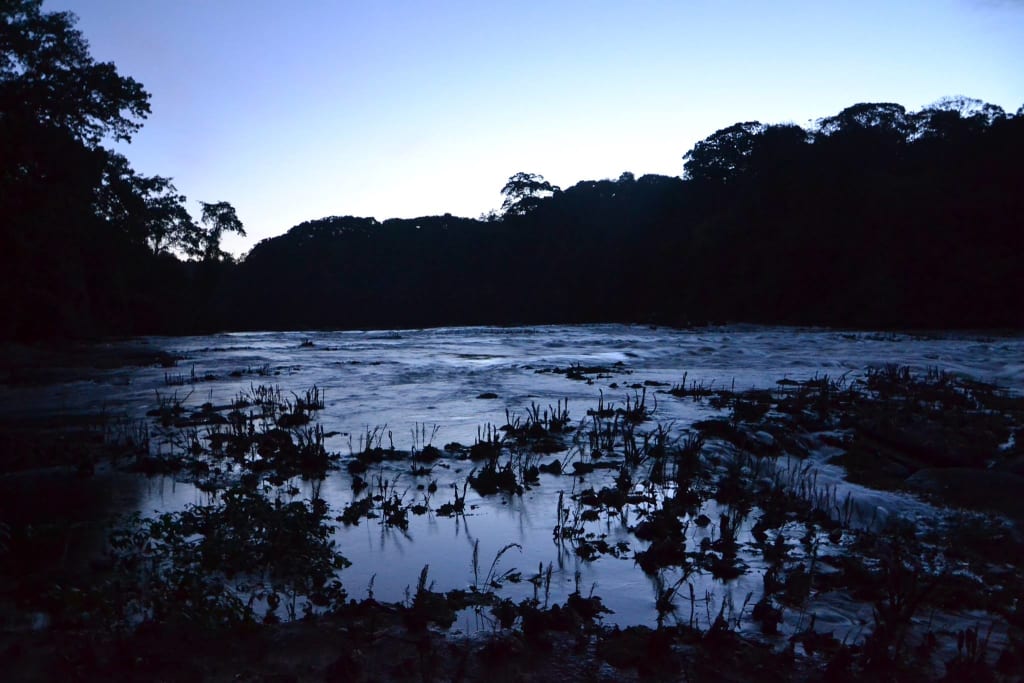
At thirteen, I didn't understand the meaning of the words stereotype and inequality or what they stood for between men and women. My parents never limited me based on my gender. They raised me with love and open-mindedness, teaching me that with perseverance and hard work, anything can be achieved. As children, we often find a role-model to shape our lives around, striving to be just like them. People often choose celebrities, comic book heroes, sports icons, political figures, and the like. However, the person I most admired, and my personal hero was my grandfather, Tamu. He was well-traveled and adventurous. He spent his early teenage years exploring foreign lands digging through vast jungles mining for gold. He used to go every year for months at a time on an epic adventure living in the Amazon with a tribe called the "Wayana" in French Guiana. He was my real-life Indiana Jones.
However, he would often take my male cousin to accompany him on the trip, always leaving me behind. I couldn't understand why; he knew it was my dream to go with him and experience the wilderness, yet I was often left to dream about my adventure while my cousin got to live it. When I turned eleven, my mom finally told me the reason, she said, "You're a girl, and these kinds of trips were made for men, the jungle is no place for a woman." Hearing those words from my own mother and worst yet knowing it was the mindset of my grandfather devastated me. It felt heavy on my heart, knowing my gender was the reason I was unable to accompany him on his explorations. I started questioning myself and my capabilities. Was my cousin better than me because he was a boy, was I less because I was a female, what else was I inadequate at? After some time, I grew stronger mentally, believing in myself and my abilities, knowing I was every bit as good as my male counterparts. I knew I was tough enough to live in the wild for a month, especially in the company of my grandfather and the Native Americans. I cried with frustration every time I was left behind; however, I never gave up on my dream that I would one day go with him. I was always trying to convince Tamu I was physically and mentally ready for this trip and not to doubt me based on my gender.
By the end of July, when I was thirteen, my dreams finally came to fruition. I remember noticing I had one missed call from my mom and a voice mail. The only thing I can remember from that moment way the voice of my mom saying, "Tamu agreed for you to go." My heart pounded in my chest, it felt unreal! After all those years of trying to change his mind, he finally accepted for me to live my dream. He acknowledged me for who I am as an individual, instead of judging me based on my gender. I felt happy, proud, but incredibly anxious. I was chasing after this moment my whole life, now I had it, but didn't know what to do with it. I had never been on such a trip nor lived in such conditions, was I going to be able to be the person I built myself up to be in my mind.
Mid-September of the same year, I was on the plane with Tamu and my cousin departing from Paris in the direction of Cayenne, the capital of French Guiana. We stayed three days in Cayenne buying all the supplies needed for the trip: fishing line, guns, boat propellers, and pearls to give as a present to the Wayanas as it was customary in their culture. After the third day, we hopped on a small plane to go closer to the entry of what is known as "the green hell" or the mouth of the Amazon, an area not inhabited by any known humans. At first, it was a little scared. I was prepared mentally to experience a cultural shock; however, everything looked so underdeveloped and somewhat unsafe. We meet up with members of the crew that would go with us into the wilderness. They were all members of the Wayana tribe. They welcomed me with such open arms, my feeling of fear completely went away, and at this point, I was truly ready to enter the jungle.
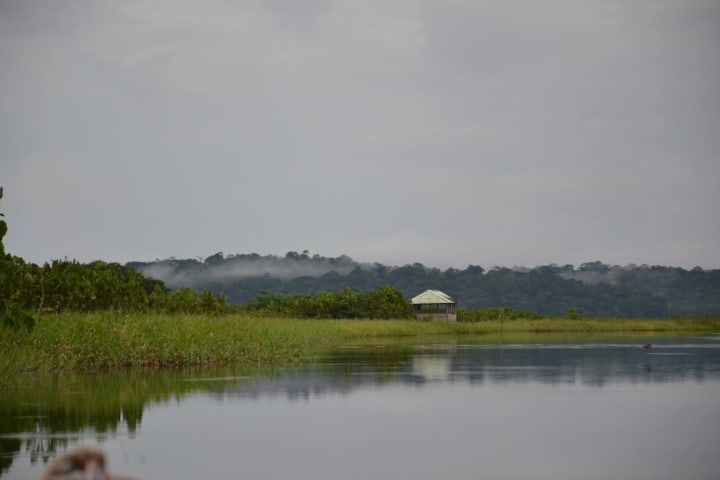
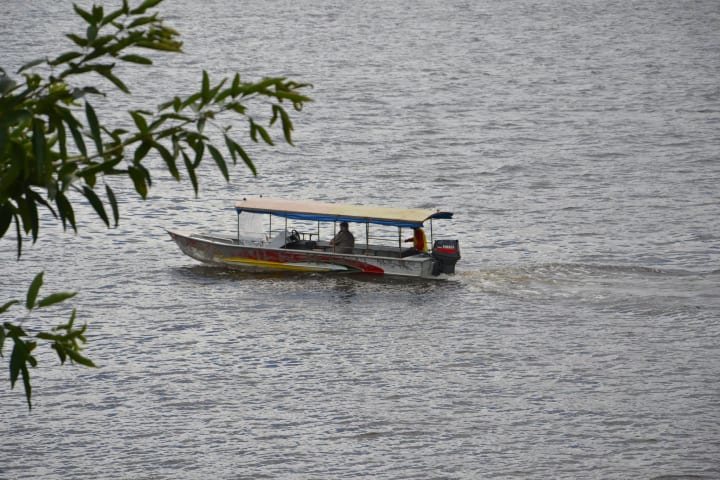
We had to get a special permit from the French Government to go into the Amazonia as its protected land. The forest is considered as a natural park, and only Wayanas legally have full access to it without a permit. Thankfully, Tamu was friends with a village chief, so he granted us entrance. The first leg of the journey was five hours by pirogue. At that moment, I realize that vigilance would be fundamental for our success. Anything could go wrong at any given time, and no helicopter or rescue team could pick us up. With the pirogues, we traveled on the river the Maroni for about 3 weeks, changing and building new camps about every three days. We slept in hammocks, eating and surviving only from what was fished and hunted. We were completely at the mercy of Mother Nature, not worrying about tomorrow, just living in the moment. To my surprise, the forest never slept. Between toads singing all night, monkeys screaming in the morning in harmony with the beautiful calling from the Tucan and Macaw parrots, I was in a constant state of mesmerization. At night natives told tales of Jaguars and jungle witches in addition to sightings of mythical creatures that roamed the land.
During this trip, I push my boundaries, bathing and crossing rivers filled with anacondas, and caiman. Disconnected from the distractions of modern life such as television, cell phones, the internet, and conveniences such as supermarkets and running water, I felt a deeper connection with nature and myself. I learned to appreciate the simple things in life that we take for granted every day, such as a roof and a warm bed. However, every step of the way I began to understand why my grandfather kept coming back here for the past 40 years. Tamu told me how proud he was of me and even said that I showed as much bravery and strength as the males in the group. Additionally, this trip helped my grandfather grow as well. I was able to break the gender stereotype he had on women for the past 80 years showing him to judge someone based on who they are, their capabilities, and their heart instead of their gender. I prevailed in an environment deemed unsafe for women. Fulfilling my Amazonian dream gave me the determination to achieve other life goals. I was set to show those who said I wouldn't even graduate high school because of my disabilities that I was stronger than they critiqued me to be. I will continue to defy odds and push boundaries to be the best version of me possible.
About the Creator
Keep reading
More stories from writers in Viva and other communities.
Germany Downplays US Threat to Greenland
Introduction Recent comments about the United States and Greenland have drawn international attention, especially in Europe. Reports suggesting that the US could threaten or pressure Greenland have raised concerns among NATO allies and Arctic nations. In response, Germany’s Foreign Minister Johann Wadephul has moved to calm the situation. He has clearly stated that Germany does not see a serious or immediate threat from the United States toward Greenland and has urged allies to focus on cooperation rather than speculation.
By sehzeen fatima5 days ago in Viva
Silver Screen Magic with Mae West
American actress and singer Mae West became a popular film actress during the Great Depression. She started entertaining in vaudeville, then performed on Broadway, and finally went to Hollywood. She signed up with Paramount Pictures and made her debut in the 1932 film “Night After Night.” She also starred in musicals, comedies, and crime dramas. The American Film Institute named her one of the best classic Hollywood actresses.
By Rasma Raisters5 days ago in Geeks


Comments
There are no comments for this story
Be the first to respond and start the conversation.