
A Game of Shadows: How the Kings and Cavaliers Reveal Modern Basketball’s Divide
Watching the Sacramento Kings face the Cleveland Cavaliers feels like studying a mirror—two young teams reflecting the state of the modern NBA, each battling identity, chemistry, and expectations.


Basketball used to be easier to describe. Some teams ran fast, and some teams pounded the ball inside. Now everything is fluid, positional, and maddeningly unpredictable. Watching the Sacramento Kings match up with the Cleveland Cavaliers this season, I realized how polarizing that modern identity crisis has become—two franchises, both young and talented, built around philosophies that test the limits of how far faith in your system can carry you.
The Kings are the children of velocity. Since Mike Brown arrived, their offense has thrived on pace, space, and improvisation. Watching De’Aaron Fox drift into a pull-up three in transition feels like watching the league’s heartbeat—fast, impulsive, thrilling. The Kings rely on rhythm the way other teams rely on structure. When they flow, they’re dangerous; when they hesitate, they collapse into chaos. I find myself torn watching them. Half the time, I’m entertained by their reckless confidence; the other half, I’m frustrated by their allergy to defense and consistency.
The Cavaliers, on the other hand, play like an argument against that style. They thrive in structure—defense-first, deliberate, often grinding. Even when Donovan Mitchell goes nova, it feels contained within rules. There’s a control to their chaos. Evan Mobley and Jarrett Allen form a frontcourt that seems engineered to punish the trends of small-ball basketball. Yet, in their restraint lies their biggest obstacle: hesitation. In a league that rewards instinct, the Cavaliers too often look like they’re waiting for permission to improvise.
What fascinates me about their clashes is not who wins, but what their matchup reveals. The Kings are everything the Cavaliers are not—fluid, emotional, fearless—and vice versa. When I watch them play, I see a philosophical divide that mirrors the larger identity struggle in the NBA. Do you trust your freedom or your system? Are you better off scoring 130 and giving up 125, or winning ugly at 102–98?
I’m old enough to remember when the Kings were perpetual chaos—boisterous, failing, but lovable. Now, they’ve become something slightly more dangerous: a team that actually believes in its identity. Fox plays with an edge I used to only associate with playoff veterans. Domantas Sabonis runs the offense like a point forward who’s one pass away from orchestrating a masterpiece—or a turnover that sparks a run the other way. That line between brilliance and disaster is what makes them must-watch television.
The Cavaliers invoke a different emotion. I admire their patience. Mitchell’s offensive explosion often disguises the fragility beneath their structure. They’ve built something admirable—tough, physical, quietly intelligent—but sometimes I wonder if they’re too careful to seize what’s in front of them. Mobley, for all his promise, plays with the restraint of someone still learning his own power. There are flashes where it clicks—when their rotations snap, when they turn defense into transition—it feels like they’re ready to break the East open. But it fades, replaced by slow half-court sets that make me check how much time’s left in the quarter.
As a fan of basketball more than any particular franchise, I love how this matchup serves as a case study in what the sport has become. The Kings embody intuition; the Cavaliers, discipline. Both are necessary, yet neither feels complete. Sacramento’s joy can turn to recklessness the moment the adrenaline dips. Cleveland’s poise can curdle into rigidity when improvisation becomes necessary. The truth, it seems, lies somewhere in the tension between the two.
Every time these teams meet, I find myself tipping back into nostalgia. The early-2000s Kings played with that same freedom—and it ended in heartbreak against the structured, bruising Lakers. The Cavaliers rebuilt from the rubble of LeBron’s exits twice, learning the hard way that patience doesn’t always equal progress. Both fan bases have endured enough mediocrity to sense when something genuine is forming. Yet, I still can’t decide which franchise I trust more long-term.
If I had to choose, I’d say Cleveland has the safer floor. Their defense gives them something sturdy to fall back on, even when shots fail. But Sacramento, volatile and loud as they are, might have the higher ceiling. When that offense hums, it’s symphonic—a blur of handoffs, cuts, and flare screens so precise they look spontaneous. I envy that kind of risk. It’s basketball without apology.
The deeper truth is that both teams are trying to outgrow their pasts. The Kings are desperate to prove that lightning in a bottle can last beyond one playoff run; the Cavaliers want to evolve from structured containment into something with soul. That’s why their meetings matter more than the standings suggest—they’re measuring sticks for intangible progress. You don’t just see how good they are; you see who they believe they are becoming.
Basketball, like identity, is always unfinished. Watching Fox attack a closing Mobley or Mitchell slicing through a lazy Kings defense reminds me that beauty in this sport comes from imperfection—the choices, the misreads, the sudden sparks of brilliance. The Kings and Cavaliers might never meet in the Finals, but they tell the story of the NBA as it exists right now: young, contradictory, and somehow still learning what it wants to be.
In the end, that’s what fascinates me most about their rivalry. It’s not historical—it’s existential. A contest between two definitions of success. Sacramento wants to feel everything; Cleveland wants to control everything. Somewhere in between, there’s a balance that defines great basketball. I watch, night after night, hoping one of them finds it first.
About the Creator
Trend Vantage
Covering the latest trends across business, tech, and culture. From finance to futuristic innovations, delivering insights that keep you ahead of the curve. Stay tuned for what’s next!
Keep reading
More stories from Trend Vantage and writers in Unbalanced and other communities.
The Smashing Machine and the Cost of Survival: Remembering Mark Kerr
When I first saw Mark Kerr fight, I wasn’t seeing a man—I was seeing an idea. A prototype of invincibility, molded in muscle and fury, tearing through opponents with the precision of a hammer striking glass. Pride Fighting Championship in the late 1990s felt like something unfiltered, as if the concept of violence had been dropped back into its raw, prehistoric state. Kerr was its perfect expression: a collegiate wrestling champion turned mixed martial arts titan, a man built to win before he even stepped into the ring.
By Trend Vantageabout 2 hours ago in Unbalanced
Wild Card Weekend Recap: What Happens Now?
I think I figured out why I love Wild Card Weekend so much. It's because it's the first playoff anything of the calendar year. The NFL season starts in the fall, and once upon a time, the champion was crowned either on or slightly before New Year's. The evolution of the NFL schedule has resulted in the playoffs starting just into the New Year, and currently, the final week of the season falls on the first weekend of the New Year, with Wild Card Weekend coming a week after that. So yes, chronologically, the NFL's Wild Card Weekend serves as the first playoff anything of the calendar year.
By Clyde E. Dawkins11 days ago in Unbalanced
Lamar Odom DUI Arrest Article – Complete
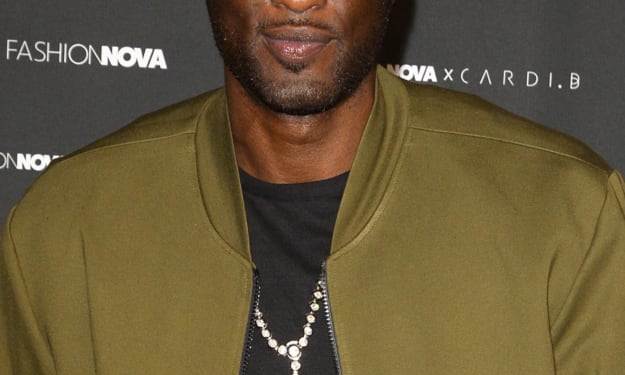
Sober driving is the only rational way to drive on the roadways. NBA two-time champion Lamar Odom was picked up for driving under the influence, violating lane changing protocol, and for not maintaining his vehicle in his own lane.
By Skyler Saunders6 days ago in Unbalanced
Autonomy Is The Real Privilege
Good morning, freedom-seekers! Today we’re gonna be looking at autonomy. A strange word, I know; one many would probably look at blankly and run away from on sight. We’re gonna figure out what it actually means, consider how it’s achieved, and decipher just how deeply most of us are tangled up in dependence without realising it.
By That ‘Freedom’ Guy4 days ago in Humans



Comments
There are no comments for this story
Be the first to respond and start the conversation.