
United States Generic Drugs Market Size and Forecast 2025
Affordable Medicine, Expanding Access, and the Next Phase of U.S. Healthcare Savings

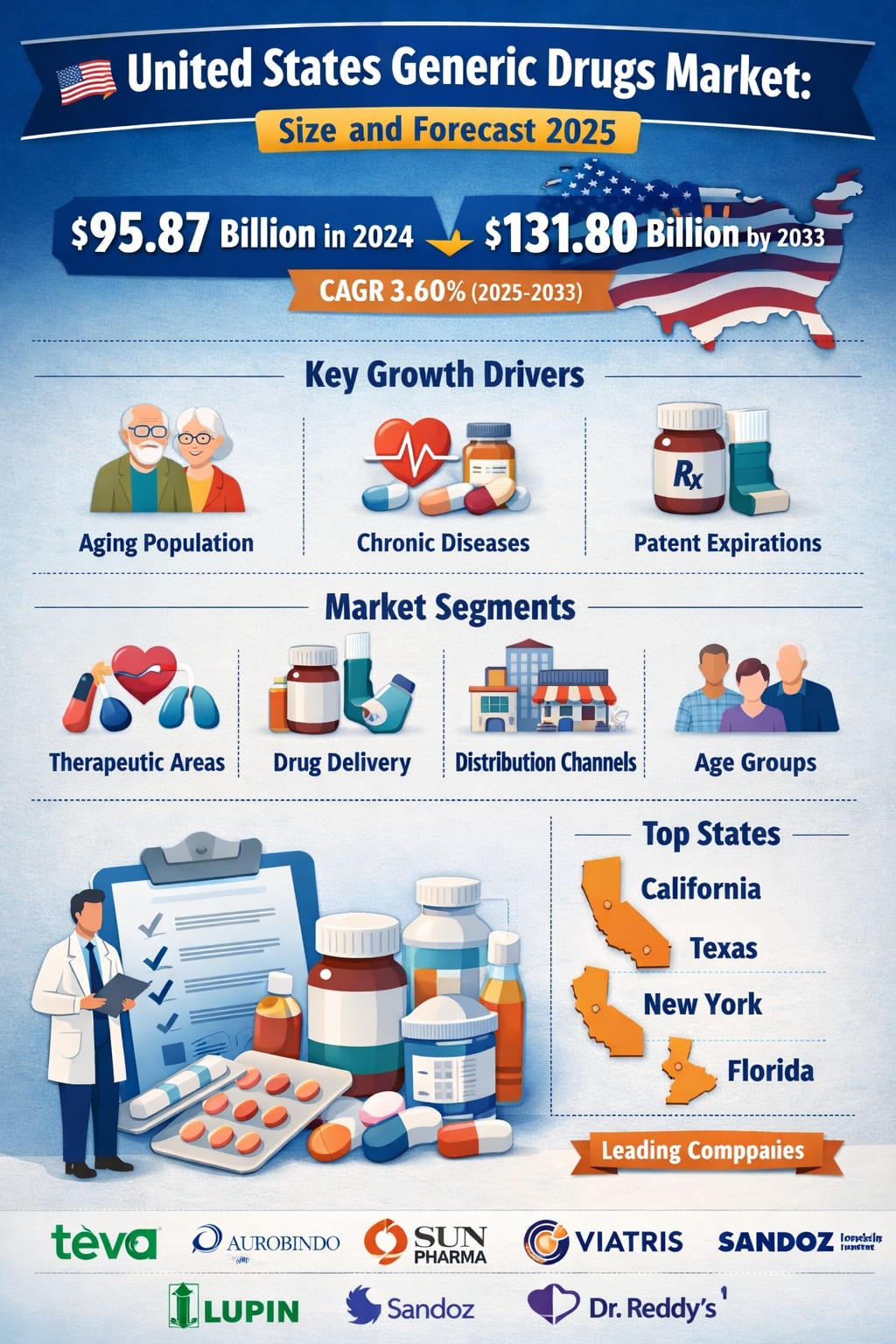
The United States Generic Drugs Market is entering a crucial decade as the healthcare system continues to balance rising treatment costs with the need for wider patient access. Valued at US$ 95.87 billion in 2024, the market is projected to reach US$ 131.80 billion by 2033, expanding at a CAGR of 3.60% from 2025 to 2033. This steady growth reflects a structural shift in how medicines are prescribed, reimbursed, and consumed across the country.
Generic drugs—pharmaceutical products that are bioequivalent to brand-name medicines in dosage, strength, safety, quality, and intended use—have become the backbone of affordable healthcare in the United States. Once the patent protection of an original branded drug expires, generic manufacturers are allowed to produce and market equivalent versions, usually at significantly lower prices. These medicines undergo rigorous regulatory review to ensure they meet the same standards of safety and effectiveness as their branded counterparts.
Over the years, generics have transformed the U.S. pharmaceutical landscape. They have helped reduce the financial burden on patients, improved access to essential treatments, and introduced much-needed competition into a market historically dominated by expensive branded drugs. Today, the role of generics goes far beyond cost savings—they are a strategic pillar in maintaining the sustainability of the American healthcare system.
United States Generic Drugs Market Overview
The U.S. generic drugs market is primarily driven by affordability, accessibility, and volume demand. With healthcare costs continuing to rise, both public and private payers are under pressure to control spending without compromising treatment outcomes. Generic medicines offer a proven solution: the same therapeutic benefits at a fraction of the price.
Another powerful force shaping the market is the aging population. As the number of people aged 65 and above grows, so does the prevalence of chronic conditions such as cardiovascular disease, diabetes, respiratory disorders, and neurological illnesses. These conditions often require long-term or lifelong medication, making cost-effective treatment options not just preferable, but essential.
In parallel, the expiration of patents for several blockbuster drugs—often referred to as the “patent cliff”—continues to open new doors for generic manufacturers. Each major patent expiry introduces new competition, drives down prices, and expands patient access, reinforcing the long-term growth trajectory of the generic drugs market in the United States.
Key Growth Drivers Shaping the Market
1. Growing Drug Shortages and the Shift Toward Generics
Drug shortages have become a recurring challenge in the U.S. healthcare system. These shortages can result from manufacturing issues, regulatory delays, supply chain disruptions, or sudden spikes in demand. When brand-name drugs become scarce, healthcare providers often turn to generic alternatives to ensure continuity of patient care.
Generic medicines are particularly well-positioned in such scenarios because they are typically produced by multiple manufacturers and distributed through wide networks. This diversified supply base reduces the risk of prolonged shortages and makes generics a reliable fallback option for hospitals and pharmacies.
In many cases, healthcare systems also adopt proactive strategies—encouraging generic substitution even before shortages become critical. Over time, this behavior not only stabilizes short-term supply issues but also increases long-term confidence in generics, further strengthening market demand.
2. Rising Burden of Chronic Diseases
The increasing prevalence of chronic illnesses is one of the most powerful engines behind the growth of the generic drugs market. Conditions such as diabetes, heart disease, asthma, chronic obstructive pulmonary disease (COPD), and neurological disorders require ongoing medication management, often over decades.
According to data published by the U.S. Centers for Disease Control and Prevention (CDC), coronary heart disease remains the most common type of heart disease, affecting a significant portion of the adult population. Each year, hundreds of thousands of Americans experience heart attacks—many for the first time—highlighting the continuous and growing need for affordable long-term medication.
Generic drugs play a critical role here. They offer the same clinical benefits as branded medicines but at significantly lower costs, improving patient adherence and reducing the financial strain on both individuals and insurers. Physicians and healthcare providers increasingly recommend generics as first-line treatment options, especially for chronic disease management, where cost sustainability is essential.
3. The Impact of Patent Cliffs
The concept of the patent cliff—when patents on high-revenue branded drugs expire—has become a defining feature of the pharmaceutical market. Each major patent expiration creates an opportunity for generic manufacturers to enter the market with lower-priced alternatives.
This influx of competition typically leads to rapid price reductions, benefiting patients, insurers, and government healthcare programs such as Medicaid and Medicare. At the same time, it expands the overall volume of generic drug usage, reinforcing the sector’s growth.
For healthcare systems and policymakers, patent cliffs are not just commercial events—they are strategic opportunities to rebalance drug spending and improve access to essential treatments across the population.
Challenges in the United States Generic Drugs Market
Regulatory Hurdles
Despite its growth potential, the generic drugs market faces significant regulatory challenges. The U.S. Food and Drug Administration (FDA) approval process, particularly through the Abbreviated New Drug Application (ANDA) pathway, can be complex, time-consuming, and resource-intensive. This is especially true for complex generics, biologics, and biosimilars.
In addition, patent litigation and so-called “pay-for-delay” agreements—where branded manufacturers compensate generic companies to postpone product launches—can further slow market entry. These delays reduce competition and keep drug prices higher for longer periods, creating friction in an otherwise cost-saving ecosystem.
Price Volatility
Price volatility is another persistent issue in the U.S. generic drugs market. While competition often drives prices down, sudden supply disruptions, manufacturing issues, or market consolidation can lead to unexpected price spikes. These fluctuations create uncertainty for healthcare providers, insurers, and patients alike.
On the other hand, intense competition can also push prices so low that profit margins become unsustainable for manufacturers, sometimes leading to production cuts or market exits—ironically increasing the risk of future shortages. Managing this delicate balance remains one of the industry’s biggest strategic challenges.
United States Generic Drugs Market by State
Demand for generic drugs varies across the country, largely reflecting population size, healthcare infrastructure, and state-level healthcare policies.
California
California represents one of the largest generic drug markets in the U.S., supported by its massive population and extensive healthcare network. The state actively promotes cost-saving measures through programs like Medicaid, encouraging widespread use of generics. However, price volatility and occasional supply chain disruptions continue to influence market stability.
Texas
Texas is another major growth market, driven by its large population and expanding healthcare system. The state emphasizes cost-effective healthcare delivery, making generics a central part of prescription drug strategies. While regulatory delays and supply challenges exist, Texas remains a key contributor to national generic drug consumption.
New York
New York’s diverse and densely populated healthcare market creates strong demand for affordable medicines. State-run programs and a competitive pharmacy landscape help keep generic drug usage high, although supply chain and regulatory issues occasionally affect availability.
Florida
Florida’s sizable senior population makes it a particularly important market for generic drugs. Chronic disease management and long-term medication needs drive consistent demand, supported by public healthcare programs and a strong retail pharmacy network.
Market Segmentation Overview
By Type
Branded Generics
Unbranded Generics
By Therapeutic Area
Heart Disease
Mental Health
Diabetes
Epilepsy
Cancers
Allergies & Asthma
Chronic Obstructive Pulmonary Disease (COPD)
Alzheimer’s Disease
HIV/AIDS
Crohn’s Colitis
By Drug Delivery
Oral
Injectables
Dermal/Topical
Inhalers
By Distribution Channel
Specialty Pharmacy
Retail Pharmacy
Hospital Pharmacy
Online Pharmacy
By Age Group
Children (0–19 years)
Young Adults (20–39 years)
Adults (40–64 years)
Seniors (Above 65 years)
By Payment Type
Cash
Commercial Insurance
Medicaid
Medicare Part D
By States
California
Texas
New York
Florida
Pennsylvania
Ohio
Illinois
North Carolina
Georgia
Michigan
Others
Competitive Landscape and Company Outlook
The U.S. generic drugs market is highly competitive, with both global and regional players striving to expand their portfolios, improve manufacturing efficiency, and secure regulatory approvals faster than rivals. Leading companies are typically evaluated across four key dimensions: company overview, key personnel, sales performance, and recent developments.
Prominent players operating in this space include:
Teva Pharmaceuticals
Aurobindo Pharma
Sun Pharmaceuticals
Abbott Laboratories Inc.
Lupin Pharmaceuticals, Inc.
Viatris
Sandoz
Dr. Reddy’s Laboratories
These companies continue to invest in product launches, complex generics, supply chain resilience, and strategic partnerships to strengthen their positions in the U.S. market.
Final Thoughts
The United States Generic Drugs Market is no longer just a cost-saving alternative—it is a cornerstone of modern healthcare delivery. With the market projected to grow from US$ 95.87 billion in 2024 to US$ 131.80 billion by 2033, generics will play an even more critical role in ensuring that high-quality treatment remains accessible and affordable for millions of Americans.
Driven by an aging population, the rising burden of chronic diseases, frequent patent expirations, and ongoing pressure to control healthcare costs, the sector is poised for steady, sustainable expansion. While regulatory hurdles and price volatility remain real challenges, the long-term fundamentals of the market remain strong.
In the coming years, the success of the U.S. healthcare system’s affordability agenda will depend heavily on the continued growth, innovation, and reliability of the generic drugs industry—and all signs suggest that this sector is ready to meet that responsibility.
About the Creator
Tom Shane
Tom Shane is a content writer specializing in SEO-driven blogs, product descriptions, and thought leadership. He crafts engaging, research-backed content that connects with audiences and drives results.
United States Motorcycle Market Size and Forecast 2025
United States Motorcycle Market Overview The United States motorcycle market continues to hold a unique position within the broader automotive and mobility landscape, blending lifestyle, performance, and practical transportation into one dynamic industry. In 2024, the U.S. motorcycle market stood at US$ 9.85 billion and is projected to expand to US$ 14.64 billion by 2033, growing at a compound annual growth rate (CAGR) of 4.51% from 2025 to 2033. This steady growth reflects a combination of shifting consumer preferences, technological innovation, and the rising appeal of motorcycles as both recreational machines and efficient mobility solutions.
By shibansh kumara day ago in Trader
Russia Tequila Market Size and Forecast 2025–2033
Russia Tequila Market Overview The Russia tequila market is gradually transforming from a niche imported spirits segment into a recognizable and steadily growing category within the country’s broader alcoholic beverages industry. According to industry estimates, the Russia tequila market is expected to reach US$ 172.02 million by 2033, up from US$ 131 million in 2024, registering a compound annual growth rate (CAGR) of 3.08% during 2025–2033.
By Sakshi Sharma2 days ago in Trader


Comments
There are no comments for this story
Be the first to respond and start the conversation.