
Europe Coffee Market Size and Forecast 2025: Brewing Growth in a Mature but Evolving Industry
From espresso bars in Italy to specialty cafés in Berlin, Europe’s coffee market is set to reach USD 66.98 billion by 2033 as premiumization, sustainability, and home brewing reshape consumption patterns.

Europe Coffee Market Overview
Coffee is more than just a beverage in Europe—it is a daily ritual, a cultural symbol, and a social connector. Prepared from roasted coffee beans and enjoyed in countless forms such as espresso, cappuccino, latte, and filter coffee, coffee has become deeply woven into European lifestyles. From the café terraces of Paris to the espresso bars of Rome and the filter-coffee traditions of Germany and Scandinavia, coffee consumption reflects both heritage and evolving tastes.
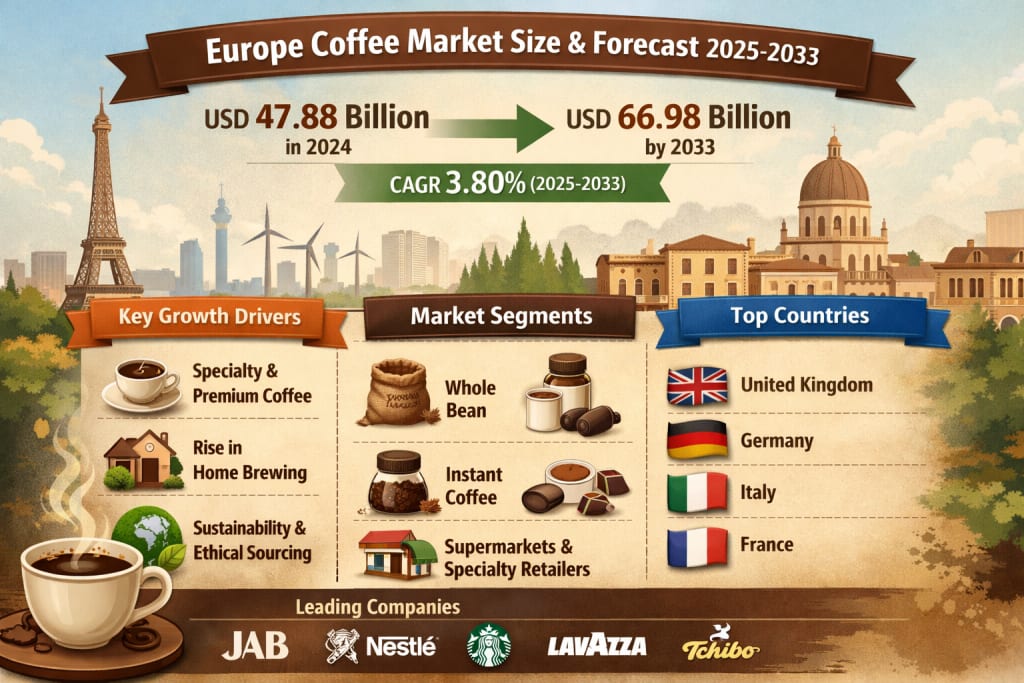
According to Renub Research-style market estimates, the Europe Coffee Market was valued at USD 47.88 billion in 2024 and is expected to reach USD 66.98 billion by 2033, growing at a CAGR of 3.80% from 2025 to 2033. While Europe is already one of the most mature coffee markets in the world, steady growth continues to be driven by premiumization, the rise of specialty coffee, sustainability concerns, and changing consumption habits—particularly the shift toward high-quality home brewing.
Coffeehouses across Europe are not just places to drink coffee; they are social hubs, workspaces, and cultural meeting points. At the same time, consumers are increasingly experimenting with brewing methods at home, investing in espresso machines, grinders, and capsule systems. The result is a market that balances tradition with innovation, and familiarity with experimentation.
Market Growth Outlook: A Blend of Tradition and Innovation
Europe represents one of the largest coffee-consuming regions globally, accounting for a significant share of worldwide demand. However, unlike emerging markets where growth is fueled by first-time consumption, Europe’s growth story is about value creation—premium products, ethical sourcing, specialty formats, and improved consumer experiences.
The projected rise from USD 47.88 billion in 2024 to USD 66.98 billion by 2033 reflects not only volume growth in certain countries but also higher average selling prices driven by premium and specialty offerings. Consumers are no longer just buying “coffee”; they are buying stories, origins, quality, sustainability, and experience.
Key Drivers of Growth in the Europe Coffee Market
1. Surging Demand for Specialty and Premium Coffee
One of the most powerful forces shaping the European coffee market is the rise of specialty and premium coffee. The so-called “third-wave coffee” movement has transformed coffee from a basic commodity into a craft product. Consumers increasingly seek single-origin beans, artisanal roasting methods, traceable supply chains, and unique flavor profiles.
Independent roasters and specialty cafés are thriving in major European cities such as London, Berlin, Paris, Amsterdam, and Milan. Even large multinational brands and supermarket chains are expanding their premium portfolios to cater to this shift. This trend is particularly strong in Western Europe, where coffee culture is deeply embedded in daily life and consumers are willing to pay more for quality and experience.
Premiumization not only boosts revenues but also improves margins for producers, roasters, and retailers, making it a crucial driver of long-term market growth.
2. Rising Popularity of Home Brewing
The European coffee market has seen a notable surge in at-home coffee consumption, especially since the pandemic period accelerated the habit of recreating café-style experiences at home. Consumers are investing in espresso machines, capsule systems, grinders, and specialty brewing equipment such as pour-over kits and French presses.
This shift has significantly boosted demand for whole bean coffee, ground coffee, and coffee pods & capsules. Brands are responding with more diverse product ranges designed specifically for home use, including barista-style blends, specialty roasts, and single-origin offerings.
In several European countries, coffee consumption per capita remains among the highest in the world, reinforcing the long-term stability of demand. The home brewing trend does not replace cafés—it complements them, expanding overall consumption occasions and product diversity.
3. Growing Focus on Sustainability and Ethical Sourcing
European consumers are increasingly values-driven in their purchasing decisions. Sustainability, ethical sourcing, and environmental responsibility have become central to brand perception and loyalty in the coffee market.
Certifications such as Fair Trade, Rainforest Alliance, and Organic play a growing role in influencing consumer choices. In addition, regulatory frameworks like the EU Deforestation Regulation (EUDR) are pushing companies to ensure that imported coffee is not linked to deforestation, encouraging greater transparency and traceability in supply chains.
While compliance can be challenging and costly, it also creates opportunities for brands that invest early in sustainable sourcing, direct trade relationships, and environmentally responsible practices. Over time, sustainability is becoming not just a differentiator, but a baseline expectation in the European coffee market.
Challenges Facing the Europe Coffee Market
1. Price Volatility and Supply Chain Disruptions
Coffee is highly sensitive to climate conditions, and changing weather patterns, droughts, and extreme events in major producing regions can significantly affect yields and quality. This leads to price volatility in raw coffee beans, which impacts roasters, manufacturers, and ultimately consumers.
In addition, global supply chain disruptions, rising transportation costs, and labor shortages add further pressure to production and distribution costs. While premiumization can offset some of these challenges, price instability remains a structural risk for the industry.
2. Growing Competition from Alternative Beverages
The European beverage landscape is becoming more diverse and competitive. Consumers—especially younger generations—are increasingly experimenting with tea, matcha, herbal infusions, functional drinks, energy drinks, and plant-based lattes. Health and wellness trends are also driving interest in lower-caffeine or caffeine-free alternatives.
Although coffee remains deeply ingrained in European culture, brands must continue to innovate in flavors, formats, and experiences to stay relevant in a crowded and evolving market.
Segment Insights: Europe Coffee Market by Product Type
Europe Whole Bean Coffee Market
Whole bean coffee is gaining strong momentum across Europe, driven by consumers who prioritize freshness, aroma, and flavor quality. Coffee enthusiasts prefer grinding beans at home to preserve taste and experiment with different brewing methods.
Specialty roasters are expanding their offerings of single-origin, organic, and ethically sourced beans, particularly in countries such as Germany, France, and Italy. The growth of home espresso machines and manual brewing devices further supports demand in this segment.
Europe Instant Coffee Market
Despite the rise of specialty coffee, instant coffee remains highly popular in several European markets, especially in Eastern Europe and the United Kingdom. Its convenience, affordability, and long shelf life make it a practical choice for busy consumers and office environments.
Innovation is reshaping this segment, with premium instant coffee, freeze-dried varieties, and single-serve sachets offering improved taste and quality. While it may not carry the same prestige as specialty coffee, instant coffee continues to play a vital role in overall market volume.
Europe Coffee Pods and Capsules Market
Coffee pods and capsules have transformed home brewing by offering consistency, convenience, and variety. This segment benefits from strong brand ecosystems, machine compatibility, and a growing range of flavors and intensities.
Sustainability concerns around packaging waste are pushing manufacturers to develop recyclable and compostable capsules, which is likely to shape future growth in this category.
Distribution Channel Insights
Supermarkets and Hypermarkets
Supermarkets and hypermarkets remain the dominant distribution channel for coffee across Europe. They offer wide product assortments, competitive pricing, and strong private-label portfolios. These retailers are increasingly expanding their ranges of organic, fair-trade, and premium coffees to match evolving consumer preferences.
Specialist Retailers
Specialist coffee retailers and boutique roasters play a key role in driving the premium and specialty segments. They offer expert advice, high-quality beans, brewing equipment, and curated experiences that appeal to coffee enthusiasts, particularly in urban areas.
Country-Level Market Highlights
United Kingdom
The UK has a vibrant and fast-evolving coffee culture, with strong demand for both café-style beverages and home brewing solutions. The growth of specialty coffee shops, subscription services, and e-commerce continues to reshape the market, while ethical sourcing and quality remain top priorities for consumers.
Germany
Germany is one of Europe’s largest coffee markets, with a strong tradition of filter coffee and growing interest in specialty and whole bean products. Supermarkets, discounters, and specialty roasters all play important roles, and demand for organic and fair-trade coffee continues to rise.
Italy
Italy is synonymous with espresso culture, where coffee is a daily ritual rather than just a beverage. While traditional espresso remains dominant, younger consumers are increasingly exploring specialty coffee, single-origin beans, and new brewing methods, blending tradition with global trends.
France
France has a deeply rooted café culture and a growing appetite for specialty, organic, and ethically sourced coffee. Home brewing is on the rise, supported by investments in premium machines and higher-quality beans. Independent roasters and third-wave cafés are also shaping modern consumption patterns.
Europe Coffee Market Segmentation
By Product Type:
Whole Bean
Ground Coffee
Instant Coffee
Coffee Pods and Capsule
By Distribution Channel:
On-Trade
Off-Trade
Supermarkets/Hypermarkets
Convenience Stores
Specialist Retailers
Other Off-Trade Channels
By Country:
United Kingdom
Germany
France
Italy
Spain
Russia
Rest of Europe
Competitive Landscape and Company Analysis
The Europe coffee market is highly competitive, featuring a mix of global giants and strong regional players. Key companies include:
JAB Holding Company
Nestlé SA
The Kraft Heinz Company
J.J. Darboven GmbH & Co. KG
Strauss Group Ltd
Melitta Group
Starbucks Corporation
Krüger GmbH & Co. KG
Luigi Lavazza SpA
Maxingvest AG (Tchibo)
These companies compete across multiple dimensions: product quality, brand strength, sustainability credentials, innovation, and distribution reach. Strategies increasingly focus on premiumization, sustainability initiatives, new product launches, and portfolio diversification to capture evolving consumer demand.
Final Thoughts
The Europe Coffee Market is a classic example of a mature industry that continues to reinvent itself. With a projected rise from USD 47.88 billion in 2024 to USD 66.98 billion by 2033, the market’s 3.80% CAGR reflects steady, value-driven growth rather than explosive expansion.
Premiumization, specialty coffee, home brewing, and sustainability are reshaping how Europeans consume and think about coffee. While challenges such as price volatility and competition from alternative beverages remain, coffee’s deep cultural roots in Europe provide a strong foundation for long-term resilience.
In the years ahead, the brands that succeed will be those that can blend tradition with innovation, quality with responsibility, and convenience with experience—much like the perfect cup of coffee itself.
About the Creator
Tom Shane
Tom Shane is a content writer specializing in SEO-driven blogs, product descriptions, and thought leadership. He crafts engaging, research-backed content that connects with audiences and drives results.
Telus Stock: Growth, Investment Insights, and Market Overview
Telus Corporation (TSX: T, NYSE: TU) is one of Canada’s leading telecommunications and technology companies, providing a comprehensive range of services including wireless, internet, TV, and digital healthcare solutions. Known for its reliable service, innovative technology, and strong customer base, Telus has become a key player in North America’s telecom sector. Investors often consider Telus stock for its consistent dividends, growth potential, and stable market performance.
By Hammad Nawazabout 6 hours ago in Trader
The Angry Man in Your House
"If you grow up with an angry man in your house, there will always be an angry man in your house" This statement has caused plenty of controversy online, people say its a statement that blames victims while also undermining those who break traumatic cycles to form health relationships... but if I'm honest now that I'm in my 30s it makes more sense to me than ever, and I'd argue that its not just about fathers and uncles.
By S. A. Crawford4 days ago in Humans




Comments
There are no comments for this story
Be the first to respond and start the conversation.