
United Arab Emirates Foodservice Market Size and Forecast 2025–2033
How Tourism, Technology, and Changing Lifestyles Are Powering a US$ 41.80 Billion Dining Boom in the UAE

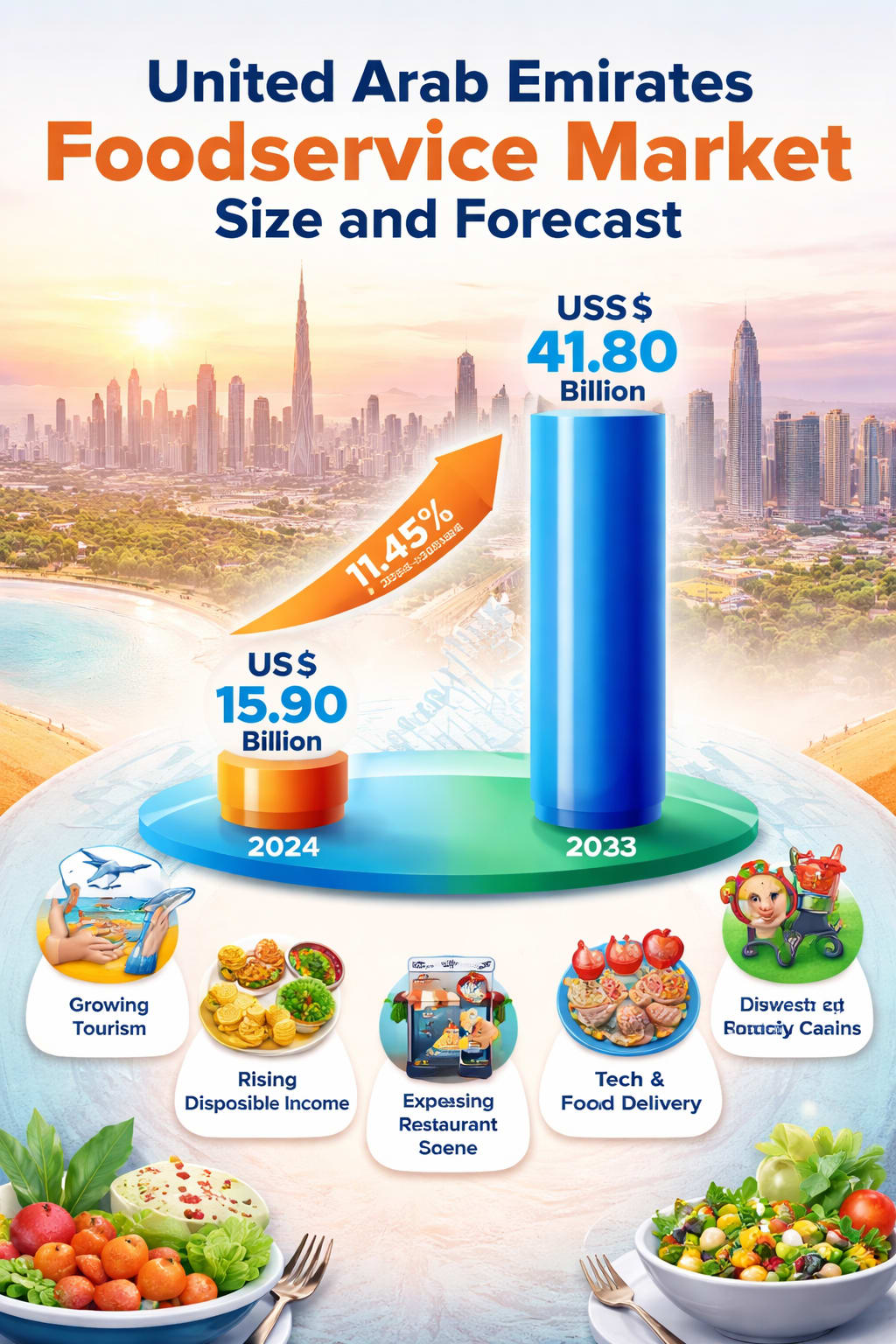
United Arab Emirates Foodservice Market Overview
Foodservice refers to the preparation, serving, and sale of food for consumption outside the home. This includes restaurants, cafés, quick-service outlets, catering services, food trucks, and an increasingly important category—cloud kitchens and delivery-only brands. In the UAE, foodservice is not merely a support industry; it is a central pillar of urban lifestyle, tourism, and hospitality.
The UAE’s unique demographic mix plays a crucial role here. With a large expatriate population and millions of tourists visiting each year, the country has evolved into a global culinary crossroads. From authentic Emirati dishes to Indian, Middle Eastern, Asian, and European cuisines, the foodservice landscape is incredibly diverse. This multicultural demand has pushed operators to constantly innovate, experiment with concepts, and raise service standards.
Urbanization and fast-paced lifestyles have further accelerated eating out and food delivery habits. Malls, business districts, and mixed-use developments are packed with dining options, while mobile apps have made restaurant food accessible at any time of day. As a result, foodservice in the UAE is no longer just about nourishment—it is about convenience, social connection, lifestyle branding, and experience-driven consumption.
Market Size and Growth Outlook
According to Renub Research, the UAE foodservice market stood at US$ 15.90 billion in 2024 and is projected to reach approximately US$ 41.80 billion by 2033. This represents a powerful compound annual growth rate (CAGR) of 11.45% from 2025 to 2033.
This level of growth places the UAE among the fastest-expanding foodservice markets globally. The expansion is being driven by several interconnected forces: booming tourism, rising disposable incomes, rapid urban development, strong inflow of international brands, and the explosive growth of digital ordering and delivery platforms. Together, these factors are reshaping both the scale and the structure of the industry.
Key Growth Drivers in the UAE Foodservice Market
1. Booming Tourism and Hospitality Sector
Tourism is one of the strongest engines behind the UAE’s foodservice growth. Cities like Dubai, Abu Dhabi, and Sharjah attract millions of visitors every year for business, leisure, shopping, and events. Hotels, resorts, theme parks, and entertainment districts all rely heavily on diverse dining offerings to enhance the visitor experience.
Major government initiatives such as long-term tourism strategies and large-scale global events have significantly strengthened infrastructure and international visibility. As tourist arrivals continue to rise, demand for everything from luxury fine dining to quick-service restaurants grows alongside it. Business travelers, expatriates, and leisure tourists together create a steady, year-round consumption base, making foodservice a critical beneficiary of the UAE’s hospitality success story.
2. Rising Disposable Income and Lifestyle Changes
The UAE’s population—especially in major cities—has strong purchasing power and a lifestyle that increasingly values convenience, social dining, and premium experiences. Millennials and Gen Z consumers, in particular, are more inclined to spend on eating out, café culture, and food delivery as part of their daily routines.
With higher disposable incomes, consumers are also becoming more selective and experimental. Demand is growing for gourmet meals, healthier menu options, plant-based choices, and premium casual dining experiences. Restaurants are responding with more diverse menus, transparent nutritional information, and stronger branding. Dining is no longer just functional—it has become a form of entertainment, socializing, and self-expression.
3. Technology and the Expanding Food Delivery Ecosystem
Technology has become a game-changer for the UAE foodservice industry. Online ordering platforms, mobile payments, cloud kitchens, and data-driven marketing tools are transforming how food is produced, sold, and consumed. With high smartphone and internet penetration, digital food ordering is now deeply embedded in everyday life.
Platforms such as Talabat, Deliveroo, and Zomato have reshaped consumer expectations around speed, choice, and convenience. Restaurants are investing heavily in loyalty apps, contactless ordering, and data analytics to improve customer engagement and operational efficiency. The rise of cloud kitchens has also lowered entry barriers for new brands, allowing rapid expansion without heavy investment in physical dining spaces.
In September 2025, the Dubai Corporation for Consumer Protection and Fair Trade (DCCPFT), under the Dubai Department of Economy and Tourism (DET), launched a dedicated working group for the online food delivery sector. New guidelines were introduced to maintain competitiveness, uphold business standards, and encourage further investment—highlighting how important digital foodservice has become to the broader economy.
Challenges Facing the UAE Foodservice Market
High Operating Costs and Intense Competition
Despite strong growth, the UAE foodservice market is highly competitive. International franchises, regional chains, and local independents all compete for prime locations and consumer attention. High rental costs, labor expenses, and strict food safety regulations increase operating pressures, particularly in premium malls and tourist zones.
With consumers expecting high quality and constant innovation, operators must continuously invest in branding, menu development, and service improvements. Smaller independent restaurants often struggle to compete with large chains that benefit from economies of scale and strong marketing budgets. Maintaining profitability while meeting rising expectations remains a key challenge.
Supply Chain Volatility and Import Dependence
The UAE relies heavily on imported food due to limited domestic agriculture. This makes the foodservice sector vulnerable to global supply chain disruptions, shipping delays, currency fluctuations, and changes in import costs. Such volatility can directly affect menu pricing and profit margins.
While some operators are exploring local sourcing options such as hydroponic farms and regional suppliers, import dependence remains a structural reality. Ensuring consistent quality and availability of ingredients continues to be a strategic concern for long-term, sustainable growth.
Key Segments of the UAE Foodservice Market
Bars & Pubs
The bars and pubs segment has grown alongside the tourism and hospitality sectors. Most licensed outlets operate within hotels and resorts, catering primarily to tourists and expatriates. The rise of rooftop bars, beach lounges, and themed pubs reflects a broader trend toward lifestyle and experience-based dining. Despite regulatory controls, this segment continues to thrive through premium concepts, live entertainment, and innovative beverage offerings.
Asian & European Foodservice
Asian and European cuisines dominate the UAE’s multicultural dining scene. Indian, Chinese, Japanese, and Thai foods enjoy massive popularity, while Italian, French, and Mediterranean restaurants attract high-income residents and tourists seeking upscale experiences. Celebrity chef restaurants, themed dining concepts, and experiential venues continue to drive innovation and demand across these segments.
Middle Eastern Foodservice
Middle Eastern cuisine holds deep cultural significance in the UAE. Dishes such as shawarma, hummus, kebabs, and mezze remain staples across both casual and fine dining formats. Seasonal demand during Ramadan and cultural festivals provides additional business boosts. This segment successfully blends tradition with modern service formats, including QSR and delivery-focused models.
Burger Segment
The burger segment is one of the most competitive and fast-evolving areas of the market. International giants and gourmet local brands compete through constant menu innovation, premium ingredients, plant-based options, and social media-driven marketing. Strong demand from younger consumers and delivery users keeps this segment growing across quick-service, casual dining, and cloud kitchen formats.
Chained Outlets
Chained outlets dominate the organized foodservice market thanks to brand recognition, consistent quality, and operational efficiency. International and regional chains leverage franchising, technology adoption, and strong supply chains to expand rapidly. Consumer trust in hygiene and consistency continues to favor branded chains over independent operators.
Leisure Foodservice
Leisure foodservice includes dining at theme parks, cinemas, resorts, and entertainment destinations. As the UAE invests heavily in leisure tourism and family attractions, this segment is benefiting from demand for themed dining, experiential concepts, and bundled entertainment packages. Dining is increasingly becoming an integral part of the overall leisure experience.
Regional Insights: Key Emirates
Dubai
Dubai leads the UAE foodservice market with its unmatched diversity, strong tourist inflows, and affluent consumer base. The city is a global hub for fine dining, casual restaurants, cafés, and street food concepts. Business-friendly policies, a vibrant events calendar, and strong delivery infrastructure continue to make Dubai the center of culinary innovation in the region.
Sharjah
Sharjah’s foodservice market is growing steadily, driven by family-oriented dining, cultural tourism, and a rising expatriate population. The emirate favors affordable, community-focused concepts, with growth concentrated in malls, coastal areas, and cultural districts. While more conservative than Dubai, Sharjah offers stable, long-term growth opportunities in casual dining and café segments.
Conclusion: A Market Built for the Future
The UAE foodservice market is entering a golden decade of expansion. With Renub Research projecting growth from US$ 15.90 billion in 2024 to US$ 41.80 billion by 2033 at a CAGR of 11.45%, the industry is clearly positioned as one of the most dynamic sectors in the country’s economy.
Driven by tourism, technology, lifestyle changes, and global culinary influence, foodservice in the UAE is no longer just about feeding people—it is about shaping experiences, building brands, and supporting the nation’s broader vision as a global hub for hospitality, innovation, and culture. For investors, operators, and entrepreneurs, the message is clear: the UAE’s foodservice story is only just getting started.
About the Creator
Keep reading
More stories from shibansh kumar and writers in Trader and other communities.
Saudi Arabia Whiskey Market Trends & Growth Outlook 2025–2033
Introduction The Saudi Arabia whiskey market presents one of the most unique and complex landscapes in the global beverage industry. Unlike most countries, Saudi Arabia operates under strict Islamic laws that prohibit the manufacture, sale, and consumption of alcoholic beverages, including whiskey. Yet, despite these restrictions, demand for whiskey and other premium spirits continues to exist beneath the surface, driven largely by expatriate communities, affluent consumers, international travel, and shifting lifestyle aspirations.
By shibansh kumar2 days ago in Trader
Super Bowl LX Recap: A Team Called Hawks
Sixty. The Super Bowl turned 60! Still amazes me that this was the sixtieth Super Bowl played in NFL history. It seems like yesterday that I watched Super Bowl XXVII, the first SB I ever watched. The QB who won Super Bowl XXVII has since called a few SBs, and will call next year's game, but that's another story. Super Bowl LX took place at Levi's Stadium in Santa Clara, California, the home stadium of the San Francisco 49ers. However, it was one of their division foes who represented the NFC, as the Seattle Seahawks faced off against the New England Patriots.
By Clyde E. Dawkins2 days ago in Unbalanced


Comments
There are no comments for this story
Be the first to respond and start the conversation.