
"The Coming Economic Storm: Preparing for Future Global Crises"
Exploring the Causes, Impacts, and Solutions for the Next Global Economic Downturn.
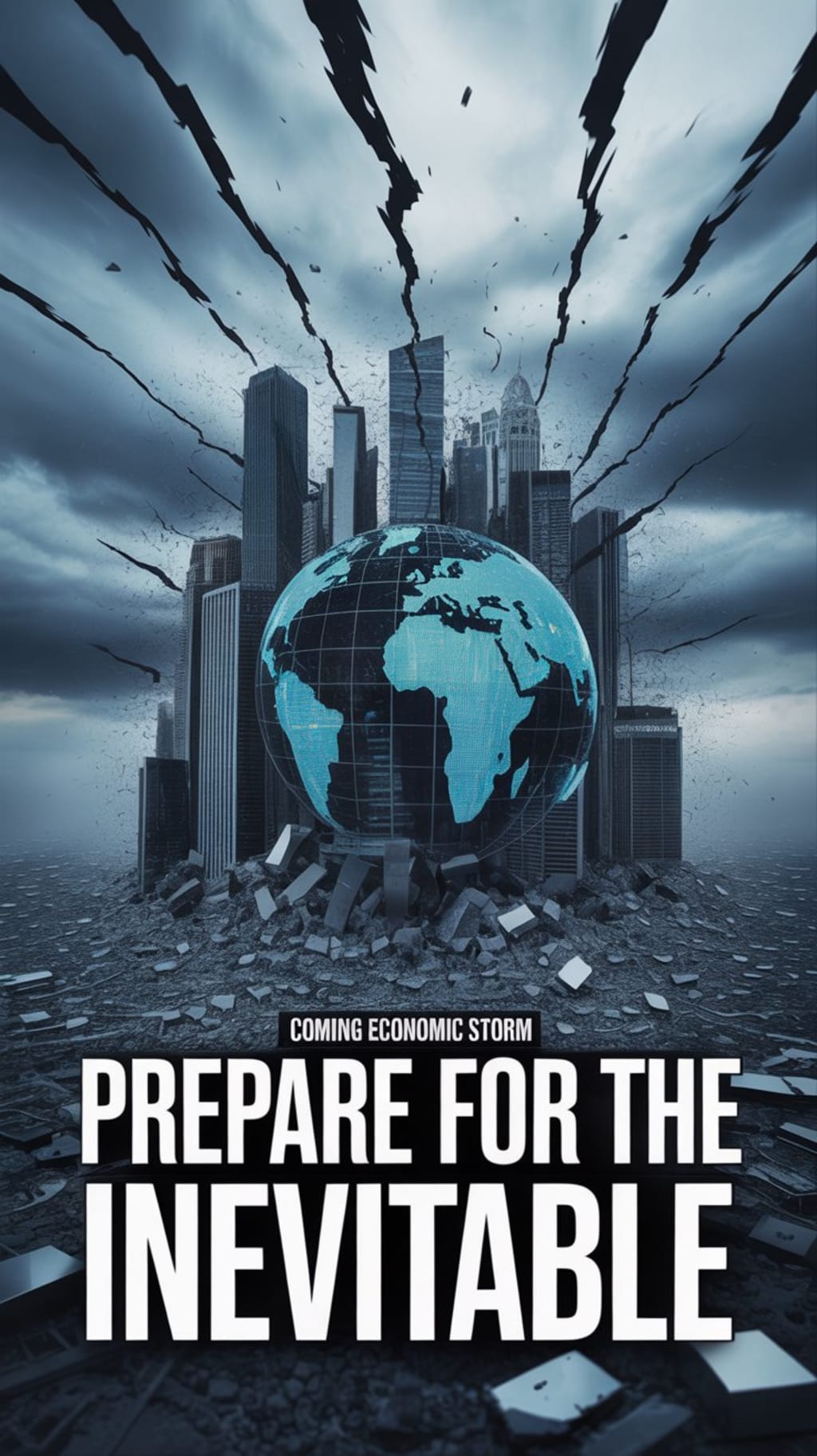
The Coming Economic Storm: Preparing for Future Global Crises
Exploring the Causes, Impacts, and Solutions for the Next Global Economic Downturn
Introduction: Understanding the Looming Economic Threat
The global economy has always been subject to cycles of growth and recession. However, with rising geopolitical tensions, growing national debts, climate change, and technological disruptions, experts are warning of a potential economic crisis that could dwarf past recessions. Understanding the triggers, anticipating the impacts, and preparing solutions are crucial to weathering the coming economic storm.
The Drivers Behind Future Economic Crises
Several key factors are positioning the global economy for significant challenges in the coming years:
1. Rising Global Debt
Global debt levels have reached unprecedented heights. According to the International Monetary Fund (IMF), global debt surged past \$300 trillion in 2024, driven by government borrowing, corporate debt, and consumer loans. Countries like the United States, China, and Japan lead the charts with record-high debt-to-GDP ratios.
Consequences: High debt levels limit government responses during financial crises, leading to slower recoveries and deeper recessions.
Warning Signs: When debt outpaces economic growth, it increases the risk of defaults and financial instability.
2. Geopolitical Tensions and Trade Wars
Escalating conflicts, such as those between the U.S. and China or tensions in Eastern Europe, disrupt global trade and shake investor confidence. Trade restrictions, tariffs, and sanctions contribute to supply chain breakdowns and inflated costs for essential goods.
Consequences: Global markets become volatile, businesses lose revenue, and consumers face higher prices.
Warning Signs: Sharp fluctuations in stock markets, currency devaluation, and declining international trade volumes.
3. Climate Change and Natural Disasters
The increasing frequency and intensity of natural disasters—hurricanes, wildfires, floods—pose significant threats to economic stability. According to the World Bank, climate-related disasters cause over \$300 billion in damages annually.
Consequences: Damaged infrastructure, disrupted agriculture, and strained public resources contribute to economic downturns.
Warning Signs: Rising insurance costs, disrupted supply chains, and migration due to uninhabitable regions.
4. Technological Disruptions and Job Losses
The rapid advancement of technologies such as artificial intelligence (AI), robotics, and automation is reshaping the job market. While technology boosts productivity, it also leads to job displacement.
Consequences:Rising unemployment, greater income inequality, and social unrest.
Warning Signs:Increasing automation in manufacturing, growth in gig economy jobs, and stagnating wages in traditional sectors.
5. Banking Sector Vulnerabilities
Global banking systems remain vulnerable to shocks, as witnessed during the 2008 financial crisis. Over-leveraged banks and risky lending practices could trigger another collapse.
Consequences:Bank runs, frozen credit markets, and loss of consumer confidence.
Warning Signs:Declining bank reserves, increasing non-performing loans, and reduced interbank lending.
The Ripple Effects of a Global Economic Crisis
If a global economic crisis were to unfold, the ripple effects would be felt worldwide:
1. Mass Unemployment and Poverty
Economic downturns often result in massive layoffs, with entire sectors collapsing under financial pressure. This leads to increased poverty rates and social instability.
Example:The 2008 financial crisis resulted in 10 million job losses in the United States alone.
2. Housing Market Collapse
When people lose their jobs, they often cannot meet mortgage payments, leading to foreclosures and housing market crashes.
Example: During the Great Recession, U.S. housing prices dropped by more than 30%, causing widespread property loss.
3. Currency Devaluation and Inflation
Nations experiencing severe economic stress often devalue their currency to boost exports, but this leads to skyrocketing inflation.
Example:In Venezuela, hyperinflation peaked at 1,000,000%, wiping out personal savings and collapsing the economy.
4. Political Instability and Social Unrest
Economic hardships often fuel political instability and protests, as seen during the Arab Spring and various anti-austerity movements across Europe.
Example:Greece’s debt crisis in 2010 led to nationwide protests and political turmoil.
Preparing for the Coming Economic Storm:
While the outlook may seem daunting, proactive measures can soften the blow of a global economic downturn.
1. Diversifying Investments
Investing in a mix of assets—real estate, stocks, commodities, and cryptocurrencies—can protect against market volatility.
Tip: Consider gold and real estate, historically stable during economic downturns.
2. Building Emergency Savings
Having an emergency fund covering 6–12 months of expenses can be a financial lifeline during job losses or market crashes.
Tip:Set up automatic deposits to a high-yield savings account to build your fund consistently.
3. Reducing Personal Debt
High-interest debt becomes unmanageable during economic downturns. Paying off credit cards and loans reduces monthly obligations.
Tip:Focus on high-interest debts first using the “avalanche method” for faster results.
4. Acquiring Recession-Proof Skills
Jobs in healthcare, IT, and public safety are often more resilient during economic crises.
Tip:Consider online courses or certifications to expand your skill set.
5. Supporting Local and Sustainable Businesses
During economic hardships, small businesses suffer the most. Supporting local shops and sustainable enterprises can help keep communities afloat.
Tip: Choose local markets, family-owned restaurants, and community-driven services when possible.
Global Solutions: A Collaborative Approach
Preventing a global economic collapse requires international cooperation:
Stronger International Regulations:The IMF and World Bank can enforce stricter lending policies to avoid national debt crises.
Climate-Resilient Infrastructure:Investments in sustainable energy and climate-proof infrastructure can reduce the economic impact of natural disasters.
Technological Adaptation Programs:Governments can fund training for workers displaced by automation to transition into emerging industries
Conclusion: Navigating Uncertainty with Preparedness
The global economy is facing significant challenges that require both individual and collective action. By understanding the warning signs, preparing for disruptions, and supporting sustainable growth, we can soften the impact of future economic crises. The path forward demands resilience, innovation, and international cooperation to navigate the storm that may lie ahead
End
About the Creator
Keep reading
More stories from Idrees khan and writers in Trader and other communities.
Stanislav Kondrashov on Greenland’s Strategic Role in the Future of Global Trade and Resources
By all appearances, Greenland is on the brink of becoming one of the world’s most closely watched regions—not for its glaciers, but for what lies beneath and beyond them. Stanislav Kondrashov, economic analyst and founder of TELF AG, has recently cast a spotlight on the island’s rising significance in global trade and resource strategy. And his perspective is clear: Greenland is not just a geographical outlier—it is a future linchpin.
By Stanislav Kondrashov5 days ago in Trader
Blox Stock: Investors Are Taking Notice Here’s Why
Blox stock has been gaining attention lately, and many investors are wondering if it’s the right time to buy. With its recent surge and growing market interest, blox stock is becoming a stock to watch closely. They will break down what makes blox stock appealing, analyze trends, and explain why it could play an important role in your investment portfolio.
By John.doe7985 days ago in Trader


Comments
There are no comments for this story
Be the first to respond and start the conversation.