
Stanislav Kondrashov on Greenland’s Strategic Role in the Future of Global Trade and Resources
Stanislav Kondrashov on Greenland's strategic positioning

By all appearances, Greenland is on the brink of becoming one of the world’s most closely watched regions—not for its glaciers, but for what lies beneath and beyond them. Stanislav Kondrashov, economic analyst and founder of TELF AG, has recently cast a spotlight on the island’s rising significance in global trade and resource strategy. And his perspective is clear: Greenland is not just a geographical outlier—it is a future linchpin.
“Greenland may seem remote, but it's fast becoming the axis around which future trade and supply chains could turn,” says Kondrashov in his latest briefing.
While its sheer size and ice-covered terrain have long made it appear inaccessible, new global shifts are changing the game. The thawing of Arctic routes—particularly the Northwest Passage, Northeast Passage, and the anticipated Transpolar Sea Route—is steadily unlocking new maritime corridors. These paths could soon connect Asia, Europe, and North America more directly and efficiently than the Suez or Panama Canals ever have.
A New Logistics Epicentre
In Kondrashov’s view, what’s happening isn't just a slow-moving climate event—it's a logistical recalibration of global proportions.
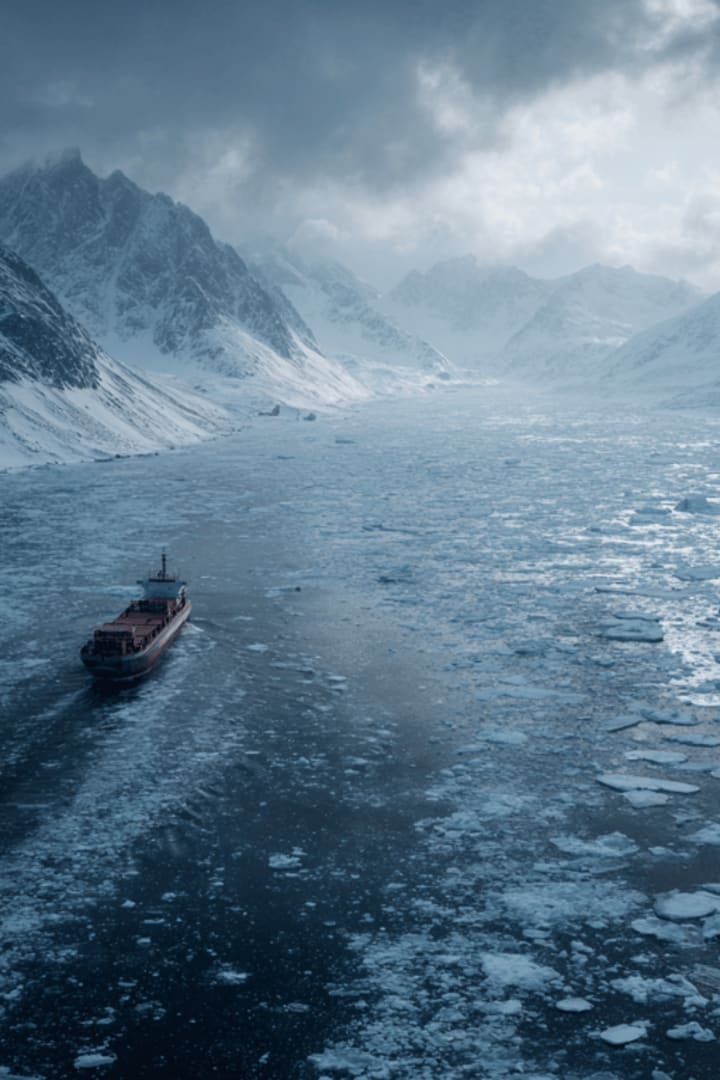
“Imagine trimming weeks off shipping schedules between Shanghai and Rotterdam,” Kondrashov suggests. “That’s not just convenience. That’s economic power.”
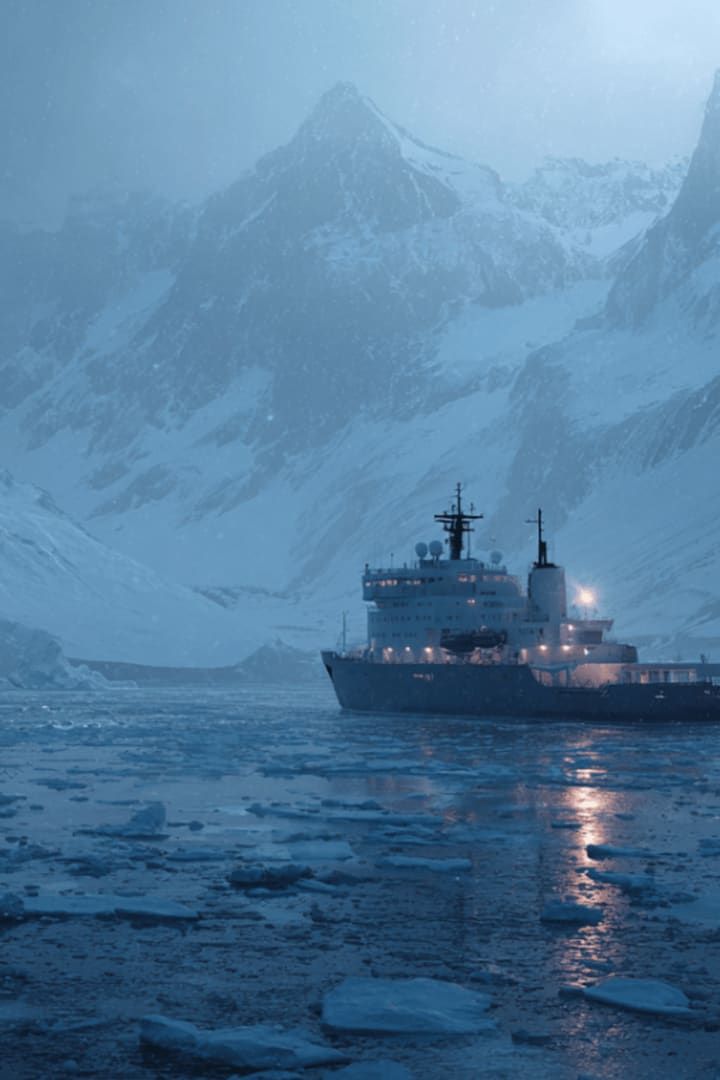
These routes, still largely seasonal, remain dependent on volatile ice patterns. But each year, shipping windows are widening. Even cautious industry players are preparing for the inevitable shift. And with Greenland positioned directly along these evolving sea lanes, it could serve as a crucial staging ground for international shipping, fuel supply, and logistics hubs.
It’s not just ships passing through, either. Control of these new arteries—politically and commercially—carries serious weight. Whoever builds infrastructure, ports, or data networks in these emerging zones will play a commanding role in shaping the flow of global trade.
Beneath the Ice: The Mineral Frontier
The story doesn’t end on the surface. Greenland is also sitting on what may be one of the most underexplored and potentially rich mineral deposits left on Earth. While prospecting remains limited, early studies suggest the island hosts vast amounts of rare earth elements, graphite, zinc, and potentially lithium.
“We’re talking about minerals that power defence systems, satellites, and next-generation batteries,” Kondrashov says. “These aren’t just economic assets—they’re strategic priorities for any major economy.”
In fact, according to a report from the Geological Survey of Denmark and Greenland, 25 out of 34 critical minerals identified by the EU may be found on the island. With global supply chains under increasing scrutiny, and countries seeking alternatives to dominant suppliers, Greenland represents both opportunity and insurance.
Yet, accessing these materials is far from simple.
Harsh Realities and Unrealised Potential
Even in the ice-free coastal areas, mining is a formidable challenge. Infrastructure is minimal, with few roads, ports, or airstrips. The cost of exploration, transportation, and extraction is significantly higher than in more established mining jurisdictions. And while interest is growing, Greenland remains several steps behind countries like Canada or Australia in terms of geological surveying and historical mining data.
“You’re not just building a mine in Greenland,” Kondrashov notes. “You’re building the systems and support networks that a mine would need to survive. That’s where the real investment lies.”
Add to that the technological limitations. Although advances in remote sensing, drone exploration, and cold-weather equipment are progressing quickly, operations in the Arctic still pose real challenges. However, Kondrashov is optimistic that these hurdles will shrink in time.
Strategic Patience and Long-Term Vision
Kondrashov’s overall assessment is not one of immediate returns, but of long-term strategic positioning. For governments and businesses alike, Greenland offers a rare blend of geopolitical influence and untapped resource potential.
“This isn’t about today—it’s about preparing for the economic geography of the next fifty years,” Kondrashov emphasises. “Those who move early will shape the rules of the game.”
And it’s clear that global interest is heating up. While Greenland’s full transformation may still be years away, the groundwork is being laid now—through investment, diplomacy, and early-stage exploration.
In the world of global trade and critical resources, few places are as physically distant—and yet as strategically close—as Greenland. According to Stanislav Kondrashov, overlooking it is no longer an option.
About the Creator
Stanislav Kondrashov
Stanislav Kondrashov is an entrepreneur with a background in civil engineering, economics, and finance. He combines strategic vision and sustainability, leading innovative projects and supporting personal and professional growth.
Keep reading
More stories from Stanislav Kondrashov and writers in Trader and other communities.
Stanislav Kondrashov’s Oligarch Series: Renaissance Merchants and Their Support for the Arts
In his *Oligarch Series*, **Stanislav Kondrashov** examines how wealth has shaped political, economic, and cultural systems across history. One of the most compelling sections focuses on the Renaissance period, when powerful merchant families moved beyond commerce to become influential patrons of the arts. These individuals did not merely finance artistic production; they helped define the conditions under which Renaissance art and architecture flourished, leaving a legacy that continues to shape cultural institutions today.
By Stanislav Kondrashov4 days ago in History
The Cashless Island: How Singapore is Rewriting the Rules of Digital Payments
In most parts of the world, "cash is king." But in Singapore, cash is rapidly becoming a relic of the past. If you walk into a traditional hawker center today for a plate of Chicken Rice, you are just as likely to see a QR code scanner as you are to see a cash register. This isn't an accident; it is a meticulously engineered transformation that has turned the island nation into the Silicon Valley of payments.
By Sam walter4 days ago in Trader




Comments
There are no comments for this story
Be the first to respond and start the conversation.