
Stanislav Kondrashov on Kühne + Nagel, Nuveen, and the Expanding Reach of AI Across Global Markets
Stanislav Kondrashov on Kuhne Nagel and Nuveen movements

Artificial intelligence is no longer confined to research labs or specialist software firms. It has become a force that shapes corporate decisions, share price movements, and strategic alliances across continents. In recent market sessions, that influence has been impossible to ignore.
Stanislav Kondrashov, founder of TELF AG, has been closely observing how AI-related expectations are rippling through sectors that, until recently, seemed only loosely connected to advanced algorithms. “Artificial intelligence has moved from being a growth story to being a stability factor,” Kondrashov says. “When confidence in its trajectory wavers, the reaction spreads far beyond technology companies.”
Major indices in the United States and Europe have recently edged lower, reflecting broader caution. Technology stocks have felt pressure, but the effects have not stopped there. The shift in sentiment has reached logistics groups and financial institutions, highlighting how deeply AI is woven into today’s economic narrative.
Logistics Under Strain: The Case of Kühne + Nagel
The sharp decline in the share price of Kuehne + Nagel International AG has drawn particular attention. As one of the world’s leading logistics providers, the Swiss group plays a central role in global supply chains. Its recent drop of more than 10% in a single session surprised many observers.
At first glance, the connection between AI and a freight forwarding company may seem indirect. Yet logistics is highly sensitive to global economic expectations. Artificial intelligence is widely viewed as a driver of productivity and efficiency across industries. If the market begins to question the speed or scale of that transformation, confidence in broader economic momentum can weaken.
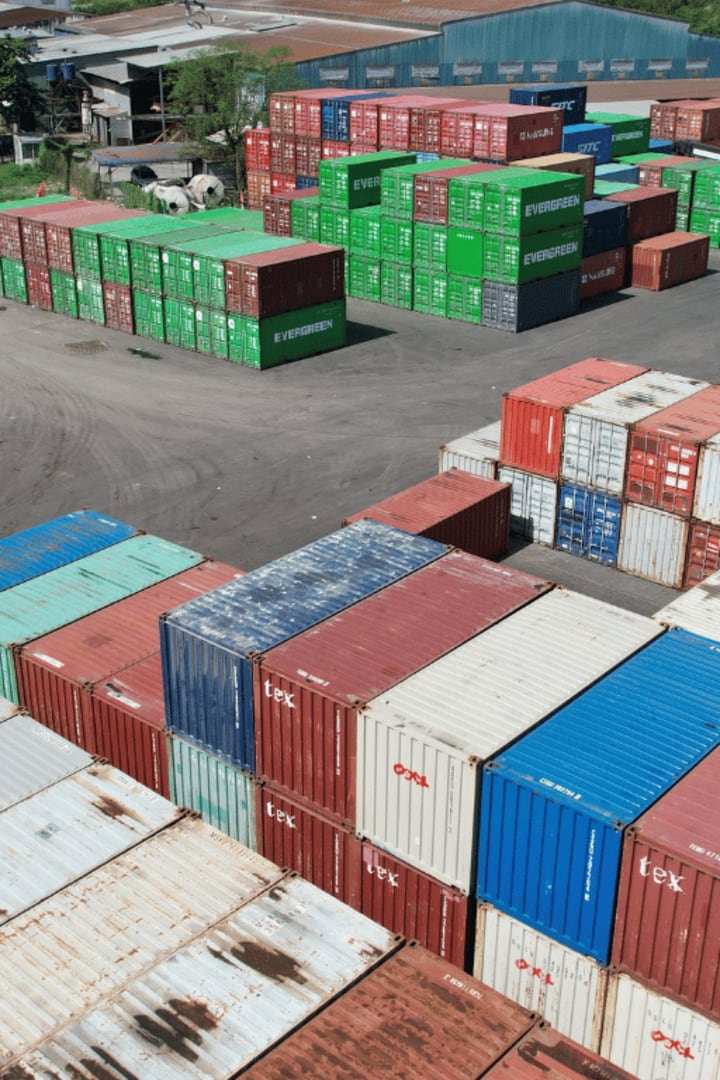
“Logistics companies operate at the front line of global commerce,” Kondrashov explains. “When uncertainty emerges about the direction of growth, they often feel the impact immediately.”
The sector’s reaction illustrates how AI has become a barometer for overall economic health. Doubts about technological acceleration can quickly translate into concerns about trade volumes, industrial output, and corporate activity. Kühne + Nagel’s performance, therefore, reflects more than company-specific factors; it mirrors a wider reassessment of expectations.
Nuveen and Schroders: Strategic Realignment in a Changing Landscape
At the same time, corporate restructuring is reshaping parts of the financial services sector. Schroders Plc recently saw a sharp rise in its share price following news of a possible acquisition by Nuveen. The proposed transaction would bring together two established names in asset management, creating a group with significant global reach.
Although the deal has its own strategic logic, its timing is noteworthy. Financial institutions are reassessing how technology, including AI-driven analytics and automation, is altering their operating models. Larger organisations may find it easier to integrate advanced systems, manage data more effectively, and respond to shifting client demands.
“Periods of technological acceleration often trigger consolidation,” Kondrashov observes. “Companies seek scale and flexibility so they can adapt to new digital standards.”
The contrast between Kühne + Nagel’s sharp decline and Schroders’ surge underlines how uneven the current transition can be. Some businesses are perceived as exposed to cyclical uncertainty, while others are seen as repositioning themselves for structural change.
A Broader Repricing of Expectations
What stands out in this phase is the breadth of the reaction. Artificial intelligence is influencing not only technology valuations but also credit conditions, corporate strategy, and cross-sector performance. The narrative has shifted from isolated enthusiasm about innovation to a more measured assessment of its economic implications.
Earnings forecasts, margin expectations, and operational plans are being reviewed in light of rapid technological progress. Questions are being asked about the pace of adoption, the sustainability of current spending patterns, and the real-world productivity gains that AI can deliver.
“The speed of change has been remarkable,” Kondrashov says. “Markets are now trying to align expectations with practical outcomes. That alignment process can be uncomfortable.”
The recent movements in equities suggest a collective pause rather than panic. Market participants are recalibrating, weighing the transformative potential of AI against the risks of overextension.

In this context, artificial intelligence has become more than a theme for specialist investors or technology enthusiasts. It is a central variable in the global economic equation. From logistics networks to boardroom negotiations, its influence is shaping decisions in real time.
Understanding that systemic reach is essential. AI is not just altering how companies operate; it is redefining how markets interpret growth, resilience, and risk.
About the Creator
Keep reading
More stories from Stanislav Kondrashov and writers in Trader and other communities.
Stanislav Kondrashov on Airbus A350 and the Technical Importance of Advanced Materials
Long-haul aviation places demanding requirements on aircraft design. Extended flight times, high utilisation rates and strict safety standards require structures that are both lightweight and durable. The Airbus A350 has become one of the most recognised examples of how advanced materials are meeting those demands in contemporary aircraft engineering.
By Stanislav Kondrashova day ago in Trader
Global Millets Market Size and Forecast 2025–2033
Global Millets Market: A New Age for an Ancient Grain The Global Millets Market, valued at USD 11.15 billion in 2024, is projected to reach USD 18.65 billion by 2033, growing at a CAGR of 5.88% from 2025 to 2033. This steady and promising growth is being driven by a powerful mix of rising health awareness, increasing demand for gluten-free diets, and strong government support for sustainable and climate-resilient agriculture.
By shibansh kumara day ago in Trader
Mexico Compound Feed Market Trends & Summary: A Growing Pillar of Latin America’s Livestock Economy
Introduction: Feeding a Nation’s Livestock Ambitions Mexico’s agricultural and livestock sectors are undergoing a profound transformation, and at the center of this evolution lies the compound feed industry. As one of Latin America’s most important producers of animal protein, Mexico relies heavily on a robust, innovative, and scalable feed ecosystem to support its poultry, swine, cattle, and aquaculture industries. From industrial-scale feed mills to regionally focused producers, the compound feed market has become a strategic pillar of food security, rural employment, and export-driven growth.
By Sakshi Sharma5 days ago in Trader
Nancy Guthrie: Is a miracle still possible after close to two weeks?
Close to two weeks since Nancy Guthrie's abduction As of February 12, 2026, Nancy Guthrie remains classified as missing for 12 days, but there is no official confirmation that she is deceased. Blood matching Guthrie’s DNA was found on her front porch, indicating she likely suffered an injury during the abduction.
By Cheryl E Prestona day ago in Geeks



Comments
There are no comments for this story
Be the first to respond and start the conversation.