
Saudi Arabia Wine Market Trends & Summary: A New Era of Alcohol-Free Luxury
How Non-Alcoholic Wines, Tourism, and Vision 2030 Are Reshaping a Once-Unthinkable Market

Introduction: A Market Evolving Against Tradition
Saudi Arabia’s relationship with wine is unlike that of any other major economy in the world. In a country where alcohol consumption is strictly prohibited by law due to religious and cultural principles, the very idea of a “wine market” might seem contradictory. Yet, the reality on the ground in 2025 and beyond tells a far more nuanced story—one driven by non-alcoholic innovation, changing consumer lifestyles, ambitious economic reforms, and a rapidly globalizing hospitality sector.
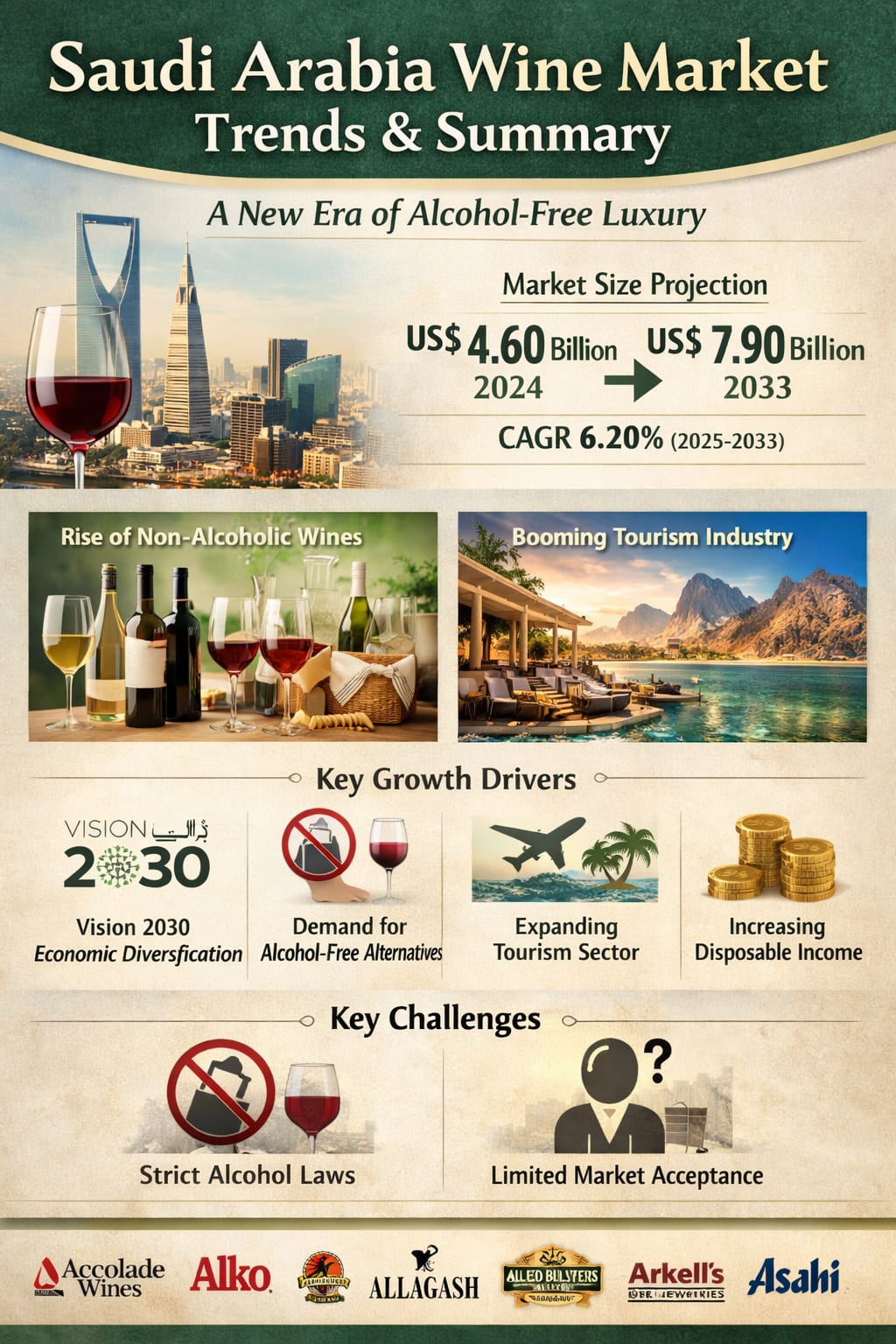
According to Renub Research, the Saudi Arabia Wine Market is expected to grow from US$ 4.60 billion in 2024 to US$ 7.90 billion by 2033, registering a compound annual growth rate (CAGR) of 6.20% from 2025 to 2033. This growth is not about traditional alcoholic wine. Instead, it reflects the rise of non-alcoholic wine alternatives, premium beverage experiences, and lifestyle-driven consumption patterns aligned with the Kingdom’s Vision 2030.
Several powerful forces are shaping this transformation: rising interest in alcohol-free wine substitutes, a growing expatriate population, the expansion of luxury dining and hospitality, evolving cultural norms, a booming tourism industry, increasing disposable incomes, and government initiatives encouraging food and beverage (F&B) innovation. Together, these factors are creating a unique and fast-evolving market that blends tradition with modernity.
Saudi Arabia Wine Industry Overview: A Market Defined by Innovation
The Saudi Arabia wine industry operates within a distinctive sociocultural and legal framework. Alcohol is strictly prohibited, and this reality has historically kept the country outside the global wine economy. However, in recent years, consumer behavior has begun to shift, especially among expatriates, international visitors, and younger, health-conscious consumers who are increasingly open to premium, alcohol-free alternatives.
Non-alcoholic wines—often produced using advanced fermentation and de-alcoholization techniques—have emerged as a sophisticated substitute. These products aim to replicate the taste, aroma, and experience of traditional wine without containing alcohol, making them compliant with local regulations and cultural expectations. For many consumers, they offer the best of both worlds: a refined, celebratory beverage experience without legal or religious conflict.
Saudi Arabia’s Vision 2030 has played a crucial role in accelerating this trend. The national strategy focuses on diversifying the economy away from oil and investing heavily in tourism, entertainment, hospitality, and luxury services. As a result, the Kingdom has seen a surge in high-end hotels, fine-dining restaurants, international events, and cultural festivals. These venues increasingly seek premium, alcohol-free beverage options that can match global standards of hospitality.
A symbolic moment came in January 2024, when Saudi Arabia reopened a controlled wine shop in Riyadh after a 70-year gap, serving only a limited group of foreign diplomats and high-end clients. While this does not signal a broad legalization of alcohol, it highlights a more nuanced and pragmatic approach to serving international communities and supporting luxury hospitality experiences.
Overall, while the market remains highly regulated and focused on non-alcoholic products, the Saudi Arabia wine sector is expected to grow steadily, driven by aspiration, globalization, and innovation in alcohol-free beverages.
Market Size and Growth Outlook
Renub Research estimates that the Saudi Arabia Wine Market will expand from US$ 4.60 billion in 2024 to US$ 7.90 billion by 2033, growing at a CAGR of 6.20% between 2025 and 2033. This growth trajectory reflects not only increasing demand for non-alcoholic wine alternatives but also broader trends in premiumization, health-conscious consumption, and lifestyle-driven spending.
Unlike traditional wine markets in Europe or the Americas, growth in Saudi Arabia is rooted in:
The expansion of luxury hospitality and tourism
Rising disposable incomes and premium consumer behavior
The influence of expatriates and international visitors
Innovation in alcohol-free and functional beverages
Government-backed economic diversification under Vision 2030
As these trends continue, non-alcoholic wines are expected to move from niche products to mainstream premium beverage options within the Kingdom’s high-end dining, hotel, and retail environments.
Key Growth Drivers in the Saudi Arabia Wine Market
1. Vision 2030 and Economic Diversification
Vision 2030 is the backbone of Saudi Arabia’s economic transformation. By reducing dependence on oil and investing in sectors such as tourism, entertainment, and hospitality, the government is reshaping consumer lifestyles and spending patterns. New luxury hotels, resorts, cultural districts, and entertainment hubs are being developed across the country, all of which require sophisticated food and beverage offerings.
In this environment, non-alcoholic wines serve as a premium, culturally acceptable option that aligns with international hospitality standards. They allow venues to offer a refined dining experience without violating local norms, making them a key product category in the evolving F&B landscape.
2. Rising Demand for Non-Alcoholic Alternatives
Globally, the demand for non-alcoholic and low-alcohol beverages is rising due to health, wellness, and moderation trends. In Saudi Arabia, this shift is even more pronounced due to legal and cultural restrictions on alcohol. Consumers—especially expatriates and health-conscious locals—are increasingly seeking beverages that offer complexity, flavor, and a sense of occasion without alcohol.
Non-alcoholic wines fit perfectly into this space. They are often positioned as premium, lifestyle-oriented products suitable for social gatherings, business dinners, and celebratory occasions. As awareness and availability increase, demand is expected to continue rising.
3. Growth of Tourism and International Events
Saudi Arabia’s tourism sector is expanding rapidly, driven by mega-projects, global sporting events, entertainment festivals, and cultural initiatives such as Riyadh Season. International visitors bring with them expectations of world-class hospitality, including premium beverage options.
Non-alcoholic wines provide a culturally appropriate solution for serving these guests. High-end hotels, resorts, and restaurants are increasingly incorporating alcohol-free wine alternatives into their menus to cater to global tastes while respecting local regulations.
Challenges Facing the Saudi Arabia Wine Market
1. Strict Alcohol Laws
The most significant challenge remains the strict legal prohibition of alcohol. This effectively eliminates any possibility of a conventional alcoholic wine market. Foreign brands and investors must navigate a complex regulatory environment and focus exclusively on alcohol-free products. While this creates a clear boundary, it also limits the scope of product offerings and requires careful compliance with local laws and cultural expectations.
2. Limited Market Acceptance
Despite growing interest, non-alcoholic wines still face cultural and perceptual barriers. Many consumers are more accustomed to traditional beverages such as tea, coffee, and juices. For some, non-alcoholic wine may still seem like an unnecessary or unfamiliar concept. Building broader acceptance will require education, marketing, and consistent exposure through hospitality and retail channels.
Regional Market Overview
By region, the Saudi Arabia Wine Market is segmented into the Northern and Central Region, Western Region, Eastern Region, and Southern Region.
Eastern Region
Cities such as Dammam, Khobar, and Jubail are home to many expatriates and international professionals, particularly due to the energy and industrial sectors. This creates a niche but growing demand for premium non-alcoholic beverages, including wine alternatives. The region’s developing hospitality infrastructure and business travel activity support steady, though still limited, market growth.
Western Region
The Western Region, including Jeddah and areas near Mecca, is heavily influenced by tourism and international visitors. Jeddah, in particular, has a more cosmopolitan atmosphere and a strong presence of luxury hotels and fine-dining establishments. This makes it one of the most promising markets for high-end non-alcoholic wine alternatives, even as strict regulations and cultural considerations remain in place.
Market Segmentation
By Product Type:
Still Wine
Sparkling Wine
Dessert Wine
Fortified Wine
Other
By Color:
Red Wine
Rosé Wine
White Wine
Other
By Distribution Channel:
Online
Offline
By Region:
Northern and Central Region
Western Region
Eastern Region
Southern Region
This segmentation highlights the industry’s effort to mirror traditional wine categories within an alcohol-free framework, giving consumers familiar choices while staying compliant with regulations.
Key Players in the Market
Some of the notable companies operating in or associated with the broader wine and beverage space include:
Accolade Wines
Alko
Allagash Brewing Company
Allied Blenders & Distillers
Arkell’s Brewery
Anchor Brewing Company
Asahi Breweries
Bass Brewery
While not all of these companies operate directly in Saudi Arabia’s non-alcoholic wine segment, their global presence, product innovation capabilities, and brand strength influence the development of alcohol-free alternatives and premium beverage trends worldwide.
Competitive Landscape and Strategic Focus
The competitive landscape in Saudi Arabia’s wine market is shaped less by traditional rivalry and more by innovation, branding, and positioning. Success depends on:
Developing high-quality, great-tasting non-alcoholic wine alternatives
Positioning products as premium lifestyle beverages
Building strong relationships with hotels, restaurants, and upscale retailers
Educating consumers and normalizing alcohol-free wine in social settings
Brands that can combine quality, cultural sensitivity, and smart marketing are likely to gain a strong foothold in this evolving market.
Future Outlook: A Market of Controlled but Steady Growth
Looking ahead to 2033, the Saudi Arabia Wine Market is expected to continue its steady expansion, driven by tourism, hospitality, lifestyle changes, and Vision 2030 reforms. While the market will remain focused on non-alcoholic products, its premium and experiential nature will create attractive opportunities for innovative beverage companies.
As Saudi Arabia continues to open up to the world—economically, culturally, and socially—the demand for sophisticated, globally inspired, yet locally acceptable products will only increase. Non-alcoholic wine is well positioned to become a permanent and growing part of the Kingdom’s modern F&B landscape.
Final Thoughts
The Saudi Arabia Wine Market is a powerful example of how tradition and transformation can coexist. With a projected rise from US$ 4.60 billion in 2024 to US$ 7.90 billion by 2033 at a CAGR of 6.20%, the market’s growth story is not about alcohol—it is about innovation, lifestyle evolution, and premium experiences.
Driven by Vision 2030, tourism growth, and changing consumer preferences, non-alcoholic wines are carving out a unique and promising space in the Kingdom’s economy. While challenges remain, especially around cultural acceptance and regulation, the long-term outlook is clear: Saudi Arabia’s wine market, in its own distinctive form, is entering a new era of opportunity and global relevance.
About the Creator
Sakshi Sharma
Content Writer with 7+ years of experience crafting SEO-driven blogs, web copy & research reports. Skilled in creating engaging, audience-focused content across diverse industries.
Keep reading
More stories from Sakshi Sharma and writers in Trader and other communities.
France Foodservice Market Size and Forecast 2025–2033
Introduction: A Market Built on Taste, Tradition, and Transformation France has long been recognized as the spiritual home of global gastronomy. From Michelin-starred fine dining restaurants to neighborhood bakeries, cafés, and bustling brasseries, food is not just a necessity in France—it is culture, identity, and daily ritual. In recent years, this deep-rooted culinary tradition has been meeting powerful new forces: digitalization, sustainability, changing lifestyles, and the revival of global tourism.
By Sakshi Sharmaabout 3 hours ago in Trader
United States Cannabis Market Size & Forecast 2026–2034
Introduction The United States cannabis market is entering a decisive growth phase, transforming from a once-restricted industry into one of the country’s most dynamic and commercially promising sectors. According to Renub Research–based projections, the U.S. cannabis market is expected to expand from USD 11.73 billion in 2025 to USD 40.41 billion by 2034, registering a strong compound annual growth rate (CAGR) of 14.73% between 2026 and 2034.
By shibansh kumar7 days ago in Trader



Comments
There are no comments for this story
Be the first to respond and start the conversation.