
North America Sports Medicine Market Size and Forecast 2025–2033
From sidelines to center stage: how innovation, fitness culture, and an active aging population are reshaping the sports medicine industry across North America

Introduction: A Market Built on Motion
Sports have always been woven into the cultural fabric of North America—from school gyms and community parks to professional stadiums that draw millions of fans. But behind every great performance is a less glamorous reality: injuries, recovery, rehabilitation, and prevention. This is where the sports medicine industry steps in, quietly becoming one of the most dynamic segments of the healthcare market.
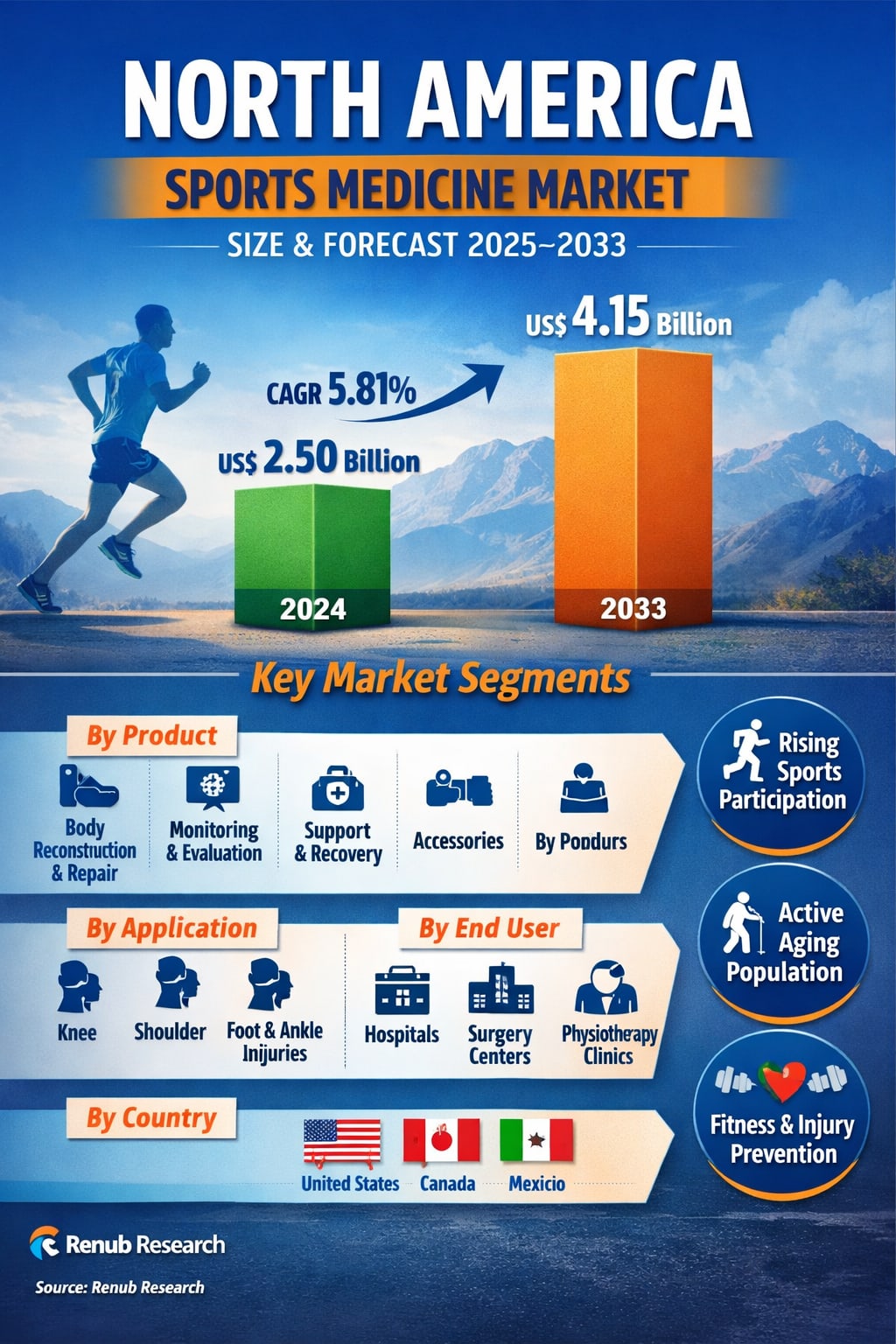
According to Renub Research, the North America Sports Medicine Market is expected to reach US$ 4.15 billion by 2033, up from US$ 2.50 billion in 2024, growing at a CAGR of 5.81% from 2025 to 2033. This steady expansion reflects more than just rising injury rates—it signals a deeper shift in how people approach fitness, aging, and long-term physical performance.
Today, sports medicine is no longer reserved only for elite athletes. Weekend runners, gym-goers, aging adults who want to stay active, and even office workers dealing with repetitive strain injuries are now part of the ecosystem. With advancements in minimally invasive surgery, rehabilitation technologies, wearable monitoring tools, and regenerative therapies, the industry is evolving from a reactive, injury-focused field into a proactive, performance- and prevention-oriented one.
North America Sports Medicine Market Overview
The North American sports medicine market is both mature and fast-evolving. It benefits from a highly developed healthcare infrastructure, strong research and development activity, and widespread awareness of fitness and physical well-being. The region, led by the United States, has a dense network of hospitals, orthopedic centers, physiotherapy clinics, and specialized sports medicine facilities that serve everyone from professional athletes to everyday fitness enthusiasts.
Demand is especially strong for orthopedic implants, rehabilitation products, minimally invasive surgical tools, and performance-monitoring devices. The aging population, which increasingly wants to remain active, is also driving the need for joint and soft tissue treatments. At the same time, younger generations are participating more in organized sports and fitness programs, increasing the overall incidence of sports-related injuries.
Technology is playing a transformative role. Wearable devices now track performance and recovery in real time, while regenerative medicine and biologics are opening new possibilities for faster and more complete healing. The United States continues to dominate the regional market thanks to its strong sports culture, advanced healthcare system, and continuous pipeline of medical innovation.
The scale of the injury problem underlines the market’s importance. For instance, data from sports accident statistics updated in 2022 show that around 150,000 anterior cruciate ligament (ACL) injuries occur annually in the United States. Female basketball and soccer players experience ACL injuries at rates 2 to 8 times higher than their male counterparts. Such figures highlight why demand for advanced sports medicine solutions continues to rise.
Industry players are also pushing innovation forward. In 2023, for example, Smith+Nephew showcased advanced ACL reconstruction technologies designed to improve surgical precision, reduce pain, and enhance recovery outcomes. These kinds of developments are not only improving patient care but also expanding the scope and value of the sports medicine market.
Key Growth Drivers
1. Rising Sports Participation
One of the strongest forces behind market growth is the steady increase in sports and fitness participation across North America. From school-level athletics to adult recreational leagues and high-intensity fitness programs, more people are engaging in physical activity than ever before. While this is a positive trend for public health, it also naturally leads to a higher incidence of injuries such as sprains, strains, fractures, and overuse conditions.
High-impact sports like football, basketball, soccer, and running contribute significantly to injury volumes. As participation grows, so does the need for specialized diagnostic tools, surgical interventions, rehabilitation services, and preventive care programs. Healthcare providers and sports organizations are responding by investing more in sports medicine infrastructure, making the field an essential pillar of modern athletic and fitness culture.
2. An Aging Yet Active Population
North America’s demographic shift is another crucial growth driver. Older adults are no longer content with sedentary lifestyles. Many are embracing walking, swimming, cycling, and recreational sports to maintain mobility and overall health. While this active approach to aging has clear benefits, it also increases the prevalence of conditions such as arthritis, tendon injuries, and joint degeneration.
As a result, demand is rising for orthopedic treatments, physical therapy, and long-term rehabilitation services tailored to older patients. Sports medicine now plays a key role in helping this population stay active, recover from injuries, and maintain quality of life. This trend is expected to remain a powerful growth engine throughout the forecast period.
3. Growing Awareness of Fitness and Preventive Care
Fitness and preventive healthcare have become mainstream priorities. People are more aware than ever of the importance of proper training techniques, injury prevention strategies, and early intervention. This cultural shift is encouraging not only professional athletes but also everyday consumers to seek guidance from sports medicine specialists.
Preventive services such as physical therapy, personalized training programs, and nutritional counseling are gaining popularity because they help reduce injury risk and improve long-term performance. Public health campaigns and media coverage focused on wellness and active lifestyles are further amplifying this trend, positioning sports medicine as a cornerstone of proactive health management rather than just injury treatment.
Challenges Facing the Market
Injury Prevention and Education Gaps
Despite rising awareness, there is still a significant knowledge gap—especially at the amateur and grassroots levels—when it comes to injury prevention. Many athletes, coaches, and recreational participants lack proper understanding of safe training methods, warm-up routines, and recovery protocols. This often leads to preventable injuries, particularly in youth sports.
Without proper guidance on biomechanics, equipment use, and conditioning, individuals are more vulnerable to overuse injuries and poor rehabilitation outcomes. Addressing this gap through community education programs and accessible preventive services could reduce injury rates, lower treatment costs, and improve overall athlete safety.
Shortage of Specialized Practitioners
Another major challenge is the shortage of trained sports medicine professionals. As demand grows for orthopedic surgeons, physical therapists, and athletic trainers, the supply of qualified specialists often struggles to keep pace. This can result in longer wait times, delayed diagnoses, and slower recovery pathways for patients.
To address this issue, greater investment is needed in education and training programs. Expanding the use of telemedicine and support staff can also help reduce the burden on specialists and improve access to care, especially in underserved areas.
Country-Level Market Insights
United States
The United States represents the largest share of the North American sports medicine market. Growth is fueled by high sports participation rates, strong fitness culture, and an aging population that wants to stay active. The country benefits from advanced healthcare infrastructure, strong research capabilities, and widespread access to specialized sports medicine facilities.
Minimally invasive procedures, regenerative medicine, and advanced diagnostic tools are increasingly shaping treatment approaches. Shoulder injuries, in particular, are a major driver of demand. Data from 2022 indicate nearly 9,000 cases of shoulder dislocation in the U.S., with an incidence rate of 23.9 per 100,000 person-years. Males account for about 72% of these cases, and young adults aged 15 to 29 represent nearly half. This high injury burden supports strong demand for braces, bandages, tapes, and surgical solutions.
Canada
Canada’s sports medicine market is growing steadily, supported by rising sports participation, an active aging population, and continuous improvements in medical technology. The market serves both professional athletes and the general public, with strong demand for injury prevention, rehabilitation, and surgical services.
Government initiatives promoting physical activity and sports participation further support market growth. Educational institutions such as Sheridan College and Acadia University contribute to workforce development, while professional bodies like the Canadian Academy of Sport and Exercise Medicine (CASEM) and the Canadian Athletic Therapists Association (CATA) help set standards and advance the field nationwide.
Mexico
Mexico’s sports medicine market is also expanding, driven by increasing sports participation, demographic changes, and improving healthcare infrastructure. The market covers a broad range of services, from injury prevention and rehabilitation to surgical interventions.
Universities such as Universidad Autónoma de Nuevo León and Universidad Nacional Autónoma de México play an important role in training skilled professionals. Meanwhile, organizations like the Mexican Federation of Sports Medicine (FMMD) and the Mexican Society of Sports Medicine (SMME) support professional development and standardization, helping the sector mature and grow.
Market Segmentation Overview
By Product
Body Reconstruction & Repair
Accessories
Body Monitoring & Evaluation
Body Support & Recovery
By Application
Knee Injuries
Shoulder Injuries
Foot and Ankle Injuries
Hip and Groin Injuries
Elbow and Wrist Injuries
Back and Spine Injuries
Others
By End User
Hospitals
Ambulatory Surgery Centers
Physiotherapy Centers and Clinics
By Country
United States
Canada
Mexico
Rest of North America
Competitive Landscape
The North American sports medicine market is highly competitive, with major global healthcare and medical device companies driving innovation, expanding product portfolios, and strengthening their regional presence. Key players covered in the market include:
Zimmer Biomet Holdings, Inc.
Stryker
Medtronic Plc.
Novartis AG
Smith & Nephew Plc.
CONMED Corporation
Johnson & Johnson Services, Inc.
These companies compete across multiple fronts, including product innovation, strategic partnerships, geographic expansion, and investment in research and development. Their focus on minimally invasive solutions, advanced implants, and integrated rehabilitation technologies continues to shape the future of the market.
Final Thoughts: A Market That Moves With the Times
The North America sports medicine market is no longer just about treating injuries—it’s about enabling movement, performance, and long-term health across all age groups. With the market projected to grow from US$ 2.50 billion in 2024 to US$ 4.15 billion by 2033 at a CAGR of 5.81%, the industry’s future looks both stable and dynamic.
Rising sports participation, an active aging population, and growing awareness of preventive care are reshaping demand patterns. At the same time, technological innovation is expanding what’s possible in diagnosis, treatment, and rehabilitation. While challenges such as practitioner shortages and education gaps remain, they also represent opportunities for smarter systems, better training, and more accessible care.
In many ways, the growth of sports medicine reflects a broader cultural shift in North America: a commitment to staying active, staying healthy, and staying in motion—no matter the age or ability level. And as long as people keep moving, this market will keep moving with them.

Comments
There are no comments for this story
Be the first to respond and start the conversation.