
Global Embolic Protection Device Market Size and Forecast 2025–2033
Rising cardiovascular disease burden and the global shift toward minimally invasive procedures are accelerating demand for embolic protection technologies worldwide

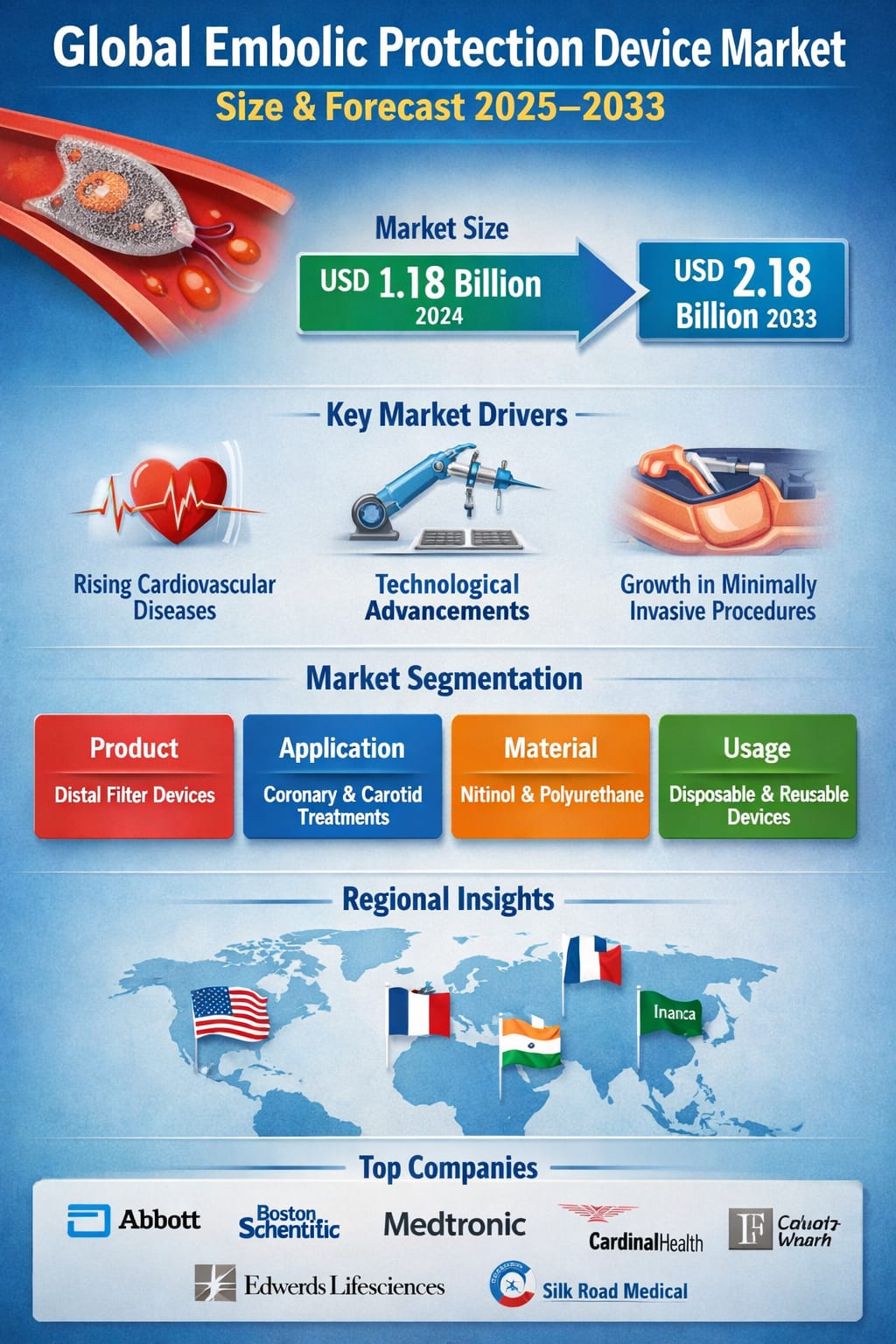
Global Embolic Protection Device Market Overview
The Global Embolic Protection Device Market was valued at USD 1.18 billion in 2024 and is projected to reach USD 2.18 billion by 2033, growing at a CAGR of 7.07% from 2025 to 2033. This strong growth trajectory reflects a healthcare landscape that is increasingly focused on procedural safety, better clinical outcomes, and the rapid adoption of minimally invasive cardiovascular and neurovascular interventions.
An embolic protection device (EPD) is a specialized medical tool designed to capture and remove embolic debris—such as blood clots or plaque fragments—that may be dislodged during interventional procedures. These devices play a crucial role in preventing serious complications including stroke, myocardial infarction, and organ damage, especially during procedures like carotid artery stenting, percutaneous coronary intervention (PCI), and transcatheter aortic valve replacement (TAVR).
As global healthcare systems face a rising burden of cardiovascular disease and an aging population, the importance of procedural safety has never been greater. Embolic protection devices are no longer viewed as optional accessories but as critical components of many interventional workflows. Their expanding use across hospitals, specialty clinics, and ambulatory surgical centers highlights a broader trend toward preventive, precision-driven medicine.
Technological improvements, expanding clinical evidence, and growing awareness among physicians are further strengthening the market’s foundation. With strong adoption across North America, Europe, and Asia-Pacific, and emerging opportunities in developing regions, the embolic protection device market is poised to remain a key segment within the global medical device industry through 2033.
Key Market Drivers of the Embolic Protection Device Market
Increasing Incidence of Cardiovascular Diseases
Cardiovascular diseases (CVDs) remain the leading cause of death worldwide, driven by factors such as aging populations, sedentary lifestyles, unhealthy diets, and increasing prevalence of obesity and diabetes. Conditions including atherosclerosis, coronary artery disease, and stroke continue to place enormous pressure on healthcare systems globally.
The rising number of interventional procedures performed to treat these conditions has directly increased the demand for embolic protection devices. During complex vascular interventions, the risk of embolic debris traveling to critical organs is significant, and EPDs provide a proven method to reduce these complications. Their use in carotid artery stenting and TAVR procedures has become particularly important, where even small embolic events can lead to severe neurological outcomes.
Global health statistics underline the urgency of this trend. Cardiovascular disease-related deaths have increased steadily over the past decades, reinforcing the need for safer and more reliable interventional solutions. As healthcare providers aim to improve procedural success rates and reduce post-operative complications, embolic protection devices are increasingly seen as essential tools rather than optional add-ons.
Technological Advances in Embolic Protection Devices
Continuous innovation in medical technology has significantly enhanced the performance, safety, and usability of embolic protection devices. Modern EPDs feature improved filter designs, advanced nitinol frameworks, and more efficient retrieval mechanisms, all of which contribute to better debris capture and reduced procedural risk.
These technological upgrades not only improve clinical outcomes but also increase physician confidence in using EPDs across a wider range of procedures. Devices are becoming more flexible, easier to deploy, and more compatible with various interventional platforms, making them suitable for both routine and complex cases.
The broader medical device industry’s focus on precision engineering and minimally invasive solutions further supports this trend. As innovation continues, newer generations of embolic protection systems are expected to offer even higher levels of safety, efficiency, and procedural integration, strengthening their role in modern interventional medicine.
Increasing Preference for Minimal Access Procedures
Minimally invasive procedures have transformed modern healthcare by offering shorter hospital stays, reduced recovery times, lower infection risks, and improved patient comfort. Both patients and physicians increasingly prefer catheter-based interventions over traditional open surgeries whenever possible.
In this evolving clinical environment, embolic protection devices have become vital safety companions to minimally invasive techniques. Whether in coronary, carotid, or structural heart procedures, EPDs help mitigate the risks associated with dislodged plaque and thrombotic material. The growing adoption of transcatheter therapies, particularly in aging populations, is a major factor driving demand for these devices worldwide.
As healthcare systems continue to prioritize efficiency, safety, and cost-effectiveness, the integration of embolic protection technologies into standard procedural protocols is likely to become even more widespread.
Challenges in the Global Embolic Protection Device Market
High Cost of Embolic Protection Devices
Despite their clinical benefits, the high cost of embolic protection devices remains a significant barrier, particularly in low- and middle-income countries. Advanced EPDs involve substantial research and development expenses, rigorous testing, and complex manufacturing processes, all of which contribute to higher prices.
In cost-sensitive healthcare systems, limited reimbursement coverage and budget constraints can restrict large-scale adoption. While leading hospitals and specialty centers in developed markets may readily incorporate these devices, smaller facilities and emerging economies often face difficult trade-offs between cost and clinical benefit.
Addressing affordability without compromising quality will be a key challenge for manufacturers seeking to expand their global footprint.
Stringent Regulatory Approvals and Compliance
The embolic protection device market is subject to strict regulatory oversight, especially in regions such as the United States and the European Union. Regulatory authorities require extensive clinical data, safety evaluations, and performance validation before approving new products.
While these regulations are essential for patient safety, they also result in longer approval timelines and higher development costs for manufacturers. Delays in product launches can limit market access, reduce competitive advantage, and slow the pace of innovation. Navigating complex regulatory pathways remains one of the most demanding aspects of operating in this market.
Market Segmentation Insights
Global Embolic Protection Device Distal Filter Market
Distal filter devices are among the most widely used embolic protection technologies, particularly in carotid artery stenting and percutaneous coronary interventions. Their primary function is to capture embolic debris downstream of the treatment site, preventing it from reaching critical organs.
Ease of deployment, effective debris capture, and compatibility with various interventional tools have made distal filters a preferred choice for many clinicians. As procedural volumes continue to rise, demand for these devices is expected to remain strong.
Global Embolic Protection Coronary Artery Treatment Market
The use of embolic protection devices in coronary artery disease interventions has expanded significantly alongside the growing burden of atherosclerosis and ischemic heart disease. During stent placement and atherectomy procedures, EPDs help reduce the risk of distal embolization and improve procedural safety.
With coronary interventions remaining one of the most common interventional cardiology procedures worldwide, this application segment represents a major growth driver for the overall market.
Global Embolic Protection Carotid Artery Stenosis Device Market
Carotid artery stenosis is a major risk factor for stroke, making safe and effective treatment essential. Embolic protection devices are routinely used during carotid artery stenting to minimize the risk of embolic events and neurological complications.
The growing preference for minimally invasive carotid interventions, combined with an expanding elderly population, is fueling steady demand for EPDs in this segment.
Global Embolic Protection Nitinol Device Market
Nitinol-based devices offer unique advantages, including flexibility, durability, and self-expanding properties. These characteristics make them particularly suitable for complex vascular and neurovascular procedures, where precise deployment and reliable performance are critical.
As demand for biocompatible and high-performance materials increases, nitinol-based embolic protection devices are expected to gain further traction across multiple clinical applications.
Global Embolic Protection Disposable Device Market
Disposable embolic protection devices are becoming increasingly popular due to their lower risk of cross-contamination and infection transmission. Single-use designs also simplify hospital workflows and align with broader trends in infection control and patient safety.
The shift toward disposable medical devices in interventional cardiology is likely to continue, supporting steady growth in this segment.
Global Embolic Protection Device Hospitals and Clinics Market
Hospitals and specialty clinics represent the largest end-user segment, driven by high volumes of cardiovascular and neurovascular procedures. The expansion of catheterization laboratories and interventional centers, along with increased investment in advanced medical technologies, is further boosting demand for embolic protection devices in these settings.
Regional Market Highlights
United States Embolic Protection Device Market
The United States holds the largest share of the global embolic protection device market, supported by advanced healthcare infrastructure, high adoption of minimally invasive procedures, and the strong presence of leading medical device companies. Favorable reimbursement policies and widespread awareness of embolic risk prevention further contribute to market growth.
France Embolic Protection Device Market
France is witnessing notable expansion due to its robust healthcare system, rising cardiovascular disease burden, and strong focus on medical research and innovation. The adoption of advanced interventional technologies in hospitals and specialized cardiac centers is driving steady demand for embolic protection devices.
India Embolic Protection Device Market
India’s market is growing rapidly, fueled by increasing healthcare awareness, rising incidence of heart disease, and government initiatives to strengthen cardiac care infrastructure. The expansion of catheterization labs and efforts to improve access to advanced treatments are creating new opportunities, although cost sensitivity remains a key challenge.
Saudi Arabia Embolic Protection Device Market
Saudi Arabia is investing heavily in healthcare infrastructure, leading to increased demand for advanced cardiovascular devices. The growing prevalence of lifestyle-related conditions such as hypertension, obesity, and diabetes is driving higher volumes of interventional procedures, supporting market growth in the region.
Competitive Landscape
The global embolic protection device market is characterized by the presence of several established medical device companies focused on innovation, product development, and strategic expansion. Key players include:
Abbott Laboratories
Allium Medical Solutions Ltd.
Boston Scientific Corporation
Cardinal Health Inc.
Edwards Lifesciences Corporation
Medtronic Inc.
Silk Road Medical Inc.
These companies compete across multiple dimensions, including product performance, technological innovation, clinical evidence, and global distribution networks. Ongoing investments in research and development, along with strategic partnerships and product launches, are shaping the competitive dynamics of the market.
Final Thoughts
The Global Embolic Protection Device Market is entering a period of sustained and meaningful growth, driven by the rising burden of cardiovascular disease, rapid adoption of minimally invasive procedures, and continuous technological innovation. With the market projected to grow from USD 1.18 billion in 2024 to USD 2.18 billion by 2033 at a CAGR of 7.07%, embolic protection devices are clearly becoming integral to modern interventional medicine.
While challenges such as high costs and stringent regulatory requirements remain, the long-term outlook is positive. As healthcare systems worldwide place greater emphasis on patient safety, procedural efficiency, and improved clinical outcomes, the role of embolic protection devices will only become more critical. For manufacturers, providers, and policymakers alike, this market represents both a clinical necessity and a strategic opportunity in the evolving global healthcare ecosystem.
About the Creator
United States Diabetes Market Size, Trends, Growth & Forecast 2034
United States Diabetes Market Overview The United States diabetes market is expanding steadily due to the rising prevalence of diabetes, increasing awareness about early diagnosis, and continuous advancements in treatment and monitoring technologies. Diabetes remains one of the most common chronic diseases in the country, affecting millions of individuals across different age groups. Sedentary lifestyles, unhealthy dietary habits, obesity, and genetic predisposition are major factors contributing to the growing patient population.
By Kim Soo hyun3 days ago in Trader
The Saddest Thing - The Billionaires Who Rule America Aren't Even Enjoying Themselves
This single post says more about our ruling class than a thousand policy papers. The saddest thing about today's system is that the men robbing the rest of us - sabotaging our economic prospects, our pensions, our access to affordable healthcare - are not even happy.
By Scott Christenson🌴7 days ago in The Swamp



Comments
There are no comments for this story
Be the first to respond and start the conversation.