
North America Balloon Catheter Market Size and Forecast 2025–2033
How minimally invasive cardiology, aging demographics, and device innovation are reshaping interventional care across the region

Introduction: A Market Expanding with the Pulse of Modern Cardiology
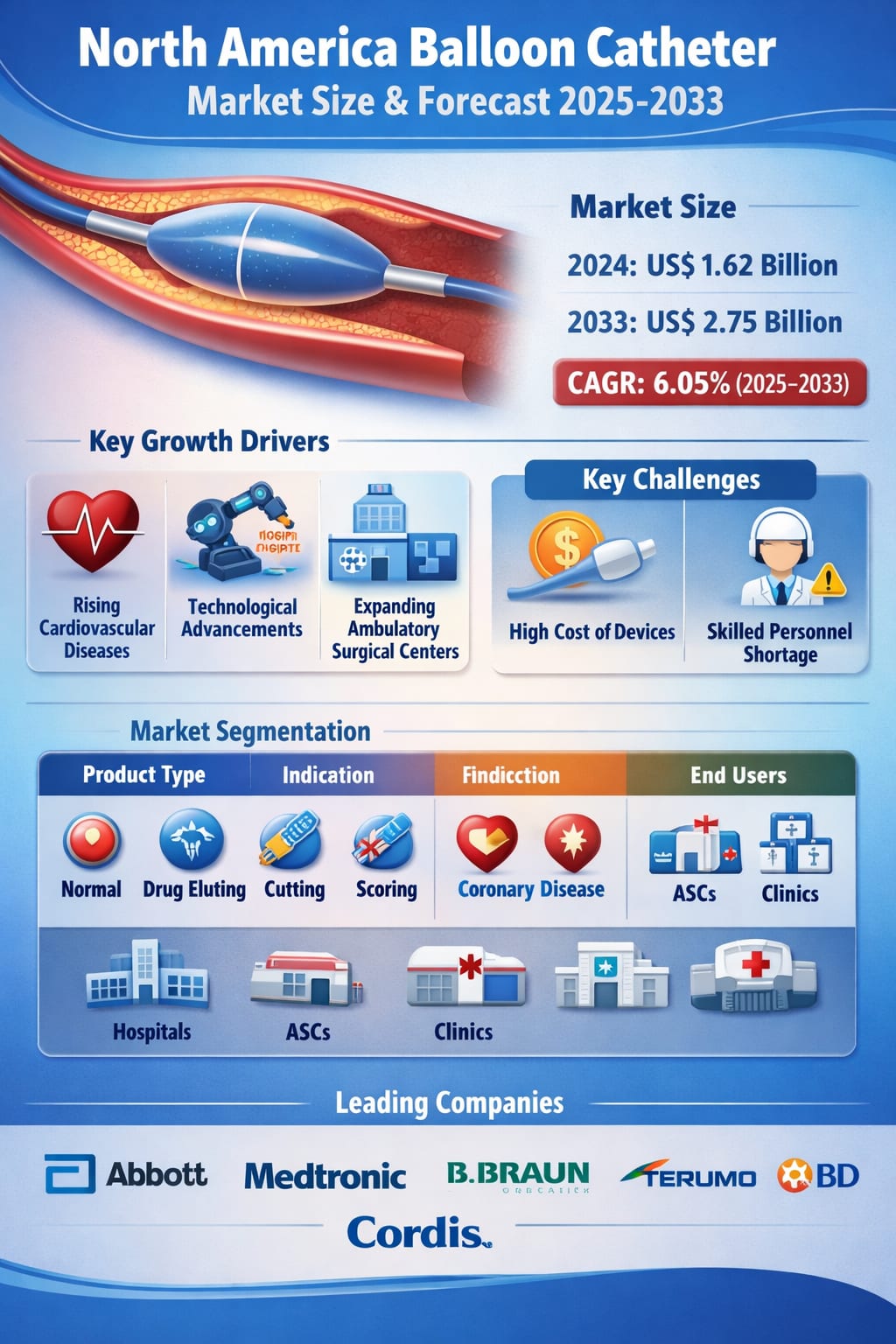
The North America Balloon Catheter Market is entering a decisive growth phase, driven by the rising burden of cardiovascular diseases, rapid technological innovation, and a healthcare system increasingly focused on minimally invasive procedures. According to Renub Research, the market is expected to reach US$ 2.75 billion by 2033, up from US$ 1.62 billion in 2024, growing at a CAGR of 6.05% from 2025 to 2033.
This steady expansion reflects more than just numbers—it signals a broader transformation in how cardiovascular and peripheral vascular diseases are diagnosed and treated. Balloon catheters, once considered a niche interventional tool, are now central to procedures such as angioplasty, enabling physicians to restore blood flow in blocked or narrowed arteries with greater precision, safety, and efficiency.
Across the United States, Canada, and Mexico, healthcare systems are under mounting pressure from aging populations, lifestyle-related diseases, and the need to deliver cost-effective care. In this environment, balloon catheter technologies—ranging from conventional models to drug-eluting and scoring variants—are becoming indispensable in modern interventional cardiology and vascular medicine.
Understanding Balloon Catheters and Their Clinical Importance
Balloon catheters are specialized medical devices used primarily in angioplasty procedures to open narrowed or blocked blood vessels. The device consists of a thin, flexible tube with a small inflatable balloon at its tip. When positioned at the site of a blockage, the balloon is inflated to compress plaque against the artery wall, improving blood flow.
Over the years, the technology has evolved significantly. Today’s market includes normal balloon catheters, drug-eluting balloon catheters, cutting balloons, scoring balloons, and stent graft balloon catheters, each designed for specific clinical needs and patient profiles. These innovations have expanded the role of balloon catheters beyond coronary interventions into peripheral vascular disease treatment and other complex procedures.
What makes balloon catheters especially valuable is their role in minimally invasive medicine. Compared to traditional open surgeries, catheter-based interventions typically involve shorter hospital stays, reduced complications, faster recovery times, and lower overall healthcare costs—benefits that resonate strongly with both patients and healthcare providers across North America.
Market Outlook: Growth Anchored in Strong Fundamentals
The projected growth of the North America balloon catheter market is rooted in powerful structural trends. Cardiovascular disease remains one of the leading causes of mortality and morbidity in the region, particularly in the United States, where heart disease continues to claim a life every few dozen seconds.
As the population ages and risk factors such as obesity, diabetes, and hypertension become more prevalent, the demand for interventional procedures is rising steadily. Angioplasty and related catheter-based treatments are now routine in many hospitals and ambulatory surgical centers, reinforcing the long-term demand for advanced balloon catheter technologies.
At the same time, healthcare systems are investing heavily in modernizing infrastructure, improving access to care, and expanding outpatient treatment capabilities. These developments create a favorable environment for continued adoption of balloon catheters across a wide range of clinical settings.
Key Growth Drivers Shaping the Market
Rising Prevalence of Cardiovascular Diseases
One of the most significant drivers of market growth is the increasing incidence of cardiovascular diseases, including coronary artery disease (CAD) and peripheral vascular disease (PVD). Aging populations, sedentary lifestyles, unhealthy diets, and higher rates of diabetes and hypertension are contributing to a growing pool of patients requiring interventional treatment.
Balloon catheters play a central role in angioplasty procedures, which remain one of the most common and effective ways to manage arterial blockages. As the patient population expands, so does the need for reliable, efficient, and increasingly specialized balloon catheter devices.
Advancements in Medical Technology
Technological innovation is another powerful growth engine. The development of drug-eluting balloon catheters, for example, represents a major step forward in reducing restenosis—the re-narrowing of arteries after treatment. Similarly, cutting and scoring balloons are improving outcomes in complex or heavily calcified lesions.
These innovations not only enhance clinical effectiveness but also build confidence among physicians, encouraging wider adoption of advanced catheter-based techniques across hospitals and specialty clinics.
Expansion of Ambulatory Surgical Centers (ASCs)
The rapid growth of ambulatory surgical centers across North America is reshaping how many interventional procedures are delivered. ASCs offer a cost-effective, efficient alternative to traditional hospital settings, particularly for minimally invasive procedures like angioplasty.
With shorter patient stays, streamlined workflows, and lower operational costs, ASCs are increasingly becoming preferred venues for catheter-based interventions. This shift is directly boosting demand for balloon catheters tailored to outpatient and same-day procedures.
Strong Healthcare Infrastructure in North America
North America benefits from a highly developed healthcare ecosystem, featuring advanced hospitals, specialized cardiac centers, skilled interventional specialists, and robust reimbursement frameworks. This infrastructure supports rapid adoption of new medical technologies and ensures that balloon catheter-based procedures are widely accessible to patients across the region.
Challenges That Could Restrain Market Expansion
High Cost of Advanced Devices
Despite their clinical benefits, advanced balloon catheters—especially drug-eluting and specialty variants—come with higher price tags. For smaller hospitals, outpatient clinics, and cost-sensitive healthcare systems, these expenses can be a significant barrier to adoption.
In some cases, budget constraints may push providers toward more traditional or lower-cost alternatives, potentially slowing the uptake of next-generation catheter technologies despite their superior outcomes.
Complex Procedures and Skill Requirements
Angioplasty and other catheter-based interventions require highly trained specialists and precise technical execution. The need for specialized training and experience can limit the availability of these procedures in rural or under-resourced areas.
This skills gap not only affects patient access but can also slow market penetration in certain regions, particularly where healthcare infrastructure is still developing or where specialist shortages persist.
Country-Level Insights
United States: The Regional Market Leader
The United States dominates the North America balloon catheter market, driven by a high prevalence of cardiovascular diseases, advanced healthcare infrastructure, and strong adoption of minimally invasive procedures.
The country’s well-established network of hospitals, cardiac centers, and ambulatory surgical facilities ensures consistent demand for balloon catheters. Moreover, continuous innovation, favorable reimbursement policies, and high levels of clinical expertise support sustained market growth despite challenges such as regulatory complexity and device costs.
Canada: Steady Growth Backed by Strong Healthcare Systems
Canada’s balloon catheter market is expanding at a steady pace, supported by a robust public healthcare system and increasing focus on minimally invasive treatments. Rising awareness of cardiovascular health, combined with technological advancements and expanding outpatient care facilities, is driving demand for catheter-based interventions.
While cost considerations and regulatory processes remain important factors, the overall outlook for the Canadian market remains positive over the forecast period.
Mexico: Emerging Opportunities in a Growing Healthcare Landscape
Mexico represents a growing market within North America, fueled by improving healthcare infrastructure, rising cardiovascular disease prevalence, and increasing adoption of modern interventional techniques.
The expansion of private healthcare facilities and ambulatory surgical centers is creating new opportunities for balloon catheter manufacturers, even as challenges related to affordability and regulatory complexity continue to shape market dynamics.
Market Segmentation: A Diverse and Evolving Landscape
The North America balloon catheter market is segmented across multiple dimensions, reflecting the diversity of clinical applications and healthcare settings:
By Product Type:
Normal Balloon Catheter
Drug Eluting Balloon Catheter
Cutting Balloon Catheter
Scoring Balloon Catheter
Stent Graft Balloon Catheter
Others
By Indication:
Coronary Artery Disease
Peripheral Vascular Disease
By Raw Material:
Polyurethane
Nylon
Others
By End Users:
Hospitals
Clinics
Ambulatory Surgical Centers
Diagnostic Centers
By Country:
United States
Canada
Mexico
Rest of North America
This broad segmentation highlights how balloon catheters are being tailored to meet specific clinical needs, procedural settings, and patient populations across the region.
Competitive Landscape: Innovation and Strategic Positioning
The North America balloon catheter market is highly competitive, with leading players focusing on product innovation, strategic partnerships, and global expansion. Key companies operating in this space include:
Abbott Laboratories
Medtronic Plc.
B. Braun Melsungen AG
Terumo Corporation
Cordis Corporation
Becton, Dickinson and Company
Cardinal Health
Stryker Corporation
These companies are continuously investing in research and development to improve device performance, safety, and clinical outcomes. From next-generation drug-coated balloons to more durable and flexible materials, innovation remains a central pillar of competitive strategy in this market.
The Road Ahead: Where the Market Is Headed
Looking ahead to 2033, the North America balloon catheter market is poised for sustained and meaningful growth. The convergence of demographic trends, technological progress, and healthcare system transformation will continue to create strong demand for minimally invasive cardiovascular and vascular interventions.
As more procedures shift to outpatient settings and as device technologies become more refined, balloon catheters will remain a cornerstone of interventional medicine. At the same time, manufacturers and healthcare providers will need to navigate challenges related to cost, training, and regulatory compliance to fully unlock the market’s potential.
Final Thoughts
The North America Balloon Catheter Market stands at the intersection of medical necessity and technological innovation. With the market projected to grow from US$ 1.62 billion in 2024 to US$ 2.75 billion by 2033 at a CAGR of 6.05%, the outlook reflects both the urgency of addressing cardiovascular disease and the confidence in minimally invasive solutions.
While challenges such as high device costs and skill requirements remain, the broader trajectory is clear: balloon catheters will continue to play a critical role in shaping the future of interventional cardiology and vascular care across North America. For healthcare providers, policymakers, and medical device companies alike, this market represents not just a growth opportunity—but a vital pathway toward better patient outcomes and more efficient healthcare delivery.
About the Creator
GCC Catheter Market Trends & Summary: A High-Growth Healthcare Story Shaping the Region’s Medical Future
The Big Picture: A Market on a Strong Growth Trajectory The Gulf Cooperation Council (GCC) catheter market is entering a decisive phase of expansion, driven by structural changes in healthcare delivery, demographic shifts, and the region’s aggressive investment in modern medical infrastructure. According to Renub Research, the GCC catheter market was valued at USD 579.83 million in 2024 and is projected to reach USD 1,281.33 million by 2033, growing at a robust compound annual growth rate (CAGR) of 9.21% from 2025 to 2033.
By Sakshi Sharmaabout 9 hours ago in Trader
Global Ready to Drink Tea and Coffee Market Size and Forecast 2025–2033
The Rise of Ready-to-Drink Beverages in a Fast-Moving World The global beverage industry is in the middle of a quiet but powerful transformation. Consumers no longer want to wait in line for a coffee or brew a cup of tea at home when life is moving faster than ever. Instead, they are reaching for bottles, cans, and cartons that deliver the same experience instantly. This shift has propelled the Ready to Drink (RTD) Tea and Coffee Market into one of the most dynamic segments of the global drinks industry.
By shibansh kumar3 days ago in Trader



Comments
There are no comments for this story
Be the first to respond and start the conversation.