
GCC Catheter Market Trends & Summary: A High-Growth Healthcare Story Shaping the Region’s Medical Future
Rising chronic diseases, expanding hospital infrastructure, and the shift toward minimally invasive procedures are pushing the GCC catheter market into a new era of innovation and demand.

The Big Picture: A Market on a Strong Growth Trajectory
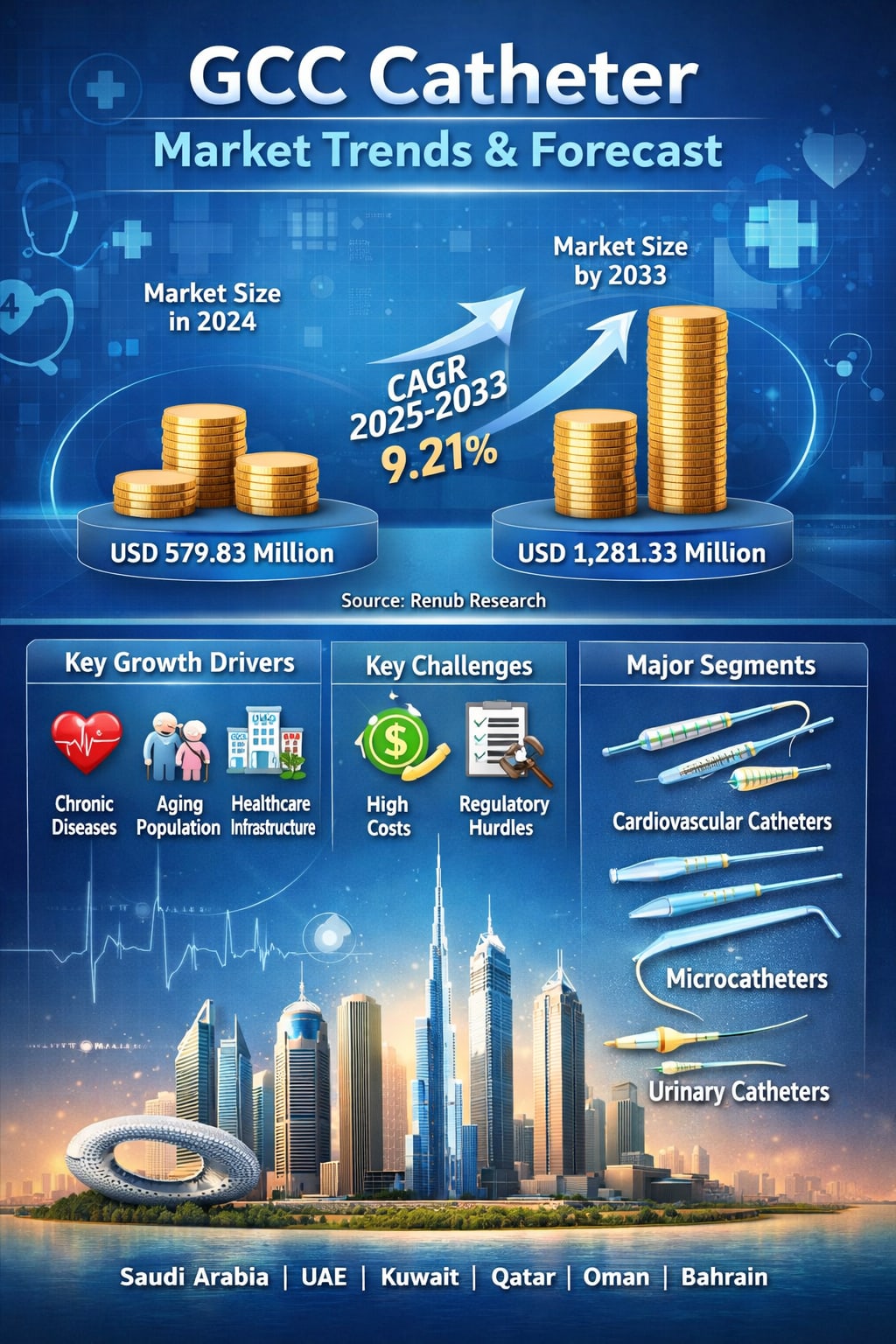
The Gulf Cooperation Council (GCC) catheter market is entering a decisive phase of expansion, driven by structural changes in healthcare delivery, demographic shifts, and the region’s aggressive investment in modern medical infrastructure. According to Renub Research, the GCC catheter market was valued at USD 579.83 million in 2024 and is projected to reach USD 1,281.33 million by 2033, growing at a robust compound annual growth rate (CAGR) of 9.21% from 2025 to 2033.
This growth story is not happening in isolation. It reflects broader transformations underway across Saudi Arabia, the United Arab Emirates, Kuwait, Qatar, Oman, Bahrain, and the rest of the GCC—where healthcare systems are being redesigned to meet the demands of aging populations, rising chronic disease burdens, and increasing patient expectations for safer, faster, and less invasive treatments.
Catheters, though often invisible to the public eye, sit at the heart of this transformation. They are essential tools in modern medicine, used for everything from cardiovascular interventions and neurovascular procedures to urinary care, dialysis, and routine hospital treatments. As the GCC healthcare ecosystem matures, the role of catheter-based technologies is becoming more strategic than ever.
What Is a Catheter and Why It Matters So Much Today?
A catheter is a thin, flexible medical tube used to deliver fluids, medications, or gases into the body, or to remove bodily fluids such as urine. In contemporary healthcare, catheters are indispensable across a wide range of applications—cardiology, neurology, urology, oncology, critical care, and post-operative management, to name just a few.
From urinary catheters used in long-term patient care to cardiovascular and neurovascular catheters that enable life-saving minimally invasive procedures, these devices are foundational to both routine and highly specialized medical interventions. Their growing importance in the GCC reflects a healthcare system that is increasingly focused on precision, efficiency, and patient safety.
In the Gulf region, the demand for catheterization is rising steadily due to the increasing prevalence of lifestyle-related disorders such as diabetes, kidney disease, and cardiovascular conditions. At the same time, an aging population and rapid expansion of high-quality hospitals and specialty centers are accelerating the adoption of catheter-based procedures. Governments are investing heavily in healthcare modernization, while private providers are embracing advanced medical technologies—making catheters a critical component of both acute and long-term patient management.
Key Growth Drivers Shaping the GCC Catheter Market
1. Rising Burden of Chronic Diseases and an Aging Population
One of the most powerful forces behind the market’s growth is the increasing prevalence of chronic conditions such as cardiovascular disease, diabetes, and renal disorders across the GCC. These illnesses often require repeated diagnostic and therapeutic interventions, many of which rely on catheter-based technologies.
The region is also experiencing a gradual but steady demographic shift toward an older population. Older adults are more likely to need long-term medical care, including catheterization for urinary management, cardiovascular monitoring, and dialysis-related procedures. This combination of chronic disease prevalence and population aging is creating sustained, long-term demand for a wide range of catheter types.
Cardiovascular disease, in particular, remains a major concern in the Middle East, accounting for a significant share of overall mortality. As interventional cardiology becomes more common, the use of advanced cardiovascular catheters is expected to rise in parallel.
2. Rapid Expansion of Healthcare Infrastructure
Healthcare infrastructure development is a cornerstone of growth in the GCC catheter market. Countries such as Saudi Arabia and the UAE are executing ambitious national healthcare strategies—most notably Saudi Arabia’s Vision 2030—which aim to expand access, improve quality, and modernize medical services.
New hospitals, specialty clinics, and diagnostic centers are being built across the region, often equipped with state-of-the-art technology. These facilities are more likely to adopt catheter-based, minimally invasive procedures as standard practice, which naturally increases demand for a wide range of catheter products.
Private sector participation is also playing a growing role, with investments flowing into specialized care centers, day surgery units, and advanced diagnostic facilities. All of these settings depend heavily on reliable, high-quality catheter systems.
3. Technological Innovation and the Shift Toward Minimally Invasive Care
The global healthcare industry is moving steadily toward minimally invasive procedures, and the GCC is very much part of this trend. Advances in catheter design—such as improved flexibility, better coatings, enhanced imaging compatibility, and drug-eluting technologies—are making procedures safer, faster, and more comfortable for patients.
Minimally invasive approaches typically result in shorter hospital stays, lower infection risks, reduced recovery times, and better overall patient outcomes. These advantages are driving both clinicians and patients to prefer catheter-based interventions whenever possible.
Recent product approvals and launches in the region highlight how quickly innovation is being adopted. The introduction of new balloon catheters, peripheral stent systems, and drug-eluting technologies underscores the market’s shift toward higher-value, more sophisticated devices.
Challenges That Could Temper Market Growth
High Cost of Advanced Catheterization Procedures
While advanced catheter technologies offer clear clinical benefits, their high cost can be a barrier—particularly for smaller healthcare facilities or budget-constrained systems. Not every hospital or clinic can immediately afford the latest equipment, which may slow adoption in certain segments of the market.
Cost pressures can also influence procurement decisions, pushing some providers to rely on older or more basic technologies rather than upgrading to premium solutions. Over time, however, as volumes increase and technologies mature, pricing pressures may ease.
Regulatory Complexity and Compliance Requirements
The regulatory environment across the GCC is diverse, with each country maintaining its own approval processes and compliance standards. For manufacturers, navigating these different systems can be time-consuming and expensive, sometimes delaying product launches or limiting market access.
While regulatory oversight is essential for patient safety, complexity and variability can create friction in the market, particularly for smaller or newer players trying to establish a regional presence.
Spotlight on Key Market Segments
Cardiovascular Catheters: The Fast-Growing Core
The cardiovascular catheter segment is one of the most dynamic areas of the GCC market. Rising rates of heart disease, combined with the growing use of interventional cardiology procedures, are driving strong demand for both diagnostic and therapeutic catheters.
Innovations such as drug-eluting and bioresorbable technologies are improving treatment outcomes and expanding the scope of catheter-based cardiac interventions. As hospitals continue to invest in cath labs and cardiac care units, this segment is expected to remain a primary growth engine.
Microcatheters: Precision Tools for Complex Interventions
Microcatheters are gaining importance in neurovascular and peripheral vascular procedures, where precision and flexibility are critical. The increasing incidence of conditions such as aneurysms and peripheral artery disease in the GCC is fueling demand for these highly specialized devices.
Their ability to navigate complex vascular pathways makes microcatheters indispensable in advanced interventions, reinforcing their strategic role in the region’s evolving healthcare landscape.
Intermittent Catheters: Comfort and Infection Control
Intermittent catheters are becoming more popular due to their convenience and lower risk of infection compared to indwelling options. They are widely used in patients with urinary retention or neurogenic bladder conditions and are increasingly favored in home care settings.
As patient-centric care models gain traction in the GCC, demand for these user-friendly solutions is expected to continue rising.
Short PIVC Catheters: Everyday Essentials in Clinical Care
Short Peripheral Intravenous Catheters (PIVCs) are among the most commonly used devices in hospitals and outpatient settings. Their ease of insertion and relatively low complication rates make them a staple for drug and fluid administration.
Growing hospitalization rates, expanding outpatient services, and higher surgical volumes are all contributing to steady demand in this segment.
End-User Landscape: Hospitals at the Center
Hospitals remain the dominant end users of catheters in the GCC, given the sheer volume of surgical, diagnostic, and therapeutic procedures they perform. The concentration of advanced medical services in hospital settings ensures consistent, high-volume demand across nearly all catheter categories.
At the same time, ambulatory surgical centers and diagnostic imaging centers are playing a growing role, particularly as healthcare systems seek to shift appropriate procedures away from inpatient settings to more cost-effective, outpatient environments.
Country-Level Insights
Saudi Arabia: The Regional Powerhouse
Saudi Arabia represents the largest share of the GCC catheter market, supported by its population size and massive investments in healthcare infrastructure. Vision 2030 is driving the construction and modernization of hospitals and specialty centers across the Kingdom, creating strong demand for advanced medical devices, including catheters.
With plans to establish hundreds of new healthcare facilities and allocate substantial budgets to healthcare modernization, Saudi Arabia is set to remain the region’s most influential market for catheter technologies.
United Arab Emirates: Innovation and Medical Tourism
The UAE’s catheter market is benefiting from a well-developed healthcare system and a strong focus on medical tourism. The country’s emphasis on advanced technology, high-quality care, and minimally invasive procedures is accelerating the adoption of next-generation catheter solutions.
Strategic investments in healthcare infrastructure and innovation-friendly policies continue to position the UAE as a regional hub for advanced medical treatments.
Kuwait and the Wider GCC
Kuwait’s market is growing steadily, driven by rising lifestyle diseases and government efforts to improve healthcare services. Similar trends are visible across Qatar, Oman, Bahrain, and the rest of the GCC, where expanding healthcare capacity and higher standards of care are supporting long-term market growth.
Competitive Landscape: Global Leaders in Focus
The GCC catheter market features a strong presence of leading global medical device companies, including:
Abbott Laboratories
Edwards Lifesciences Corp
Becton Dickinson and Company
Boston Scientific Corporation
Medtronic Plc
Johnson & Johnson
Stryker Corporation
Teleflex Inc.
These companies compete on the basis of product innovation, clinical performance, regulatory approvals, and strategic partnerships with healthcare providers across the region.
Final Thoughts: A Market Aligned with the Future of GCC Healthcare
The GCC catheter market’s journey from USD 579.83 million in 2024 to an expected USD 1,281.33 million by 2033 is more than just a story of numbers. It reflects a deeper transformation in how healthcare is delivered across the Gulf—toward more advanced, more efficient, and more patient-centered care.
Driven by chronic disease trends, infrastructure investment, and the rise of minimally invasive procedures, catheters are set to remain a cornerstone of the region’s medical technology ecosystem. While challenges such as cost pressures and regulatory complexity persist, the overall direction is clear: the GCC is building a healthcare system where precision tools like catheters play a central role in improving outcomes and quality of life.
About the Creator
Sakshi Sharma
Content Writer with 7+ years of experience crafting SEO-driven blogs, web copy & research reports. Skilled in creating engaging, audience-focused content across diverse industries.
Keep reading
More stories from Sakshi Sharma and writers in Trader and other communities.
North America Automotive Paint Market Size and Forecast 2025–2033
Introduction: A Market That Colors the Future of Mobility The automotive industry has always been about more than just engines and performance. Design, durability, and visual identity play a crucial role in how vehicles are perceived—and at the heart of that identity lies automotive paint. From glossy showroom finishes to durable protective coatings, automotive paints are no longer just about aesthetics; they are now central to performance, sustainability, and brand differentiation.
By Sakshi Sharmaabout 11 hours ago in Trader



Comments
There are no comments for this story
Be the first to respond and start the conversation.