
Europe Breakfast Cereals Market Size and Forecast 2025–2033
Health Trends, Product Innovation, and Changing Lifestyles Are Reshaping Europe’s Morning Bowl

Europe Breakfast Cereals Market: A Changing Morning Ritual
The breakfast table in Europe is quietly transforming. Once dominated by traditional bread, spreads, and simple cereals, today’s morning routine reflects a broader shift in lifestyle, health awareness, and consumer expectations. Breakfast cereals, long valued for their convenience and nutritional appeal, are now being reimagined to meet modern demands for healthier, cleaner, and more specialized food choices.
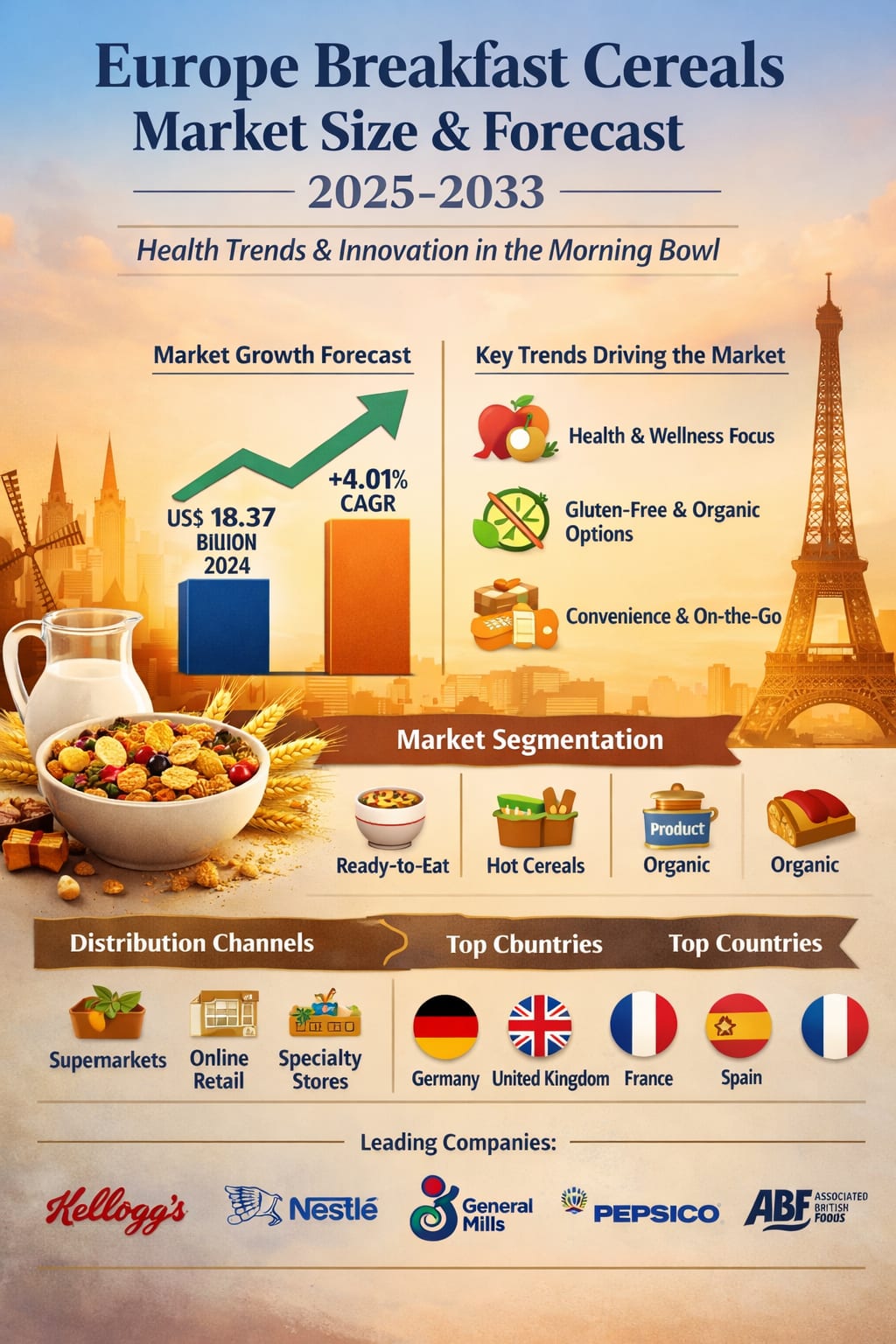
According to Renub Research, the Europe Breakfast Cereals Market is expected to reach US$ 26.18 billion by 2033, rising from US$ 18.37 billion in 2024, growing at a compound annual growth rate (CAGR) of 4.01% from 2025 to 2033. This steady expansion highlights how cereals continue to hold a strong place in European diets, even as competition from alternative breakfast options increases.
The primary force behind this growth is innovation. Major manufacturers are increasingly launching gluten-free, keto-friendly, organic, and clean-label cereal variants to attract health-conscious consumers. These new products are not just about taste or convenience anymore; they are positioned as functional foods that support digestion, weight management, and overall wellness.
Understanding Breakfast Cereals: More Than Just Convenience
Breakfast cereals are processed grain-based foods commonly consumed with milk, yogurt, or fruits. They come in both ready-to-eat and ready-to-cook formats and are typically made from grains such as wheat, oats, corn, rice, and barley. Over the years, cereals have evolved from simple, sugar-heavy products into more nutritionally balanced offerings.
Modern breakfast cereals are often enriched with vitamins, minerals, dietary fiber, proteins, and essential carbohydrates. Their nutritional profile supports digestive health, helps regulate blood sugar levels, and contributes to sustained energy throughout the day. Many products are now marketed for their potential role in reducing the risk of lifestyle-related conditions such as obesity, diabetes, and cardiovascular diseases.
What makes cereals particularly attractive in Europe is their versatility. From traditional muesli and granola to high-protein flakes and organic whole-grain blends, there is a product for nearly every dietary preference and age group. This adaptability has helped cereals remain relevant in a fast-changing food landscape.
Key Growth Drivers Shaping the European Market
1. Health and Wellness at the Center Stage
Health and wellness trends are arguably the most powerful drivers of growth in the European breakfast cereals market. Consumers today are far more informed about nutrition than they were a decade ago. Ingredient lists are scrutinized, sugar content is questioned, and claims related to fiber, protein, and whole grains strongly influence purchasing decisions.
As a result, cereals that are low in sugar, high in fiber, and fortified with essential nutrients are seeing rising demand. Whole-grain cereals, in particular, are gaining popularity due to their association with better digestion and long-term health benefits. The inclusion of superfoods such as chia seeds, flaxseeds, quinoa, and nuts is also becoming more common, catering to consumers looking for nutrient-dense breakfast options.
This shift aligns with the broader European trend toward clean-label, natural, and functional foods, where consumers prefer products that are simple, transparent, and minimally processed.
2. Convenience and On-the-Go Lifestyles
Modern European lifestyles are increasingly fast-paced. With longer working hours, busy school schedules, and urban commuting, many consumers prioritize quick and easy meal solutions, especially in the morning. Breakfast cereals fit perfectly into this routine.
Ready-to-eat cereals, single-serve packs, portion-controlled bowls, and instant hot cereal cups are becoming staples in many households. These products offer a time-saving solution without compromising too much on nutrition. Additionally, portable formats such as cereal bars and granola packs are gaining traction among students and working professionals who prefer to eat on the move.
This trend reflects a broader consumer shift toward functional convenience—foods that are not only easy to consume but also provide sustained energy and health benefits.
3. Cultural Influences and Regional Preferences
Europe is not a single, uniform market. Each country has its own food culture, dietary habits, and taste preferences, which significantly influence cereal consumption patterns.
In Germany, consumers tend to favor whole-grain and high-fiber cereals, reflecting a strong focus on digestive health and natural nutrition.
In France, traditional options like muesli and granola remain popular, aligning with a cultural preference for natural ingredients and balanced meals.
In the United Kingdom, there is strong demand for both convenient and healthier cereal options, ranging from classic flakes to protein-enriched and low-sugar variants.
These regional differences push manufacturers to localize their product strategies, tailoring flavors, formulations, and marketing messages to suit national tastes and dietary trends.
Challenges Facing the Europe Breakfast Cereals Market
Growing Competition from Alternative Breakfast Options
One of the biggest challenges for the traditional cereal segment is the rise of alternative breakfast choices. Smoothies, yogurt bowls, protein bars, plant-based snacks, and ready-to-drink shakes are increasingly competing for the same consumer attention.
Many of these alternatives are marketed as high-protein, dairy-free, or more “natural”, which resonates strongly with younger consumers and fitness-focused individuals. They also often fit better into on-the-go lifestyles, reducing reliance on conventional boxed cereals.
This shift is forcing cereal manufacturers to rethink their product portfolios, focusing more on innovation, functionality, and modern consumption formats.
Rising Concerns Over Sugar Content
Sugar content remains a sensitive issue in the breakfast cereals category, especially for products targeted at children. Public health campaigns and stricter nutritional guidelines across Europe have increased awareness about the risks of excessive sugar consumption.
As a result, many consumers are turning away from traditionally sweetened cereals and opting for low-sugar muesli, plain oats, or alternative breakfast foods. This trend has put pressure on established brands to reformulate their products, reduce sugar levels, and improve transparency in labeling.
While this reformulation is necessary for long-term credibility, it also presents challenges in maintaining taste, texture, and consumer acceptance.
Country-Level Market Insights
France
The French breakfast cereals market is evolving in line with changing lifestyle and dietary preferences. Consumers are increasingly drawn to low-sugar, high-fiber, and clean-label products. Traditional favorites such as muesli and granola continue to perform well, supported by France’s cultural preference for natural and balanced foods. There is also growing interest in plant-based, gluten-free, and organic cereals, reflecting broader sustainability and wellness trends.
United Kingdom
The UK market is undergoing a noticeable transformation. Health-conscious consumers are driving demand for low-sugar, high-protein, and clean-label cereals. At the same time, convenience remains critical, boosting sales of porridge pots, breakfast bars, and ready-to-eat options. Inflation and cost pressures have also influenced buying behavior, leading some consumers to shift toward private-label and value-for-money products.
Germany
Germany’s breakfast cereals market is shaped by a strong focus on health, whole grains, and functional nutrition. Consumers show high interest in cereals enriched with superfoods and essential nutrients. Busy urban lifestyles are also encouraging demand for single-serve and easy-to-prepare cereal options. Overall, the German market reflects a balanced mix of health awareness and convenience-driven consumption.
Spain
In Spain, the market is expanding steadily as consumers become more health-conscious. There is rising demand for whole-grain, low-sugar, and fortified cereals, along with products that include superfoods. Similar to other European countries, busy lifestyles are driving interest in ready-to-eat and portable breakfast solutions, supporting consistent market growth.
Market Segmentation Overview
By Product Type:
Ready-to-eat
Hot cereals
Nature
Conventional
Organic
By Distribution Channel:
Supermarkets/Hypermarkets
Specialty Stores
Online Retail
Others
By Country:
France, Germany, Italy, Spain, United Kingdom, Belgium, Netherlands, Russia, Poland, Greece, Norway, Romania, Portugal, and Rest of Europe
Competitive Landscape: Major Players Driving Innovation
The European breakfast cereals market is highly competitive, with global and regional players investing heavily in product innovation, reformulation, and branding. Key companies covered in the market include:
General Mills, Inc.
PepsiCo, Inc.
Nestlé S.A.
Kellogg Company
Calbee, Inc.
Post Holdings, Inc.
Migros
Associated British Foods plc.
These companies are focusing on health-oriented product lines, sustainable sourcing, eco-friendly packaging, and digital retail strategies to strengthen their market positions. Recent developments across the industry show a clear emphasis on meeting evolving consumer expectations around nutrition, transparency, and environmental responsibility.
The Road Ahead: What the Future Holds
Looking ahead to 2033, the European breakfast cereals market is set to continue its steady growth trajectory. The projected rise to US$ 26.18 billion reflects not just population growth or inflation, but a fundamental transformation of the category.
Cereals are no longer just a quick breakfast option—they are becoming personalized nutrition solutions, tailored to specific lifestyles, health goals, and dietary restrictions. The winners in this market will be brands that successfully balance taste, nutrition, convenience, and trust.
At the same time, competition from alternative breakfast formats will remain intense, pushing cereal manufacturers to innovate continuously. Those who adapt fastest to trends like low-sugar formulations, high-protein blends, plant-based ingredients, and sustainable practices will be best positioned to capture future growth.
Final Thoughts
The Europe Breakfast Cereals Market stands at an interesting crossroads. While traditional eating habits are changing and competition is intensifying, cereals continue to prove their relevance by evolving with consumer needs. Supported by strong health and wellness trends, product innovation, and growing demand for convenient yet nutritious food, the market is on track for steady expansion through 2033.
With Renub Research forecasting growth from US$ 18.37 billion in 2024 to US$ 26.18 billion by 2033, the message is clear: breakfast cereals are not just surviving—they are reinventing themselves for a new generation of European consumers.
About the Creator
Nifty 50 & Sensex: Little-Known Market Insights Every Investor Must Know
Nifty 50 & Sensex are the heartbeat of India’s stock market. Every time these indexes move, investors feel the impact. Understanding their patterns can help you make better investment decisions. If you know how Nifty 50 & Sensex behave, you can avoid common mistakes and spot opportunities early. Even beginners can benefit. Tracking Nifty 50 & Sensex gives insights into the economy and investor sentiment. In this article, we reveal little-known secrets of these indexes that most people overlook.
By John.doe798a day ago in Trader
Australia Electric Bus Market — Growth, Forecast & Strategic Outlook 2026–2034
The Australia electric bus market is emerging as a high-growth segment within the broader public transportation and sustainability landscape. According to IMARC Group, the market was valued at USD 38.5 million in 2025 and is projected to reach USD 368.7 million by 2034, expanding at a substantial compound annual growth rate (CAGR) of 29.48% during 2026–2034. This rapid growth reflects strong momentum in electrifying mass transit across major cities and regional networks.
By Rashi Sharmaa day ago in Trader
No Other Choice (2025)
It is only February, so other films may well surpass “No Other Choice”, but I think this is the best film I’ve seen so far this year. And that surprises me, because, it is a subtitled film and while I am pretentious enough to choose to watch foreign-language films, I was also very tired and that was an extra commitment from me. But more importantly, let me warn you, this film is gruesome and violent. There were times I had to turn away from the screen to avoid the worst of it (including some self-inflicted dentistry).
By Rachel Robbins2 days ago in Geeks




Comments
There are no comments for this story
Be the first to respond and start the conversation.