
Global Ready to Drink Tea and Coffee Market Size and Forecast 2025–2033
From Café Culture to Cans: How Convenience, Flavor Innovation, and Health Trends Are Brewing a US$ 211 Billion Market

The Rise of Ready-to-Drink Beverages in a Fast-Moving World
The global beverage industry is in the middle of a quiet but powerful transformation. Consumers no longer want to wait in line for a coffee or brew a cup of tea at home when life is moving faster than ever. Instead, they are reaching for bottles, cans, and cartons that deliver the same experience instantly. This shift has propelled the Ready to Drink (RTD) Tea and Coffee Market into one of the most dynamic segments of the global drinks industry.
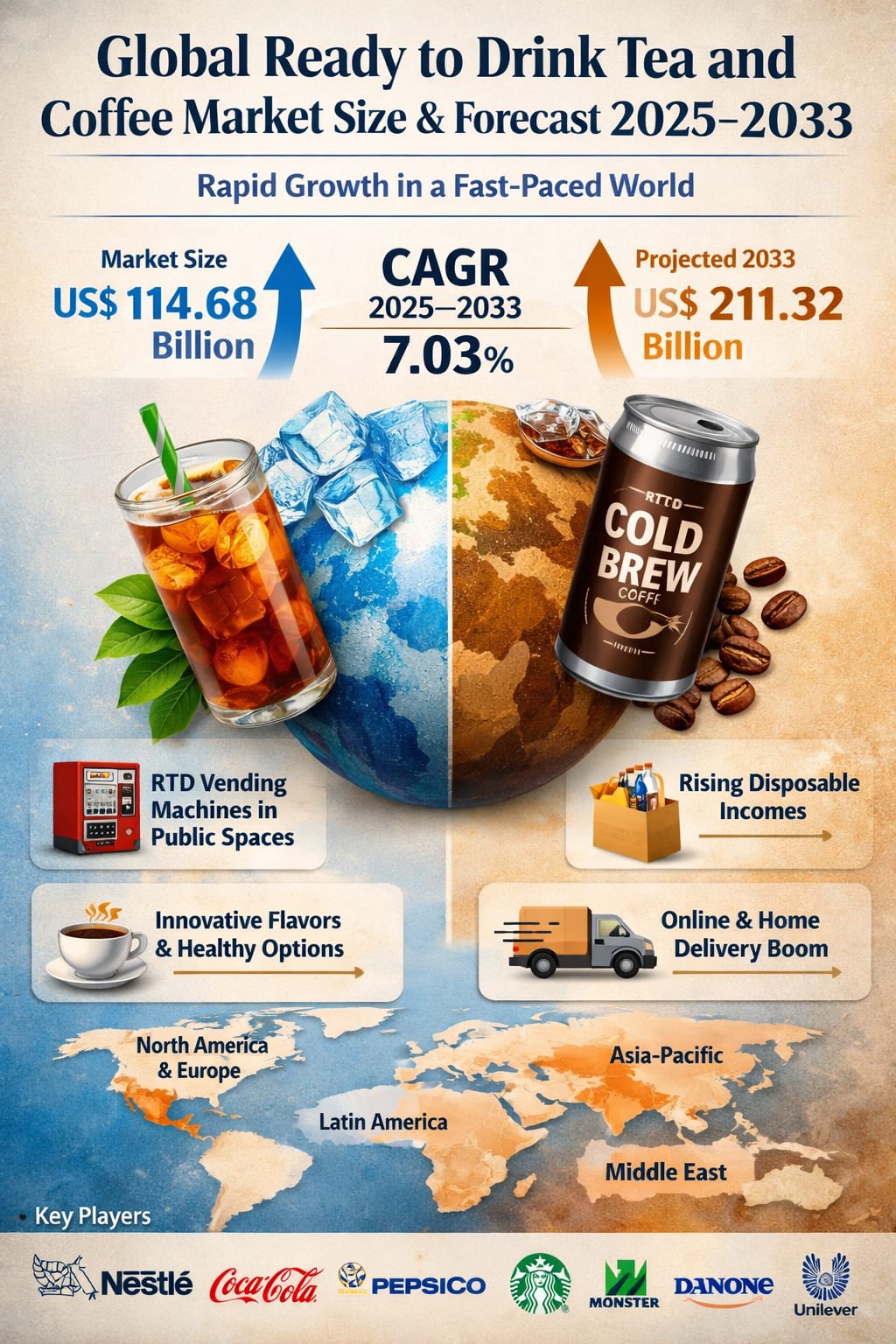
According to Renub Research, the Ready to Drink Tea and Coffee Market is expected to reach US$ 211.32 billion by 2033, up from US$ 114.68 billion in 2024, growing at a CAGR of 7.03% from 2025 to 2033. This impressive growth trajectory reflects not only changing lifestyles but also deeper shifts in consumer preferences toward convenience, health-conscious choices, and flavor innovation.
Ready-to-drink tea and coffee refer to pre-prepared beverages that are packaged and sold in a form that requires no additional preparation. From bottled iced teas and canned cold brews to flavored lattes and functional tea infusions, these products are designed for people who want quality, taste, and energy on the go.
Why RTD Tea and Coffee Are Winning Over Consumers
The popularity of RTD beverages is rooted in modern living. Urbanization, longer working hours, and increasingly mobile lifestyles have changed how people consume food and drinks. Traditional brewing methods, while still valued, are often replaced during busy days by quick, portable alternatives.
RTD tea offers refreshing options across black, green, white, and herbal varieties, often enhanced with fruit flavors or functional ingredients. RTD coffee, on the other hand, spans a wide spectrum—from classic iced coffee and lattes to cold brews and specialty blends—delivering caffeine and flavor without the need for barista skills or equipment.
Another important factor is packaging. Single-serve bottles and cans not only preserve freshness but also fit perfectly into backpacks, office desks, gym bags, and car cup holders. This convenience has turned RTD beverages into everyday companions for commuters, students, office workers, and travelers.
Market Expansion Fueled by Retail and Commercial Spaces
The growth of the global RTD tea and coffee market is also closely tied to the expansion of commercial and retail spaces. Cafeterias, coffee shops, quick-service restaurants (QSRs), hotels, and convenience stores are increasingly stocking RTD options to meet consumer demand for quick, reliable refreshments.
In addition, the installation of RTD tea and coffee vending machines in high-traffic locations such as airports, hospitals, shopping malls, railway stations, schools, and gas stations has significantly boosted accessibility. These machines make it possible for consumers to grab a chilled coffee or tea within seconds, reinforcing the idea that convenience is now just as important as taste.
Brand collaborations, in-store promotions, and endorsement programs between beverage companies and retail chains are further strengthening market penetration and visibility across both developed and emerging economies.
Flavor Innovation and Marketing: The New Growth Engines
One of the most exciting aspects of the RTD tea and coffee market is the constant wave of flavor innovation. Manufacturers are moving far beyond basic tea and coffee profiles to attract adventurous consumers. Today’s shelves feature flavors such as matcha, hazelnut, mint, hibiscus, Thai iced tea, caramel, passion fruit, mango, kiwi green tea, peanut butter, and even melon-infused blends.
This diversity does more than just attract new customers—it keeps existing ones engaged and curious. Limited-edition flavors, seasonal launches, and region-specific recipes are becoming powerful tools for brand differentiation.
At the same time, marketing strategies have evolved. Social media campaigns, influencer partnerships, and celebrity endorsements are playing a major role in shaping brand perception, especially among younger consumers. Online retail channels and home delivery platforms have added another layer of convenience, offering wide product selections, flexible payment options, discounts, and fast shipping—all of which further support market growth.
Key Growth Drivers Shaping the Market
1. Growing Focus on Health and Wellbeing
Health consciousness is no longer a niche trend—it is mainstream. Consumers are actively reducing their intake of sugary carbonated drinks and seeking beverages that align with healthier lifestyles. RTD tea and coffee brands have responded by launching low-sugar, low-calorie, organic, and natural-ingredient-based options.
Green tea, herbal infusions, and specialty coffee variants are particularly popular due to their perceived antioxidant and wellness benefits. Many manufacturers are also adding functional ingredients such as vitamins, minerals, probiotics, and adaptogens, turning simple beverages into “functional drinks” that promise more than just refreshment or caffeine.
2. Diverse Taste Profiles and Premiumization
Variety is a powerful driver in the RTD segment. From classic flavors to exotic and indulgent combinations, the range continues to expand. This not only attracts new customers but also encourages repeat purchases as consumers explore different taste experiences.
The premiumization trend is also reshaping the market. Artisanal cold brews, single-origin coffee blends, and crafted tea infusions are positioning RTD beverages as premium lifestyle products rather than mere convenience items. Consumers are increasingly willing to pay more for quality, authenticity, and unique flavor stories.
3. Convenience and On-the-Go Lifestyles
Perhaps the strongest driver of all is convenience. With packed schedules and limited downtime, consumers want products that fit seamlessly into their routines. RTD tea and coffee deliver exactly that—no brewing, no waiting, no cleanup.
Whether it’s a canned cold brew before a workout or a bottled iced tea during a hectic workday, these beverages meet the modern demand for speed without compromising on taste or quality.
Challenges Facing the RTD Tea and Coffee Market
Price Fluctuations of Raw Materials
One of the major challenges in the RTD coffee segment is the volatility of coffee bean prices. Weather conditions, climate change, and rising agricultural input costs can significantly affect supply and pricing. According to the International Coffee Organization, coffee bean prices have experienced notable fluctuations in recent years, putting pressure on production costs.
Additionally, RTD coffee products are generally priced higher than traditional brewed coffee, which can limit adoption in price-sensitive markets.
Supply Chain and Logistics Issues
Sourcing high-quality tea leaves and coffee beans is increasingly complex, especially when geopolitical factors and climate conditions disrupt supply. On top of that, packaging costs, transportation expenses, and inventory management challenges can impact profitability and product availability.
These supply chain pressures make efficiency, diversification of sourcing, and strong logistics partnerships critical for long-term success.
Regional Outlook: A Market with Global Momentum
North America and Europe
North America and Europe currently dominate the global RTD tea and coffee market, driven by high consumer demand for convenience, premium products, and health-conscious options. Well-established retail networks and strong brand presence further support market growth in these regions.
Asia-Pacific
The Asia-Pacific region, particularly China and Japan, represents one of the most dynamic growth markets. Traditional tea culture, rising disposable incomes, and increasing adoption of Western-style coffee consumption are creating a fertile ground for RTD beverages.
Latin America and the Middle East
In Latin America and the Middle East, urbanization and changing lifestyles are fueling demand. As modern retail formats expand and consumer preferences evolve, RTD tea and coffee are gaining steady traction across these regions.
Country-Level Market Highlights
United States
The U.S. RTD tea and coffee market is growing rapidly, supported by strong demand for portable, functional, and low-sugar beverages. Health-conscious consumers are driving interest in organic and better-for-you options.
In December 2022, MatchaKo launched the first certified organic, vegan, and non-GMO RTD premium matcha beverage in the U.S., offering a lower-calorie alternative to traditional sugary drinks. With ceremonial-grade matcha sourced from Japan, this product reflects the broader trend toward premium and wellness-focused RTD beverages.
France
France’s RTD tea and coffee market is expanding steadily as consumers seek quality, convenience, and healthier beverage choices. The shift toward organic and low-sugar options is particularly noticeable.
In December 2023, Carrefour strengthened its retail presence by acquiring the Cora and Match brands, expanding its supermarket and hypermarket network across France. This move is expected to further boost the visibility and accessibility of RTD beverages.
In April 2023, Carrefour also expanded its partnership with Uber Eats, offering over 12,000 items—including RTD drinks—across multiple French cities, supporting the growing demand for convenient home delivery.
China
China’s RTD tea and coffee market is one of the fastest-growing globally, driven by urbanization, a rising middle class, and evolving consumer tastes. Younger consumers, in particular, are embracing coffee culture, fueling strong growth in RTD coffee.
In September 2021, Yum China and Lavazza announced a partnership to open 1,000 Lavazza cafés in China by 2025, including exclusive distribution of Lavazza’s RTD coffee products. In April 2021, Nestlé also invested in a new RTD coffee innovation center in China to develop products tailored to local preferences.
Saudi Arabia
Saudi Arabia’s RTD tea and coffee market is benefiting from a young population, urban lifestyles, and rising interest in premium and functional beverages. In May 2023, Starbucks introduced “Oleato,” a line blending Arabica coffee with extra virgin olive oil, highlighting the market’s appetite for innovation and premium experiences.
Market Segmentation Snapshot
By Product Category:
Tea
Coffee
By Packaging Type:
Glass Bottle
PET Bottle
Canned
Others
By Distribution Channel:
Supermarkets/Hypermarkets
Convenience Stores
Online
Others
Key Countries Covered:
Ready to Drink Tea Market:
China, India, Turkey, Japan, United Kingdom, Germany, United States, Indonesia, Egypt, Australia, Others
Ready to Drink Coffee Market:
United States, Brazil, France, Germany, Spain, Canada, Netherlands, Sweden, Finland, Denmark, Others
Competitive Landscape: Major Players in Focus
The global RTD tea and coffee market is highly competitive, with leading players focusing on innovation, branding, and distribution expansion. Key companies include:
Nestlé SA
The Coca-Cola Company
PepsiCo
Starbucks Corporation
Monster Beverage
Danone S.A.
Asahi Group Holdings
Unilever Plc
These companies are continuously investing in new product development, strategic partnerships, and geographic expansion to strengthen their market positions.
Final Thoughts: A Market Brewing with Opportunity
The global ready-to-drink tea and coffee market is no longer just about convenience—it is about lifestyle, health, and experience. With the market projected to grow from US$ 114.68 billion in 2024 to US$ 211.32 billion by 2033 at a CAGR of 7.03%, the opportunities for brands, retailers, and investors are substantial.
As consumers continue to prioritize speed, quality, and wellness, RTD tea and coffee will remain at the forefront of the global beverage revolution. The winners in this space will be those who can balance innovation with authenticity, convenience with quality, and global scale with local taste preferences.
About the Creator
Keep reading
More stories from shibansh kumar and writers in Trader and other communities.
Global LED Lighting Market Trends & Summary (2025–2033)
Global LED Lighting Market Overview The global LED lighting market is undergoing a powerful transformation, driven by the world’s accelerating shift toward energy efficiency, sustainability, and smart infrastructure. According to Renub Research, the LED Lighting Market is expected to grow from US$ 71.74 billion in 2024 to US$ 171.13 billion by 2033, registering a strong CAGR of 10.14% from 2025 to 2033. This impressive growth highlights how light-emitting diode (LED) technology has moved far beyond being a niche alternative and has become the global standard for modern lighting.
By shibansh kumara day ago in Trader



Comments
There are no comments for this story
Be the first to respond and start the conversation.