
Netflix's fourth-quarter 2025 earnings show strong revenue growth, as the Warner deal is imminent.
Investor uncertainty regarding Netflix's bold attempt to acquire Warner Bros. contrasts with the company's solid fundamentals, rising ad revenue, and steady subscriber momentum. Discovery resources

Netflix finished 2025 with a solid fourth-quarter performance, exceeding Wall Street's expectations and demonstrating the streaming giant's continued relevance in an entertainment industry that is changing quickly. But the spotlight on its latest earnings report was partly overshadowed by one of the most consequential strategic moves in the company’s history — its pursuit of Warner Bros. Discovery’s studio and streaming assets in a massive acquisition effort that’s captured investor attention and sparked both optimism and concern.
The streamer’s fourth-quarter revenue was expected to climb about 16.8% to roughly $11.97 billion, a continuation of the robust growth trend Netflix has exhibited over recent quarters, driven by a broader lineup of popular content and expanding monetization avenues. Adjusted earnings per share were also expected to rise, indicating operational strength despite the intensifying competitive landscape. Netflix’s earnings release arrived amid a critical moment for its stock, which had slipped roughly 15–30% since the mid-2025 peak.
Concerns regarding the company's strategic direction, particularly its efforts to acquire Warner Bros., were the primary cause of much of that volatility. Discovery, a deal that would give Netflix access to a vast content collection and iconic franchises, but also raise concerns about integration risk and debt. The question of whether the Q4 results could themselves help calm markets was a major topic of discussion among investors.
Analysts noted that the deal drama—not the numbers—may continue to be the primary factor moving the stock in the short term, despite revenue growth remaining in line with expectations and highlighting Netflix's ability to attract viewers and monetize content. Wedbush Securities managing director Joel Kulina warned that "deal drama is likely to drag out for way too long" despite the financials highlighting the core business's underlying health. Netflix's shifting monetization strategy was another factor at play. In addition to subscription revenue, the company's "advertising business has emerged as an increasingly important growth engine" as a result of rising adoption of its lower-priced, ad-supported tier and returns to live events that draw a lot of engagement, such as NFL games.
Even though subscriber growth, which was once Netflix's primary metric, is now less transparent due to changes in reporting practices, industry observers note that this advertising push could help diversify revenue and cushion margins. In the past, Netflix's subscriber count has indicated the company's market strength. Estimates indicate continued modest growth; analysts projected approximately 10 million net additions in the quarter, despite the fact that the company stopped regularly disclosing detailed subscriber data at the beginning of 2025 to focus on revenue and engagement metrics. This steady, if not spectacular, pace reflects both Netflix's substantial existing base and the maturing global streaming market, where platforms like Disney+ and Amazon Prime Video continue to face fierce competition.
Nevertheless, Netflix's recent strategic moves indicate that its goals go far beyond organic subscriber growth. In December 2025, the company entered into an $82.7 billion agreement to acquire Warner Bros.’s studios and streaming assets, a deal that would dramatically expand its content library and production capabilities. In order to expedite regulatory procedures and provide Warner shareholders with greater value certainty, Netflix even changed its structure to a cash-only transaction. This acquisition, if completed, would incorporate blockbuster franchises and longstanding cultural touchstones — from HBO and Warner Bros. film libraries to franchises like Game of Thrones and DC Universe properties — into Netflix’s global footprint, creating a near-unprecedented blend of streaming scale and content depth.
Despite the strong performance on revenue, Netflix’s strategic gambit has introduced fresh complexities to its valuation narrative. Investors and analysts alike have voiced concerns that heavy debt financing tied to the Warner deal — which could push Netflix’s leverage levels higher — may cloud near-term profitability and distract management from core operation execution. Additionally, "regulatory hurdles" and "a competing bid from Paramount Skydance" have been cited by some skeptics as sources of uncertainty that could either delay or reshape the transaction.
It is evident that market sentiment has been mixed. While long-term bulls emphasize Netflix’s still-expanding global reach, strong brand recognition, and burgeoning ad business as reasons for optimism, short-term caution stems from integration risks, competitive pressures, and margin compression in an advertiser-heavy revenue mix.
Future narratives for Netflix are likely to focus on "balancing growth and integration." Significant upside is provided by the company's capacity to profit from compelling content, which includes its ongoing venture into live events, diverse revenue streams, and broader global reach. Netflix's revenue growth is expected to continue, with revenue targets of over $45 billion for the full year 2025 and further expansion anticipated, according to analysts.
Yet the ultimate success of these strategies may hinge on how effectively Netflix weaves Warner Bros.’s assets into its business without undermining its operational discipline or overwhelming its balance sheet. Netflix may reshape the size and scope of streaming entertainment if the integration goes well and regulatory approvals are granted.
However, investors may continue to price in a risk discount if uncertainties persist, limiting upside in the short term. In this context, Netflix's earnings report for the fourth quarter of 2025 may not provide investors with all the answers they seek, but it does show a resilient company with solid fundamentals that is navigating one of its most transformative periods.
About the Creator
Keep reading
More stories from Raviha Imran and writers in Trader and other communities.
China Hits 5% Growth Target in 2025 as Exports Power Economy Despite Trade Tensions
China’s national economy achieved its official 2025 growth target of about 5%, surprising some observers who expected renewed U.S. tariffs and internal structural weaknesses to slow the world’s second-largest economy significantly. GDP increased by 5.0% last year, in line with Beijing's stated goal and indicating resilience in the face of numerous obstacles, according to government data.
By Raviha Imrana day ago in Trader
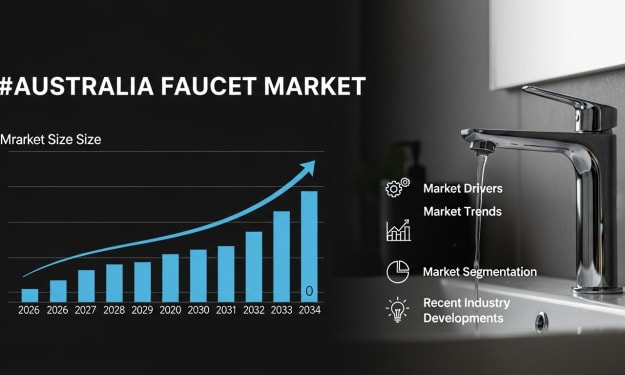
Australia Faucet Market Flows Toward Strong Growth on Construction, Water Efficiency & Smart Tech Adoption
The Australia faucet market is experiencing a dynamic growth phase as consumer demand, regulatory momentum, and construction activities converge to drive broader adoption of modern plumbing fixtures. According to IMARC Group, the market was valued at USD 661.13 Million in 2025 and is expected to reach USD 1,142.71 Million by 2034, exhibiting a compound annual growth rate (CAGR) of 6.27% over 2026–2034.
By Rashi Sharma5 days ago in Trader
Wild Card Weekend Recap: What Happens Now?
I think I figured out why I love Wild Card Weekend so much. It's because it's the first playoff anything of the calendar year. The NFL season starts in the fall, and once upon a time, the champion was crowned either on or slightly before New Year's. The evolution of the NFL schedule has resulted in the playoffs starting just into the New Year, and currently, the final week of the season falls on the first weekend of the New Year, with Wild Card Weekend coming a week after that. So yes, chronologically, the NFL's Wild Card Weekend serves as the first playoff anything of the calendar year.
By Clyde E. Dawkins8 days ago in Unbalanced



Comments
There are no comments for this story
Be the first to respond and start the conversation.