
Australia Faucet Market Flows Toward Strong Growth on Construction, Water Efficiency & Smart Tech Adoption
Supported by rising residential and commercial development, growing preference for water-efficient and touchless fixtures, and renovation activity, Australia’s faucet market is forecast to expand from USD 661.13 Million in 2025 to USD 1,142.71 Million by 2034 at a CAGR of 6.27%.

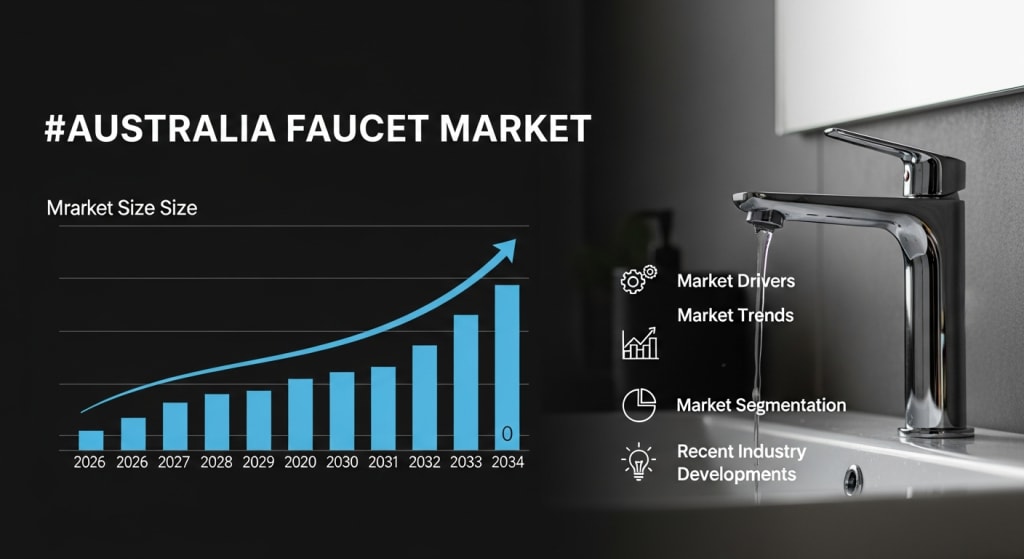
The Australia faucet market is experiencing a dynamic growth phase as consumer demand, regulatory momentum, and construction activities converge to drive broader adoption of modern plumbing fixtures. According to IMARC Group, the market was valued at USD 661.13 Million in 2025 and is expected to reach USD 1,142.71 Million by 2034, exhibiting a compound annual growth rate (CAGR) of 6.27% over 2026–2034.
Faucets—essential fixtures in residential and commercial plumbing systems—have evolved beyond basic utility to become design highlights and efficiency levers. Across bathrooms and kitchens in homes, offices, healthcare facilities, hospitality venues and public infrastructure, the demand for well-designed, durable, and water-efficient faucets continues to surge. The growth reflects not only expanding building activity but also heightened consumer expectations for sustainability, hygiene, and technological sophistication.
Australia’s construction landscape remains robust, guided by ongoing urbanization, infrastructure investments and renovation trends that are propelling faucet demand. Furthermore, water scarcity concerns and stringent water-efficiency standards under schemes like the Water Efficiency Labelling and Standards (WELS) are encouraging adoption of high-performance, low-flow fixtures. With smart, touchless, and IoT-enabled faucets gaining ground, the market is transitioning toward solutions that address both functionality and environmental responsibility.
The faucet market’s steady historical growth is grounded in increasing residential dwelling completions and commercial property development, coupled with consumer renovation projects that prioritize both aesthetics and performance. New housing and refurbishment of existing homes support sustained demand for both basic and premium fixture categories, while commercial facilities seek reliable, compliant, and sometimes sensor-activated plumbing products to meet modern expectations.
Looking forward, innovations in smart features, durable materials, and water-saving designs will guide product differentiation. The interplay of construction trends, environmental regulation, and consumer preferences positions Australia’s faucet market as both a staple of everyday infrastructure and an emerging arena for technological and design advances.
Why the Market Is Growing So Rapidly
1. Expansion of Residential and Commercial Construction
Australia’s construction industry is a key driver of faucet demand. Population growth, urban expansion, and ongoing commercial development create significant new installations for both bathrooms and kitchens. Residential housing completions and urban renewal projects translate into faucet fixtures required in new builds and refurbishment projects.
2. Renovation and Home Improvement Trends
Homeowners are increasingly investing in kitchen and bathroom upgrades that enhance aesthetics, functionality, and property value. Faucets, often featured as premium design elements, benefit from this renovation cycle as consumers seek modern finishes, ergonomic designs, and advanced features that align with contemporary tastes and lifestyles.
3. Water Efficiency and Environmental Standards
Water scarcity challenges and stringent environmental policies like Australia’s WELS push manufacturers and consumers toward water-efficient faucet solutions. Low-flow designs and advanced aerators not only conserve water but also align with regulatory compliance and sustainability goals, making them popular choices in both residential and commercial segments.
4. Rising Adoption of Smart and Touchless Technologies
Touchless and smart faucets with motion sensors, precision flow control, and IoT connectivity are gaining traction. These technologies enhance hygiene, reduce contamination risks in public and healthcare environments, and offer convenience in residential applications. The integration of digital capabilities elevates user experiences and broadens the appeal of premium models.
5. Premiumization and Design Focus
Consumer preference for premium, aesthetically appealing faucets—featuring contemporary finishes such as matte black, brushed gold, and gunmetal—fuels value-added growth in the market. Faucets are increasingly seen as design statements in modern interiors, especially in higher-income households and luxury renovations.
What the Opportunities Are
1. Smart and Sensor-Enabled Faucet Solutions
Manufacturers can capitalize on growing demand for touchless faucets with IoT connectivity, enhanced hygiene features, and water-usage analytics.
2. Expansion of Water-Efficient Product Lines
Developing faucets with superior water conservation performance can drive adoption in both residential and commercial segments, particularly where regulatory incentives align with sustainability goals.
3. Customization and Design-Driven Offerings
Offering customizable options and designer finishes allows brands to capture premium revenue and align products with diverse interior styles and consumer preferences.
4. Strengthening Online and Omni-Channel Distribution
E-commerce and omnichannel strategies including digital showrooms, AR visualization, and home delivery services can expand reach and streamline purchasing experiences.
5. Partnerships with Builders and Contractors
Collaborating with developers, builders, and plumbing professionals can build strong product placement pipelines and secure long-term project contracts in both new construction and renovation markets.
6. Enhanced After-Sales Services
Providing comprehensive installation support, warranties, and maintenance services boosts customer satisfaction and differentiates brands in a competitive marketplace.
7. Regional Market Penetration
Targeted expansion into fast-growing regional markets beyond major cities can drive incremental volumes and diversify geographic revenue streams.
Recent News & Developments in Australia Faucet Market
March 2025: Regulatory Action: Australian water authorities updated the WELS water efficiency standards to tighten minimum flow requirements for faucets sold domestically. The revised benchmarks aim to accelerate the adoption of water-saving technologies and improve national water management outcomes. As a result, manufacturers are reformulating products to meet new efficiency thresholds, and builders are incorporating compliant fixtures into new developments.
June 2025: Company Expansion: Global tapware brand Meir partnered with local designers to launch an expanded range of premium faucet finishes in Australia, including matte black and brushed gold collections. This move was supported by enhanced in-store displays and digital campaigns that highlight design integration, water efficiency ratings, and durability—leading to increased market visibility and retailer uptake.
September 2025: Market Adoption Milestone: Industry reports indicated that smart and touchless faucets surpassed a key adoption milestone, with sensor-activated models accounting for over 20% of new faucet installations in major metropolitan residential and commercial projects. Sales data showed robust year-on-year growth driven by hygiene concerns and water conservation preferences among urban consumers.
Why Should You Know About the Australia Faucet Market?
The Australia faucet market stands at the crossroads of sustainable infrastructure, lifestyle evolution, and technological innovation. For investors, it offers a resilient growth profile supported by construction and renovation cycles as well as recurring demand for improved plumbing solutions. Manufacturers and brands can benefit from pursuing water-efficiency technologies, smart systems, and differentiated designs that resonate with modern consumers. Retailers and distributors should leverage omni-channel strategies and professional partnerships to optimize market penetration. For policymakers and sustainability advocates, understanding faucet market dynamics is essential for aligning regulations with consumer needs and promoting efficient water use nationwide. As Australian consumer priorities continue to emphasize sustainability, convenience, and design, faucet products will remain integral to everyday living spaces and commercial environments alike.
About the Creator
Rashi Sharma
I am a market researcher.
Keep reading
More stories from Rashi Sharma and writers in Trader and other communities.
Australia Edible Grocery Market Set for Steady Expansion on Health, Convenience & E-Commerce Trends
The Australia edible grocery market encompasses a comprehensive range of food products purchased for household consumption, including fresh produce, dairy, meat and seafood, packaged foods, bakery and confectionery, non-alcoholic beverages, and frozen/ready-to-eat meals. According to IMARC Group, the market reached USD 9.5 Billion in 2025 and is expected to grow to USD 12.7 Billion by 2034, posting a compound annual growth rate (CAGR) of 3.23% during 2026–2034.
By Rashi Sharma3 days ago in Trader
Australia Construction Market: Infrastructure Expansion, Urban Growth & Industrial Momentum
Australia Construction Market Overview The Australia construction market remains a key driver of economic activity, employment and long-term growth, reflecting robust investment in public infrastructure, residential building, commercial developments and industrial facilities. The Australia construction market size was valued at USD 420.5 Billion in 2025. Looking forward, the market is expected to reach USD 603.0 Billion by 2034, exhibiting a CAGR of 4.09% from 2026-2034. The market is driven by the growing government infrastructure spending, economic expansion, which is leading to the construction of commercial, residential, and mixed complexes, and advanced technologies and sustainability trends. This sustained expansion stems from government infrastructure programmes, urbanisation trends, rising housing demand, and private sector investment in commercial and industrial projects. As Australia positions itself for future growth, the construction sector continues to mirror economic resilience, evolving policy focus and the shift toward sustainable development.
By Amyra Singh5 days ago in Trader
The Devil's Cut
“Comrade, finally you’re awake.” The voice was smooth, sensual. A flickering incandescent bar was all that lit the white, sterile room. All Vladimir remembered was everything going black. He tried to move his arms and found them strapped to the gurney.
By Matthew J. Fromm5 days ago in Fiction




Comments
There are no comments for this story
Be the first to respond and start the conversation.