
Australia General Insurance Market Set for Strong Growth Amid Digital Innovation and Climate Risks
With nearly USD 20 billion in revenue and double-digit opportunities ahead, the Australia general insurance sector is evolving rapidly through technology, risk-aligned products, and resilient underwriting.

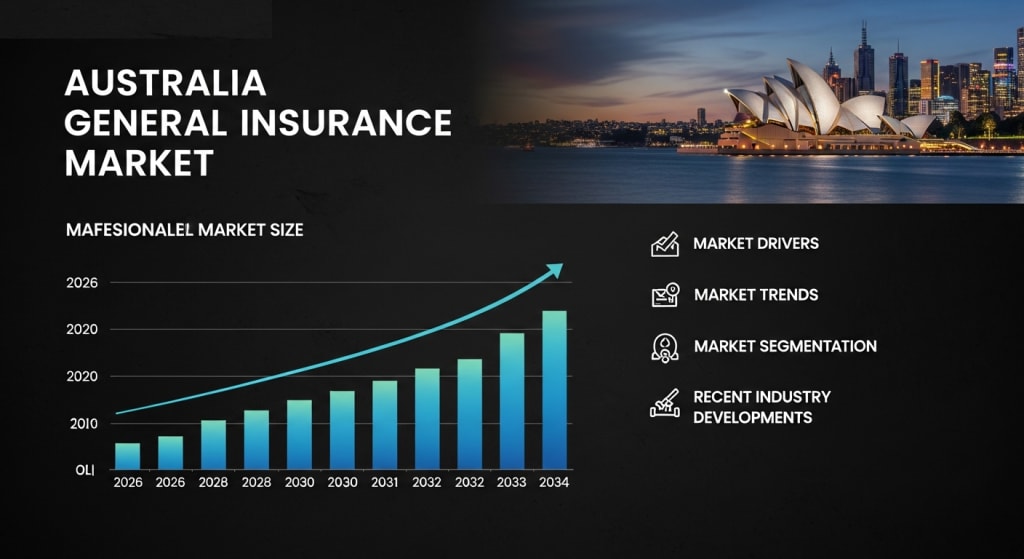
The Australia General Insurance Market continues to expand significantly as insurers navigate complex risk environments, pricing pressures, and digital transformation.
According to the latest IMARC Group research, the market reached USD 19,397.0 million in 2025 and is projected to grow to USD 34,492.6 million by 2034, reflecting a compound annual growth rate (CAGR) of 6.60% between 2026 and 2034.
This growth reflects deeper shifts in consumer expectations, heightened risk exposures — particularly from climate-related events — and innovation across the value chain. General insurance, encompassing property, motor, liability, and specialized coverages, serves as a critical financial safety net for individuals, businesses, and governments alike. Demand is driven by structural economic trends, regulatory reforms, and the rising need for tailored risk products.
In Australia, insurers are adapting to evolving threats such as bushfires, floods, and storms, which have driven both pricing adjustments and product innovation. At the same time, digital technologies — from AI-driven underwriting to mobile claims platforms — are reshaping how insurance is sold and serviced. As stakeholders respond to these pressures and opportunities, the market’s trajectory is one of meaningful transformation.
Why the Market Is Growing So Rapidly
1. Rising Exposure to Climate-Driven Risks
Australia’s unique geography and climate patterns make it particularly vulnerable to natural disasters. Bushfires, floods, and cyclones have become more frequent and severe, pushing up claims volumes and stimulating demand for coverage that can respond to extreme weather risk. Insurers are now offering parametric products that trigger automatic payouts based on indexed environmental parameters — such as rainfall metrics or fire danger ratings — enabling quicker claims resolution and improved customer confidence.
These innovations not only help policyholders recover faster but also provide insurers with more precise risk models, enabling stronger actuarial performance in a shifting risk landscape.
2. Digital Transformation Across the Insurance Value Chain
Digital distribution channels and technology platforms are reshaping customer experiences and operational efficiency. Online policy comparison tools, AI-enabled virtual advisors, and mobile claims filing portals are making insurance more accessible and responsive. Consumers can obtain quotes, purchase coverage, and manage policies with minimal friction; insurers benefit from reduced acquisition costs and faster service delivery.
Digital transformation also extends into underwriting and claims analytics. AI and big data enable more granular risk assessment, pricing personalization, and fraud detection, strengthening both profitability and customer engagement.
3. Tailored Underwriting and Usage-Based Insurance
A growing emphasis on personalized pricing models — such as usage-based auto insurance or behavior-linked home policies — is reshaping how products are structured. Telematics, IoT sensors, and real-time risk monitoring empower insurers to align premiums more closely with actual risk behaviors. These models not only enhance fairness in pricing but also encourage safer customer conduct, reducing loss ratios over time.
As demand for customization rises, insurers investing in next-generation analytics and data partnerships gain competitive edges.
4. Regulatory Reform and Consumer Expectations
Regulators in Australia continue to focus on fair customer outcomes, solvency strength, and transparency. Policy reforms aimed at enhancing consumer protection and promoting competitive markets are encouraging insurers to improve clarity in pricing and claims servicing. This regulatory backdrop, combined with heightened public awareness of insurance fundamentals, has bolstered both demand and trust in general insurance products.
At the same time, evolving expectations — such as faster claims turnaround, digital self-service, and fair pricing — are pushing insurers to innovate continuously.
5. Broader Economic and Demographic Drivers
The Australian economy’s steady growth, rising home ownership, and increasing vehicle purchases contribute to expanding insurance demand. As households accumulate more assets, the need for property, motor, and liability coverage grows accordingly. Population shifts, including migration and urban expansion, also expand the pool of insured exposures across diverse regions.
These macro-level factors create a strong foundation for sustained market growth throughout the forecast period.
What the Opportunities Are
1. Parametric and Climate-Responsive Insurance Products
As extreme weather events become more prevalent, insurers that can develop innovative parametric policies — with pre-defined payout triggers — are well positioned to capture market share and deepen customer trust.
2. AI-Driven Underwriting and Risk Analytics
Companies that invest in advanced analytics and AI capabilities will unlock superior pricing precision and risk assessment, enabling more competitive products and improved loss ratios.
3. Digital Retail Platforms and Customer Engagement Tools
Insurers with seamless digital onboarding, self-service applications, and mobile claims technologies can attract tech-savvy consumers and reduce operational costs substantially.
4. Usage-Based and Telematics Solutions
Deployment of telematics and usage-linked pricing models in motor and home insurance offers insurers differentiation through personalized risk assessment and rewards for safer behavior.
5. Strategic Partnerships and Ecosystems
Collaborations with insurtech startups, data providers, and IoT platform vendors can accelerate product development and expand service offerings through integrated ecosystems.
6. Enhanced Customer Education and Trust Initiatives
Proactive communication, transparent pricing practices, and responsive claims support strengthen customer relationships and reduce churn.
7. Expansion into Niche and Underserved Segments
Opportunities exist in liability, marine, financial lines, and specialty insurance segments where tailored solutions remain underserved and premiums can command higher risk-based pricing.
Recent News & Developments in Australia General Insurance Market
March 2025: Australia’s competitive landscape continued to evolve as Insurance Australia Group (IAG) reported stronger financial results for the fiscal year ending June 30, 2025, with net earned premiums rising 8% and annual cash profit exceeding A$1.15 billion. Improved natural peril cost performance and strategic partnerships helped fuel this growth, with IAG reinforcing its commitment to digital transformation and regional expansion.
• August 2025: The Australian Securities and Investments Commission (ASIC) initiated legal action against RACQ Insurance — a unit recently integrated into IAG’s operations — alleging misleading premium comparisons in renewal notices to over 570,000 customers. This regulatory intervention highlights ongoing focus on transparency and consumer protection in insurance pricing and disclosures.
• October 2025: General insurance pricing trends drew attention as consumer advocacy group Choice revealed that average home insurance premiums increased by 16% year-on-year, with some insurers implementing hikes exceeding 30%. This development underscores the continuing impact of extreme weather risk and inflationary pressures, even as policy makers and industry leaders explore pricing and subsidy reforms.
Why Should You Know About the Australia General Insurance Market?
For investors, the Australia general insurance market represents a resilient growth sector anchored in essential risk protection services and evolving product innovation. Its forecasted expansion at a healthy CAGR through 2034 reflects both foundational demand and opportunities for differentiated technologies and underwriting strategies.
For business leaders, opportunities lie in leveraging analytics, digital engagement tools, and tailored risk products to capture market share and improve profitability. Insurers that prioritize customer experience and strategic partnerships will outperform peers in a competitive environment.
For policy makers, understanding the dynamics of risk pricing, climate-aligned products, and transparency challenges is vital to shaping frameworks that balance consumer protection with industry viability. As insurance plays a central role in economic resilience, stakeholders across government and industry must collaborate to promote sustainable growth and public trust.
In a landscape defined by climate challenges, digital disruption, and shifting consumer expectations, the Australia general insurance market stands as a cornerstone of financial security and economic stability. Recognizing its trends and levers of change empowers stakeholders to make informed decisions today that shape a more resilient tomorrow.
About the Creator
Rashi Sharma
I am a market researcher.
Keep reading
More stories from Rashi Sharma and writers in Trader and other communities.
Australia Computer Vision Market Poised for Strategic Growth: From Smart Surveillance to AI-Driven Enterprise Transformation
The Australia Computer Vision Market is rapidly evolving from a niche tech segment into a mainstream technology catalyst across multiple sectors. According to IMARC Group’s latest analysis, the market reached USD 434.0 million in 2025 and is poised to grow to USD 706.1 million by 2034, representing a CAGR of 5.56% during 2026–2034.
By Rashi Sharmaa day ago in Trader
Japan Building Automation Systems Market Size and Forecast 2025–2033
Introduction Japan is undergoing a profound transformation in the way its buildings are designed, managed, and operated. From skyscrapers in Tokyo to manufacturing hubs in Aichi and logistics centers in Chiba, the demand for smarter, more energy-efficient, and digitally connected infrastructure is accelerating. At the center of this transformation lies the Building Automation Systems (BAS) market, which integrates mechanical, electrical, and electromechanical services into a centralized, intelligent control framework.
By Marthan Sir4 days ago in Trader



Comments
There are no comments for this story
Be the first to respond and start the conversation.