
North America Autoimmune Disease Diagnostics Market Size and Forecast 2025–2033
Rising Disease Burden, Smarter Diagnostics, and Strong Healthcare Systems Are Redefining Early Detection Across the Region

Introduction: Why Autoimmune Diagnostics Matter More Than Ever
Autoimmune diseases represent one of the most complex and rapidly growing challenges in modern healthcare. These conditions occur when the immune system mistakenly attacks the body’s own tissues, leading to chronic inflammation, progressive organ damage, and long-term disability if not diagnosed and managed early. From rheumatoid arthritis and multiple sclerosis to lupus and type 1 diabetes, autoimmune disorders affect millions of people across North America and place a heavy burden on healthcare systems, families, and national economies.
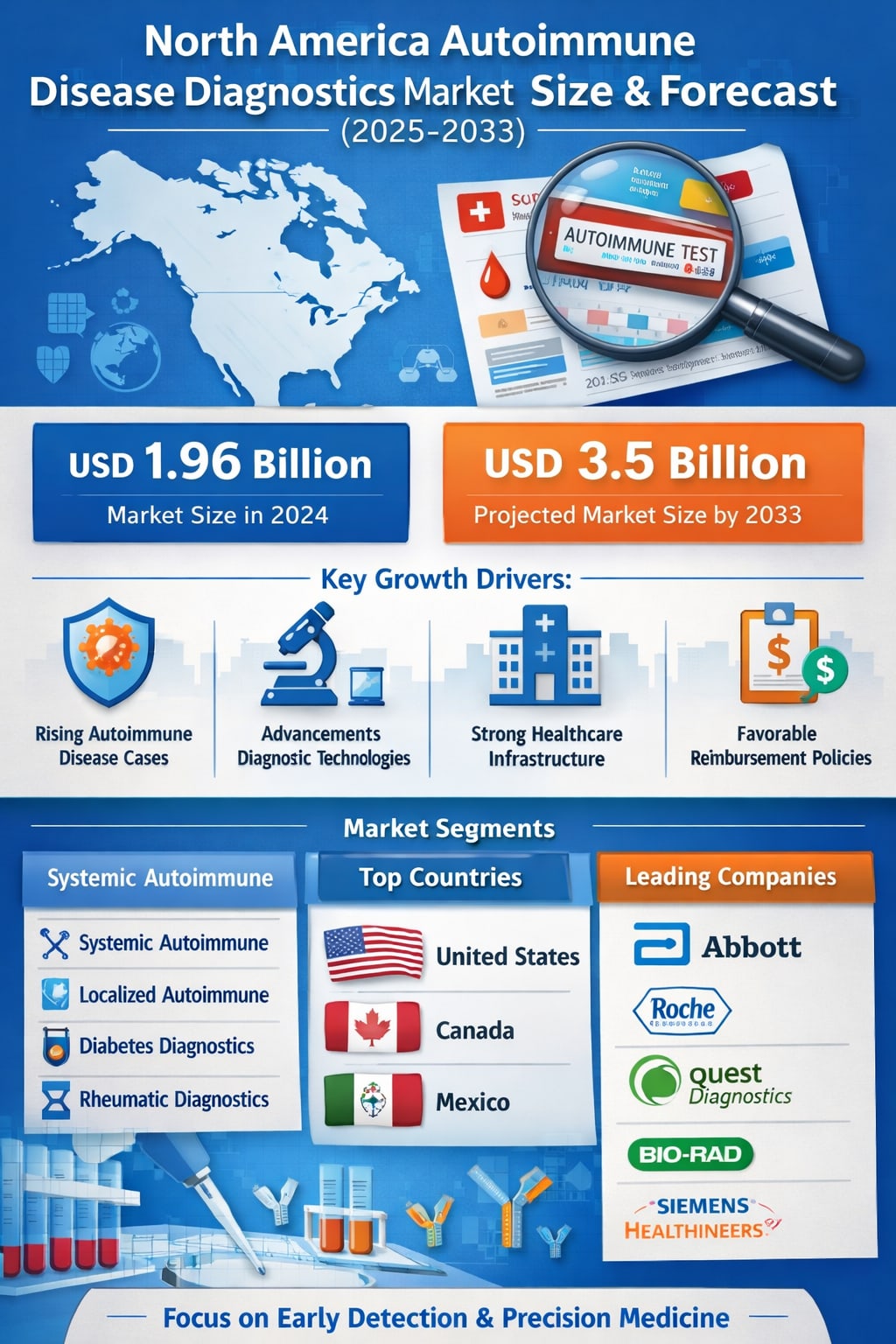
Against this backdrop, the North America Autoimmune Disease Diagnostics Market is emerging as a critical pillar of modern medicine. According to Renub Research, the market accounted for USD 1.96 billion in 2024 and is expected to reach USD 3.5 billion by 2033, growing at a CAGR of 6.66% during 2025–2033. This growth is driven by a rising prevalence of autoimmune diseases, increasing public and clinical awareness, rapid advances in diagnostic technologies, and higher healthcare spending across the region.
In an era where early detection can significantly alter disease outcomes, autoimmune diagnostics are no longer just a support function of healthcare—they are becoming a strategic necessity.
Understanding Autoimmune Disease Diagnostics
Autoimmune disease diagnostics involve a combination of laboratory assays, imaging techniques, and clinical evaluations used to identify and monitor disorders in which the immune system attacks healthy tissues. Common diagnostic tools include autoantibody tests, enzyme-linked immunosorbent assays (ELISA), molecular diagnostics, imaging studies, and increasingly, next-generation sequencing and biomarker-based tests.
These diagnostics play a crucial role in:
Early disease detection, often before severe symptoms appear
Accurate disease classification, which guides treatment decisions
Therapy monitoring, especially for patients on biologics or immunosuppressants
Improving long-term outcomes and quality of life
In North America, the demand for these tests is growing rapidly due to higher disease awareness, better access to healthcare, and a strong push toward personalized medicine. Hospitals, diagnostic centers, and specialty clinics are investing heavily in advanced diagnostic platforms to meet this rising demand.
Market Outlook: A Strong Growth Trajectory Through 2033
The North American market is benefiting from a powerful combination of medical need and technological capability. The rise from USD 1.96 billion in 2024 to USD 3.5 billion by 2033 reflects not only higher testing volumes but also the increasing adoption of advanced, higher-value diagnostic technologies.
Several structural trends are shaping this outlook:
An aging population more susceptible to chronic immune-related disorders
Improved screening programs and preventive healthcare models
Integration of diagnostics with digital health and remote monitoring tools
Strong public and private investment in biomedical research and diagnostics
As healthcare systems increasingly shift toward early intervention and precision medicine, autoimmune diagnostics are set to become even more central to clinical decision-making.
Key Growth Drivers in the North America Autoimmune Disease Diagnostics Market
1. Rising Prevalence of Autoimmune Diseases
North America has seen a steady increase in autoimmune conditions such as rheumatoid arthritis, lupus, multiple sclerosis, inflammatory bowel disease, and type 1 diabetes. Factors like sedentary lifestyles, environmental triggers, genetic predisposition, and improved disease recognition all contribute to this trend.
One striking example is celiac disease in the United States, where incidence has reportedly increased fivefold over the last three decades, roughly doubling every 15 years. This growing patient pool naturally drives demand for accurate, early, and repeat diagnostic testing. Clinicians are increasingly prioritizing early diagnosis to slow disease progression, reduce complications, and improve long-term outcomes—making diagnostics a frontline tool in autoimmune care.
2. Advancements in Diagnostic Technologies
Technological innovation is transforming how autoimmune diseases are detected and monitored. Breakthroughs in molecular diagnostics, biomarker discovery, and next-generation sequencing are enabling faster, more precise, and more comprehensive testing.
These technologies not only improve diagnostic accuracy but also support personalized treatment strategies. North American diagnostic companies and research institutions continue to invest heavily in R&D, expanding the availability and performance of advanced tests. Higher sensitivity and specificity are driving wider adoption across hospitals, diagnostic laboratories, and research centers.
The broader life sciences ecosystem is also contributing, with ongoing developments in biologics and targeted therapies reinforcing the need for precise companion diagnostics and monitoring tools.
3. Strong Healthcare Infrastructure and Favorable Reimbursement
North America benefits from a well-established healthcare infrastructure, including advanced laboratory networks, specialist clinics, and academic medical centers. Favorable reimbursement policies from both public and private payers encourage patients to undergo necessary diagnostic testing without facing prohibitive out-of-pocket costs.
In the United States, for example, policy decisions that support higher reimbursement rates for healthcare services strengthen the overall diagnostic ecosystem. This environment promotes early testing, routine monitoring, and broader access to advanced diagnostics—further accelerating market growth.
Challenges Facing the Market
High Cost of Advanced Diagnostic Tests
While cutting-edge technologies improve accuracy and clinical value, they also come with higher costs. Sophisticated laboratory infrastructure, specialized equipment, and highly trained personnel make advanced autoimmune diagnostics expensive. This can limit access for uninsured or underinsured patients and create barriers for smaller or rural healthcare providers with constrained budgets.
Affordability remains a critical issue, particularly in regions where healthcare resources are unevenly distributed.
Diagnostic Complexity and Disease Overlap
Autoimmune diseases often present with non-specific symptoms such as fatigue, joint pain, or inflammation, which overlap with many other conditions. This makes differential diagnosis challenging and increases the risk of misdiagnosis or delayed diagnosis.
Additionally, many biomarkers are not entirely disease-specific, further complicating clinical decision-making. Addressing this challenge requires continued investment in biomarker research, better clinical guidelines, and ongoing education for healthcare professionals.
Segment Insights: A Market Shaped by Diverse Clinical Needs
Therapeutic & Monitoring and Diagnostics Equipment
The therapeutic and monitoring segment is growing alongside the expanding patient population and the wider use of biologics and immunosuppressants. These therapies require regular monitoring, creating sustained demand for diagnostic and follow-up testing. Integrated care models—where diagnostics, treatment, and monitoring work together—are becoming increasingly common, supported by digital health and remote monitoring tools.
Systemic Autoimmune Disease Diagnostics
Systemic autoimmune diseases such as systemic lupus erythematosus and multiple sclerosis require comprehensive diagnostic approaches, including blood tests, autoantibody panels, and imaging studies. Awareness campaigns and early screening initiatives in North America are boosting demand in this segment, while government and academic research funding continues to support innovation in diagnostic methods.
Localized Autoimmune Disease Diagnostics
Localized conditions like psoriasis and Hashimoto’s thyroiditis are typically diagnosed through tissue biopsies, hormone tests, and targeted clinical evaluations. Strong dermatology and endocrinology networks in North America support this segment, while pharmaceutical and diagnostic collaborations are driving the development of companion diagnostics for targeted therapies.
Diabetes Autoimmune Diagnostics
Type 1 diabetes, an autoimmune condition, is increasingly diagnosed among children and young adults in North America. Autoantibody testing, insulin production assessments, and continuous glucose monitoring play a critical role in early detection and disease management. Public health campaigns, school screening programs, and pediatric care initiatives are further supporting growth in this segment.
Autoimmune Rheumatic Disease Diagnostics
Rheumatic diseases such as rheumatoid arthritis and scleroderma remain highly prevalent. Diagnostic tools like rheumatoid factor (RF) tests, anti-CCP assays, and imaging scans are essential for early and accurate diagnosis. Strong rheumatology networks, patient advocacy efforts, and clinical research activity continue to fuel demand in this area.
End-User Landscape: Hospitals at the Center
Hospitals remain the primary hubs for autoimmune disease diagnostics in North America. With advanced laboratories, multidisciplinary teams, and integrated care pathways, hospitals offer comprehensive diagnostic services under one roof. Many are also linked to research institutions, giving patients access to clinical trials and emerging diagnostic technologies.
Diagnostic centers and other specialized facilities also play an important role, particularly in improving access, reducing wait times, and supporting routine monitoring for chronic patients.
Country-Level Perspectives
United States: The Regional Market Leader
The United States dominates the North American autoimmune disease diagnostics market, supported by a highly developed healthcare system, high disease prevalence, and strong investment in research and innovation. Autoimmune disorders affect a significant portion of the population, and conditions such as type 1 diabetes and multiple sclerosis are being diagnosed more frequently than in the past.
Major diagnostic companies, robust reimbursement frameworks, and growing telehealth and preventive care programs all contribute to market expansion. Venture capital and private equity investments in early detection and digital health solutions further strengthen the ecosystem.
Canada: Innovation Within a Universal Healthcare System
Canada’s market benefits from universal healthcare coverage, ensuring broad access to essential diagnostic services. The country has a well-established laboratory network and a collaborative research environment that supports innovation in autoimmune diagnostics. Rising disease incidence and strong public health emphasis on early detection are key growth drivers, alongside supportive government policies for healthcare innovation.
Mexico: Gradual Expansion and Improving Access
Mexico’s autoimmune diagnostics market is growing steadily as awareness increases and access to healthcare improves. While challenges remain in rural areas, urban hospitals and diagnostic laboratories are adopting more advanced technologies. Ongoing healthcare reforms and international collaborations are expected to further enhance diagnostic capacity and market growth over the coming years.
Competitive Landscape: Key Players Driving Innovation
The North American market features a strong presence of global and regional leaders, including:
Bio-Rad Laboratories
Abbott Laboratories
Roche Diagnostics
Quest Diagnostics Incorporated
Thermo Fisher Scientific Inc.
bioMérieux SA
Myriad Genetics, Inc.
Siemens Healthineers
These companies compete across multiple dimensions, including technological innovation, test accuracy, turnaround time, service networks, and strategic partnerships. Continuous product development and investment in R&D remain central to maintaining competitive advantage.
Final Thoughts: A Market Built on Early Detection and Precision Care
The North America Autoimmune Disease Diagnostics Market is entering a decisive decade. With the market projected to grow from USD 1.96 billion in 2024 to USD 3.5 billion by 2033, the role of diagnostics in shaping patient outcomes will only become more critical. Rising disease prevalence, rapid technological innovation, and strong healthcare infrastructure are aligning to create a robust growth environment.
While challenges such as high costs and diagnostic complexity remain, the long-term direction is clear: earlier detection, more precise diagnosis, and better disease monitoring will define the future of autoimmune care. For healthcare providers, policymakers, and industry players alike, investing in advanced diagnostics is no longer optional—it is essential for building a more effective, sustainable, and patient-centered healthcare system across North America.


Comments
There are no comments for this story
Be the first to respond and start the conversation.