
Europe Functional Water Market Trends & Summary 2025–2033
Health, hydration, and innovation fuel Europe’s booming functional water industry as consumers trade sugar for smarter refreshment.

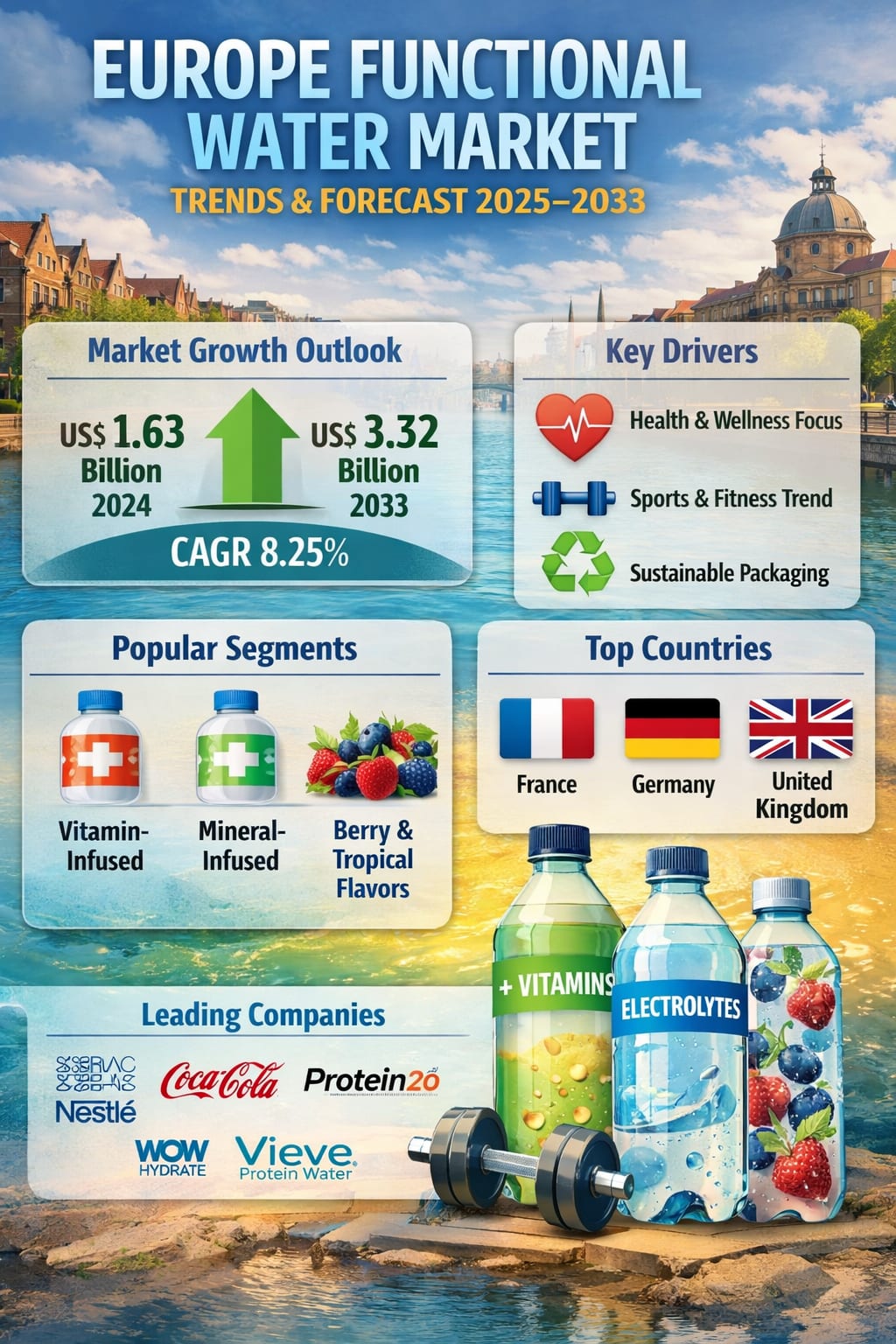
Europe Functional Water Market Overview
The Europe Functional Water Market is entering a decisive growth phase, driven by shifting consumer preferences toward healthier, low-calorie, and nutrient-enriched beverages. Valued at US$ 1.63 billion in 2024, the market is projected to grow at a CAGR of 8.25% from 2025 to 2033, reaching approximately US$ 3.32 billion by 2033. This impressive expansion reflects not only changing hydration habits but also a broader transformation in how European consumers view everyday beverages.
Functional water, unlike standard bottled water, is enhanced with additional ingredients such as vitamins, minerals, electrolytes, proteins, or botanical extracts. These products are positioned to deliver benefits beyond basic hydration, including energy support, immunity boosting, digestion support, and overall wellness. As awareness around sugar reduction, clean-label products, and preventive health continues to rise across Europe, functional water has emerged as a compelling alternative to carbonated soft drinks, sugary juices, and even some traditional sports drinks.
From gym-goers and office professionals to wellness-focused consumers and athletes, functional water now serves a wide spectrum of lifestyles. The market’s growth is also supported by innovation in flavors, sustainable packaging, and premium positioning, making functional water one of the most dynamic segments within Europe’s non-alcoholic beverage industry.
What Is Functional Water and Why It’s Gaining Popularity
Functional water refers to bottled or packaged water that is fortified with nutrients or functional ingredients such as vitamins, minerals, electrolytes, proteins, antioxidants, or herbal extracts. While conventional bottled water focuses solely on hydration, functional water aims to support specific health outcomes—ranging from improved energy and immunity to better recovery and skin health.
Across Europe, consumers are increasingly mindful of what they drink. Concerns around obesity, diabetes, and lifestyle-related diseases have accelerated the shift away from sugar-laden beverages. At the same time, busy urban lifestyles have increased demand for convenient, “better-for-you” drinks that fit seamlessly into daily routines. Functional water sits perfectly at this intersection: it is light, convenient, low in calories, and positioned as a wellness-enhancing choice.
The category has also benefited from the broader clean-label and natural ingredients movement. European consumers, in particular, show strong preference for products that are free from artificial additives, use natural flavors, and align with sustainability values. This has pushed brands to innovate not just in formulations, but also in sourcing, packaging, and marketing narratives.
Key Growth Drivers in the Europe Functional Water Market
Rising Health and Wellness Awareness
One of the strongest drivers behind the growth of functional water in Europe is the region’s increasing focus on health and wellness. Consumers are more aware than ever of the impact of sugar, artificial ingredients, and empty calories on long-term health. As a result, many are actively replacing sugary soft drinks and energy drinks with nutrient-enriched hydration options.
Functional water, often fortified with vitamins such as B-complex, C, D, and E, or minerals like magnesium and potassium, offers a practical way to combine hydration with daily nutritional support. Government initiatives aimed at reducing sugar consumption and encouraging healthier diets have further accelerated this shift. Product launches in the zero-sugar and low-calorie functional water space underline how brands are responding to this evolving demand.
Growth of Sports and Fitness Culture
Europe’s expanding fitness and sports culture has significantly boosted demand for electrolyte and mineral-infused water. From gym memberships and marathon participation to yoga studios and home workouts, more Europeans are embracing active lifestyles. This has created strong demand for hydration products that support performance, endurance, and recovery.
Electrolyte-infused functional water, in particular, is popular among athletes and fitness enthusiasts, as it helps replenish minerals lost through sweat and supports hydration balance. Protein-infused and collagen-enhanced waters are also gaining traction, especially among consumers focused on muscle recovery, fitness, and beauty-from-within trends.
Premiumization and Sustainability Trends
European consumers are increasingly willing to pay more for beverages that align with their values—especially around sustainability, quality, and ethical sourcing. This has led to the rise of premium functional water brands that emphasize organic ingredients, plant-based infusions, and environmentally responsible packaging.
Brands are investing in recyclable PET, aluminum cans, and even biodegradable or reusable bottle solutions to reduce environmental impact. Sustainability is no longer just a marketing angle; it has become a key purchase driver, particularly among younger consumers in Western Europe. This premium and eco-conscious positioning is helping functional water stand out in an otherwise crowded beverage market.
Challenges Facing the European Functional Water Market
Intense Competition from Other Health Beverages
Despite strong growth, functional water faces stiff competition from a wide range of alternative health beverages. Coconut water, kombucha, flavored water, herbal teas, and sports drinks all compete for the same health-conscious consumer base. Many of these categories also offer functional benefits such as probiotics, natural electrolytes, or antioxidants, making it harder for functional water brands to clearly differentiate themselves.
This crowded landscape increases pressure on brands to continuously innovate in terms of ingredients, taste, branding, and pricing.
High Production and Packaging Costs
Functional water is more expensive to produce than regular bottled water due to the cost of fortification, quality ingredients, and advanced formulation processes. Sustainable packaging solutions, such as recycled PET or aluminum cans, further increase production costs. As a result, functional water often carries a premium price tag, which can limit its appeal among price-sensitive consumers, especially in Southern and Eastern European markets.
Market Segmentation Insights
Vitamin-Infused Functional Water
Vitamin-infused water represents one of the fastest-growing segments in Europe. These products are popular among consumers seeking immunity support, energy boosts, and general wellness. The post-pandemic focus on immune health has further strengthened demand, with brands increasingly highlighting natural vitamin sources and botanical extracts to appeal to clean-label enthusiasts.
Mineral-Infused Functional Water
Mineral-infused water, enriched with magnesium, calcium, potassium, and other electrolytes, is especially popular among fitness-oriented consumers. This segment benefits from Europe’s strong tradition of mineral water consumption, particularly in countries like Germany and France, where naturally sourced mineral waters already enjoy high trust and credibility.
Flavor Trends: Berry and Tropical Varieties
Berry-flavored functional waters—featuring strawberry, blueberry, raspberry, or acai—are gaining popularity due to their antioxidant positioning and refreshing taste. At the same time, tropical flavors such as coconut, pineapple, mango, and passionfruit are attracting consumers looking for exotic, refreshing, and naturally inspired hydration options. Both segments benefit from the growing demand for sugar-free, naturally flavored beverages.
Packaging Trends: PET vs. Cans
PET bottles continue to dominate the market due to their convenience, light weight, and cost-effectiveness. However, environmental concerns around plastic waste are pushing brands to adopt recycled PET and alternative materials.
Aluminum cans are rapidly emerging as a sustainable and premium alternative. They are fully recyclable, visually appealing, and align well with eco-conscious branding. The rise of canned functional water also reflects broader trends in the beverage industry, where cans are increasingly used for sparkling waters and flavored drinks.
Distribution Channel Dynamics
Supermarkets and hypermarkets remain the largest sales channel for functional water in Europe, offering wide brand selection, bulk purchase options, and frequent promotions. Major retail chains play a crucial role in driving volume sales and increasing product visibility.
At the same time, online retail is growing rapidly. E-commerce platforms and specialty health stores offer consumers access to niche, premium, and imported brands, often supported by subscription models and home delivery. Digital marketing and social media influence have further accelerated online sales, especially among younger, urban consumers.
Country-Level Market Highlights
France
France’s functional water market is driven by demand for premium, organic, and clean-label hydration products. French consumers show strong interest in botanically infused and mineral-rich waters, supported by the country’s long-standing bottled water culture and strong retail infrastructure.
Germany
Germany is one of the largest functional water markets in Europe, fueled by a strong focus on sports nutrition, wellness, and sustainability. Demand for alkaline, electrolyte-enriched, and vitamin-fortified waters continues to rise, alongside growing interest in recyclable and eco-friendly packaging.
United Kingdom
The UK market is expanding due to rising health awareness and the popularity of athleisure and fitness lifestyles. Consumers are increasingly choosing low-calorie, sugar-free functional waters over traditional soft drinks and energy drinks, with sustainability playing an important role in brand choice.
Competitive Landscape
The European functional water market features a mix of global beverage giants and specialized nutrition brands. Key players include Nestlé, The Coca-Cola Company, Protein2o, Vieve Protein Water, BiPro Protein Water, Nutramino, WOW HYDRATE, Biotech USA, The Hut.com Limited (Myprotein), and XXLnutrition. These companies compete through product innovation, flavor expansion, functional ingredient differentiation, and sustainable packaging strategies.
Final Thoughts
The Europe Functional Water Market is no longer a niche segment—it is fast becoming a core part of the region’s health and wellness beverage landscape. With the market expected to grow from US$ 1.63 billion in 2024 to US$ 3.32 billion by 2033, the future looks strong for brands that can balance functionality, taste, affordability, and sustainability.
As consumers continue to prioritize smarter hydration, clean labels, and wellness-driven choices, functional water is well-positioned to benefit from long-term lifestyle and dietary shifts across Europe. The brands that succeed will be those that go beyond simple fortification and deliver real value—through innovation, transparency, and trust.
About the Creator
Sakshi Sharma
Content Writer with 7+ years of experience crafting SEO-driven blogs, web copy & research reports. Skilled in creating engaging, audience-focused content across diverse industries.
Keep reading
More stories from Sakshi Sharma and writers in Trader and other communities.
United States Biscuits Market Size and Forecast 2025
Introduction The humble biscuit has long been a staple of American food culture, appearing on breakfast tables, in snack aisles, and alongside classic comfort meals across the country. What was once seen primarily as a simple baked good has now evolved into a dynamic and innovation-driven product category that reflects broader changes in consumer behavior, retail strategies, and nutritional preferences.
By Sakshi Sharmaa day ago in Trader
Peanut Butter Market Set to Soar to USD 6.3 Billion by 2033 | At CAGR 4%
Overview – Peanut Butter Market Peanut butter is a widely consumed spread made from roasted peanuts and is commonly used in sandwiches, bakery items, smoothies, and confectionery products. The market is gaining traction due to the increasing adoption of convenient breakfast and snack options among busy consumers. Growing awareness regarding the nutritional benefits of peanuts, including high protein, healthy fats, vitamins, and minerals, is supporting demand. The expansion of retail distribution channels, e-commerce platforms, and increasing product availability across emerging economies is further contributing to market growth.
By James Smithabout 17 hours ago in Trader


Comments
There are no comments for this story
Be the first to respond and start the conversation.