
United States Biscuits Market Size and Forecast 2025
From Comfort Food to Functional Snack: How Health Trends and Premiumization Are Reshaping America’s Biscuit Industry

Introduction
The humble biscuit has long been a staple of American food culture, appearing on breakfast tables, in snack aisles, and alongside classic comfort meals across the country. What was once seen primarily as a simple baked good has now evolved into a dynamic and innovation-driven product category that reflects broader changes in consumer behavior, retail strategies, and nutritional preferences.
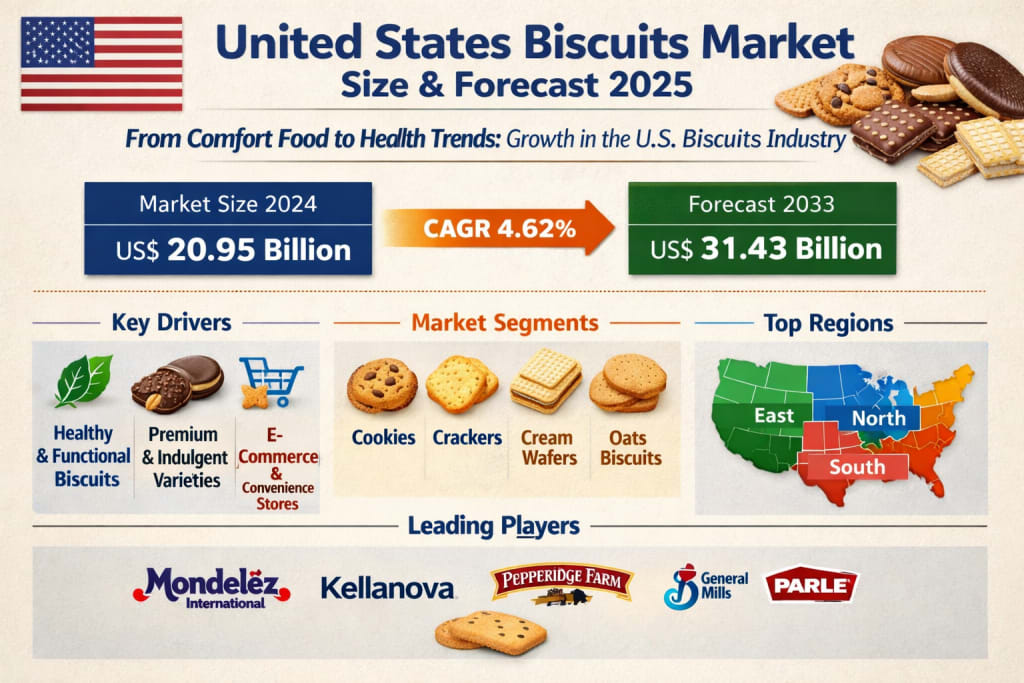
According to Renub Research, the United States Biscuits Market was valued at US$ 20.95 billion in 2024 and is projected to grow at a compound annual growth rate (CAGR) of 4.62% from 2025 to 2033, reaching US$ 31.43 billion by 2033. This steady expansion highlights not only the resilience of the category but also its ability to adapt to new demands—ranging from health-focused formulations to premium indulgent offerings and convenient on-the-go formats.
Today’s biscuit market is no longer defined solely by traditional flavors or legacy brands. Instead, it is shaped by rising interest in gluten-free, organic, high-fiber, and protein-enriched products, as well as by the growing influence of e-commerce and convenience retailing. For investors, manufacturers, and retailers alike, the U.S. biscuits market represents a compelling mix of stability and innovation.
United States Biscuits Market Overview
In the American context, biscuits are baked flour-based products that are typically soft, flaky, and closer in texture to scones or bread rolls rather than the hard cookies commonly referred to as biscuits in other parts of the world. They are usually made with flour, baking powder, butter, and milk, producing a light and airy structure that makes them suitable for both sweet and savory applications.
Biscuits occupy a versatile position in U.S. cuisine. They are widely consumed as a breakfast item, a side dish, or a snack, and are often paired with gravy, butter, honey, or jam. In Southern-style cooking, biscuits are a centerpiece, commonly served with fried chicken, sausage gravy, or eggs. They also feature prominently in sandwiches, filled with ham, cheese, bacon, or eggs for quick and satisfying meals.
As lifestyles become busier and food preferences more diverse, the biscuit category has expanded beyond its traditional roots. The market now includes whole-grain, gluten-free, high-protein, and fortified biscuits, along with frozen and ready-to-bake varieties designed for convenience. Whether consumed at home, in restaurants, or as a grab-and-go snack, biscuits continue to offer both comfort and adaptability—qualities that underpin their sustained popularity in the U.S. food market.
Key Growth Drivers in the United States Biscuits Market
1. Rising Demand for Healthy and Functional Biscuits
One of the most important forces shaping the modern biscuit market is the growing consumer focus on health and wellness. American shoppers are increasingly seeking snacks that align with their dietary goals, fueling demand for whole-grain, high-fiber, gluten-free, low-sugar, and protein-fortified biscuits. This shift is also reinforced by the popularity of vegan, organic, and clean-label diets.
Manufacturers are responding with innovative formulations that incorporate plant-based ingredients, natural sweeteners, and added nutrients. Low-carb, keto-friendly, and even probiotic-enriched biscuits are now entering the market, reflecting how far the category has moved from its indulgence-only image.
A notable example came in February 2023, when Sweet Loren’s introduced gluten-free breakfast biscuits containing 19 grams of whole grains, 4 grams of protein, and 3 grams of fiber per serving, along with B vitamins. These products, which are Non-GMO Project verified and plant-based, demonstrate how brands are using nutrition-focused messaging to attract health-conscious consumers without sacrificing taste or convenience.
2. Growth of Premium and Indulgent Biscuits
While health trends are reshaping one side of the market, the other side is being driven by premiumization and indulgence. Many consumers are willing to pay more for gourmet, artisanal, and specialty biscuits that offer unique flavors, higher-quality ingredients, or a more luxurious experience.
Chocolate-coated, nut-filled, and internationally inspired biscuit varieties are gaining traction, particularly among urban and younger consumers who enjoy experimenting with new tastes. Limited-edition flavors and seasonal launches also play a key role in keeping the category fresh and exciting.
In November 2024, for instance, Bimbo Bakeries USA expanded its Entenmann’s brand with the launch of Big Chunk cookies in flavors such as chocolate, mint chocolate, and salted caramel chocolate. These soft, chewy, and individually wrapped cookies reflect how premium positioning and indulgent flavor profiles can drive incremental growth even in a mature market.
3. Expansion of Online and Convenience Retail Channels
Distribution dynamics are also transforming the U.S. biscuits market. The rapid growth of e-commerce has made it easier for consumers to discover new brands, order in bulk, and subscribe to regular deliveries. Direct-to-consumer (DTC) models, in particular, allow manufacturers to build stronger relationships with customers while offering personalized product bundles and exclusive online-only flavors.
At the same time, convenience stores continue to play a crucial role in driving impulse purchases. Single-serve packs, travel-sized portions, and snack-friendly formats are especially popular among students, commuters, and busy professionals. The combination of digital accessibility and physical convenience is expanding the reach of biscuit products across multiple consumption occasions.
Challenges Facing the United States Biscuits Market
1. Rising Raw Material Costs
Despite strong demand, biscuit manufacturers face ongoing pressure from the rising cost of key raw materials such as wheat, sugar, butter, and cocoa. Supply chain disruptions and commodity price volatility have increased production costs, making it harder for brands to maintain competitive pricing without sacrificing margins.
For smaller or unorganized players, these cost pressures can be particularly challenging, as they often lack the purchasing power or scale efficiencies of larger multinational companies. As a result, pricing strategies and supply chain optimization have become critical areas of focus across the industry.
2. Intense Competition from Alternative Snacks
The biscuits category also faces stiff competition from other snack segments, including protein bars, granola bars, nuts, seeds, and dried fruits. Many of these alternatives are marketed as healthier or more functional options, appealing to consumers who prioritize nutrition, portion control, and convenience.
To remain competitive, biscuit brands must continue to innovate—not only in terms of flavors and textures, but also in nutritional profiles and packaging formats. Strong branding and clear value propositions are increasingly important in a crowded and highly competitive snack market.
Segment Insights
United States Cookies Biscuits Market
Cookies remain the dominant segment within the U.S. biscuits market, driven by enduring favorites such as chocolate chip, oatmeal raisin, and peanut butter cookies. At the same time, demand for organic, sugar-free, and gluten-free cookies is growing, reflecting the broader health and wellness trend.
Premium and stuffed cookies are also gaining popularity, offering consumers a more indulgent snacking experience. In January 2024, Kellanova launched CHEEZ-IT Extra Crunchy in bold cheddar and sharp white cheddar flavors, highlighting how even well-established brands continue to refresh their portfolios with new textures and taste profiles.
United States Cream Wafers Biscuits Market
Cream-filled wafer biscuits remain a popular choice for consumers seeking light, crispy, and flavorful snacks. Classic flavors such as vanilla, chocolate, strawberry, and hazelnut continue to dominate, while new low-calorie and high-protein variants are attracting fitness-conscious buyers. Their portability and dessert-like appeal make cream wafers especially popular for on-the-go consumption.
United States Organized Biscuits Market
The organized segment, led by major brands such as Nabisco, Pepperidge Farm, and Keebler, benefits from strong distribution networks, brand recognition, and marketing capabilities. However, the rise of private-label products in supermarkets is intensifying competition, as retailers offer lower-priced alternatives that increasingly match branded products in quality and variety.
United States Oats Biscuits Market
Oats-based biscuits are gaining momentum due to their high fiber content, heart-health benefits, and natural sweetness. Health-conscious consumers often perceive oat biscuits as a more wholesome alternative to traditional flour-based products. The introduction of protein-enriched, sugar-free, and digestive oat biscuits is further expanding the appeal of this segment.
United States Wheat Biscuits Market
Whole wheat biscuits continue to attract consumers looking for fiber-rich and nutrient-dense snacks. The clean-label movement has boosted demand for wheat biscuits made without artificial additives or preservatives, while organic and multigrain variants are helping brands differentiate their offerings in a competitive landscape.
Distribution Channel Insights
Convenience Stores
Convenience stores play a major role in driving impulse purchases, particularly through single-serve packs and travel-sized portions. The expansion of gas stations, mini-marts, and urban convenience outlets has further strengthened this channel, making biscuits an easy and accessible snack option for consumers on the move.
Supermarkets and Hypermarkets
Supermarkets and hypermarkets remain the largest sales channel for biscuits, offering a wide range of brands, flavors, and packaging sizes. Shoppers often prefer buying family packs and promotional bundles from major retailers such as Walmart, Target, and Kroger. At the same time, the growth of private-label products is reshaping competitive dynamics within this channel.
Regional Market Outlook
East United States
The Eastern U.S. market features a diverse consumer base with strong demand for both classic and innovative biscuit varieties. States such as New York and Massachusetts are seeing increased interest in organic, low-sugar, and gluten-free options, driven by health-conscious urban consumers. There is also a growing appetite for international and ethnic biscuit styles in metropolitan areas.
West United States
Health and sustainability trends are particularly influential in the Western U.S., including states like California and Washington. Consumers in this region show strong preference for plant-based, protein-rich, and keto-friendly biscuits. The West is also a leader in online retail adoption, with many brands leveraging direct-to-consumer channels to reach digitally savvy shoppers.
North United States
In northern states such as Illinois and Minnesota, seasonal and indulgent biscuits play a significant role, especially during winter months. Holiday-themed biscuits and flavored shortbread cookies tend to see higher sales, while artisanal and gourmet brands cater to consumers seeking premium experiences.
South United States
The South remains deeply rooted in traditional biscuit culture, with strong demand for buttermilk and Southern-style biscuits served alongside classic comfort foods. Sweet varieties such as honey and cinnamon biscuits are also growing in popularity. Expanding retail networks and drive-through food outlets continue to support steady market growth in this region.
Market Segmentation Overview
By Product:
Cookies
Filled/Coated Biscuits
Crackers (Flat Crackers, Saltine Crackers, Filled Crackers, Graham Crackers)
Cream Wafers
Others
By Type:
Organized
Unorganized
By Source:
Oats
Wheat
Millets
Others
By Distribution Channel:
Specialist Retail Stores
E-commerce
Convenience Stores
Supermarkets
Others
By Region:
East
West
North
South
Company Analysis
Key players in the United States biscuits market include:
Mondelēz International
Britannia Industries
Kellanova
United Biscuits
PARLE
General Mills Inc.
Nestlé
The Campbell’s Company
Ferrero
PARTNERS
All major players are typically analyzed across four perspectives: company overview, key persons, recent developments, and revenue performance, reflecting the competitive and innovation-driven nature of the market.
Final Thoughts
The United States biscuits market is undergoing a meaningful transformation—one that blends tradition with innovation, indulgence with functionality, and mass-market appeal with premium differentiation. Backed by Renub Research’s forecast, the market’s growth from US$ 20.95 billion in 2024 to US$ 31.43 billion by 2033 underscores the category’s long-term potential.
As consumers continue to seek healthier, more convenient, and more exciting snack options, biscuits are proving remarkably adaptable. For manufacturers, retailers, and investors, the years ahead will offer significant opportunities to capitalize on evolving tastes, new retail channels, and the enduring love Americans have for this versatile baked classic.
About the Creator
Sakshi Sharma
Content Writer with 7+ years of experience crafting SEO-driven blogs, web copy & research reports. Skilled in creating engaging, audience-focused content across diverse industries.
Keep reading
More stories from Sakshi Sharma and writers in Trader and other communities.
United States Communication Equipment Market Size and Forecast 2025
United States Communication Equipment Market Overview The United States communication equipment market stands as one of the most critical pillars of the nation’s digital economy. Valued at US$ 123.11 billion in 2024, the market is projected to expand steadily at a CAGR of 3.42% from 2025 to 2033, reaching approximately US$ 168.09 billion by 2033. This growth is being driven by rapid advancements in 5G networks, cloud computing, Internet of Things (IoT) devices, and the ever-increasing demand for high-speed, reliable communication infrastructure across industries.
By Sakshi Sharmaa day ago in Trader
NIFTY50 Trade Outlook Feb 10: Can the Index Maintain Momentum on Tuesday?
The Indian stock market opened on a positive note on Tuesday, with the NIFTY50 index showing early gains amid domestic optimism and supportive global cues. Investors are closely watching the market to determine if these initial gains can be sustained, as macroeconomic factors, corporate earnings, and global developments continue to shape trading activity.
By Hammad Nawaza day ago in Trader
There's Nothing Sexy About Long-Term Investing, But It WORKS
There are infinite ways to build wealth, and when you find the right one, you can accelerate your rate of return exponentially. The challenge is that the best opportunities are not always obvious at the beginning. Before wealth accelerates, you have to find the right deals, strategies, or systems that align with your goals, timeline, and risk tolerance. Most people never reach this stage because they quit too early or spend too much time chasing shortcuts.
By Destiny S. Harris4 days ago in Trader
📢 Raise Your Voice Thread: 02/05/2026
Our “Raise Your Voice Threads” are hosted most alternating Thursdays at 12PM ET to offer creators more avenues to uncover exceptional stories on Vocal. As we are continuously searching for fresh creators and inspiring stories, this thread provides an opportunity to exchange and discuss the stories that have moved and motivated us on Vocal.
By Raise Your Voice by Vocal6 days ago in Resources




Comments
There are no comments for this story
Be the first to respond and start the conversation.