
Europe Anticoagulants Market Size and Forecast 2025–2033
Rising Cardiovascular Burden, Aging Population, and the Shift to NOACs Are Redefining Blood Thinner Therapy Across Europe

Introduction: A Market at the Heart of Modern Cardiovascular Care
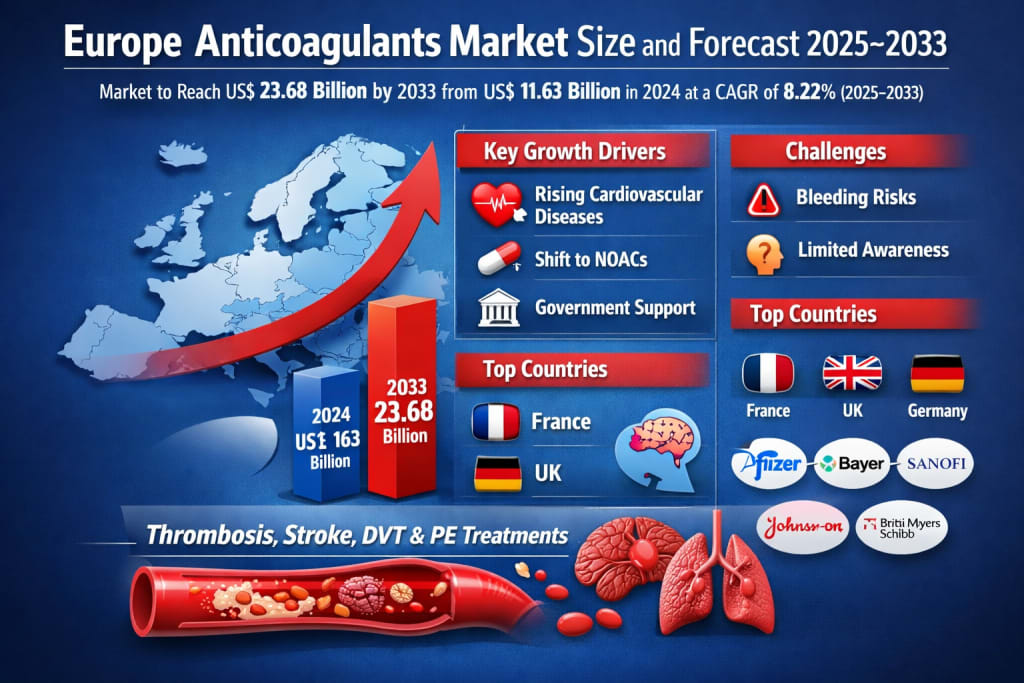
The Europe anticoagulants market is entering a decisive decade, shaped by demographic change, lifestyle-related disease burdens, and rapid pharmaceutical innovation. Valued at US$ 11.63 billion in 2024, the market is expected to reach US$ 23.68 billion by 2033, expanding at a CAGR of 8.22% from 2025 to 2033. This strong growth reflects not only rising clinical need, but also a fundamental transformation in how blood clotting disorders are treated across the continent.
Anticoagulants—often called blood thinners—are essential medicines used to prevent and treat conditions such as atrial fibrillation, deep vein thrombosis (DVT), pulmonary embolism (PE), and stroke. In Europe, where cardiovascular diseases remain among the leading causes of death, these drugs play a central role in both emergency care and long-term disease management.
Sedentary lifestyles, aging populations, obesity, smoking, and unhealthy dietary habits are all contributing to a steady increase in thrombotic and cardiovascular conditions. At the same time, healthcare systems are placing greater emphasis on preventive care, early diagnosis, and long-term risk management, which further boosts the demand for reliable and patient-friendly anticoagulant therapies.
Adding momentum to this market is the rapid adoption of Novel Oral Anticoagulants (NOACs), which are gradually replacing older therapies such as warfarin in many clinical settings. With fewer dietary restrictions, less need for constant monitoring, and more predictable dosing, these newer drugs are reshaping treatment protocols and improving patient adherence across Europe.
Market Overview: Why Anticoagulants Matter More Than Ever
The European anticoagulants market is expanding against the backdrop of a major public health challenge. Cardiovascular diseases account for nearly 45% of all deaths in Europe, making them the region’s leading cause of mortality. Blood clots play a critical role in many of these conditions, whether in the form of ischemic strokes, heart attacks, or venous thromboembolism.
Thrombosis is particularly common among people aged 60 years and above, but it is not limited to the elderly. Risk factors such as prolonged immobility, obesity, genetic predisposition, smoking, excessive alcohol consumption, and chronic illnesses have increased the incidence of clot-related disorders across wider age groups.
Anticoagulant drugs are now routinely used in:
Stroke prevention in atrial fibrillation
Post-surgical clot prevention
Treatment of deep vein thrombosis and pulmonary embolism
Management of patients undergoing percutaneous coronary interventions
In parallel, healthcare reforms, improved reimbursement policies, and stronger regulatory oversight by bodies such as the European Medicines Agency (EMA) have strengthened confidence in newer therapies. Pharmaceutical companies are also investing heavily in research and development to improve safety profiles, reduce bleeding risks, and create more convenient formulations.
Despite challenges such as high treatment costs and safety concerns, the overall outlook remains highly positive. Greater awareness, better diagnostics, and the rise of personalized medicine are expected to keep the European anticoagulants market on a strong growth trajectory through 2033.
Key Growth Drivers of the Europe Anticoagulants Market
1. Rising Prevalence of Cardiovascular Diseases
One of the most powerful forces driving this market is the growing burden of cardiovascular diseases across Europe. Conditions such as atrial fibrillation, ischemic stroke, and venous thromboembolism are being diagnosed more frequently, particularly among aging populations.
Sedentary lifestyles, increasing obesity rates, smoking, and poor dietary habits have all contributed to this trend. As a result, healthcare providers are placing greater emphasis on long-term anticoagulation therapy to reduce the risk of fatal or disabling complications. In many cases, patients now require lifelong treatment, ensuring sustained demand for anticoagulant drugs across hospital, retail, and online pharmacy channels.
2. Shift Toward Novel Oral Anticoagulants (NOACs)
The rapid shift from traditional vitamin K antagonists like warfarin to Novel Oral Anticoagulants (NOACs) is reshaping the European market. NOACs offer several clinical and practical advantages:
No need for frequent blood monitoring
Fewer food and drug interactions
More predictable dosing
Improved patient compliance
These benefits have made NOACs increasingly popular among both physicians and patients. As clinical evidence continues to support their safety and effectiveness, prescription rates are rising steadily across major European healthcare systems. This transition is one of the most important structural changes in the anticoagulants market today.
3. Government Initiatives and Reimbursement Support
Government policies and reimbursement frameworks play a crucial role in market expansion. Countries such as Germany, France, and the United Kingdom have implemented healthcare programs that improve patient access to modern anticoagulant therapies, including NOACs.
Public health campaigns focused on cardiovascular disease prevention, early diagnosis, and long-term management are also encouraging wider adoption of anticoagulant treatments. By reducing the long-term costs associated with strokes and thromboembolic events, these policies not only improve patient outcomes but also support sustainable healthcare spending—further reinforcing market growth.
Challenges Facing the Europe Anticoagulants Market
1. Risk of Bleeding Complications
Despite their clinical importance, anticoagulants are associated with a significant risk of bleeding, particularly in elderly patients or those with multiple comorbidities. Gastrointestinal bleeding, intracranial hemorrhage, and complications from drug interactions remain major concerns.
Physicians must carefully balance the benefits of clot prevention against the risks of excessive bleeding. This often requires close monitoring, dose adjustments, and detailed patient education, which can limit wider adoption and increase the overall cost of care.
2. Limited Awareness in Certain Regions
In some rural and underserved parts of Europe, awareness of thrombosis, stroke risks, and modern anticoagulant therapies remains limited. Delayed diagnosis and poor treatment adherence can lead to worse outcomes and higher healthcare costs.
Limited access to specialist care and updated clinical guidelines in these regions also slows the adoption of newer therapies such as NOACs. Addressing these gaps through education, training, and public health initiatives will be essential for more balanced market growth across the continent.
Country-Level Insights
France
France’s anticoagulants market benefits from a strong healthcare system and high awareness of cardiovascular health. The country’s aging population and rising incidence of atrial fibrillation and venous thromboembolism are driving steady demand. NOACs are increasingly preferred over warfarin due to their convenience and safety profile. However, challenges such as cost management and bleeding risk monitoring continue to influence prescribing patterns.
United Kingdom
In the UK, the market is expanding steadily due to the growing prevalence of cardiovascular diseases and an aging population. The National Health Service (NHS) has played a key role in supporting access to newer anticoagulants. Advances in personalized medicine and pharmacogenomics are also helping tailor therapies to individual patients, improving outcomes despite ongoing concerns about costs and safety.
Germany
Germany represents one of the largest anticoagulants markets in Europe, supported by a well-funded healthcare system and strong pharmaceutical industry presence. The adoption of NOACs is rising rapidly, driven by clinical guidelines and patient demand for more convenient therapies. While high drug costs and bleeding risks remain concerns, continued investment in R&D and preventive care is expected to sustain long-term growth.
Spain
Spain’s anticoagulants market is growing in line with demographic trends and rising cardiovascular disease rates. Increased use of NOACs, along with improvements in healthcare access and awareness, is supporting market expansion. As in other European countries, balancing cost, safety, and accessibility remains a key policy challenge.
Market Segmentation Overview
By Drug Class:
Novel Oral Anticoagulants (NOACs)
Heparin and Low Molecular Weight Heparin (LMWH)
Vitamin K Antagonists
Others
By Route of Administration:
Oral Anticoagulants
Injectable Anticoagulants
By Distribution Channel:
Hospital Pharmacies
Retail Pharmacies
Online Stores
Others
By Application:
Atrial Fibrillation and Heart Attack
Stroke
Deep Vein Thrombosis (DVT)
Pulmonary Embolism (PE)
Others
By Country:
France, Germany, Italy, Spain, United Kingdom, Belgium, Netherlands, Russia, Poland, Greece, Norway, Romania, Portugal, Rest of Europe
Competitive Landscape: Key Players Shaping the Market
The European anticoagulants market is highly competitive, with major global pharmaceutical companies investing heavily in innovation, clinical trials, and market expansion. Key players include:
Pfizer Inc.
Alexion Pharmaceuticals Inc.
Aspen Holdings
Bayer AG
Sanofi
Johnson & Johnson
Bristol-Myers Squibb Company
Daiichi Sankyo Company Limited
These companies compete across multiple dimensions, including product safety, efficacy, pricing, and patient convenience. Strategic partnerships, new product launches, and expanded indications are expected to remain central to competitive strategies over the coming years.
Final Thoughts: A Market Poised for Long-Term Transformation
The Europe anticoagulants market is on a strong and sustainable growth path, driven by demographic shifts, rising cardiovascular disease prevalence, and the rapid adoption of novel oral anticoagulants. From US$ 11.63 billion in 2024 to a projected US$ 23.68 billion by 2033, the market’s expansion reflects both increasing medical need and meaningful therapeutic progress.
While challenges such as bleeding risks, cost pressures, and regional disparities in awareness remain, ongoing innovation, supportive government policies, and a growing focus on preventive care are set to reshape the future of anticoagulation therapy in Europe.
In the years ahead, the market will likely move toward safer, more personalized, and more patient-friendly solutions, reinforcing the role of anticoagulants as a cornerstone of modern cardiovascular care across the continent.
About the Creator
Sakshi Sharma
Content Writer with 7+ years of experience crafting SEO-driven blogs, web copy & research reports. Skilled in creating engaging, audience-focused content across diverse industries.
Keep reading
More stories from Sakshi Sharma and writers in Trader and other communities.
GCC Catheter Market Trends & Summary: A High-Growth Healthcare Story Shaping the Region’s Medical Future
The Big Picture: A Market on a Strong Growth Trajectory The Gulf Cooperation Council (GCC) catheter market is entering a decisive phase of expansion, driven by structural changes in healthcare delivery, demographic shifts, and the region’s aggressive investment in modern medical infrastructure. According to Renub Research, the GCC catheter market was valued at USD 579.83 million in 2024 and is projected to reach USD 1,281.33 million by 2033, growing at a robust compound annual growth rate (CAGR) of 9.21% from 2025 to 2033.
By Sakshi Sharmaabout 21 hours ago in Trader
When True Love Never Questions Your Soul
“And she’s going to learn that this life will hit you, hard, in the face, wait for you to get back up, just so it can kick you in the stomach but getting the wind knocked out of you is the only way to remind your lungs how much they like the taste of air.” — Sarah Kay’s Poem — If I Should Have a Daughter
By Chantal Christie Weiss7 days ago in Humans


Comments
There are no comments for this story
Be the first to respond and start the conversation.