
Australia Food Enzymes Market: Innovation in Processing, Nutrition & Industry Growth
How rising demand for processed foods, sustainability goals and performance enhancement are driving the food enzymes landscape in Australia


The Australia food enzymes market is on a strong growth trajectory as food manufacturers increasingly use enzyme technologies to enhance processing efficiency, improve product quality and respond to evolving consumer preferences for healthier, clean-label foods. According to IMARC Group, the market reached USD 82.6 million in 2025 and is expected to grow to USD 135.6 million by 2034, exhibiting a compound annual growth rate (CAGR) of 5.66% during 2026–2034. This growth mirrors broader industry dynamics where innovation, sustainability and consumer demand intersect to shape how food products are developed, produced and marketed.
Food enzymes — naturally occurring proteins that catalyse biochemical reactions — are used across a wide range of food applications including dairy, baking, beverages, meat processing, and functional ingredients. Their ability to improve texture, flavour, shelf life, nutritional composition and processing yields makes them indispensable in modern food production.
What’s Driving Market Growth?
Increasing Need for Processed and Easy-to-Prepare Foods
Consumers in Australia are adopting convenience and ready-made foods, motivated by hectic schedules and increased disposable income. Food enzymes boost processing efficiency, enhance product stability, and refine textures — making them perfect for baked goods, dairy items, snacks, and drinks that require uniform quality across extensive production batches.
Consumption Focused on Health and Clean Labels
Shoppers are progressively looking for products with familiar ingredients and few synthetic additives. Enzymes, commonly regarded as natural or permitted processing aids, assist producers in decreasing dependence on synthetic chemicals, reducing sugar or fat content (for instance, via enzymatic alteration of carbohydrates or fats), and attaining cleaner labels while maintaining quality.
Functional Nutrition & Specialty Products
Food enzymes support the development of functional foods by improving digestibility, enhancing nutrient bioavailability and tailoring textures for specialised diets. Enzymatic processes help produce lactose-free dairy, high-fibre foods, protein-enriched products and low-GI baked items, catering to health-conscious segments and dietary needs.
Sustainability & Waste Reduction
Enzymes enable more efficient use of raw materials, reduce energy consumption during processing, and minimise waste in food production. These sustainability benefits — increasingly valued by manufacturers and consumers alike — align with corporate environmental goals and regulatory encouragement of greener food systems.
What the Opportunities Are?
Innovation in Tailored Enzyme Solutions
There is increasing demand for customised enzyme blends designed for specific applications such as gluten-free baking, plant-based dairy alternatives, high-protein product textures, and reduced-allergen formulations. R&D investments that deliver targeted performance benefits can unlock premium value.
Plant-Based & Alternative Proteins
As plant-based diets gain traction, enzymes play a critical role in improving texture, flavour and nutritional quality of alternative proteins, dairy analogues and meat substitutes. Enzymatic processes enhance protein functionality and digestibility, catalysing adoption among flexitarians, vegetarians and vegan consumers.
Sustainability & Circular Processing
Enzymes enable opportunities in circular food systems — turning food byproducts into value-added ingredients. Waste streams from fruit, grain and dairy can be enzymatically processed into fibres, antioxidants or nutraceutical components, supporting resource efficiency and new revenue pathways.
Supply Chain Collaboration & Local Production
Collaboration between enzyme suppliers, food manufacturers and research institutions can strengthen supply chain resilience and innovation capacity. Local production and formulation labs tailored to Australian processing conditions reduce lead times and improve service responsiveness.
Enhanced Regulatory Support & Standards
As food safety and regulatory frameworks evolve, there is opportunity for standardised enzyme usage guidelines and clearer labelling practices that build consumer trust. Engagement with regulatory bodies to support transparent frameworks helps manufacturers innovate while maintaining compliance.
Recent News and Developments in Australia Food Enzymes Market
Jul 2025: Leading enzyme technology providers expanded application-specific enzyme portfolios targeting gluten-free bread, lactose-free dairy processing and high-fibre snack categories. These launches responded to rising demand for healthy, multifunctional products supported by enzymatic solutions.
Sep 2025: Several large food manufacturers in Australia announced partnerships with enzyme innovators to co-develop advanced enzymatic solutions that enhance processing efficiency and product consistency — particularly in large-scale bakery and dairy operations.
Nov 2025: Industry analysts reported that enzyme-based processing techniques reduced waste and energy usage across pilot facilities, showcasing sustainability gains and improved raw material utilisation. These results encouraged broader adoption of enzyme technologies across mid-sized food producers.
Why should You Know About Australia Food Enzymes Market?
You should know about this market because food enzymes are at the intersection of innovation, nutrition and sustainable food production — acting as essential tools that help food manufacturers respond to modern consumer expectations and operational challenges. As lifestyle trends favour healthier, cleaner, and more functional food options, enzymes play an enabling role in delivering quality, performance and sustainability.
The food enzymes market provides investors access to a specialized but growing segment within the food technology sector, showcasing steady CAGR forecasts and opportunities for product innovation, processing effectiveness, and high-value uses.
For food manufacturers, grasping enzyme dynamics — comprising application segmentation, material trends, and consumer motivations — improves strategic planning, product innovation, and competitive standing. Fundamentally, the Australian food enzymes market illustrates the intersection of science-driven innovations with culinary needs and sustainability objectives, influencing the future of food production in the coming years.
About the Creator
Thomas
Market Research Analyst | Industry Trends & Forecasting | Turning market data into clear, actionable business insights across global sectors.
United States Interactive Whiteboard Market Size and Forecast 2025–2033
Introduction The United States is undergoing a significant transformation in how information is shared, taught, and collaboratively developed. From digital classrooms and university lecture halls to corporate boardrooms and remote work environments, interactive technologies are redefining traditional communication tools. Among these, interactive whiteboards (IWBs) have emerged as one of the most powerful and versatile platforms for enhancing engagement, productivity, and real-time collaboration.
By Marthan Sir5 days ago in Trader
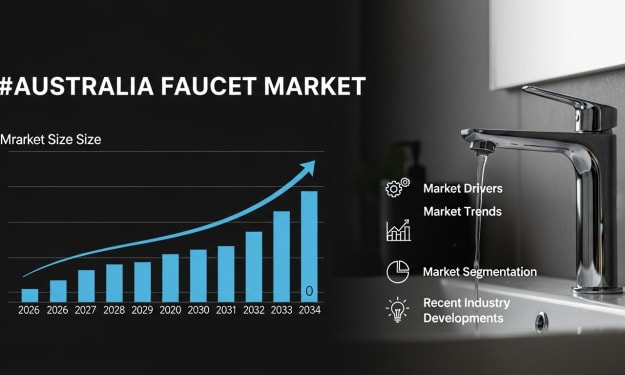
Australia Faucet Market Flows Toward Strong Growth on Construction, Water Efficiency & Smart Tech Adoption
The Australia faucet market is experiencing a dynamic growth phase as consumer demand, regulatory momentum, and construction activities converge to drive broader adoption of modern plumbing fixtures. According to IMARC Group, the market was valued at USD 661.13 Million in 2025 and is expected to reach USD 1,142.71 Million by 2034, exhibiting a compound annual growth rate (CAGR) of 6.27% over 2026–2034.
By Rashi Sharma5 days ago in Trader



Comments
There are no comments for this story
Be the first to respond and start the conversation.