
Australia Edible Grocery Market Set for Steady Expansion on Health, Convenience & E-Commerce Trends
Driven by rising demand for fresh, organic, and convenience-ready foods, and the rapid growth of online retail, the Australia edible grocery market is projected to grow from USD 9.5 Billion in 2025 to USD 12.7 Billion by 2034, at a CAGR of 3.23%.

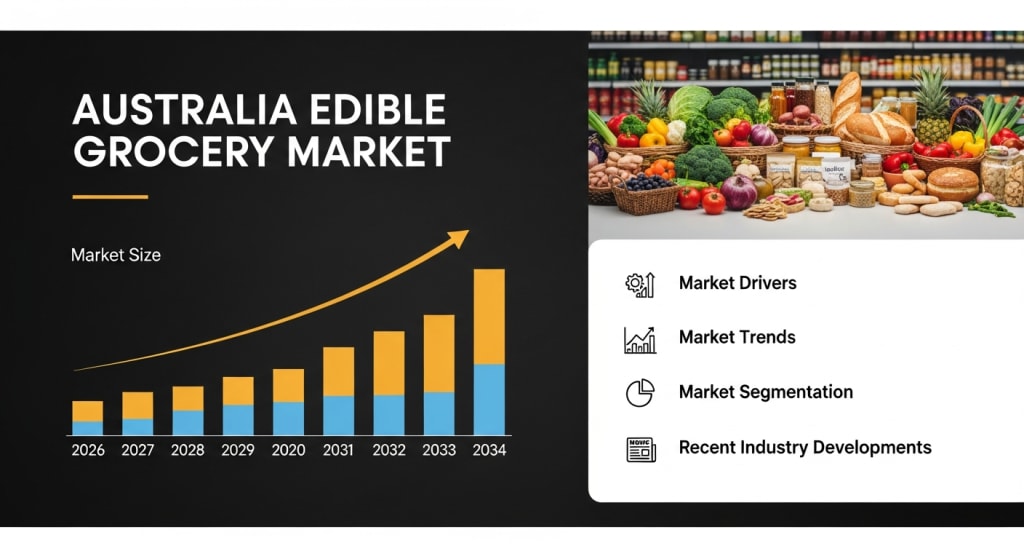
The Australia edible grocery market encompasses a comprehensive range of food products purchased for household consumption, including fresh produce, dairy, meat and seafood, packaged foods, bakery and confectionery, non-alcoholic beverages, and frozen/ready-to-eat meals. According to IMARC Group, the market reached USD 9.5 Billion in 2025 and is expected to grow to USD 12.7 Billion by 2034, posting a compound annual growth rate (CAGR) of 3.23% during 2026–2034.
Australia edible grocery market reflects evolving consumer preferences that emphasize freshness, health, sustainability, and convenience. These preferences are reshaping product portfolios and retail strategies. Consumers are increasingly seeking fresh, minimally processed, and ethically sourced foods—pushing manufacturers and retailers to diversify offerings and highlight transparency in their supply chains. Retail channels such as supermarkets, hypermarkets, specialty and organic stores, and online grocery platforms fuel market accessibility across urban and regional areas.
This market is a key pillar of Australia’s larger food ecosystem, connected closely with broader grocery and food retail sectors that are themselves experiencing digital transformation and consumer-driven change. As household consumption patterns evolve alongside foodservice demand, edible grocery products are becoming more integral to lifestyle and wellness trends, especially among younger, health-conscious consumers.
Segmentation within the edible grocery market highlights distinct product categories—from fresh produce and dairy to frozen meals—and various distribution channels that shape how consumers access groceries. IMARC Group also segments demand by consumer demographics (household vs. foodservice), reinforcing the diverse nature of consumption patterns across Australia.
Why the Market Is Growing So Rapidly
1. Rising Health & Wellness Consumer Focus
Australian consumers are increasingly prioritizing nutritional value and health outcomes in their food choices. There is growing demand for organic, minimally processed, low-sugar, and functional foods fortified with vitamins, minerals, or probiotics. This health orientation encourages manufacturers to innovate and reformulate products to meet evolving wellness preferences, boosting overall market growth.
2. E-Commerce Expansion Bolstering Accessibility
The rapid growth of online grocery shopping contributes significantly to edible grocery demand. Improved digital platforms, user-friendly mobile apps, and innovations in delivery logistics like same-day or contact-free delivery enable consumers to order a wide range of grocery products conveniently. Subscriptions, digital promotions, and personalized experiences are key drivers among younger and urban demographics who value convenience and speed.
3. Preference for Fresh, Local & Sustainable Products
Environmental consciousness is influencing purchasing decisions, with more consumers opting for sustainably produced, locally sourced grocery items. Retailers are responding by highlighting local produce and sustainable packaging, and brands are adopting transparent supply chains. These eco-friendly practices appeal to ethical consumers, catalyzing market demand.
4. Diverse & Expanding Product Portfolios
The edible grocery market includes a broad array of product types, from fresh fruits and vegetables to dairy, meat, packaged foods, and ready-to-eat meals. This diversity supports robust demand across multiple consumer segments and meal occasions, enabling manufacturers and retailers to capture a wider base of shoppers.
5. Urbanization & Changing Lifestyles
Lifestyle shifts, including busier schedules and dual-income households, have increased demand for convenience-oriented foods that require minimal preparation. Ready-to-eat and easy-to-cook edible grocery products cater to time-pressed consumers and support consistent household spending on groceries.
What the Opportunities Are
1. Growth of Premium & Functional Food Lines
There is opportunity to innovate with premium products—such as organic, plant-based, or high-protein offerings—that cater to health-focused and niche dietary preferences.
2. Strengthening E-Commerce & Omni-Channel Models
Investing in seamless omnichannel retailing—including click-and-collect, subscription kits, and personalized digital promotions—can unlock deeper consumer engagement and loyalty.
3. Fresh & Local Sourcing Partnerships
Collaborating with local producers and supply chains enhances product authenticity, sustainability credentials, and community support—key differentiators in a crowded marketplace.
4. Sustainable Packaging & Eco-Friendly Initiatives
Adopting recyclable or biodegradable packaging solutions and promoting carbon-neutral logistics can appeal to environmentally conscious shoppers and improve brand positioning.
5. Enhanced Consumer Data & Personalization
Leveraging AI and analytics to gain consumer insights allows for more targeted product development, tailored promotions, and personalized shopping experiences that drive repeat purchases.
6. Expansion in Regional & Convenience Channels
Retailers can optimize distribution to reach underserved regional markets and smaller formats (like convenience stores) to capture incremental grocery spending outside urban hubs.
7. Partnerships with Foodservice & Hospitality
Developing solutions for foodservice demand—from ready-to-cook meal kits to institutional grocery supplies—can broaden market reach and diversify revenue streams.
Recent News & Developments in Australia Edible Grocery Market
March 2025: Regulatory Focus on Healthy Foods: The Australian government introduced updated dietary guidelines and consumer education campaigns promoting healthier eating and reduced sugar consumption. These initiatives emphasize the importance of fresh produce and nutritious food selections, encouraging food manufacturers and retailers to align product portfolios with national health objectives and consumer wellness goals.
June 2025: Retail & E-Commerce Expansion: A major grocery retailer in Australia expanded its online grocery platform with advanced AI-driven features—such as personalized recommendations and dynamic pricing—which resulted in double-digit growth in online grocery orders. The enhancements also included faster delivery options and subscription meal kits, strengthening the retailer’s competitive position amid rising digital demand.
September 2025: Market Adoption Milestone: Industry analytics reported that consumer spending on fresh and organic edible grocery products surpassed traditional packaged foods for the first time in several urban regions. This milestone reflects heightened demand for health-oriented products and a shift in consumption patterns, with shoppers increasingly allocating grocery budgets toward nutritious, sustainable food options.
Why Should You Know About the Australia Edible Grocery Market?
The Australia edible grocery market exemplifies how shifting consumer preferences, technological adoption, and lifestyle changes converge to reshape essential household spending. For investors, the market offers stable, long-term growth prospects rooted in resilient consumer demand and expanding digital channels. For retailers and manufacturers, understanding evolving food trends—such as health-first products, sustainability, and convenience-based shopping—provides critical insight for product innovation and competitive strategy. For policymakers, the market signals broader dietary shifts and underscores the importance of supportive public health initiatives and sustainable supply chain frameworks. As Australian consumers continue to place value on wellness, convenience, and responsible consumption, the edible grocery sector will remain central to everyday life and retail evolution.
About the Creator
Rashi Sharma
I am a market researcher.
Keep reading
More stories from Rashi Sharma and writers in Trader and other communities.
Australia Crushing and Screening Equipment Market Gearing Up for Steady Growth Amid Mining and Infrastructure Push
The Australia crushing and screening equipment market is experiencing solid expansion as mining and construction sectors drive increased demand for effective material processing solutions. According to IMARC Group, the market reached USD 494.8 Million in 2025 and is expected to grow to USD 714.1 Million by 2034, reflecting a compound annual growth rate (CAGR) of 4.16 % during 2026–2034.
By Rashi Sharma4 days ago in Trader
Center Stage with Paul Stewart
*** I'm keen to republish the interviews I did for my series with Vocal creators. It's been a few years and I thought it might be nice to revisit these wonderful conversations. I'll be releasing them one at a time for a few weeks/months.
By Heather Hubler5 days ago in Interview



Comments
There are no comments for this story
Be the first to respond and start the conversation.