
Australia Biofuel Market Poised to Surpass USD 9.29 Billion by 2033 Amid Policy Support and Energy Transition
Rising demand for cleaner fuels, supportive government mandates, and sustainable feedstock strategies are powering Australia’s biofuel market growth through 2033.

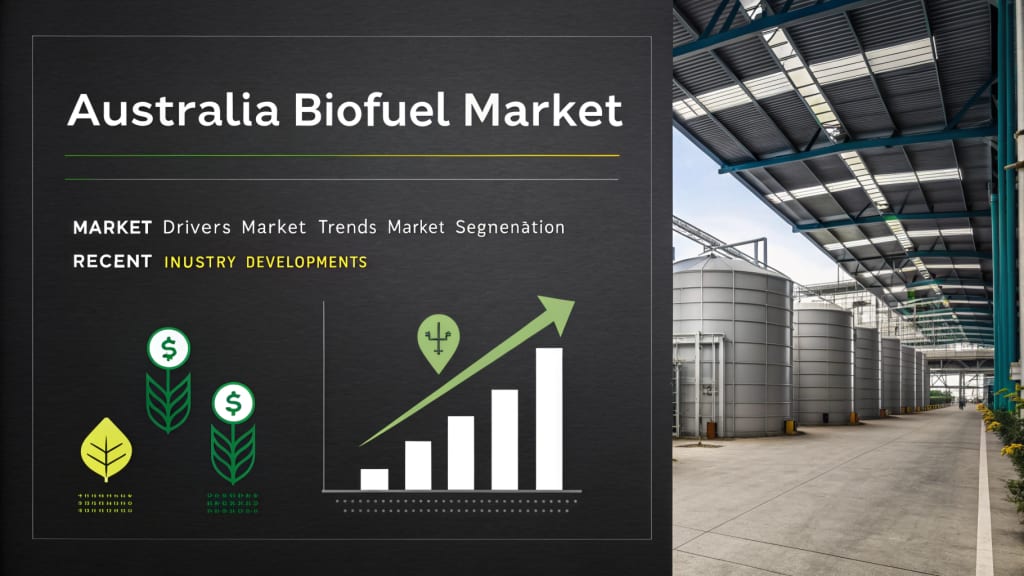
The Australia biofuel market is experiencing strong expansion driven by national energy security concerns, environmental sustainability goals, and robust policy support. According to IMARC Group’s latest analysis, the market reached USD 2.79 billion in 2024 and is expected to grow to USD 9.29 billion by 2033, reflecting a compound annual growth rate (CAGR) of 12.8% during 2025–2033.
Biofuels—which include biodiesel, ethanol, and other renewable fuel types—are gaining traction as key alternatives to conventional fossil fuels across transportation, industrial, and energy sectors. This shift comes as Australia, like many advanced economies, moves to decarbonize its energy systems while enhancing domestic fuel production capacity and reducing reliance on imported petroleum.
The market’s segmentation encompasses type (biodiesel, ethanol, others) and feedstock (coarse grain, sugar crop, vegetable oil, others), together reflecting a diversified supply base and multiple avenues for innovation and deployment.
These dynamics are underpinned by strategic investments in feedstock development, evolving regulatory frameworks, and growing commercial interest in sustainable aviation fuels and low-carbon diesel alternatives. As environmental priorities and economic incentives align, the growth trajectory for Australia’s biofuel market remains compelling.
Request a Sample Report with Latest 2026 Data & Forecasts:
Why the Market Is Growing So Rapidly
1. Strong Government Policies and Mandates
Government support plays a central role in fueling biofuel demand. Mandates requiring minimum biofuel blending with conventional fuels in key states such as New South Wales and Queensland create a stable baseline of demand for ethanol and biodiesel. These policies are designed to reduce greenhouse gas emissions while boosting local renewable fuel production capacity.
Financial incentives, including capital grants, tax rebates, and co-investment initiatives through bodies like the Australian Renewable Energy Agency (ARENA), are further encouraging private investments in new bio-refinery construction and expansion projects. Funding for research and pilot initiatives cultivates a supportive ecosystem for growth and innovation.
2. Leveraging Abundant Agricultural Resources
Australia’s expansive agricultural base provides a significant competitive advantage. Feedstocks such as sugarcane, canola, sorghum, and organic waste residues are readily available and support large-scale production of ethanol and biodiesel. These resources reduce dependence on imports and enhance rural economic participation by enabling farmers to monetize agricultural by-products.
Advancements in agricultural practices and crop rotation techniques are improving yields while maintaining food production, enabling the biofuel sector to scale sustainably.
3. Rising Energy Security Concerns
Australia’s heavy reliance on imported petroleum supplies has heightened strategic concerns around energy independence and price volatility. Biofuels offer a domestically sourced alternative that enhances supply resilience and mitigates exposure to global energy market fluctuations.
By investing in localized biofuel production infrastructure and feedstock supply chains, Australia is strengthening its long-term energy security while supporting national decarbonisation goals.
4. Technology Advancements in Biofuel Production
Innovations in biofuel production technology are improving efficiency, feedstock conversion rates, and fuel quality. Research initiatives focusing on advanced biofuels—such as algae-derived fuels and cellulosic ethanol—are expanding potential feedstock sources beyond traditional agriculture, increasing both environmental sustainability and production scalability.
5. Increasing Demand for Low-Carbon Transport Fuels
There is a growing global and domestic push toward reducing transport sector emissions, and biofuels are central to this transition. With the transport sector accounting for a significant share of national emissions, ethanol and biodiesel are attractive alternatives to fossil fuels, offering immediate emission reductions and compatibility with existing engine technologies and infrastructure.
What the Opportunities Are
1. Sustainable Aviation Fuel (SAF) Expansion
The demand for sustainable aviation fuels presents a major opportunity. Airlines and airports are increasingly seeking low-carbon solutions to meet emission reduction commitments, creating a scalable market for aviation-grade biofuels derived from local feedstocks.
2. Export Growth in the Asia-Pacific
Australia’s geographic proximity to energy-importing nations such as Japan, South Korea, and Singapore positions it as a potential exporter of bioethanol, biodiesel, and SAF. Establishing export-ready refining capacity could significantly boost national revenue and regional energy diversification.
3. Advanced Biofuel Innovation
Second- and third-generation biofuels—like algae-based fuels and waste-to-fuel technologies—offer enhanced sustainability and efficiency. Investing in R&D and commercialization of these fuels can open new market segments and attract foreign investment.
4. Decentralised Bio-Refinery Development
Regional and decentralised refineries can reduce transportation costs, strengthen supply chains, and create local economic opportunities. These facilities can leverage nearby agricultural residues and organic waste for cost-effective production.
5. Strengthening Feedstock Networks
Collaborations with agricultural cooperatives, waste management firms, and energy tech companies can help secure consistent feedstock supply, reducing seasonal variability and strengthening production planning.
6. Integration with Carbon Markets
Biofuels that demonstrably reduce emissions can participate in carbon credit markets, creating new revenue streams and aligning with broader climate policy incentives.
7. Corporate Partnerships for Green Energy Goals
Partnerships between energy firms, airlines, agribusinesses, and technology providers can drive co-investment in refining capacity, shared R&D, and commercial deployment of biofuel solutions.
Recent News & Developments in Australia Biofuel Market
• January 2025: Federal Cleaner Fuels Program Boosts Investment — Australia’s federal government announced a 10-year Cleaner Fuels Program aimed at accelerating the low-carbon liquid fuels sector through grants supporting domestic supply chains, enhancing energy security, and lowering emissions. This initiative is expected to attract substantial private investment and bolster national biofuel capacity.
• April 2025: Major SAF Production Facility Plans Unveiled — Virgin Australia and Qatar Airways partnered with Renewable Developments Australia to plan a Sustainable Aviation Fuel (SAF) facility in North Queensland. The proposed plant is designed to produce up to 96 million litres of SAF annually, significantly cutting aviation emissions and positioning Australia as a regional SAF hub.
• May 2025: Commercial Biofuel Trial for Maritime Sector — Viva Energy Australia launched the nation’s first commercial biofuel trial for cruise ships, using a B20 blend (80% marine distillate, 20% biodiesel from used cooking oil) on Royal Caribbean’s Celebrity Edge, highlighting the expanding application of biofuels beyond land transport.
Why Should You Know About the Australia Biofuel Market?
The Australia biofuel market is a key pillar in the country’s transition toward sustainable energy and decarbonised transport systems. For investors, it offers substantial growth potential with strong policy backing, technological innovations, and expanding domestic and international demand. For policymakers, biofuels support national energy security, agricultural value creation, and climate commitments. And for industry stakeholders—from feedstock suppliers to fuel producers and end-users—the biofuel landscape presents opportunities to innovate, diversify offerings, and lead in renewable energy adoption. With consistent growth prospects through 2033 and beyond, understanding this market equips decision-makers with the insights needed to capitalise on one of Australia’s most promising low-carbon investment frontiers.
About the Creator
Rashi Sharma
I am a market researcher.
Keep reading
More stories from Rashi Sharma and writers in Trader and other communities.
Australia Power Cables Market Accelerates as Renewable Integration and Grid Modernization Drive Steady Growth
The Australia Power Cables Market is emerging as a key pillar of the nation’s energy transition, underpinned by increasing electricity demand, renewable energy integration, and significant grid modernization efforts. In 2024, the market reached a value of USD 5.22 billion, reflecting solid demand from transmission, distribution, and infrastructure development projects. Looking ahead, IMARC Group forecasts that the market will expand to USD 8.27 billion by 2033, growing at a CAGR of 4.70% between 2025 and 2033.
By Rashi Sharma7 days ago in Trader
Australia Carbon Credit Market: Emissions Reduction, Policy Support & Green Investment
Australia Carbon Credit Market Overview The Australia carbon credit market is gaining considerable momentum as climate policy, corporate sustainability commitments and international environmental standards converge to support the reduction of greenhouse gas (GHG) emissions. Carbon credits — tradable certificates representing the reduction or removal of one tonne of CO₂ equivalent — enable businesses, governments and individuals to meet emissions targets through verified climate action projects. The Australia carbon credit market size reached 18.35 Million ACCUs in 2024. Looking forward, the market is expected to reach 32.16 Million ACCUs by 2033, exhibiting a growth rate (CAGR) of 6.43% during 2025-2033. This surge highlights increased corporate participation, enhanced regulatory support, the rise of voluntary carbon markets and Australia’s commitment to international climate frameworks and net-zero goals.
By Amyra Singhabout 8 hours ago in Trader
Ctoph Exchange: Advancing Scalability and Security in Blockchain
Executive Summary In recent years, blockchain technology has emerged as a transformative force across multiple industries, redefining the way data is stored, transferred, and secured. Ctoph Exchange, a rising player in the financial technology ecosystem, has dedicated significant resources to studying blockchain and its applications. This report examines Ctoph Exchange’s research approach, technological focus areas, strategic implications, and the potential impact of their findings on the broader blockchain ecosystem.
By Ctoph Exchange5 days ago in Trader


Comments
There are no comments for this story
Be the first to respond and start the conversation.