
Australia Power Cables Market Accelerates as Renewable Integration and Grid Modernization Drive Steady Growth
Market set to grow from USD 5.22 B in 2024 to USD 8.27 B by 2033, supported by energy transition and infrastructure expansion.

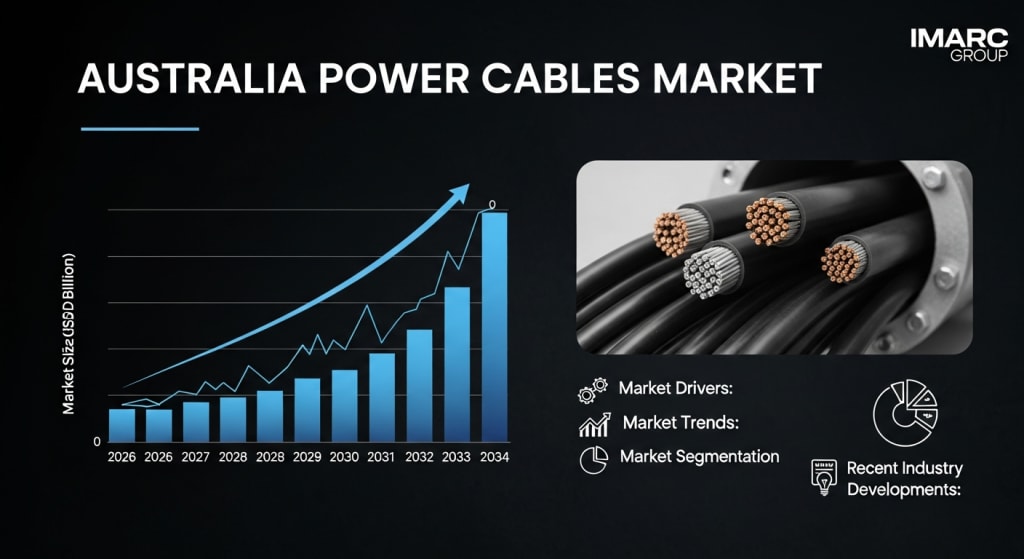
The Australia Power Cables Market is emerging as a key pillar of the nation’s energy transition, underpinned by increasing electricity demand, renewable energy integration, and significant grid modernization efforts. In 2024, the market reached a value of USD 5.22 billion, reflecting solid demand from transmission, distribution, and infrastructure development projects. Looking ahead, IMARC Group forecasts that the market will expand to USD 8.27 billion by 2033, growing at a CAGR of 4.70% between 2025 and 2033.
This projected growth trajectory highlights the strategic importance of power cables in enabling a resilient, efficient, and greener electricity network across Australia. From overhead high-voltage lines linking remote renewable generation to urban smart grid deployments, the sector is poised for sustained expansion.
Why the Market Is Growing So Rapidly
1. Rising Electricity Demand Across Sectors
Australia’s energy consumption continues to rise across residential, commercial, and industrial sectors, driven by population growth and broader electrification. Power cables are critical to transmitting and distributing this electricity reliably, necessitating continuous upgrades and expansions of cable networks. As utilities and developers work to meet demand without compromising reliability, robust cable infrastructure remains essential.
2. Renewable Energy Integration Expands Network Needs
The nation’s transition toward renewable energy sources, particularly solar and wind, is reshaping power infrastructure dynamics. These distributed and often remote generation facilities require specialized power cables to integrate into the existing grid. Next-generation cables — including high-capacity and subsea variants — are essential for linking renewable plants to load centers and enabling long-distance transmission with minimal losses.
3. Grid Modernization and the Smart Grid Transition
Australia’s grid modernization efforts, including the Rewiring the Nation Fund, are injecting billions into infrastructure upgrades designed to support higher renewable penetration and improved grid resilience. Advanced grid architectures — featuring real-time monitoring and two-way communication — demand more sophisticated cabling solutions capable of supporting data and power in modern networks.
4. Infrastructure Development and Urban Expansion
Ongoing infrastructure projects in metropolitan and regional zones — from transportation to commercial construction — are broadening the scope of power cable deployment. Underground and overhead cabling systems are essential for utilities as urban areas grow and new developments emerge. This trend boosts demand across voltage classes and installation types.
5. Regulatory Support and Government Initiatives
Federal and state government initiatives aimed at enhancing energy security, accelerating emissions reduction, and modernizing the grid have catalyzed investment in power infrastructure. Programs that incentivize infrastructure investment — particularly those tied to renewable integration and smart network technologies — are strengthening the market’s fundamental drivers.
Market Segmentation
IMARC Group categorizes the Australia Power Cables Market based on several key dimensions, giving stakeholders a clear view of underlying demand drivers:
Installation Type:
• Overhead
• Underground
• Submarine Cables
Voltage Level:
• High
• Medium
• Low
Material:
• Copper
• Aluminum
End-Use Sector:
• Power
• Oil & Gas
• Chemical
• Manufacturing
• Metals & Mining
• Infrastructure
• Transportation
• Others
Regional Insights:
• Australia Capital Territory & New South Wales
• Victoria & Tasmania
• Queensland
• Northern Territory & South Australia
• Western Australia
This comprehensive segmentation underscores the diversity of applications and opportunities across geographic and industrial domains.
What the Opportunities Are
1. Renewable Grid Expansion Projects
With Australia pursuing ambitious renewable generation goals, developers and cable manufacturers can capitalize on transmission and distribution expansions connecting solar, wind, and hybrid energy facilities.
2. Smart Infrastructure Integration
Advanced power cables that support data integration and real-time monitoring present an innovation opportunity as utilities deploy smart grid capabilities.
3. Underground Cabling for Urban Growth
Increasing underground installations — particularly in urban and high-density regions — offer opportunities for high-specification cabling systems designed for durability and safety.
4. High-Voltage and Submarine Cable Demand
Large energy-link projects, including subsea links and long-distance high-voltage lines, demand specialized cables, creating a niche for suppliers with technical expertise in these areas.
5. Materials Innovation and Sustainability
Developing lower-emission, recyclable, and high-efficiency cable materials — particularly copper and aluminum innovations — can differentiate product portfolios in a competitive marketplace.
6. Industrial and Mining Sector Expansion
Industries such as mining and heavy manufacturing require resilient power transmission infrastructure, presenting steady demand for robust cable solutions.
7. Public-Private Infrastructure Initiatives
Collaborations between government bodies and private firms focused on infrastructure renewal and green grid initiatives can unlock co-investment opportunities and long-term contracts.
• April 2025: Federal energy agencies announced accelerated funding toward smart grid pilot projects in Queensland, committing over AUD 250 million to bolster grid digitization, smart meter deployment, and advanced cable installations in support of distributed energy resources. This initiative is expected to strengthen demand for advanced power cables with real-time data capabilities.
• June 2025: Nexans Australia inaugurated a new production facility near Melbourne designed to supply high-voltage and smart grid cables locally, reducing lead times and enhancing resilience of supply chains for critical infrastructure projects. The facility’s capacity is expected to increase output by 30% by year-end.
• September 2025: The Australian Energy Market Operator (AEMO) reported that renewable capacity connected to the national grid grew by 11% year-on-year, with solar and wind installations driving this rise. The associated network upgrades and new grid links underscore increasing cable deployment and modernization activity nationwide.
Why Should You Know About the Australia Power Cables Market?
For investors, the Australia Power Cables Market represents a steady, long-term growth opportunity linked to essential energy and infrastructure investments. The projected climb from USD 5.22 billion in 2024 to USD 8.27 billion by 2033 reflects not just increased demand but structural shifts toward renewable and smart energy systems.
For businesses and suppliers, this market offers fertile ground to innovate — from high-voltage transmission products to smart grid-ready cable solutions — and to secure strategic partnerships across public and private sectors. For policy makers, understanding power cables’ role in enabling a resilient, sustainable grid is crucial for shaping effective infrastructure and energy transition policies. As Australia continues its electrification journey, power cables will remain at the heart of system reliability, performance, and modernization.
About the Creator
Rashi Sharma
I am a market researcher.
Keep reading
More stories from Rashi Sharma and writers in Trader and other communities.
Australia Industrial Filtration Market Poised to Nearly Double by 2033 on Sustainability and Mining Expansion
The Australia industrial filtration market is gaining strong traction as industries across the country intensify efforts to improve environmental compliance, enhance process efficiency, and support rapid expansion in mining and manufacturing sectors. According to IMARC Group, the market was valued at USD 996.8 million in 2024 and is forecast to reach USD 1,924.51 million by 2033, growing at a CAGR of 6.80% between 2025 and 2033.
By Rashi Sharma6 days ago in Trader
Bitcoin Price Today: What Experts Are Saying About Its Next Big Move
Bitcoin price today continues to grab the attention of investors around the world. Every shift in value sparks curiosity and concern, especially for those looking to make smart investment choices. Understanding what drives these changes can help you stay ahead. They will explore key insights, hidden trends, and expert perspectives that shape bitcoin price today.
By hamza mirzaa day ago in Trader
Dimovo Exchange: Driving Global Economic Integration and Financial Innovation
Executive Summary Dimovo Exchange has emerged as a notable player in the global digital asset and financial technology ecosystem. Beyond its core function as a digital trading platform, Dimovo Exchange exerts a significant influence on global economic structures through capital flow facilitation, market liquidity enhancement, technological innovation, and cross-border financial integration. This report analyzes the multifaceted impact of Dimovo Exchange on the global economy, focusing on macroeconomic trends, financial market stability, and technological contributions to the financial sector.
By Dimovo Exchangea day ago in Trader


Comments
There are no comments for this story
Be the first to respond and start the conversation.