
Australia Asphalt Pavers Market: Steady Expansion to USD 119.08 Million by 2033
Infrastructure growth, mobile equipment demand and tech-enhanced paving solutions fuel long-term market momentum

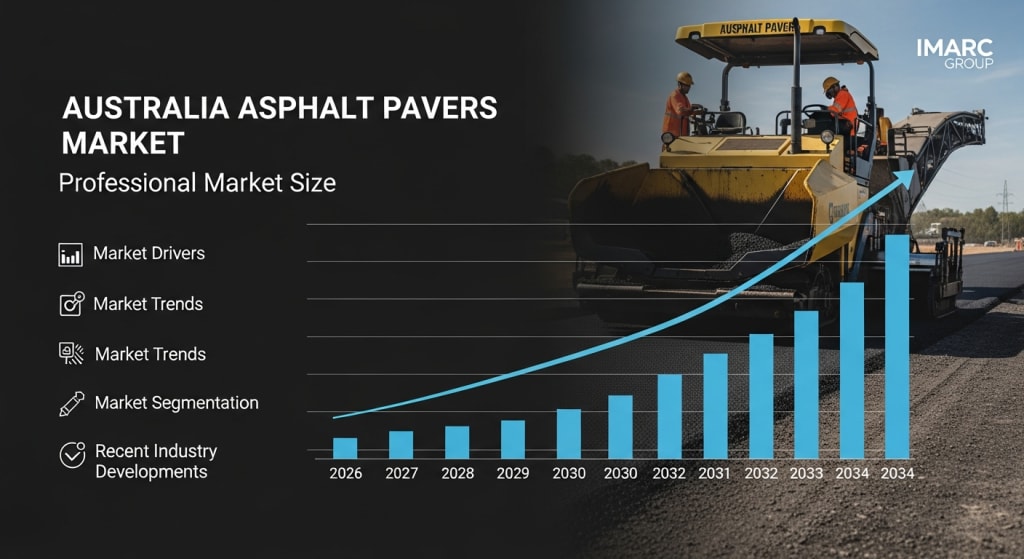
The Australia asphalt pavers market is on a sustainable growth trajectory, driven by infrastructure spending, rising demand for efficient paving equipment and evolving construction technologies. According to the latest IMARC Group research, the market was valued at USD 67.76 million in 2024 and is projected to reach USD 119.08 million by 2033, representing a compound annual growth rate (CAGR) of 5.80% over 2025–2033.
This growth reflects broader national development trends as Australia continues to invest in road networks, urban infrastructure and transport upgrades. Asphalt pavers — the machines responsible for laying asphalt on roadways and surfaces — are becoming crucial not just for large highways but also for regional, urban and specialised civil works.
Why the Market Is Growing So Rapidly
1. Infrastructure Development and Road Construction Programs
Australia’s federal and state governments are actively funding road construction, highway upgrades and pavement rehabilitation projects as part of long-term infrastructure strategies. These projects require reliable asphalt paving equipment capable of laying uniform, durable surfaces — driving consistent demand for both large-scale and compact pavers across regions.
2. Demand for Mobile and Efficient Machinery
Contractors increasingly prioritise mobile mix plants and fast-deploying pavers that can be quickly moved between sites, especially in remote and regional areas. Such equipment offers meaningful advantages in speed and setup time over traditional static methods, enabling better project scheduling and lower logistic costs.
3. Rising Labour Costs and Efficiency Pressures
With rising labour costs and tight construction deadlines, machine productivity is more valuable than ever. Asphalt pavers that minimise manual input, reduce labour intensity and support multifunction capabilities are gaining preference. These features improve job site efficiency and lower overall project costs.
4. Increased Adoption of Compact and Multi-Functional Solutions
There’s growing interest in compact, multi-functional pavers that handle tasks in narrow or constrained environments — such as urban streets and utility corridors — while reducing material waste. Such machines allow contractors to deliver consistent results with better control over paving width and depth.
5. Technological Enhancements and Precision Controls
Advanced features such as wireless controls, integrated cameras and adjustable screeds are enhancing the performance of asphalt pavers. These innovations improve operational precision, reduce rework, and facilitate better quality outcomes across varied paving conditions — benefitting large highways as well as intricate patches and shoulder work.
What the Opportunities Are
1. Expansion of Compact Paver Adoption
Machines tailored to urban and utility applications — with agile deployment and reduced footprint — continue to present attractive growth opportunities, especially for smaller contractors and municipal works.
2. Development of Integrated Telematics and Diagnostics
Equipment with embedded telematics, remote diagnostics and data analytics can support predictive maintenance and operational monitoring, helping fleet managers optimise utilisation and reduce downtime.
3. Regional Market Penetration
Beyond metropolitan hubs like Sydney and Melbourne, infrastructure enhancements in Queensland, Western Australia and Northern Territory present notable opportunities for equipment suppliers and rental fleets.
4. Partnerships with Government Programs
Aligning product capabilities with government procurement and performance standards can secure long-term equipment contracts and participation in multi-year infrastructure pipelines.
5. Emphasis on Sustainability and Material Efficiency
Manufacturers that innovate around lower-emission engines, reduced fuel consumption, and materials-efficient paving solutions will appeal to sustainability-focused project specifications and green construction norms.
6. After-Sales Service and Training Offerings
Providing maintenance services, operator training, and spare parts support builds stronger client relationships while generating ongoing revenue streams for suppliers and dealers.
7. Expansion of Fleet Rental and Flexible Acquisition Models
Offering pavers through rental, leasing, or fleet-sharing arrangements can lower entry barriers for smaller contractors and regions with project-based demand fluctuations.
Recent News & Developments in Australia Asphalt Pavers Market
• March 2025: Industry Sustainability Initiative: Boral introduced an asphalt mix incorporating crumbed rubber from off-the-road (OTR) tyres developed with AfPA and Tyre Stewardship Australia. This innovation improved UV resistance and extended pavement life — a noteworthy step toward more sustainable and durable road surfaces that could influence future paving specifications in the asphalt pavers market.
• March 2025: Product Innovation & Market Expansion: ShoulderMaster unveiled the CP-1000 skid steer centre paver at the World of Asphalt exhibition. Featuring wireless controls, integrated cameras and adjustable screed widths, the machine reduced material waste and manual labour, reflecting broader adoption of precision-enabled, multi-functional equipment in the Australian construction ecosystem.
• June 2025: Infrastructure Uptake & Adoption Trends: Industry surveys indicated double-digit year-on-year increases in asphalt paver deployments across major states, linked to government infrastructure spending and accelerated project timelines. Rising adoption mirrors stronger contractor confidence and underscores the value of equipment that improves productivity and delivery quality.
Why Should You Know About the Australia Asphalt Pavers Market?
For investors, the Australia asphalt pavers market represents a solid growth segment within the broader construction equipment space. With projections from USD 67.76 million in 2024 to USD 119.08 million by 2033 and a 5.80% CAGR, the sector reflects sustained infrastructure investment and mechanisation trends.
For equipment manufacturers and suppliers, the demand for advanced mobile, compact and efficiency-focused pavers signals opportunities to develop differentiated products that address performance, sustainability and automation needs.
For contractors and fleet managers, focusing on technologies that enhance productivity and reduce lifecycle costs will be key to securing contracts and improving project outcomes — particularly as government infrastructure pipelines grow across urban and regional Australia.
For policy makers, understanding how evolving paving technologies align with infrastructure goals and sustainability priorities can support smarter procurement strategies that maximise public value and long-term performance.
About the Creator
Rashi Sharma
I am a market researcher.
Keep reading
More stories from Rashi Sharma and writers in Trader and other communities.
Australia Bedsheet Market: Steady Growth Fueled by Sustainability, Technology & E-Commerce
The Australia bedsheet market is expanding steadily as consumer preferences shift toward sustainable materials, high-performance textiles and digitally enabled purchasing experiences. According to IMARC Group’s latest research, the market reached USD 2,236.36 million in 2024 and is projected to grow to USD 3,069.20 million by 2033, recording a CAGR of 3.58% during the 2025–2033 forecast period.
By Rashi Sharmaabout 17 hours ago in Trader
Large Cap Equity Fund: How to Build Wealth with Smart Investments
Investing in a Large Cap Equity Fund is one of the smartest ways to grow your money safely. These funds focus on big, stable companies with strong track records, making them less risky than smaller stocks. This guide will show you how to make smart choices, maximize returns, and avoid common mistakes. For beginners, you can also explore our guide on Best Mutual Fund Strategies for New Investors to understand other fund options.
By hamza mirza3 days ago in Trader
Writing About Writing: The Rainbow Trap
The good thing about living in modern times is that LGBTQ representation in media is increasing. Not just in niche and Independant media, either, but also in mainstream media. Books, movies, TV shows, comics... they're finally catching on that LGBTQ+ people form a significant part of their audience, and deserve to see themselves on screen and in fiction, not just as victims in documentaries and true crime shows.
By Natasja Roseabout 12 hours ago in Writers



Comments
There are no comments for this story
Be the first to respond and start the conversation.