
What Drives Changes in the Treasury Yield Index Over the 5-Year Term
How Inflation, Federal Policy, and Investor Behavior Shape the 5-Year Treasury Yield?

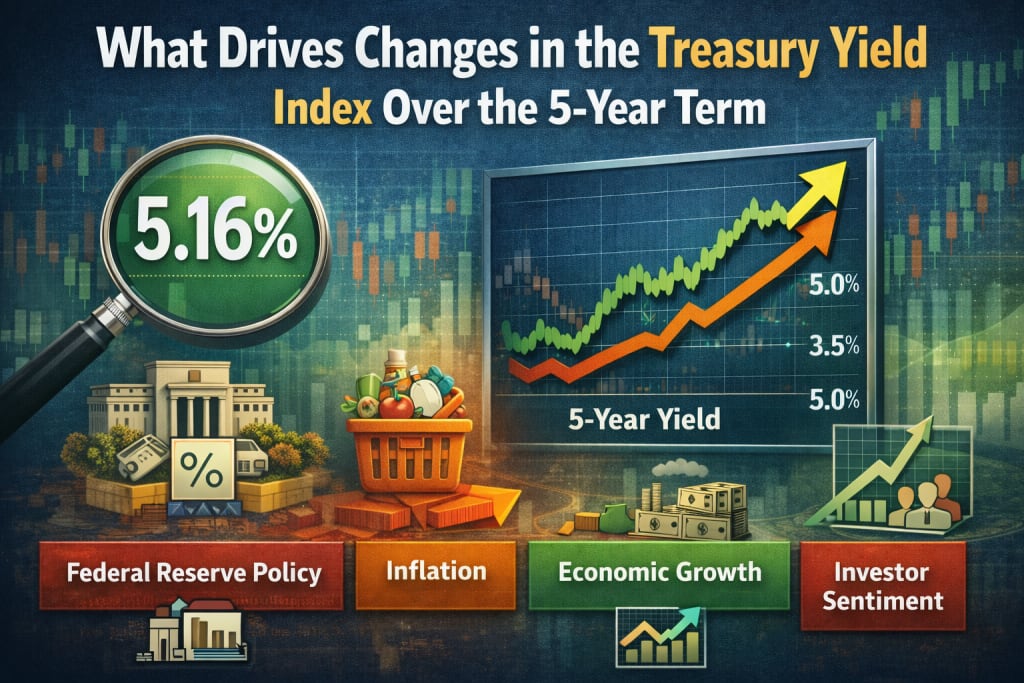
The historical 5 year treasury yield is one of the most watched signals in the financial world because it reflects how investors feel about the near future.
It sits in the middle of short-term and long-term rates, which makes it a strong guide for both economic growth and market confidence.
Many people follow the Treasury Yield 5 Years Index to understand where interest rates may go next.
This article breaks down what really moves this index, using clear language and real-world examples.
The Treasury Yield 5 Years Index
The Treasury Yield 5 Years Index shows the return investors earn by holding a U.S. government bond for five years. It changes daily based on buying and selling activity in the bond market.
Think of it like a mood ring for investors. When confidence is high, yields often rise, and when fear grows, yields usually fall.
Why the 5-Year Term Matters to Investors?
The five-year term is important because it balances short-term safety and long-term growth. It often reacts faster than long bonds but is steadier than very short ones.
Banks, mortgage lenders, and fund managers watch this term closely. Their decisions often ripple through the wider economy.
The Role of the Historical 5 Year Treasury Yield in Market Trends
Looking at the historical 5 year treasury yield helps investors see patterns over time. Past movements often show how markets responded to stress, growth, or policy changes.
For example, yields dropped sharply during major recessions. They climbed again when recovery signs appeared.
How Inflation Expectations Shape Yield Movement?
Inflation plays a big role in the Treasury Yield 5 Years Index. When people expect prices to rise, they demand higher yields to protect their money.
This is why even inflation news can move the index quickly. A single report can shift expectations overnight.
Key inflation drivers include:
Rising food and energy prices
Strong consumer demand
Supply shortages
Federal Reserve Decisions and Their Influence
The Federal Reserve has a powerful effect on the five-year yield. When it signals rate hikes, yields often move up in advance.
When the Fed hints at cuts, the opposite happens. Investors rush toward bonds, pushing yields lower.
Economic Growth Signals from Jobs and Spending
Strong job reports usually lift the Treasury Yield 5 Years Index. They suggest people are earning and spending more.
Weak data does the reverse. It makes investors cautious, which pulls yields down.
Global Events That Impact U.S. Treasury Yields
The U.S. bond market does not move alone. Wars, trade conflicts, and global slowdowns all affect demand for Treasuries.
When global risk rises, investors seek safety. This often lowers the five-year yield quickly.
Investor Demand and Market Psychology
Bond prices and yields move in opposite directions. When many investors buy five-year Treasuries, yields fall.
This behavior is often driven by emotion as much as logic. Fear and optimism both leave clear marks on the index.
Comparing Short-Term and Long-Term Yields
The five-year yield often acts as a bridge between short and long terms. It reflects both current policy and future expectations.
If short-term yields rise faster, it can signal tighter policy. If long-term yields climb more, it may point to future growth.
What the Yield Curve Says About the Economy?
The yield curve compares yields across different terms. The five-year point is a key reference in this curve.
An inverted curve, where short yields exceed longer ones, has often appeared before recessions. The historical 5 year treasury yield helps confirm these warning signs.
How Government Debt Supply Affects Yields?
When the government issues more debt, supply increases. More supply can push yields higher if demand does not keep up.
This is why budget decisions and spending plans matter. They quietly shape the Treasury Yield 5 Years Index.
Using the Historical Data for Smarter Decisions
Studying the historical 5 year treasury yield gives context to today’s numbers. It shows what is normal and what is extreme.
Investors often compare current yields with past averages. This helps them judge risk more clearly.
Common Misunderstandings About the 5-Year Yield
Many people think yields only move because of the Fed. In reality, many forces act together.
Others believe yields predict the market perfectly. They are helpful signals, but not guarantees.
Practical Takeaways for Everyday Readers
You do not need to trade bonds to care about this index. It affects loan rates, savings returns, and investment costs.
Watching trends in the historical 5 year treasury yield can help you understand where money conditions are heading.
Final Thoughts
The Treasury Yield 5 Years Index moves because of inflation, growth, policy, and human behavior working together. Each factor adds a small push that shapes the final number.
By following the historical 5 year treasury yield, readers can gain clearer insight into economic direction and financial planning. Keep an eye on it, and you will better understand the story markets are telling.
About the Creator
Best investments during war
War Changed Investing From Eastern Europe to the Middle East, conflicts are no longer distant headlines — they are market-moving events. And when investors talk about war today, one name dominates the conversation more than any other: Iran and the United States.
By USA daily update about 4 hours ago in Trader
Why Tax Refunds Are So High in 2026: New Tax Laws, More Checks, and Risks to the Budget
Millions of Americans are in for a financial shock as the 2026 tax filing season begins: "tax refunds this year are on track to be the largest in U.S. history." This comes as a result of sweeping tax changes signed into law in 2025 that dramatically altered how taxes are calculated and withheld, leaving many workers with bigger refund checks than they’ve seen in years.
By Raviha Imran2 days ago in Trader
One Hard Thing
Stop me if you’ve heard this one before: You have the number, you know your schedule- you’ve even picked out the perfect day and time to make this appointment. Shoot, you’ve even picked out alternative days and times just in case their schedules can’t accommodate you!
By Taylor Rigsby4 days ago in Motivation




Comments
There are no comments for this story
Be the first to respond and start the conversation.