
6 Pieces of "Good" Financial Advice That Are Keeping You Broke
The rules everyone follows are the reason MOST people never build wealth


There's a certain type of financial advice that gets repeated so often it becomes gospel.
Diversify everything. Save 6 months of expenses. Buy a home as soon as possible. Avoid debt at all costs. Max out your 401k. Don't invest until you're debt-free.
It sounds responsible. It sounds safe. Your parents said it. The internet says it. Every financial "expert" with a podcast says it.
And it's keeping you broke.
Not because it's entirely wrong - but because it's incomplete, outdated, or blindly applied to situations where it doesn't make sense.
Today I'm going to challenge six pieces of "good" financial advice that might be holding you back. This isn't about being reckless. It's about thinking critically instead of following rules that were made for someone else's situation.
1. "Diversify, Diversify, Diversify"
The advice: Spread your money across everything. Don't put all your eggs in one basket. Own a little bit of everything so you're never too exposed.
Why it sounds smart: Diversification reduces risk. If one investment tanks, others will balance it out. It's the safe, responsible approach.
Why it might be keeping you broke:
Diversification is a protection strategy, not a wealth-building strategy.
When you own a little bit of everything, you get average returns. By definition. You've bought the average.
The people who build serious wealth don't do it by owning 47 different ETFs across 12 asset classes. They do it by researching deeply, developing conviction, and concentrating their bets.
Warren Buffett - the most famous investor alive - has said: "Diversification is protection against ignorance. It makes little sense if you know what you're doing."
Think about that. Diversification is what you do when you DON'T know what you're doing.
If you've done the research. If you understand the business. If you have genuine conviction based on knowledge - spreading that conviction thin across 50 positions dilutes your returns.
The math:
Let's say you identify a company that returns 25% over a year.
If it's 2% of your portfolio, that's a 0.5% impact on your total returns
If it's 20% of your portfolio, that's a 5% impact on your total returns
Same insight. 10x different outcome. The only variable is concentration.
The smarter approach:
Diversification makes sense when you're passive - when you're not doing deep research and you just want market returns.
But if you're willing to do the work? If you're reading annual reports, understanding competitive advantages, and developing real conviction?
Concentrate. Own fewer things. Own them with size.
The wealthy didn't get wealthy by buying a little bit of everything. They got wealthy by being right about a few big things - and betting accordingly.
This doesn't mean be reckless. It means be informed. And when you're informed, act with conviction instead of hedging yourself into mediocrity.
2. "Save 6–12 Months of Expenses Before You Invest"
The advice: Build a massive emergency fund before you put a single dollar into the market.
Why it sounds smart: Emergencies happen. You need a cushion. Don't invest money you might need.
Why it might be keeping you broke:
For most people, saving 6–12 months of expenses takes YEARS. And during those years, your money sits in a savings account earning 4–5% while the market historically returns 10%.
Let's do the math:
Say your monthly expenses are $4,000. A 6-month emergency fund is $24,000. A 12-month fund is $48,000.
If you're saving $1,000/month, it takes 2–4 years just to build the emergency fund. That's 2–4 years of $0 invested. 2–4 years of missed compound growth. 2–4 years of waiting to build wealth.
The smarter approach:
Build a starter emergency fund of $2,000–5,000. Then split your savings - half to the emergency fund, half to investments.
You don't need 12 months of expenses sitting in cash before you start investing. You need SOME cushion, then you need your money working for you.
The risk of a market crash matters less than the certainty of missing years of compound growth.
3. "Buy a Home As Soon As You Can"
The advice: Renting is throwing money away. Get into a home ASAP to build equity.
Why it sounds smart: Homeownership builds wealth. Rent payments disappear. Mortgage payments build equity.
Why it might be keeping you broke:
Homeownership is expensive in ways most people don't calculate:
Someone said it best, homeownership can come with "phantom" expenses.
Down payment (tens of thousands locked up)
Closing costs (2–5% of purchase price)
Property taxes (thousands per year)
Insurance (thousands per year)
Maintenance (1–3% of home value annually)
HOA fees (if applicable)
Interest (the majority of early mortgage payments)
When you add it all up, homeownership often costs MORE than renting in the first 5–7 years - especially when you factor in opportunity cost of the down payment.
If you'd invested that $60,000 down payment instead of locking it in a house, it could grow to $150,000+ in 10 years.
The smarter approach:
Run the actual numbers for YOUR situation.
Use a rent vs. buy calculator. Factor in how long you'll stay, the local market, and what else you could do with the down payment.
Renting isn't "throwing money away" - it's paying for flexibility and freedom from maintenance. Sometimes renting and investing the difference builds more wealth than buying.
4. "Avoid Debt At All Costs"
The advice: All debt is bad. Pay off everything before you do anything else. If you can't pay cash, you can't afford it.
Why it sounds smart: Debt is stressful. Interest is expensive. Debt-free feels like freedom.
Why it might be keeping you broke:
Not all debt is created equal.
High-interest debt (credit cards at 20%+) is an emergency. Pay that off immediately.
But low-interest debt? That's a different calculation.
If you have a car loan at 4% and the market returns 10% on average, paying off the car early actually COSTS you money in opportunity cost.
Every extra dollar you throw at a 4% loan is a dollar not earning 10% in the market.
The math:
$10,000 extra payment on 4% loan saves you ~$400/year in interest
$10,000 invested at 10% earns you ~$1,000/year in returns
You're giving up $600/year to feel debt-free.
The smarter approach:
Rank your debts by interest rate. Anything above 6–7%? Pay aggressively. Anything below? Pay minimums and invest the difference.
The wealthy use low-interest debt strategically. They're not afraid of it - they do the math.
5. "Always Max Out Your 401k"
The advice: Max out your 401k every year. It's tax-advantaged. It's the most important thing you can do.
Why it sounds smart: Tax benefits are real. Employer matches are free money. Retirement is important.
Why it might be keeping you broke:
The 401k is a great tool - but it has limitations most people ignore:
Your money is locked until 59½ (with penalties for early withdrawal)
Limited investment options (often expensive funds)
You can't access it for opportunities (real estate, business, emergencies)
Required minimum distributions force withdrawals later
If you're aggressively maxing your 401k but have nothing in taxable brokerage accounts, you're building wealth you can't touch for decades.
What if you want to retire early at 45? What if a real estate opportunity appears? What if you want to start a business? Your 401k can't help you.
The smarter approach:
Get the full employer match - that's free money, never leave it.
Beyond that? Consider splitting between 401k and taxable brokerage accounts. The taxable account gives you flexibility. You can access it anytime. You can use it for opportunities.
Diversify by TIME ACCESS, not just asset class.
6. "Don't Invest Until You're Completely Debt-Free"
The advice: Pay off all debt before investing. You can't build wealth with debt hanging over you.
Why it sounds smart: Focus feels good. One thing at a time. Debt feels like an emergency.
Why it might be keeping you broke:
This advice assumes all debt is equal (it's not) and ignores time value of money.
Someone with $30,000 in student loans at 5% who waits 5 years to pay it off before investing loses YEARS of compound growth.
Let's compare two people:
Person A: Puts $500/month toward debt only. Pays it off in 5 years. Then invests $500/month for the next 15 years.
Person B: Puts $250/month toward debt, $250/month toward investing from day one. Takes 10 years to pay off debt.
After 20 years:
Person A: ~$208,000 invested
Person B: ~$266,000 invested
Person B has MORE money despite taking longer to pay off debt - because their investments had more time to compound.
The smarter approach:
If your debt interest rate is low (under 6–7%), invest WHILE paying it off. Time in the market beats timing the market - and it also beats waiting to start.
Why This Advice Persists
Bad advice persists because it's simple.
"Save 12 months" is easier to remember than "save 1–3 months, then split contributions based on your risk tolerance and expected returns."
"Avoid all debt" is easier than "calculate the interest rate differential and optimize for net worth growth."
Simple advice gets shared. Nuanced advice gets ignored.
But wealth is built in the nuance.
It's built by people who run the numbers instead of following slogans.
The Pattern You Should Notice
All six of these pieces of advice have something in common:
They prioritize SAFETY over OPTIMIZATION.
They're designed to prevent worst-case scenarios, not maximize outcomes.
And for some people, that's the right approach. If you have no financial discipline, "avoid all debt" is better than "use debt strategically."
But if you're reading this, you probably have discipline. You're definitely capable of nuance. You're probably leaving money on the table by following rules made for people who can't handle complexity.
What To Do Instead
Question every "rule." Ask: does this apply to MY situation, at MY interest rates, with MY goals?
Run the actual math. Calculators exist. Spreadsheets exist. Stop guessing and start calculating.
Optimize for net worth, not feelings. "Debt-free" feels good but might cost you hundreds of thousands in opportunity cost.
Think in decades, not months. The decisions you make about investing vs. debt payoff compound over 20–30 years. Small differences become massive.
Get comfortable with nuance. The best financial decisions aren't black and white. They're calculated trade-offs.
Here's What You Need To Remember
The financial advice everyone follows is designed to be safe, simple, and universal.
But safe, simple, and universal doesn't build wealth - it builds mediocrity.
The wealthy ask questions. They run numbers. They break "rules" when the math says to.
Stop following advice blindly. Start thinking critically.
That's how you stop being kept broke by "good" advice.
Continue the financial insights.
This article is for informational purposes only. It should not be considered financial or legal advice. Consult a financial professional before making any significant financial decisions.
About the Creator
Destiny S. Harris
Writing since 11. Investing and Lifting since 14.
destinyh.com
Keep reading
More stories from Destiny S. Harris and writers in Trader and other communities.
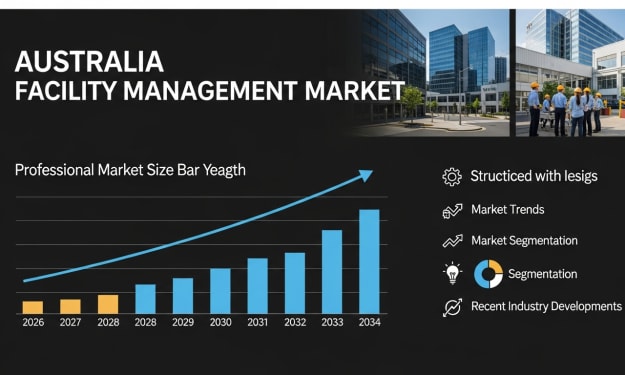
Australia Facility Management Market Set to Nearly Double by 2033 on Tech, Sustainability and Outsourcing Trends
The Australia facility management market is on a strong growth trajectory, driven by rising demand for integrated services that boost operational efficiency and sustainable building performance. According to IMARC Group, the market reached USD 691.3 million in 2024 and is expected to grow to USD 1,303.4 million by 2033, exhibiting a compound annual growth rate (CAGR) of 7.3% during 2025–2033.
By Rashi Sharma5 days ago in Trader
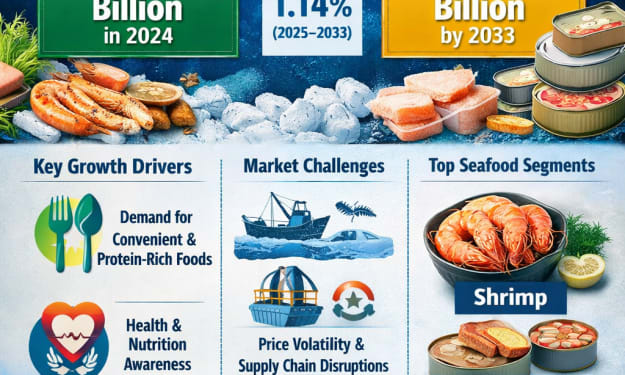
North America Frozen and Canned Seafood Market Size and Forecast 2025–2033
Introduction: A Market Built on Convenience and Consistency The North America frozen and canned seafood market has steadily positioned itself as a reliable pillar of the region’s food industry. In 2024, the market was valued at around USD 24.26 billion and is projected to reach approximately USD 26.84 billion by 2033, growing at a compound annual growth rate (CAGR) of 1.14% between 2025 and 2033. While this growth rate may appear modest compared to some fast-moving food categories, it reflects the stability and resilience of a market that serves everyday consumer needs.
By shibansh kumar5 days ago in Trader


Comments
There are no comments for this story
Be the first to respond and start the conversation.