
Australia Facility Management Market Set to Nearly Double by 2033 on Tech, Sustainability and Outsourcing Trends
As businesses prioritise efficiency, green standards and digital systems, the sector is projected to grow to over USD 1.3 billion by 2033.

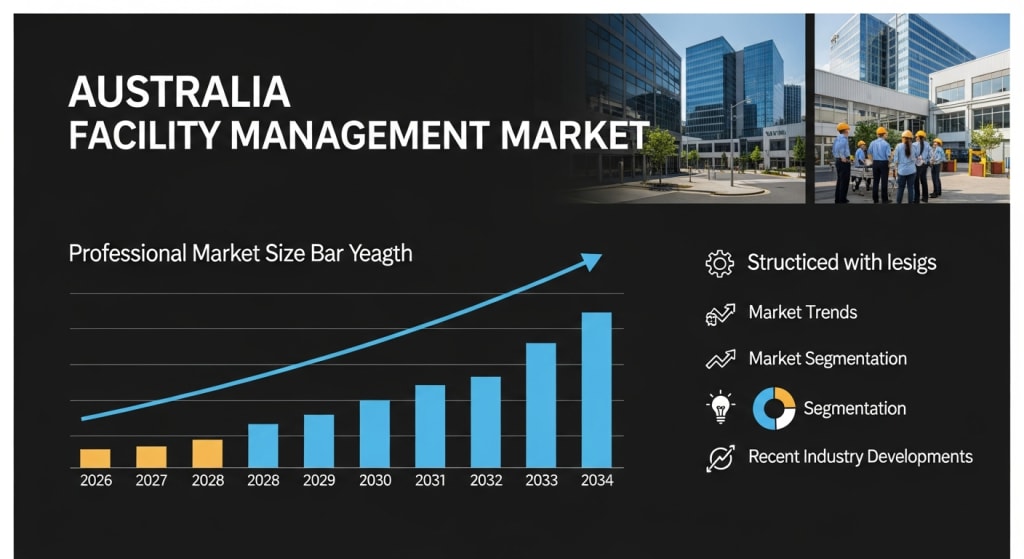
The Australia facility management market is on a strong growth trajectory, driven by rising demand for integrated services that boost operational efficiency and sustainable building performance. According to IMARC Group, the market reached USD 691.3 million in 2024 and is expected to grow to USD 1,303.4 million by 2033, exhibiting a compound annual growth rate (CAGR) of 7.3% during 2025–2033.
Facility management encompasses a range of services — from hard services like building maintenance to soft services such as cleaning and security — and plays a pivotal role in ensuring safe, efficient and compliant operations across commercial, institutional, industrial and public infrastructure sectors. As businesses and public entities confront complex building requirements, evolving regulatory expectations and the need for digitally enabled facilities, professional FM services are becoming indispensable to Australian enterprises.
Why the Market Is Growing So Rapidly
One of the primary drivers of market growth in Australia is the adoption of advanced technologies within facility management operations. Tools such as the Internet of Things (IoT), artificial intelligence (AI) and building information modelling (BIM) are being integrated to optimise predictive maintenance, automate routine tasks, enhance energy efficiency and improve overall facility performance. These technologies not only drive operational cost savings but also contribute to improved real time decision making and system reliability — benefits that appeal strongly to large commercial tenants and owners.
Sustainability and environmental responsibility are also major growth catalysts. As businesses face tightening environmental regulations and increased stakeholder expectations around corporate ESG (Environmental, Social and Governance) performance, facility management services that incorporate green building practices — such as energy optimisation, waste reduction and sustainable maintenance strategies — are in higher demand. These services help organisations comply with new codes and standards and attract environmentally conscious tenants.
The outsourcing trend is another significant factor. Many Australian companies — particularly in commercial and industrial sectors — are opting to outsource facility management functions rather than manage them in house. Outsourced FM allows organisations to streamline non core operations like cleaning, security and building upkeep under a single provider, unlocking efficiencies and predictable cost structures. Integrated facility management (IFM) solutions, which bundle multiple services, are especially sought after.
Urban development and infrastructure expansion are creating steady demand for FM services as well. New commercial complexes, retail spaces, healthcare facilities and logistics hubs require comprehensive lifecycle management solutions to ensure building performance and compliance. FM providers that can support these infrastructure demands — particularly in high growth regions — are gaining traction.
Another factor supporting market growth is regulatory compliance and workplace safety mandates. Increasingly stringent government rules related to occupational health and safety, environmental standards and building codes are motivating organisations to engage professional FM services that can ensure ongoing compliance and mitigate legal and operational risks.
What the Opportunities Are
1. Technology Enabled Solutions: Expanding offerings that leverage IoT, AI, predictive analytics and real time monitoring platforms can help clients reduce costs, increase uptime and meet digital transformation goals.
2. Sustainable and Green FM Services: Providers that specialise in energy management, green certifications and ESG compliance support will be attractive to organisations aiming to meet environmental targets and regulatory requirements.
3. Integrated Facility Management (IFM): Offering bundled service packages covering hard and soft FM services can enhance efficiency for clients, create recurring revenue streams and differentiate providers in the competitive landscape.
4. Regional Expansion: Many remote and regional areas of Australia remain under served by FM services; targeted geographic expansion can unlock new contracts in industrial, healthcare and government sectors.
5. Sector Specific Expertise: Tailored FM solutions for specialised industries (e.g., healthcare, education, aged care, defence) that require regulatory expertise and customised service protocols can command premium pricing.
6. SME Outsourcing Solutions: Small and medium enterprises are increasingly outsourcing FM responsibilities; developing flexible, scalable service packages for this segment can drive steady growth.
7. Lifecycle and Retrofit Services: As ageing buildings require refurbishment and system upgrades, FM companies offering lifecycle planning and retrofit solutions — particularly for energy efficiency — will be in demand.
Recent News & Developments in Australia Facility Management Market
February 2025: The Australian Building Codes Board released proposals under the National Construction Code 2025 that emphasise energy performance and sustainability targets for new and existing buildings. This regulatory shift is motivating facility owners to adopt advanced FM solutions that support compliance, energy optimisation and environmental reporting, laying the groundwork for deeper engagement of professional services.
• April 2025: A major Australian facility management firm announced the launch of a new AI integrated building management platform designed to reduce energy consumption by providing predictive analytics and automated control systems. The investment reflects growing industry confidence in digital solutions and is expected to significantly enhance service delivery across commercial portfolios.
• August 2025: Industry data showed a notable uptick in outsourced facility management contracts in the corporate and healthcare sectors, with year on year contract values rising in excess of 10%. This trend suggests strengthening trust in external FM partners as organisations prioritise operational efficiency and compliance amid complex building and safety requirements.
Why Should You Know About Australia Facility Management Market?
The Australia facility management market is becoming increasingly strategic for businesses, real estate owners and policymakers alike. With market value projected to nearly double from USD 691.3 million in 2024 to USD 1,303.4 million by 2033 at a 7.3% CAGR, the sector represents a compelling growth story underpinned by technology, sustainability and outsourcing trends.
For facility management service providers, this growth points to expanding opportunities across technology driven services, green building solutions and integrated offerings. Investors can find attractive prospects in companies that successfully differentiate through digital capabilities and sustainability expertise. For business leaders and occupiers, partnering with professional FM firms helps reduce operational risk, enhance compliance and improve asset performance.
From a policy perspective, supporting technology adoption, sustainability frameworks and workforce development within the FM industry can bolster building efficiency and economic productivity. In an environment where buildings and infrastructure play a critical role in economic activity, the FM sector is increasingly central to operational excellence, workplace safety and long term value creation.
About the Creator
Rashi Sharma
I am a market researcher.
Keep reading
More stories from Rashi Sharma and writers in Trader and other communities.
Australia Biosimilar Market Set for Explosive Growth as Affordable Biologics Gain Traction
The Australia biosimilar market is on a remarkable growth trajectory, driven by increasing demand for cost effective biologic therapies, supportive government frameworks, and broader healthcare adoption. According to IMARC Group, the market was valued at USD 741.6 million in 2024 and is forecast to reach USD 5,512.5 million by 2033, reflecting a robust compound annual growth rate (CAGR) of 22.20% between 2025 and 2033.
By Rashi Sharmaa day ago in Trader
Hindustan Copper Share Price: Latest Trends and Investment Insights
Hindustan Copper Share Price: Market Overview The latest Hindustan Copper share price shows that the company continues to maintain its position as a significant player in India’s mining and metals sector. As the country’s leading copper producer, Hindustan Copper has consistently attracted investor attention due to its steady production output, government support, and role in meeting domestic and international copper demand.
By Hammad Nawaz4 days ago in Trader
Feelings Never Die
It is Valentine's Day again, and it bought back memories that were over fifty years old. It bought me back to 1971, and I woke up and I knew my baby was due today. I was big and pregnant, and I felt like I was about to burst wide open. Imagine my surprise when the doctor told my I had a due date of February 14. I couldn't believe it, and since my baby was due today, I felt I could indulge myself a bit. I had gained a lot of weight, and chocolate was on the no-no list, but I had came to the end of this pregnancy, and I hoped it would be okay, after all I would deliver this baby today. So I walked across the street to the grocery story, and bought myself, a peppermint patty, covered in chocolate, my favorite. Me and my Valentine's baby would enjoy it together.
By Susan Payton2 days ago in Fiction




Comments
There are no comments for this story
Be the first to respond and start the conversation.