
North America Frozen and Canned Seafood Market Size and Forecast 2025–2033
Convenience, Nutrition, and Sustainability Shape the Future of Preserved Seafood in North America

Introduction: A Market Built on Convenience and Consistency
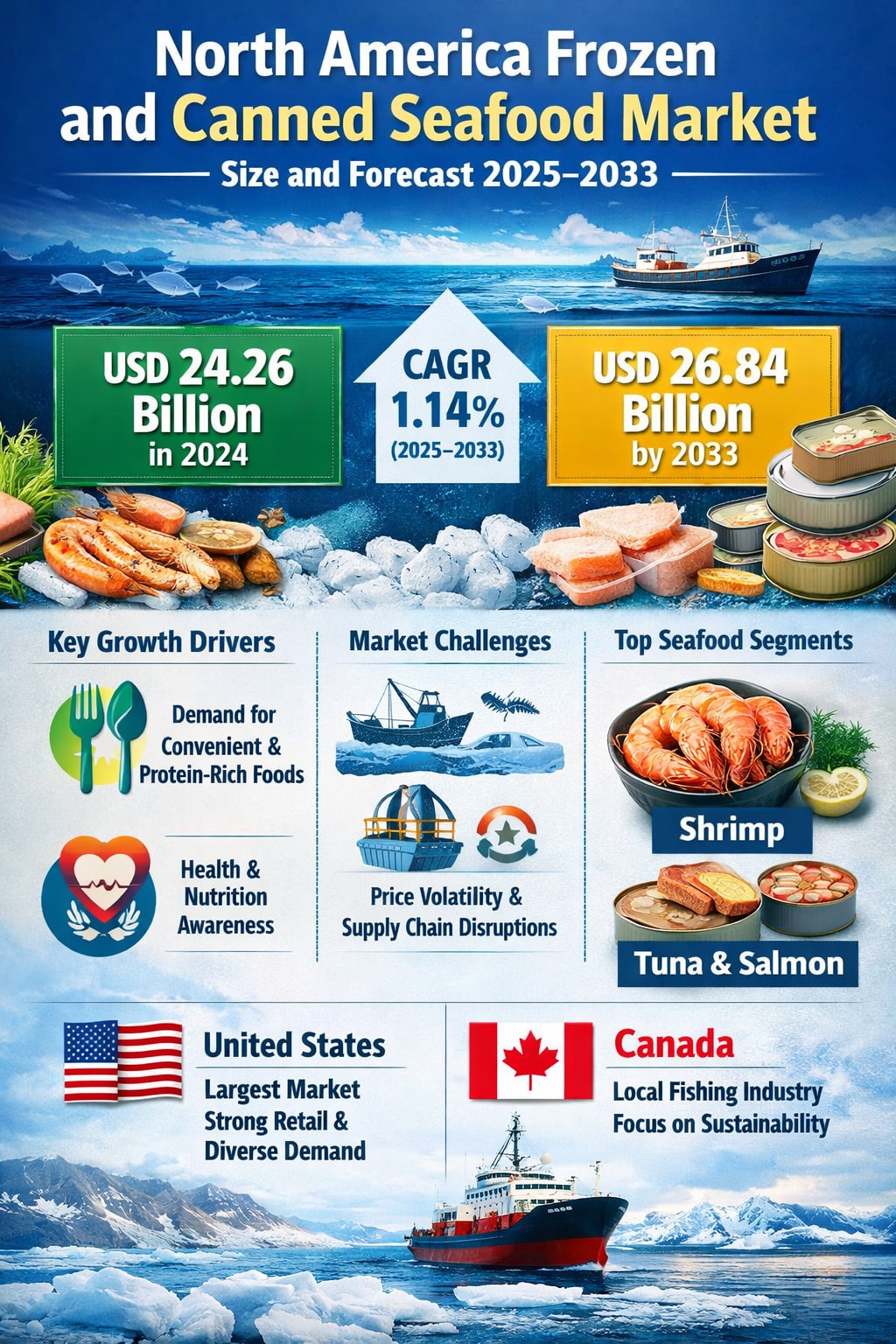
The North America frozen and canned seafood market has steadily positioned itself as a reliable pillar of the region’s food industry. In 2024, the market was valued at around USD 24.26 billion and is projected to reach approximately USD 26.84 billion by 2033, growing at a compound annual growth rate (CAGR) of 1.14% between 2025 and 2033. While this growth rate may appear modest compared to some fast-moving food categories, it reflects the stability and resilience of a market that serves everyday consumer needs.
The core strength of frozen and canned seafood lies in its ability to balance nutrition, affordability, and convenience. As modern lifestyles become increasingly busy, consumers continue to seek food options that are easy to store, quick to prepare, and nutritionally reliable. Seafood, long praised for its protein content and omega-3 fatty acids, fits neatly into this demand profile when offered in frozen and canned formats.
In North America, these preservation methods also play a crucial role in ensuring year-round access to seafood, regardless of fishing seasons or geographic limitations. From family kitchens to restaurant menus and institutional catering, frozen and canned seafood has become a staple ingredient across a wide range of culinary applications.
Market Overview: What Defines Frozen and Canned Seafood?
Frozen and canned seafood refers to fish and other marine products that are preserved through freezing or canning processes to extend shelf life while maintaining safety and nutritional value. Frozen seafood typically includes products such as fish fillets, shrimp, calamari, and mixed seafood portions that are rapidly frozen shortly after harvest. This process helps lock in freshness, texture, and taste.
Canned seafood, on the other hand, commonly includes tuna, salmon, sardines, clams, and other fish varieties that are sealed in airtight containers and heat-processed to ensure long-term storage stability. These products are especially valued for their long shelf life, portability, and ease of use.
Across North America, both frozen and canned seafood are widely used in home cooking and foodservice. They feature in dishes ranging from salads and sandwiches to soups, casseroles, stir-fries, and pasta meals. Compared to fresh seafood, these products are often more affordable and less prone to spoilage, making them accessible to a broader consumer base and reducing food waste at the household level.
Key Growth Driver: Rising Demand for Convenient, Protein-Rich Foods
One of the most important drivers of the North America frozen and canned seafood market is the growing consumer preference for high-protein, nutrient-rich foods that support healthy lifestyles. Seafood is widely recognized as a lean source of protein and an excellent provider of essential nutrients such as omega-3 fatty acids, vitamins, and minerals.
At the same time, convenience has become a defining factor in food choices. Busy work schedules, urban lifestyles, and smaller household sizes have increased demand for ready-to-cook or ready-to-eat meal solutions. Frozen fish fillets, pre-cleaned shrimp, and canned tuna or salmon offer quick meal options without compromising on nutrition.
Consumer research in the United States has shown that a large majority of adults continue to rely on traditional protein sources such as poultry, beef, pork, and fish. However, there is also a growing openness to protein diversification, particularly among younger and health-conscious consumers who follow flexitarian or balanced diets. In this context, seafood in frozen and canned forms fits perfectly into modern eating habits.
Technological Advancements: Improving Quality and Shelf Life
Technological progress in freezing, canning, and packaging has played a critical role in strengthening consumer confidence in preserved seafood products. Innovations such as flash freezing, vacuum sealing, and high-pressure processing help maintain flavor, texture, and nutritional value, making frozen and canned seafood increasingly competitive with fresh alternatives.
Packaging innovations, including easy-open cans, resealable packs, and recyclable materials, further enhance convenience and align with sustainability goals. At the same time, improvements in cold chain logistics ensure that products maintain consistent quality from processing facilities to retail shelves.
Digital tracking and traceability systems are also becoming more common, offering greater transparency about product origin and handling. These developments not only improve food safety but also build trust among consumers who are increasingly interested in knowing where their food comes from and how it is processed.
Expanding Retail Channels and Consumer Access
Another major factor driving market growth is the widening availability of frozen and canned seafood across multiple retail formats. Supermarkets and hypermarkets remain the dominant distribution channels, offering broad product ranges, private-label options, and frequent promotions that encourage regular purchases.
At the same time, online grocery platforms and direct-to-consumer seafood brands are reshaping purchasing habits. Home delivery, subscription seafood boxes, and digital product information are making it easier for consumers to access both everyday and premium seafood products without visiting physical stores.
Convenience stores also play a growing role, particularly in urban areas and transit locations. These outlets cater to impulse purchases and time-sensitive consumers by offering canned seafood snacks and microwaveable frozen meals. Together, these channels create a diverse and accessible retail ecosystem that supports steady market demand.
Market Challenges: Sustainability and Environmental Concerns
Despite its stable growth outlook, the North America frozen and canned seafood market faces significant challenges, particularly around sustainability and environmental responsibility. Issues such as overfishing, habitat degradation, and bycatch continue to raise concerns among regulators, environmental groups, and consumers.
In response, many companies are adopting certification schemes such as those from the Marine Stewardship Council (MSC) and Aquaculture Stewardship Council (ASC) to demonstrate responsible sourcing practices. However, meeting these standards often involves higher operational costs, which can impact pricing and profitability.
Consumer awareness of ocean conservation is also increasing, driving demand for traceable and eco-labeled products. While this trend creates opportunities for responsible brands, it can be challenging for smaller suppliers or complex global supply chains to meet these expectations consistently.
Price Volatility and Supply Chain Disruptions
The market is also affected by price fluctuations and supply chain uncertainties. Climate variability can influence fish stocks and catch volumes, leading to inconsistent raw material availability. In addition, factors such as fuel prices, labor shortages, transportation costs, and geopolitical trade issues can increase operational expenses.
For products that rely heavily on imports, currency exchange rate movements further add to price instability. Regulatory requirements related to food safety and labeling can also slow down imports and raise compliance costs. Together, these factors make long-term price predictability more difficult for both producers and retailers.
Segment Insight: Shrimp in Frozen and Canned Seafood
Shrimp remains one of the most popular seafood choices in North America, driving strong demand in both frozen and canned categories. Consumers appreciate shrimp for its mild flavor, quick cooking time, and versatility across different cuisines.
Frozen shrimp dominates this segment due to its wide availability in various forms, including peeled, deveined, and pre-cooked options. Canned shrimp, while a smaller category, serves niche needs in foodservice and long-shelf-life meal solutions. Growing interest in high-protein, low-fat diets continues to support shrimp consumption, while sustainability initiatives in aquaculture aim to address ethical sourcing concerns.
Segment Insight: Fish in Frozen and Canned Seafood
Fish-based products represent a significant share of the market, supported by consistent demand for affordable and healthy protein sources. Canned tuna, salmon, and sardines remain household staples, valued for their convenience and long shelf life.
On the frozen side, varieties such as cod, tilapia, and haddock are widely used in both home cooking and foodservice. Advances in freezing technology have improved taste and texture retention, reinforcing consumer confidence in product quality. Increasing awareness of omega-3 benefits and heart-healthy diets continues to strengthen demand in this segment.
Distribution Focus: Convenience Stores and Online Channels
Convenience stores are becoming increasingly important for frozen and canned seafood, particularly for on-the-go consumers. Small pack sizes, ready-to-eat options, and promotional pricing encourage impulse purchases, especially in urban centers.
Meanwhile, online channels are transforming how consumers buy seafood. E-commerce platforms offer broader product selection, detailed product information, and doorstep delivery. Improved cold chain logistics and insulated packaging have addressed many of the traditional challenges of shipping seafood, making online purchasing a practical and attractive option for many households.
Country Analysis: United States and Canada
The United States represents the largest market in North America, driven by strong retail infrastructure and diverse consumer demand. Frozen seafood such as shrimp, salmon, and cod dominates household consumption, while canned tuna and sardines remain pantry essentials. Sustainability, recyclable packaging, and premium ready-to-eat offerings are increasingly shaping product innovation.
Canada, supported by its strong domestic fishing industry, shows high consumer trust in locally sourced seafood. Canadian consumers place significant emphasis on quality, freshness, and sustainability, which supports demand for traceable and certified products. Both frozen and canned seafood continue to play important roles in everyday diets, with online channels expanding access, especially in remote regions.
Competitive Landscape and Key Players
The North America frozen and canned seafood market features a mix of established players and specialized producers. Key companies covered from multiple viewpoints include:
Admiralty Island Fisheries Inc.
American Tuna Inc.
Beaver Street Fisheries
Dongwon Industries Ltd
Dulcich Inc.
FCF Co. Ltd
Gulf Shrimp Co. LLC
High Liner Foods Inc.
Mowi ASA
These companies compete through product innovation, sustainability initiatives, brand positioning, and expanding distribution networks.
Final Thoughts: A Stable Market with Evolving Priorities
The North America frozen and canned seafood market may not be the fastest-growing segment of the food industry, but it remains one of the most dependable and resilient. With the market expected to grow from USD 24.26 billion in 2024 to USD 26.84 billion by 2033, its steady trajectory reflects ongoing consumer reliance on convenient, nutritious, and affordable seafood options.
Looking ahead, sustainability, technology, and changing retail habits will play increasingly important roles in shaping the market. Companies that invest in responsible sourcing, transparent supply chains, and innovative product formats will be best positioned to capture future opportunities. In a world where convenience and health continue to define food choices, frozen and canned seafood is set to remain a cornerstone of North American diets for years to come.
About the Creator
Keep reading
More stories from shibansh kumar and writers in Trader and other communities.
Neonatal Intensive Care Market Size and Forecast 2026–2034
Neonatal Intensive Care Market: A Decade of Critical Growth The global Neonatal Intensive Care Market is entering a decisive growth phase as healthcare systems across the world intensify their focus on infant survival and long-term health outcomes. According to Renub Research, the market is expected to expand from US$ 4.27 billion in 2025 to US$ 7.87 billion by 2034, growing at a CAGR of 7.03% during the forecast period 2026–2034.
By shibansh kumara day ago in Trader
Hindustan Copper Share Price: Latest Trends and Investment Insights
Hindustan Copper Share Price: Market Overview The latest Hindustan Copper share price shows that the company continues to maintain its position as a significant player in India’s mining and metals sector. As the country’s leading copper producer, Hindustan Copper has consistently attracted investor attention due to its steady production output, government support, and role in meeting domestic and international copper demand.
By Hammad Nawaz4 days ago in Trader
Public Announcement Challenge Winners
For the Public Announcement Challenge, writers were asked to work inside voices built for control. These were notices, warnings, and updates meant to inform rather than confess. The strongest entries committed to that form and didn't break from it. Corporate memos, formal government alerts, and internal policy language were held consistently, allowing emotion, fear, grief, or humor to surface indirectly through pressure rather than declaration. The following poems recognize the voice of authority, and let human feeling slip through despite all its rules and restraint.
By Vocal Curation Teama day ago in Resources



Comments
There are no comments for this story
Be the first to respond and start the conversation.