
Aid Groups in Gaza and West Bank Thrown Lifeline as Israel Court Pauses Ban Threat
Israel’s Supreme Court temporarily halts enforcement of new regulations that threatened to shut down international humanitarian organizations, allowing critical aid operations in Gaza and the West Bank to continue amid rising tensions.
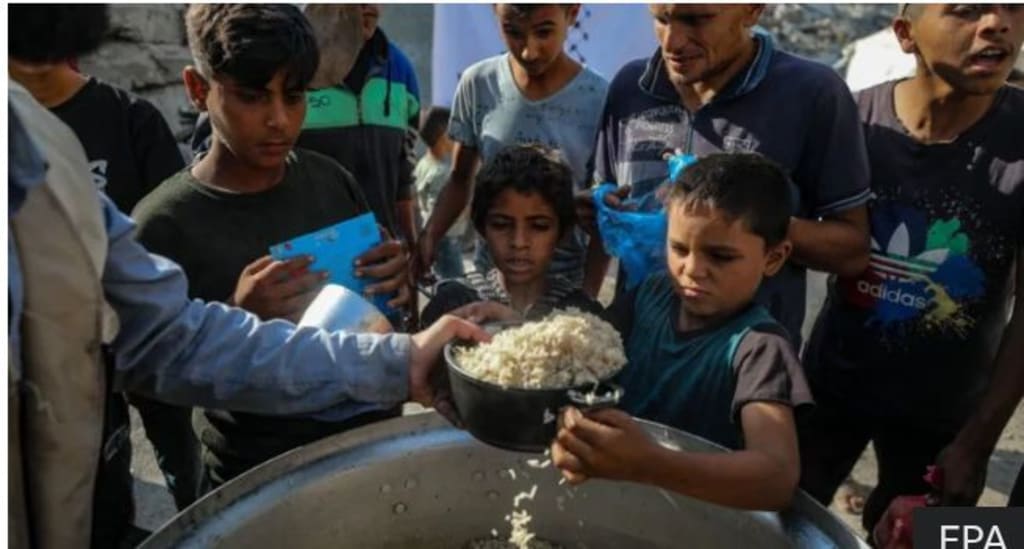
For communities already grappling with conflict, displacement, and economic hardship, that pause could mean the difference between continuity of care and sudden disruption.
A Sudden Legal Challenge for Aid Organizations
Earlier this year, Israeli authorities introduced new regulations requiring foreign aid groups operating in Gaza, the West Bank, and East Jerusalem to submit detailed information about their staff and operations. The measures reportedly included the disclosure of local Palestinian employees’ identities, funding structures, and expanded documentation on project activities.
Organizations were given a deadline to comply — or face the possibility of being barred from operating.
Seventeen aid groups responded by filing an urgent petition with Israel’s High Court of Justice, arguing that the new requirements would undermine humanitarian principles, put local staff at risk, and conflict with international data protection laws. Shortly before the deadline expired, the court issued an interim order freezing the enforcement of the ban while the case is reviewed.
That temporary injunction now allows these organizations to keep operating — at least for the moment.
Why Aid Groups Were Alarmed
From the government’s perspective, the new rules were framed as a matter of security and oversight. Officials have long argued that stricter monitoring of NGOs is necessary in a conflict zone where militant activity and political tensions complicate humanitarian work.
Aid organizations, however, see the issue differently.
Many NGOs operate under strict international standards of neutrality, independence, and impartiality. They argue that sharing sensitive staff information — particularly in an environment shaped by decades of conflict — could expose employees to danger or political targeting.
Additionally, several of these organizations are headquartered in Europe and must comply with stringent privacy laws that limit how personal data can be transferred or disclosed. They contend that meeting the new Israeli requirements could place them in legal conflict with their home-country regulations.
Beyond the legal concerns lies a deeper fear: that heavy-handed regulatory demands could set a precedent that politicizes humanitarian action in ways that undermine its credibility and effectiveness.
The Humanitarian Stakes in Gaza
The Gaza Strip remains one of the most densely populated and crisis-affected regions in the world. Years of blockade, internal political division, and repeated rounds of armed conflict have severely damaged infrastructure.
Since the outbreak of major hostilities in October 2023, humanitarian needs have surged. Hospitals have struggled with shortages of supplies. Clean water access has been inconsistent. Thousands of families remain displaced.
Aid organizations provide:
Emergency medical care and trauma surgery
Food distribution and nutrition support
Water and sanitation services
Shelter assistance for displaced families
Psychological support programs
If forced to shut down abruptly, these services would not easily be replaced. Local systems are already overstretched. International NGOs often fill critical gaps that public institutions cannot manage alone.
For many residents, the court’s pause translates into continued access to food, medicine, and shelter during an already precarious period.
The West Bank: A Different but Fragile Context
While the West Bank’s humanitarian landscape differs from Gaza’s, it is hardly stable.
Movement restrictions, periodic security operations, settlement expansion, and economic strain create complex daily challenges for Palestinian communities. Aid groups in the West Bank often focus on:
Educational programs
Livelihood and small-business support
Legal aid and human rights monitoring
Emergency response to displacement or home demolitions
Although the scale of destruction differs from Gaza, the support structure provided by international organizations remains significant — especially in marginalized rural areas.
A sweeping ban could have disrupted long-running development initiatives that aim to strengthen local resilience.
What the Court’s Decision Means — and What It Doesn’t
The Supreme Court’s move is temporary. It does not overturn the regulations. It simply halts enforcement until the legal challenge is fully examined.
Legal experts suggest that the court will need to balance Israel’s stated security concerns with broader obligations under international humanitarian law. Under those principles, authorities controlling a territory are expected to facilitate humanitarian assistance to civilians in need.
The case may hinge on questions such as:
Are the regulatory demands proportionate to the security risks cited?
Do they create unnecessary barriers to lifesaving aid?
Do they conflict with international privacy protections?
The outcome could shape not only NGO operations in Gaza and the West Bank but also the broader relationship between governments and international humanitarian actors in conflict zones worldwide.
International Reaction and Diplomatic Ripples
Foreign governments and global aid networks have been closely monitoring the situation. Many have expressed concern that restricting humanitarian groups could worsen instability in an already volatile region.
Some diplomatic observers note that humanitarian access often serves as a stabilizing factor. When food, healthcare, and essential services are available, tensions may be somewhat mitigated. Removing that safety net can amplify desperation and unrest.
The court’s pause has therefore been viewed by some as a measure that prevents further escalation — at least in the short term.
A Broader Question About Humanitarian Space
At its core, this dispute raises a larger issue: how humanitarian organizations operate in politically charged environments.
Conflict zones are rarely simple. Governments have legitimate security concerns. Aid groups have legitimate obligations to protect staff and beneficiaries while maintaining neutrality.
When those priorities clash, courts often become the battleground.
The current case underscores the fragile nature of “humanitarian space” — the operating environment that allows aid workers to function independently of political agendas. Once that space narrows, it can be difficult to restore.
For Now, A Breathing Moment
For aid workers on the ground in Gaza and the West Bank, the ruling offers something invaluable: time.
Time to continue distributing food. Time to keep clinics open. Time to maintain shelter programs. Time to advocate for a workable compromise.
Whether the pause becomes a permanent safeguard or simply a temporary reprieve remains to be seen. But for thousands of families relying on international support, even a short extension matters.
In regions defined by uncertainty, sometimes survival depends not only on food and medicine — but on the fragile thread of legal protection that allows help to reach those who need it most.
About the Creator
A Gathering of Evil Bosses
“I’m the queen of chin jutting while I smooth my hair, attacking, insulting, and deflecting to protect my appointer.” “Oh, please, Blondi, my hair is curled, highlighted, and longer than yours. I feature television commercials telling immigrants that we will give them a free plane ride home, and if they voluntarily turn themselves in, they will be allowed to legally apply for re-entry. It runs everywhere, and I look good in it! You can’t compete because of your blond hair. Mine is nicer, and my lips are prettier than yours.”
By Andrea Corwin 10 days ago in The Swamp




Comments
There are no comments for this story
Be the first to respond and start the conversation.