
Winter Storm Snarls US Travel, Forces Mass Flight Cancellations
Extreme Weather Disrupts Airports and Roads Across the Nation

A major winter storm sweeping across the United States has caused widespread travel disruptions, forcing airlines to cancel thousands of flights and leaving travelers stranded at airports. Snow, ice, and high winds have combined to create hazardous conditions on roads, at airports, and in public transportation systems, prompting authorities to issue warnings and travel advisories.
Meteorologists have labeled the storm as one of the most severe winter weather events this season, with snowfall measured in feet in some regions and temperatures dropping to record lows. Airlines, already struggling with staffing shortages, have been forced to adjust schedules rapidly, prioritizing passenger safety over convenience.
Flight Cancellations and Delays
According to the Airline Reporting Corporation, thousands of flights have been canceled nationwide, with major disruptions reported at hubs such as:
Chicago O’Hare International Airport
New York’s JFK and LaGuardia Airports
Denver International Airport
Atlanta Hartsfield-Jackson International Airport
Passengers report long lines, delayed boarding, and uncertainty about rebooking. Airlines have activated emergency response teams to assist travelers, but the scale of the disruption means that many people will face delays lasting several days.
Airlines affected include major carriers such as Delta, United, American Airlines, and Southwest. Travel experts warn that the combination of extreme weather and high passenger volume could result in continued cancellations throughout the week.
Road Travel and Public Transportation
It’s not just airports that are affected. Interstate highways and state roads are covered in snow and ice, leading to multiple vehicle accidents and highway closures. Transportation departments in affected states have deployed snowplows, salt trucks, and emergency personnel to clear routes, but travel remains dangerous.
Public transportation systems in major cities, including subways, buses, and commuter trains, are also experiencing delays and service reductions due to weather conditions. Commuters are advised to check schedules in advance, allow extra travel time, and avoid unnecessary trips.
Safety Warnings and Precautions
Authorities are urging the public to exercise extreme caution during the storm:
Avoid non-essential travel by car or public transport.
Keep emergency supplies in vehicles, including blankets, food, and water.
Check weather alerts and advisories regularly.
Follow airline updates and maintain contact with travel providers.
In addition, cities have opened emergency shelters for those stranded or without power, ensuring that residents and travelers have access to warmth, food, and medical assistance.
Economic and Social Impact
The storm’s impact on travel is significant, both economically and socially. Airline revenues are expected to be affected due to mass cancellations, while the tourism and hospitality industries may see reduced bookings as travelers postpone or cancel plans.
Schools and businesses in affected areas have closed, and many events, including conferences, sports games, and community gatherings, have been postponed or canceled. The disruption highlights the interconnectedness of travel, commerce, and daily life, and the vulnerability of infrastructure during extreme weather.
Meteorological Analysis
Meteorologists explain that the storm was fueled by a combination of cold Arctic air moving south and moisture from the Gulf of Mexico, creating conditions for heavy snowfall, ice accumulation, and high winds. The result is a widespread winter storm stretching across multiple states, from the Midwest to the East Coast.
Experts say that such storms are becoming more intense and unpredictable due to climate variability, emphasizing the importance of preparedness and responsive infrastructure.
Personal Stories
Many travelers have shared experiences of being stranded for hours at airports, sleeping in terminals, and facing uncertainty about connecting flights. Families heading to holidays, business travelers, and students returning home have all been affected.
For example, one traveler tweeted:
“Stuck at JFK for 14 hours. Flights canceled, lines everywhere, and no clear updates. This storm is chaos!”
Such stories highlight the human impact of extreme weather, emphasizing the need for effective communication and emergency support systems.
Responses from Airlines and Authorities
Airlines have urged passengers to monitor email, text alerts, and airline apps for updates, while some have implemented waivers for rebooking and refunds. Transportation authorities continue to deploy resources to maintain safety on roads and public transit.
Officials stress that safety is the top priority, and while travel disruptions are inconvenient, they are necessary to prevent accidents and injuries.
Looking Ahead
The storm is expected to continue affecting travel over the next several days, with cold temperatures persisting even after snowfall ends. Travelers are advised to plan ahead, check updates frequently, and prepare for ongoing disruptions.
Experts also suggest that cities and airlines should review contingency plans, improve communication with travelers, and strengthen infrastructure to withstand increasingly frequent extreme weather events.
Conclusion
The winter storm snarling U.S. travel is a stark reminder of the power of nature and the vulnerability of transportation systems. With thousands of flights canceled, icy roads, and widespread disruption, travelers, airlines, and authorities are all facing challenges.
While inconvenience and economic losses are inevitable, safety measures, preparedness, and effective communication are essential. The storm also highlights the importance of resilient infrastructure, emergency planning, and adaptation to extreme weather, as similar events are likely to become more frequent in the future.
For travelers, the message is clear: stay informed, prioritize safety, and prepare for delays. For authorities and airlines, the storm is a reminder to continuously improve emergency response and operational resilience.
About the Creator
Keep reading
More stories from Aarif Lashari and writers in The Swamp and other communities.
Republican Senators Join Calls for Fuller Investigation into Minneapolis Killing
In the wake of a controversial killing in Minneapolis, several Republican senators have publicly joined calls for a thorough and comprehensive investigation. The move highlights growing bipartisan concern over law enforcement actions and the need for transparency in high-profile cases that have captured national attention.
By Aarif Lashari2 days ago in The Swamp
Ukraine War Briefing: Iran Football Great Ali Karimi Leads Call for Infantino to Speak Up on Protest Deaths
Global sports figures weigh in as humanitarian concerns grow As the conflict in Ukraine continues to unfold, international attention has extended beyond the battlefield. Recently, Iranian football legend Ali Karimi joined calls urging FIFA President Gianni Infantino to address the deaths of civilians in ongoing protests, highlighting the intersection of global sports influence and human rights advocacy.
By Fiaz Ahmed about 23 hours ago in The Swamp
The Line, a Saudi Megaproject, Is Dead
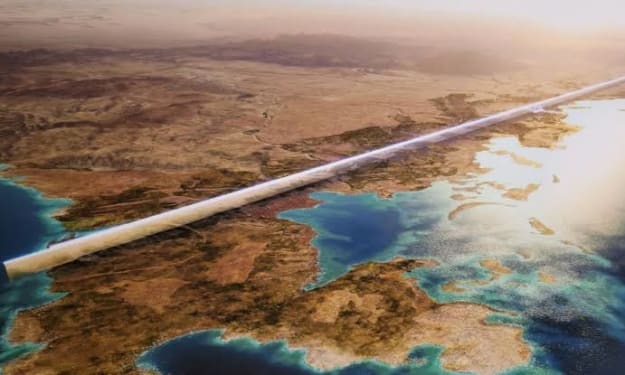
When Saudi Arabia unveiled The Line, it was presented as a vision of the future. A 170-kilometer-long city with no cars, no streets, and no carbon emissions, The Line promised to reshape how humans live. It was the centerpiece of NEOM, the kingdom’s ambitious plan to diversify its economy beyond oil. But years after the announcement, a growing number of experts, investors, and observers are asking the same question: Is The Line effectively dead? While Saudi officials have not officially canceled the project, mounting evidence suggests that The Line, as originally imagined, is no longer realistic. What Was The Line Supposed to Be? The Line was announced in 2021 as a linear smart city built in the Saudi desert near the Red Sea. According to its designers: The city would house up to nine million people It would run entirely on renewable energy Residents could reach daily needs within five minutes A high-speed rail system would allow end-to-end travel in 20 minutes No cars, no roads, and no traditional infrastructure The city’s mirrored walls, rising hundreds of meters high, were meant to reflect nature and minimize land use. It was bold, futuristic, and controversial from the start. The Reality Sets In As construction began, problems quickly surfaced. 1. Unrealistic Engineering Challenges Building two parallel skyscrapers stretching across 170 kilometers is something the world has never attempted. Engineers raised concerns about: Structural stability Wind pressure Heat management Emergency evacuation Long-term maintenance The technology required either did not exist or had never been tested at this scale. 2. Soaring Costs Initial estimates put the cost of NEOM at over $500 billion, with The Line as the most expensive part. Rising global inflation, supply chain issues, and construction costs pushed that number even higher. Reports began to surface that Saudi planners were quietly cutting back the project’s scope to manage expenses. Scaling Back the Dream Instead of canceling The Line outright, Saudi Arabia appears to be shrinking it dramatically. Sources familiar with the project suggest: Only a small section of The Line may be built in the near future Population targets have been reduced significantly Focus has shifted to more practical developments within NEOM This shift has fueled the belief that The Line, as originally sold to the world, will never exist. Economic Pressures Behind the Scenes Saudi Arabia’s economy is still heavily dependent on oil revenue. While oil prices have helped fund Vision 2030, the kingdom is also juggling: Massive infrastructure spending Global economic uncertainty Rising domestic costs Investor skepticism International investors have reportedly expressed concerns about returns, making funding harder to secure. Mega-ambitions are impressive, but they must still make financial sense. Human and Environmental Criticism The Line also faced serious backlash from human rights groups and environmental experts. Displacement Issues Local tribes were reportedly forced to relocate to make way for construction. This led to international criticism and damaged the project’s global image. Environmental Concerns Ironically, a project marketed as “green” raised alarms about: Wildlife disruption Bird collisions with mirrored walls Desert ecosystem damage Enormous carbon emissions during construction These concerns weakened public and investor confidence even further. Why Saudi Arabia Won’t Admit It’s Over Saudi leadership rarely announces failure, especially on projects tied to national pride. Instead of canceling The Line, officials appear to be: Rebranding goals Adjusting timelines Redirecting attention to other NEOM projects This allows the government to save face while quietly moving on. In many ways, The Line has become more of a conceptual symbol than an actual city plan. What NEOM Becomes Without The Line NEOM itself is not dead. Other projects within the region, such as: Oxagon (industrial hub) Trojena (mountain tourism) Luxury coastal developments These are far more achievable and already showing progress. By focusing on these, Saudi Arabia can still claim success under Vision 2030. The Line, however, was the most extreme and risky part of the plan. A Lesson in Megaproject Reality The rise and fall of The Line offers a powerful lesson: Vision matters, but execution matters more Technology cannot be willed into existence Cities grow organically, not by decree Human, environmental, and economic factors cannot be ignored History is filled with grand projects that looked perfect on paper but failed in reality. Is The Line Truly Dead? Officially? No. Practically? Almost certainly. What remains is a scaled-down fragment, far removed from the bold vision that once captured headlines. The dream of a 170-kilometer mirrored city housing millions appears to have collided with real-world limits. The Line may survive as a marketing idea, a case study, or a futuristic prototype. But as a full city? That future now seems extremely unlikely. Conclusion “The Line, a Saudi Megaproject, Is Dead” may sound dramatic, but it reflects a growing consensus. The world watched as Saudi Arabia attempted to leap decades into the future in one move. Ambition alone, however, cannot overcome physics, economics, and human reality. The Line will be remembered not as the city that changed the world—but as a reminder that even the richest nations must respect the limits of possibility. Sometimes, the future arrives more slowly than we expect.
By Fiaz Ahmed 6 days ago in The Swamp


Comments
There are no comments for this story
Be the first to respond and start the conversation.