
Why Has Former Bangladesh PM Sheikh Hasina Been Sentenced to Death?
A closer look at the explosive verdict that has stunned Bangladesh and raised global concern.

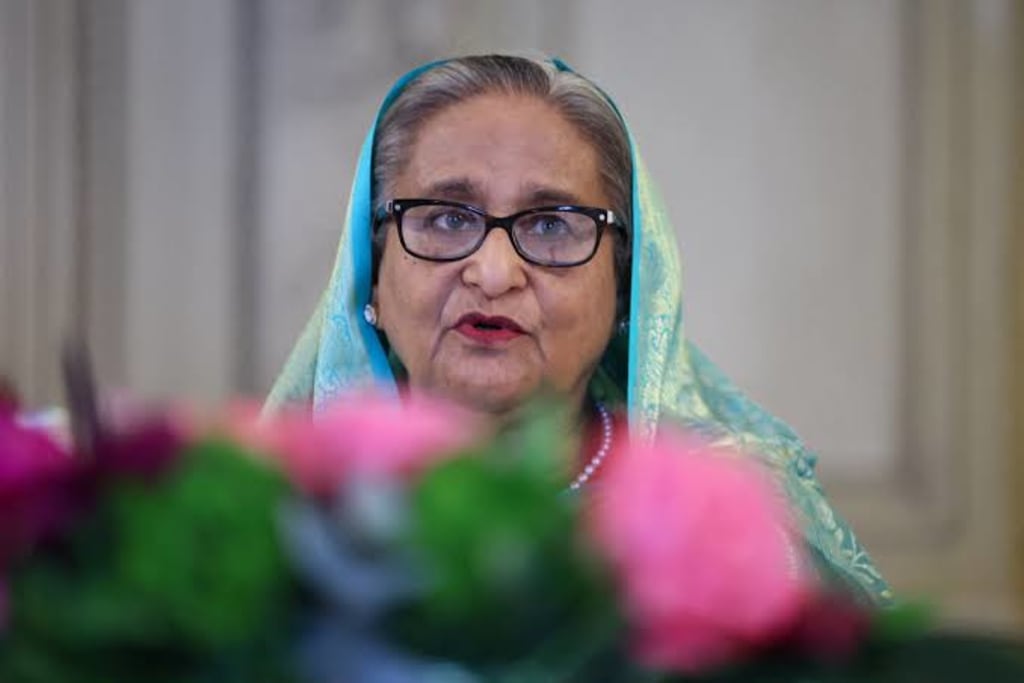
Understanding the Shocking Verdict That Has Shaken South Asia
The political landscape of Bangladesh has been rocked by one of the most dramatic and polarising verdicts in the nation’s history: former Prime Minister Sheikh Hasina, one of South Asia’s longest-serving leaders, has been sentenced to death in absentia. The ruling has triggered intense debate, global reactions, and deep uncertainty about the country’s future. But what exactly led to such a drastic sentence, and why is this case so controversial?
To understand the verdict, one must first revisit the turbulent events that unfolded during the 2024 mass uprising—a series of student-led demonstrations that spiraled into nationwide unrest. What began as protests over job quotas and governance concerns soon morphed into one of the largest anti-government movements Bangladesh had seen in decades. As crowds grew, violence escalated, and the state’s response became increasingly severe.
The court now concludes that Sheikh Hasina’s government was responsible for the systematic use of lethal force, resulting in what prosecutors have called “crimes against humanity.” The tribunal claims that the crackdown was not accidental, but organized, deliberate, and carried out under the former prime minister’s watch.
---
The Charges: Crimes Against Humanity
The verdict, delivered by Dhaka’s International Crimes Tribunal, rests on several key allegations:
Incitement and order of violence during the 2024 protests
Use of military helicopters, drones, and security forces to disperse demonstrators
Failure to prevent killings, even when intelligence warnings allegedly reached her office
Authorization of a coordinated crackdown, classified by the tribunal as premeditated
State-sanctioned torture and unlawful detentions
According to the prosecution, the unrest resulted in hundreds of deaths, though some human rights groups estimate the toll to be much higher. The court argues that Hasina acted as a “superior commander,” making her responsible for all actions carried out by the security forces.
Of the five charges filed, three resulted in death sentences, while two resulted in life imprisonment. Because Hasina is currently outside Bangladesh, the verdict was delivered in absentia.
---
Hasina’s Response: A Verdict She Calls “Rigged and Politically Motivated”
Sheikh Hasina has rejected the judgment outright. From abroad, she issued a statement describing the tribunal as:
Politically influenced
Legally flawed
Designed to eliminate her from Bangladeshi politics
She claims she never ordered mass killings and insists that her only goal during the unrest was to restore stability in a country facing violent agitation. Her supporters argue that the interim government formed after her fall had a political incentive to target her and dismantle her party, the Awami League, which had dominated national politics for 15 years.
Many international rights groups have echoed similar concerns, arguing that trials of this magnitude must meet the highest standards of transparency—and that a death sentence handed down without the accused being present raises serious questions.
---
Global Reaction: Shock, Concern, and Calls for Fairness
The verdict has received widespread international attention. The United Nations expressed concern about the use of the death penalty, noting that accountability must not come at the cost of fairness. Several governments in the region worry that the ruling may destabilize Bangladesh further.
India, where Hasina is believed to be currently staying, has not yet responded publicly to Bangladesh’s request for extradition. Diplomats fear that any action could deeply affect bilateral relations.
Human rights organizations, meanwhile, emphasize that crimes against humanity must indeed be prosecuted—but caution that the legal process must be beyond political influence.
---
Why This Sentence Is So Controversial
There are several layers to the controversy:
1. Timing and Context
The verdict arrives during a politically fragile period, with Bangladesh transitioning under an interim government. Critics believe the sentence could reshape the upcoming political contest.
2. Trial in Absentia
Many question whether a fair trial is possible when the accused is not present and cannot defend herself.
3. Use of the Death Penalty
Even those who support accountability argue that capital punishment complicates the pursuit of justice and risks pushing the country toward further unrest.
4. Legacy of Hasina’s Rule
Hasina is a deeply polarising figure. Supporters hail her as the leader who brought economic growth and stability. Critics accuse her of authoritarian tendencies. The verdict seems to have amplified both narratives.
---
What Happens Next?
Legally, Sheikh Hasina can appeal the verdict only if she returns to Bangladesh or is extradited. Politically, the ruling may reshape alliances and deepen divides. For ordinary Bangladeshis, the situation creates uncertainty as they watch their country navigate a complicated crossroads.
The sentencing of a former prime minister—especially one who ruled for over a decade—is not just a legal decision. It is a moment that will influence the country’s democratic structure, regional diplomacy, and historical memory for years to come.
About the Creator
Fiaz Ahmed
I am Fiaz Ahmed. I am a passionate writer. I love covering trending topics and breaking news. With a sharp eye for what’s happening around the world, and crafts timely and engaging stories that keep readers informed and updated.
Keep reading
More stories from Fiaz Ahmed and writers in The Swamp and other communities.
Two Ukrainians Working for Russia Behind Rail Sabotage, Polish PM Says
In recent months, Europe has been on edge as the war in Ukraine continues to drive political tension, cyberattacks, and covert operations across the region. But a recent revelation from Poland has added a new layer to the growing sense of unease. According to Polish Prime Minister Donald Tusk, two Ukrainians were arrested for allegedly working on behalf of Russian intelligence to sabotage Poland’s rail network. The discovery has raised serious concerns about Moscow’s influence, its recruitment strategies, and the vulnerability of Europe’s critical infrastructure.
By Fiaz Ahmed 2 months ago in The Swamp
Iran’s Khamenei Blames Violent Protests on Trump
Iran is once again at the center of international attention after Supreme Leader Ayatollah Ali Khamenei blamed violent protests on former U.S. President Donald Trump, accusing Washington of fueling unrest inside the country. The comments come amid widespread demonstrations, a heavy security crackdown, and rising international concern over human rights and regional stability.
By Aarif Lashariabout 7 hours ago in The Swamp



Comments
There are no comments for this story
Be the first to respond and start the conversation.