
Two Ukrainians Working for Russia Behind Rail Sabotage, Polish PM Says
How a rail disruption in Poland exposed a deeper and more dangerous shadow war unfolding across Europe.

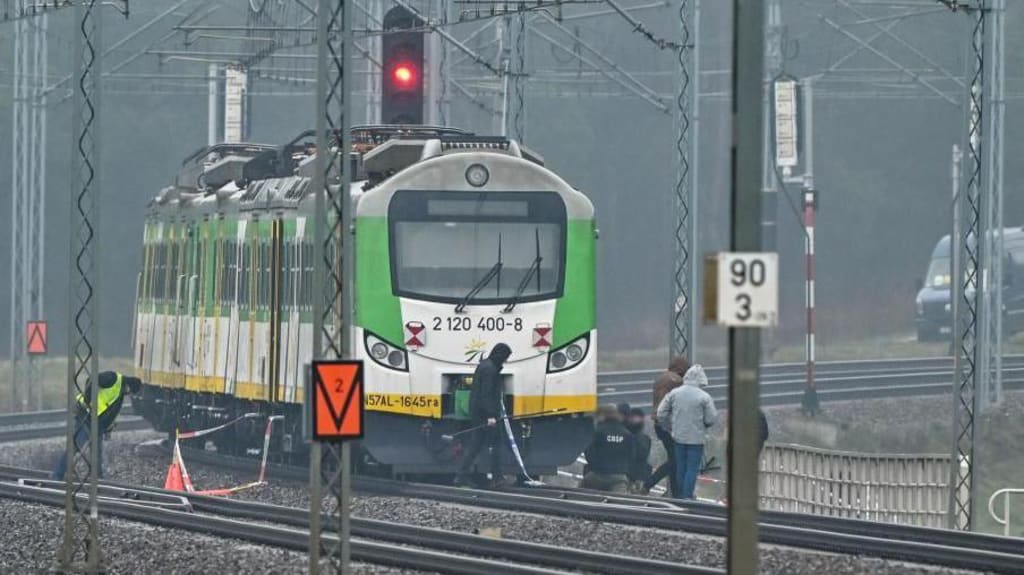
In recent months, Europe has been on edge as the war in Ukraine continues to drive political tension, cyberattacks, and covert operations across the region. But a recent revelation from Poland has added a new layer to the growing sense of unease. According to Polish Prime Minister Donald Tusk, two Ukrainians were arrested for allegedly working on behalf of Russian intelligence to sabotage Poland’s rail network. The discovery has raised serious concerns about Moscow’s influence, its recruitment strategies, and the vulnerability of Europe’s critical infrastructure.
Two Ukrainians Working for Russia Behind Rail Sabotage, Polish PM Says
The case became public after a series of mysterious rail disruptions caused delays and confusion across several routes in Poland. What at first looked like technical glitches soon appeared far more intentional. As officials dug deeper, they uncovered signals interference, tampered communication systems, and deliberate attempts to divert rail traffic. For a country that sits at the heart of NATO’s supply chain into Ukraine, any attempt to disrupt transport routes is more than an inconvenience — it is a strategic threat.
Prime Minister Tusk confirmed that the two arrested individuals were Ukrainian citizens who had allegedly been recruited and paid by Russian operatives. Their mission: to cause chaos on Poland’s busy rail system. Authorities believe the sabotage was part of a broader Russian campaign to weaken support for Ukraine by creating disorder within allied countries.
While the pair reportedly acted under Russian direction, their arrest has shocked many. Ukrainians have been seen globally as victims of Russian aggression, not collaborators. However, intelligence experts say this case highlights a well-known yet often hidden strategy. Russia has a long history of recruiting foreigners — including from Ukraine — through money, coercion, manipulation, or disinformation.
For Poland, the attempted sabotage is a reminder of its position as one of Kyiv’s strongest allies. Polish railways have been crucial for transporting humanitarian aid, fuel, equipment, and sometimes even military supplies toward Ukraine. Any disruption, even a small one, can ripple outward and affect ongoing operations on the ground.
Officials also warned that this incident is just one of many attempts to destabilize the region. In recent years, Poland, Lithuania, Germany, and the Czech Republic have all reported suspicious activities linked to Russian intelligence. These include arson plots, GPS jamming, cyberattacks, and attempts to infiltrate political or civil organizations. The goal is not always destruction. Sometimes it is confusion, fear, and mistrust — all powerful tools in modern hybrid warfare.
Despite the shock of Ukrainian suspects being involved, Polish investigators emphasized that this does not reflect Ukraine or its people. Instead, it highlights the complexity of espionage in wartime. Russian security services often target individuals with financial difficulties, personal grievances, or uncertain immigration status. Some are promised money. Others are tricked into thinking they are helping a harmless “information project.”
In this case, the sabotage attempt failed before causing any major damage. But it succeeded in raising new questions: How far is Russia willing to go? Who else may be working undercover? And how should Europe protect itself from threats that hide in plain sight?
Poland has responded by tightening security around critical infrastructure, increasing digital surveillance, and collaborating more closely with European security agencies. The government has also urged the public to remain alert, noting that sabotage does not always come from dramatic explosions or cyberattacks. Sometimes it arrives quietly, disguised as a harmless signal error.
For Ukraine, the incident adds a painful complication. As its citizens fight, rebuild, and endure daily attacks, a story of two Ukrainians aiding Russia creates unwanted headlines. Ukrainian officials have condemned the alleged sabotage and promised to assist in the investigation.
For Europe, the message is clear: the conflict with Russia is not confined to the battlefield. It stretches across borders, into transportation systems, digital networks, and the lives of ordinary civilians. The arrest of the two suspects is not just a police success — it is a warning.
As the war continues, Europe faces a new reality where hybrid warfare blends espionage, misinformation, and sabotage. Poland’s rail incident shows that even small acts can carry big consequences, and the battle for stability now extends far beyond Ukraine’s front line.
About the Creator
Fiaz Ahmed
I am Fiaz Ahmed. I am a passionate writer. I love covering trending topics and breaking news. With a sharp eye for what’s happening around the world, and crafts timely and engaging stories that keep readers informed and updated.
Keep reading
More stories from Fiaz Ahmed and writers in The Swamp and other communities.
Hasina Sentenced to Death for Crimes: A Shocking Verdict That Shakes the Region
How a Controversial Case Turned Into a Global Conversation on Justice, Power, and Accountability The news that Hasina has been sentenced to death for her alleged crimes has sent shockwaves across the region, sparking debate, confusion, and deep concern among political analysts, human rights groups, and ordinary citizens. The case has quickly moved beyond a local legal decision and transformed into an international talking point. With social media full of conflicting narratives and news channels offering limited clarity, many people are asking the same questions: Who is Hasina? What crimes was she accused of? Why has her conviction sparked such intense reactions?
By Fiaz Ahmed 2 months ago in The Swamp
Time to Dump Trump? Europeans Whisper Last-Resort Options to Save Greenland
In diplomatic circles across Europe, a phrase once unthinkable is now being whispered behind closed doors: What if the alliance can’t hold? As renewed pressure from former U.S. President Donald Trump resurfaces over Greenland, European officials are reportedly discussing last-resort options to safeguard the strategically vital Arctic territory — even if it means distancing themselves from Washington. While public statements remain carefully measured, private conversations suggest a growing anxiety: Greenland has become a geopolitical fault line, testing NATO solidarity, transatlantic trust, and Europe’s ability to defend its own interests. Why Greenland Is Suddenly at the Center of Global Power Politics Greenland is not just the world’s largest island. It is a strategic prize. Located between North America and Europe, Greenland sits at the crossroads of Arctic shipping lanes, missile defense routes, and untapped reserves of rare earth minerals. As climate change melts Arctic ice, access to these routes and resources is expanding — turning the region into a global competition zone. The United States already maintains a military presence in Greenland through Thule Air Base, vital to missile warning and space surveillance. But Trump’s earlier proposal to buy Greenland outright shocked European capitals and Denmark alike, reframing the island not as a partner but as a commodity. Now, with Trump once again influencing U.S. foreign policy discourse, European leaders fear that economic pressure, security leverage, or political coercion could return. Denmark’s Dilemma and Europe’s Unease Greenland is an autonomous territory within the Kingdom of Denmark, and Copenhagen has repeatedly stated that it is not for sale. Yet Denmark alone lacks the political and military weight to counter sustained pressure from Washington. That’s where Europe enters the picture. Behind the scenes, diplomats from Germany, France, and Nordic countries are reportedly discussing how to shield Denmark and Greenland from unilateral U.S. moves. These discussions are not about confrontation — at least not yet — but about contingency planning. The uncomfortable truth is this: Europe has long relied on the U.S. for Arctic security, and challenging Washington risks exposing Europe’s own strategic weaknesses. What Are the “Last-Resort Options”? European officials are careful not to spell out these ideas publicly, but analysts point to several possibilities under quiet consideration. 1. Deepening EU Involvement in Greenland One option is stronger European Union engagement with Greenland — economically, politically, and diplomatically. This could include increased investment in infrastructure, climate research, and sustainable mining projects to reduce Greenland’s reliance on external powers. By anchoring Greenland more firmly within Europe’s economic orbit, the EU could make any U.S. attempt at leverage far more complicated. 2. Expanded European Security Presence Another option involves enhancing European defense cooperation in the Arctic, potentially through joint patrols, surveillance missions, or NATO-aligned European initiatives that do not rely solely on U.S. leadership. This would be a delicate move, as NATO cohesion depends heavily on U.S. participation. Still, some European officials believe greater autonomy is overdue. 3. Legal and Diplomatic Shields Europe could also pursue stronger legal frameworks affirming Greenland’s right to self-determination and Denmark’s sovereignty. While largely symbolic, such measures would raise the diplomatic cost of any aggressive maneuver. In extreme scenarios, coordinated diplomatic resistance — even sanctions or formal rebukes — could be considered, though most officials view this as a true last resort. Why Trump Changes the Equation European leaders are accustomed to managing disagreements with Washington. What makes Trump different is unpredictability. During his presidency, Trump repeatedly questioned NATO commitments, framed alliances as transactional, and blurred the line between negotiation and coercion. His interest in Greenland was not just strategic — it was personal, public, and disruptive. The fear in Europe is not necessarily that Trump would “take” Greenland, but that he might use U.S. security guarantees as leverage, forcing concessions through pressure rather than partnership. For European capitals already dealing with Ukraine, energy insecurity, and domestic political shifts, another transatlantic crisis is the last thing they want. Greenland’s Own Voice Amid the power politics, Greenlanders themselves are increasingly vocal. Many in Greenland support greater autonomy or eventual independence — but not annexation. Local leaders have emphasized that Greenland’s future must be decided by its people, not foreign governments. European officials privately acknowledge that ignoring Greenlandic voices would undermine their moral position. Any European strategy, they argue, must prioritize economic development, environmental protection, and self-governance, not just strategic defense. A Test for Transatlantic Relations At its core, the Greenland issue is about more than territory. It raises uncomfortable questions: Can Europe protect its interests without U.S. backing? Is NATO flexible enough to survive internal disagreements? What happens when allies no longer trust each other’s intentions? For now, European leaders are trying to avoid open confrontation, hoping that diplomacy and quiet deterrence will keep tensions from escalating. But the whispers themselves are revealing. They suggest that Europe is, for the first time in decades, seriously contemplating a future where American leadership is not guaranteed. Why This Moment Matters The Arctic is warming faster than any other region on Earth — physically and politically. What happens in Greenland could set a precedent for how global powers compete in newly accessible regions. If Europe fails to act, it risks appearing passive and divided. If it acts too forcefully, it risks fracturing the transatlantic alliance that has underpinned its security since World War II. It is a narrow path — and one that demands strategic clarity Europe has often postponed. Final Thoughts “Time to dump Trump?” may sound dramatic, but it captures a deeper unease spreading across European capitals. Greenland has become a symbol of a shifting world — one where alliances are tested, assumptions are challenged, and old guarantees no longer feel automatic. Europe is not eager for a break with Washington. But the quiet conversations suggest a realization that preparation is not betrayal. Whether these whispered last-resort options remain theoretical — or become policy — will depend on how the next phase of U.S. politics unfolds. For Greenland, Europe, and the Arctic, the stakes could not be higher.
By Muhammad Hassan2 days ago in The Swamp


Comments
There are no comments for this story
Be the first to respond and start the conversation.