
What Will Happen with the U.S. Shutdown?
Unprecedented Consequences!

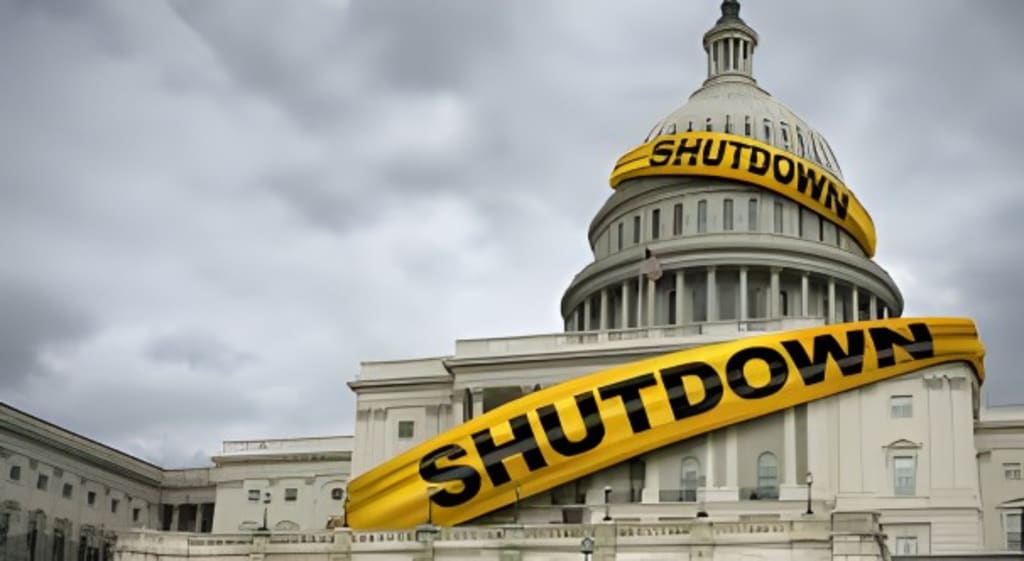
When the world’s most powerful government grinds to a halt, the tremors are felt far beyond Washington, D.C. As the United States once again faces a federal government shutdown, the question isn’t just about politics; it’s about livelihoods, credibility, and global stability.
The 2025 U.S. shutdown is more than a headline. It’s a reflection of deep political divisions and fiscal mismanagement that have been building for years. But what exactly happens during a shutdown, who gets hurt, and how does it ripple across the world?
Understanding the U.S. Shutdown
A government shutdown occurs when Congress fails to pass the necessary funding bills; known as appropriations; that allow federal agencies to operate. Without this approval, many government offices close, federal employees are furloughed (sent home without pay), and countless public services come to a halt.
This isn’t the first time it’s happened. In fact, the United States has faced shutdowns several times before, but each time, the stakes seem higher. In 2025, with inflation still a concern, global conflicts intensifying, and the cost of living rising, another shutdown is a blow the American economy can hardly afford.
Immediate Impacts Inside the United States
When the government stops functioning, it’s not just politicians who feel it. Millions of Americans are directly or indirectly affected.
Federal Employees and Services: Nearly 2 million federal workers face uncertainty. Many won’t receive paychecks, even though some — such as military personnel and airport security; are required to work without pay. Families dependent on government salaries face immediate financial stress.
Public Services Halt: Vital services like passport processing, small business loans, national park operations, and food safety inspections either slow down or stop completely. This disrupts travel, tourism, and local economies that rely on federal support.
Economic Slowdown: Each week of shutdown costs the U.S. economy billions of dollars. During the 2018-2019 shutdown, the Congressional Budget Office estimated a $11 billion loss; and experts warn that this year’s shutdown could exceed that by far. Consumer confidence drops, spending slows, and businesses hesitate to invest.
Vulnerable Populations Suffer the Most: Programs like WIC (Women, Infants, and Children) and SNAP (Supplemental Nutrition Assistance Program) face funding gaps, threatening food security for millions. Housing assistance, healthcare subsidies, and educational grants are delayed; creating a silent but severe humanitarian cost.
Global Implications: A World Watching Closely
The U.S. shutdown doesn’t stop at America’s borders. Because the United States plays such a dominant role in global trade, diplomacy, and finance, a government shutdown sends waves across continents.
Investor Anxiety and Market Volatility: The U.S. dollar is the world’s reserve currency. When Washington is in disarray, investor confidence declines, causing market instability. Stock markets may dip, gold prices rise, and international investors shift toward safer assets.
Global Aid and Diplomacy at Risk: The shutdown limits the U.S. government’s ability to fund international aid programs, embassy operations, and humanitarian missions. Many developing nations; especially those relying on U.S. assistance; face sudden funding gaps. This also weakens America’s diplomatic leverage at a time when rivals like China and Russia are actively expanding their influence.
Trade Uncertainty: U.S. ports and customs offices experience delays, which affect global supply chains. Goods entering or leaving the country may get stuck, leading to shortages and price increases worldwide — particularly in technology and automotive sectors.
Impact on Allies’ Economies: Countries closely linked to the U.S. economy; such as Canada, Mexico, Japan, and members of the European Union; experience ripple effects. A weaker U.S. economy translates to reduced imports, which in turn affects their exports and GDP growth.
What Will the Government Do Now?
Once a shutdown begins, pressure mounts quickly on both Congress and the White House. The U.S. government typically takes several steps:
Negotiations and Stopgap Bills: Lawmakers rush to negotiate temporary funding bills (known as Continuing Resolutions) to reopen parts of the government while larger budget disputes continue.
Prioritizing Essential Operations: Agencies categorize employees as “essential” or “non-essential.” Military operations, air traffic control, and emergency services continue, but most other services are suspended.
Public Messaging and Blame Game: Political leaders use the media to frame the shutdown in their favor. Each side blames the other for “holding the country hostage,” while public frustration grows.
Post-Shutdown Recovery: Once funding is restored, federal employees receive back pay, but the lost productivity, delayed projects, and shaken confidence take months to repair.
How Can the U.S. Tackle This Recurring Problem?
The shutdown isn’t just a temporary crisis — it’s a symptom of a deeper political disease. To prevent such situations in the future, several measures can be considered:
Reform the Budget Process: Congress needs a more stable and automatic funding mechanism. Many economists propose a system where, if no new budget is approved, the previous year’s budget automatically continues at a baseline level to prevent shutdowns.
Promote Bipartisan Fiscal Responsibility: Instead of using the budget as a political weapon, lawmakers must prioritize national stability. Regular bipartisan committees focusing on long-term financial reforms could minimize brinkmanship.
Educate the Public: Citizens should understand how government funding works; and hold their representatives accountable. A more informed public means more pressure on politicians to act responsibly.
Protect Essential Services Legally: Certain departments, especially those related to health, food, and safety, should be permanently shielded from political gridlock.
Strengthen Emergency Economic Buffers: Encouraging savings, supporting small businesses, and expanding community-level safety nets can make the economy more resilient during future shutdowns.
A Lesson for the World
The U.S. government shutdown is not just an American story; it’s a warning to every democracy. Political divisions and fiscal irresponsibility can paralyze even the mightiest of nations. For Americans, it’s a test of patience and unity. For the world, it’s a reminder that global stability depends on the reliability of the systems that underpin it.
If the United States; the world’s largest economy and most influential democracy; cannot fund its own government, then every nation must ask: how strong are our institutions when politics outweighs progress?
The path forward lies not in blame, but in reform. Only by prioritizing cooperation, transparency, and national interest can America — and the world; move beyond the chaos of shutdowns and into a future of sustained stability.
About the Creator
Keramatullah Wardak
I write practical, science-backed content on health, productivity, and self-improvement. Passionate about helping you eat smarter, think clearer, and live better—one article at a time.
Keep reading
More stories from Keramatullah Wardak and writers in The Swamp and other communities.
Why Afghanistan & Pakistan Are Enemies?
The flames of conflict between Afghanistan and Pakistan have once again erupted, turning their shared border into a battlefield echoing with artillery and accusation. As the smoke rises from the Durand Line — a boundary that has symbolized division for over a century — both nations stand at a dangerous crossroads. The most recent escalation has claimed dozens of lives, shuttered major crossings like Torkham and Chaman, and brought South Asia to the brink of a deeper regional crisis.
By Keramatullah Wardak5 months ago in The Swamp
Why Black History Matters in America?
The United States of America is celebrating their 250th anniversary in 2026. I'm proud to be an American and as someone who was born here, I wouldn't imagine myself living anywhere else. This is a country where opportunities are possible. Where anyone can be successful in anything they desire to do. Equality, community, and togetherness are the backbones of what America is and should be about. However, we have an administration who wants to erase and disregard those who have made positive, meaningful impacts in our country, specifically Black figures, such as Martin Luther King, Jr., Rosa Parks, and Maya Angelou. President Trump and his administration have been constantly complaining and fighting against what they call the "Woke agenda". They use this excuse as a distraction from other issues they refuse to address, such as the high cost of living, climate change, and inflation. That equality is dividing America, when in reality, it's bringing us together. Being woke is not tied to a specific political party. No matter where you stand on the political spectrum, you can still care about other people and their plights. Compassion and empathy for others isn't tied to a political party, either. We were taught as children to treat others the way we want to be treated and not judge others because they're different from us. Caring about others isn't a personal attack on your beliefs. It doesn't make you any less of a person. People who are easily offended over African American figures, past or present, or anything related to it, are grasping at straws. Current and future generations need to know who people like Harriet Tubman and Shirley Chisholm were, especially in the classroom. Black History is part of American History. It should be recognized, not hidden or forgotten. Besides, you can't shield children from everything, just because your feelings are easily hurt.
By Mark Wesley Pritchard 29 days ago in The Swamp
Here Are The 10 Most Powerful Air Forces in the World in 2025 – And France Is Second to Last
As global military technology continues to evolve, the ranking of the world’s most powerful air forces has shifted dramatically in 2025. Military analysts have assessed air forces based on a combination of fleet size, technological sophistication, readiness, operational experience, and strategic reach. The results reveal significant disparities between nations, with some long-standing military powers retaining dominance, while others, including France, surprisingly lag behind despite their historical military reputation. At the top of the list is the United States Air Force (USAF), which continues to maintain an unmatched edge in technology, global reach, and operational readiness. The USAF’s fleet of fifth-generation stealth fighters, including the F-22 Raptor and F-35 Lightning II, along with advanced bomber aircraft such as the B-2 Spirit and the B-21 Raider, provides the United States with unmatched aerial dominance. Coupled with a global network of bases, satellite reconnaissance, and rapid deployment capabilities, the U.S. remains the uncontested leader in air power. Second on the list is China, whose People’s Liberation Army Air Force (PLAAF) has grown rapidly in both size and sophistication. China has invested heavily in stealth fighters, such as the Chengdu J-20, and has expanded its strategic bomber capabilities with aircraft like the Xian H-20, reflecting the nation’s ambitions to project air power regionally and globally. The PLAAF has also developed advanced drone programs, hypersonic weapons, and integrated electronic warfare capabilities, making it a formidable opponent in any potential conflict scenario. Third place is held by Russia, which continues to maintain a strong air force with a focus on both quantity and quality. The Sukhoi Su-57 stealth fighter and modernized versions of the Su-35 provide Russia with a credible air combat capability. Additionally, Russia’s strategic bomber fleet, including the Tu-160 and Tu-95, enhances its long-range strike potential. While Russia faces challenges in logistics and modernization, its operational experience and robust defense industry keep it among the top air powers. Other countries in the top ten include India, Japan, Israel, South Korea, Turkey, and the United Kingdom, each demonstrating a mix of advanced aircraft, operational readiness, and domestic aerospace production capabilities. India and Japan have heavily invested in modern fighters and domestic production programs, while Israel is known for its highly trained pilots and integrated defense networks. South Korea and Turkey balance modern Western aircraft with indigenous upgrades, while the UK leverages its nuclear deterrent and fifth-generation fighter capabilities. Surprisingly, France, traditionally regarded as a military power with one of Europe’s most advanced air forces, ranks second to last in the 2025 assessment. Analysts point to several factors contributing to France’s low ranking. Although France possesses modern aircraft such as the Dassault Rafale, the air force suffers from limited fleet size, aging support systems, and budget constraints that restrict large-scale modernization. Additionally, France’s global deployment capacity is constrained compared to the U.S., China, or Russia, limiting its strategic reach. While operationally competent and technologically advanced, France’s air force cannot match the scale or depth of its global rivals. Several key takeaways emerge from the 2025 ranking. First, technological sophistication alone does not guarantee top ranking; fleet size, maintenance, training, and logistical support play equally important roles. Second, countries investing in domestic aerospace programs, such as China and India, are gaining strategic advantages by reducing reliance on foreign suppliers. Third, nations with limited defense budgets may struggle to maintain parity with more resource-rich powers, regardless of technological competence. Experts suggest that France’s position should not be interpreted as an immediate strategic weakness. Its air force remains capable for regional operations, NATO missions, and nuclear deterrence. However, the ranking highlights the increasing importance of scale, industrial capacity, and integrated technology in defining air power in the 21st century. In conclusion, the 2025 assessment of the world’s most powerful air forces reflects the shifting balance of global military power. While the U.S. continues to dominate, emerging powers such as China and India are rapidly advancing, and traditional European powers, including France, face challenges in maintaining competitive edge. The rankings underscore that in modern warfare, a combination of technological innovation, fleet size, strategic reach, and industrial capability determines the strength of a nation’s air force.
By Fiaz Ahmed about 24 hours ago in The Swamp


Comments
There are no comments for this story
Be the first to respond and start the conversation.