
What the New World Order Means for Ordinary People
Hope or Uncertainty?

What the New World Order Means for Ordinary People: Hope or Uncertainty?
The phrase "New World Order" evokes a sense of intrigue, often sparking debates and raising questions about its implications for global governance, economies, and societies. But beyond the political rhetoric and media narratives, what does it truly mean for the everyday person? Is it a beacon of hope or a harbinger of uncertainty?
This question resonates deeply as ordinary individuals navigate a rapidly changing world, shaped by geopolitical tensions, technological advancements, and shifting societal norms. Understanding the New World Order’s impact requires delving into the ways it influences lives at the grassroots level.
Defining the New World Order
At its core, the New World Order represents a shift in global power dynamics; a reconfiguration of how nations interact, economic systems function, and societies are structured. Historically, such shifts have been marked by significant events, from the Treaty of Westphalia to the post-World War II era that established the United Nations. Today, this concept is evolving amidst challenges like climate change, globalisation, and digital transformation.
For ordinary people, these changes manifest in various aspects of daily life; jobs, education, healthcare, and social equity.
Economic Implications
Opportunities for Growth
The promise of the New World Order lies in its potential to create economic opportunities. Globalisation has enabled access to international markets, allowing small businesses and entrepreneurs to thrive. E-commerce, for example, has connected local artisans to customers worldwide, fostering economic inclusion and innovation.
Moreover, emerging technologies such as artificial intelligence and renewable energy present new avenues for employment and skill development. Governments and private sectors collaborating on these advancements can create jobs and support sustainable economic growth.
Challenges of Inequality
Despite its promises, the New World Order also poses significant economic risks. The widening gap between the wealthy and the poor is a pressing concern. Automation and artificial intelligence, while driving efficiency, threaten traditional jobs, leaving many unprepared for the demands of a tech-driven economy.
Ordinary workers in sectors like manufacturing and agriculture may face displacement, requiring robust retraining programs and social safety nets to bridge the gap. Without such measures, the economic benefits of the New World Order may remain concentrated in the hands of a few.
The Social Fabric: Unity or Division?
Bridging Cultures
A hallmark of the New World Order is increased global connectivity. Cultural exchange through travel, technology, and media has the potential to foster understanding and unity among diverse populations.
For ordinary people, this means exposure to new ideas, traditions, and perspectives. Cross-cultural collaborations in education and the arts are fostering a sense of global citizenship, breaking down barriers of prejudice and ignorance.
Risks of Fragmentation
However, increased connectivity also brings challenges. Social media and the spread of misinformation have heightened polarisation in many societies. Ordinary individuals may feel overwhelmed by the pace of change, struggling to reconcile global trends with local traditions.
Efforts to balance global integration with respect for cultural identities are crucial. Inclusive policies that value diversity while promoting shared values can help mitigate the risks of division.
Technological Advancements
Empowering Individuals
Technology is at the heart of the New World Order, revolutionising how people work, communicate, and access information. For ordinary citizens, this means unprecedented access to knowledge, healthcare, and financial services. Telemedicine, for instance, has brought healthcare to remote communities, while digital banking has empowered individuals to participate in the economy.
In education, online learning platforms have democratised access to quality resources, enabling individuals to acquire new skills and improve their livelihoods.
Exacerbating Inequality
Yet, the benefits of technology are not evenly distributed. The digital divide, marked by disparities in access to internet and technology, excludes millions from the advantages of a connected world. Rural and underserved communities often lack the infrastructure needed to participate fully in the digital economy.
Addressing this divide requires collaborative efforts from governments, businesses, and civil society. Investing in digital literacy and infrastructure is essential to ensure that technological advancements benefit everyone.
Governance and Political Stability
The Promise of Collaboration
A key aspect of the New World Order is the emphasis on multilateralism. For ordinary people, this offers hope for collective solutions to global challenges like climate change, pandemics, and economic crises. Nations working together can provide stability and security, fostering environments where communities can thrive.
The Threat of Instability
However, the transition to a new global order is often marked by uncertainty. Power struggles between nations, trade wars, and ideological conflicts create volatility that trickles down to ordinary lives. Political instability can disrupt economies, fuel migration crises, and undermine trust in institutions.
For individuals, this uncertainty manifests in job insecurity, rising living costs, and fears about the future. Transparent governance, accountability, and inclusive decision-making are critical to ensuring that the New World Order is a source of stability rather than discord.
Climate Change and Sustainability
A Global Responsibility
The New World Order brings with it an urgent focus on climate change, a challenge that transcends borders. For ordinary people, this represents an opportunity to participate in sustainable practices, from adopting renewable energy to supporting eco-friendly products.
Governments and corporations leading the charge in sustainability can inspire communities to embrace greener lifestyles, ensuring a healthier planet for future generations.
The Cost of Inaction
However, the burden of climate change often falls disproportionately on vulnerable populations. Rising sea levels, extreme weather events, and resource scarcity impact livelihoods and exacerbate inequalities.
Ensuring a fair transition to a sustainable future requires policies that prioritise social justice, providing support to communities most affected by climate change.
The Emotional Impact
For ordinary individuals, the New World Order is not just a political or economic concept; it is a deeply personal experience. It brings hopes for a brighter future but also fears of being left behind.
The emotional toll of navigating an uncertain world is real. Communities must come together to provide support, fostering resilience and optimism. Storytelling, art, and local initiatives can play a vital role in helping people make sense of the changes around them.
Conclusion
The New World Order is a complex tapestry of opportunities and challenges. For ordinary people, its meaning lies in the balance between hope and uncertainty. By addressing inequalities, fostering inclusivity, and prioritising sustainability, the global community can ensure that the New World Order uplifts rather than divides.
The future is not preordained. It is shaped by the collective actions of individuals, communities, and nations. As the New World Order unfolds, it is a call to all of humanity to work together in crafting a world where hope prevails over uncertainty.
About the Creator
Mutonga Kamau
Mutonga Kamau, founder of Mutonga Kamau & Associates, writes on relationships, sports, health, and society. Passionate about insights and engagement, he blends expertise with thoughtful storytelling to inspire meaningful conversations.
Keep reading
More stories from Mutonga Kamau and writers in The Swamp and other communities.
Power Struggles in the New World Order
Power Struggles in the New World Order: Winners and Losers The phrase "New World Order" often evokes images of seismic global shifts; transformations in political alliances, economic structures, and social hierarchies. Throughout history, power struggles have defined the dynamics of such transitions, determining the winners and losers in the reorganisation of global influence. In today's rapidly evolving world, these struggles are shaped by a convergence of technology, geopolitics, and ideology, raising critical questions about the future of global governance and equity.
By Mutonga Kamauabout a year ago in The Swamp
The Forsyth House Fire
Since 1851, Forsyth House has stood on the corner of Union Street and Gordon Street in the heart of Glasgow. Its iconic, or was... because on Sunday 8th of March, 2026, a fire broke out in a small, seemingly un-named shop in the building and tore all that history down. As I write, the rubble is still unsettled and the street is still blocked off. Central Station is quiet on the upper level, and around 30 small businesses have quite literally gone up in smoke.
By S. A. Crawford2 days ago in The Swamp
For Israel’s Netanyahu, Trump grants wishes, but his support carries risks
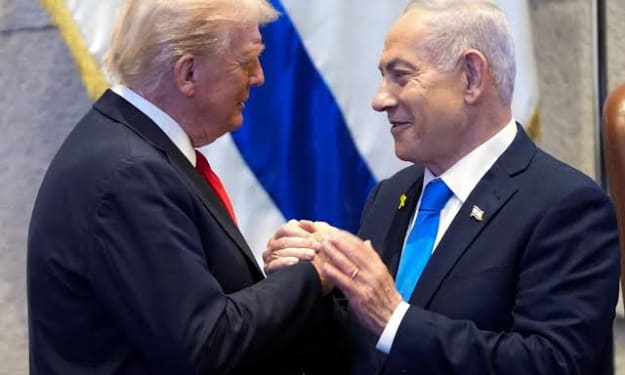
In the long and complex alliance between Benjamin Netanyahu and Donald Trump, the U.S. leader has delivered some of the most significant policy victories the Israeli premier has pursued for years. Yet while these achievements have reshaped the Middle East and bolstered Netanyahu’s standing with many supporters, they also carry risks that could have lasting political and diplomatic consequences. Over the past five years, Trump has granted a string of Netanyahu’s long‑standing strategic wishes, starting with symbolic but consequential decisions early in his presidency. Trump moved the U.S. Embassy to Jerusalem, a step long demanded by Israeli leaders and supporters; formally recognised Israeli sovereignty over the Golan Heights, territory captured from Syria in 1967; withdrew the United States from the international nuclear agreement with Iran; and significantly cut U.N. funding for Palestinian refugees. But none of these moves compares in scale to Trump’s recent embrace of the joint military campaign against Iran—a campaign that Netanyahu long sought and which represents the most consequential gamble of their partnership yet. What began as deepening tensions with Tehran has escalated into a full‑scale conflict involving U.S. forces alongside Israeli operations. For Netanyahu, this intervention is more than just a strategic victory—it is a political lifeline. A Strategic Bet in an Election Year Netanyahu, trailing in polls and facing persistent legal challenges at home, is betting that the war—with Trump’s backing—can rekindle a surge of nationalist support that might secure his political survival. Experts say the prime minister is likely to capitalise on the ongoing conflict to call early elections, hoping that a wave of patriotic sentiment will carry him back into a stronger parliamentary position. Israel must hold elections by late October this year, and many analysts believe Netanyahu sees an immediate wartime context as his best opportunity to salvage his political career. Political scientist Gayil Talshir of Hebrew University summed up the situation by pointing to the existential nature of the conflict. “Everything else can be forgotten because this is the big one,” she said, referring to the military campaign against Iran as the defining issue of Netanyahu’s era. But linking domestic political fortunes to an ongoing war carries real dangers—particularly when it involves another major power like the United States, whose own domestic politics may not align with Netanyahu’s expectations. Risks for Trump’s Base and U.S. Politics For Trump, the alliance has helped cement his image among many conservative voters, especially those inclined toward strong American support for Israel. In Israel itself, Trump enjoys extraordinary popularity; some polls show his approval within the country exceeding that among key voter blocs in the United States. Yet Trump’s support for an increasingly controversial and protracted conflict has also strained his political base in the U.S. Many Republicans who favour a more isolationist posture question a deepening military involvement, while Democrats and independents have grown critical of the human cost and strategic ambiguity of the war. Rising fuel prices and extended American casualties only amplify these political pressures. The war’s unpredictability complicates Trump’s broader political ambitions. An over‑reliance on Netanyahu’s strategic priorities could alienate portions of the Republican base and temper voter enthusiasm in key demographics—particularly among younger voters and communities more sympathetic to a diplomatic resolution or concerned about humanitarian impact. Strains and Strategic Tension Despite the strong partnership between the two leaders, their relationship has not been without tension. Trump has occasionally pushed back against some of Netanyahu’s policies, such as annexation efforts in the West Bank, and has encouraged moves toward a future pathway to Palestinian self‑determination—proposals that Netanyahu historically resisted. These moments illustrate the fragile balance between unconditional support and strategic disagreement. EWN Moreover, Trump’s public calls for Isaac Herzog to pardon Netanyahu from longstanding corruption charges underscore the political entanglement of foreign policy with domestic Israel politics. Trump’s pressure for Herzog to grant clemency—even as the nation remains at war—highlights how external advocacy can complicate Israel’s internal legal and political processes. Long‑Term Consequences for the Alliance Internationally, the deepening U.S.–Israel partnership could affect broader diplomatic alignments. Allies in Europe and across the Middle East may be wary of being drawn into a conflict that seems increasingly personalised around the political fortunes of two leaders. Analysts suggest that if the war doesn’t achieve a clear strategic outcome, the blame may return to both Netanyahu and Trump, with potential fallout in regional diplomacy and future peace negotiations. Ultimately, the political calculus that has driven Netanyahu and Trump together in pursuit of mutual goals may prove double‑edged. The military campaign against Iran may be the strategic high point of their partnership—but it also carries deep risks that extend well beyond battlefield victories. For Netanyahu, it could be the defining gamble of his political life; for Trump, it may shape his legacy in ways that reverberate long after the conflict has subsided.
By Fiaz Ahmed 7 days ago in The Swamp


Comments
There are no comments for this story
Be the first to respond and start the conversation.