
China Bans Certain Rare Earths and Other Exports to Japan for Military Purposes Over Takaichi’s Comments
How politics, power, and rare earth minerals are reshaping Asia’s geopolitical landscape
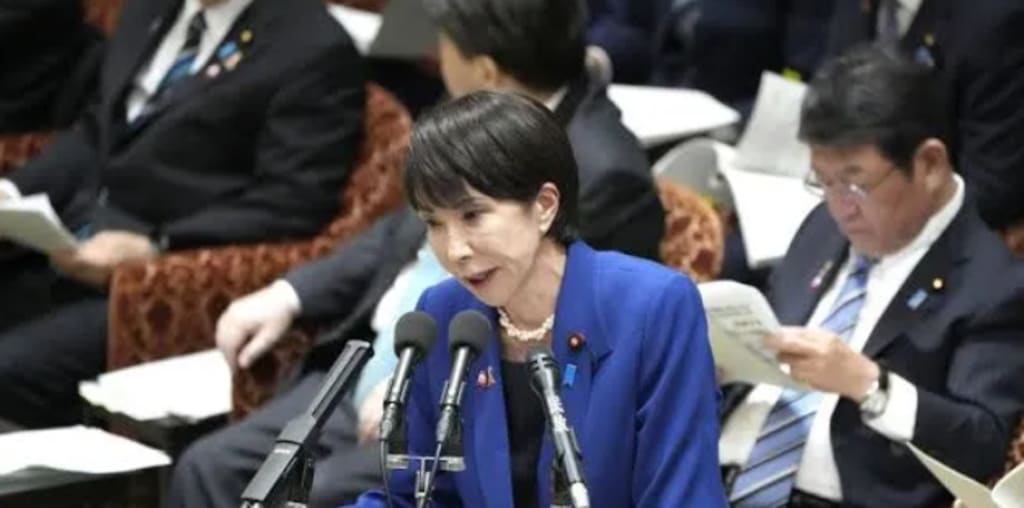
In a move that has sent ripples across Asia and global markets, China has announced a ban on exporting certain rare earth elements and other strategic goods to Japan for military purposes. The decision comes in direct response to controversial remarks made by Japanese Prime Minister Sanae Takaichi regarding Taiwan and regional security.
This development is more than just a trade restriction—it is a reminder of how economics, diplomacy, and national security are deeply intertwined in today’s world.
Let’s break down what happened, why it matters, and what it could mean going forward.
What Did China Do?
China’s Ministry of Commerce declared that it would restrict exports of specific rare earth materials and dual-use items—products that can be used for both civilian and military purposes—to Japan if they are intended to support military activities.
These restrictions apply immediately and cover materials and technologies essential to modern defense systems, including:
Rare earth elements used in missiles, radar systems, and fighter jets
Advanced electronic components
Aerospace and aviation technologies
Drone-related equipment
Certain nuclear-related technologies
China made it clear that any company or individual violating these rules—regardless of nationality—could face legal consequences. This signals that Beijing is serious about enforcing the ban and using its economic leverage strategically.
Why Rare Earths Matter So Much
Rare earth elements may sound obscure, but they are critical to modern life and modern warfare. These materials are essential for:
Smartphones and laptops
Electric vehicles and renewable energy systems
Precision-guided weapons
Military communications and surveillance equipment
China currently dominates the global rare earth supply chain, especially processing and refining. This gives Beijing enormous influence over industries and governments that rely on these materials—including Japan.
When China restricts rare earth exports, it doesn’t just affect one country—it shakes entire global supply chains.
The Spark: Takaichi’s Comments on Taiwan
The immediate trigger for China’s action was a series of comments made by Japanese Prime Minister Sanae Takaichi. She suggested that a Chinese military invasion of Taiwan could pose an existential threat to Japan, potentially justifying a military response from Tokyo.
From Beijing’s perspective, these remarks crossed a red line.
China views Taiwan as an inseparable part of its territory under the one-China principle. Any foreign leader suggesting military involvement in a Taiwan conflict is seen as interfering in China’s internal affairs.
Chinese officials described Takaichi’s comments as provocative and dangerous, accusing Japan of fueling regional instability and drifting toward militarization.
A Familiar Strategy from Beijing
This is not the first time China has used rare earth exports as a strategic tool.
In 2010, during a territorial dispute with Japan over the Senkaku/Diaoyu Islands, China reportedly restricted rare earth shipments to Japan. That incident served as a wake-up call to the world about the geopolitical power of critical minerals.
Since then, China has steadily expanded its export control laws, particularly on materials tied to national security. The current ban fits into a broader pattern of weaponizing trade policy to achieve political and strategic goals.
What This Means for Japan
Japan is one of the world’s most technologically advanced economies—but it remains highly dependent on Chinese rare earths, especially for heavy rare earth elements used in high-performance magnets.
The immediate impact could include:
Disruptions to defense manufacturing
Increased costs for high-tech industries
Delays in research and development projects
While Japan has made efforts over the past decade to diversify its rare earth supply—partnering with countries like Australia and investing in recycling—China still plays a dominant role.
This ban may push Japan to accelerate its push for supply-chain independence, especially in defense-related sectors.
Global Implications Beyond Japan
The ripple effects of China’s decision extend far beyond Tokyo.
Countries around the world are watching closely because any precedent set here could be applied elsewhere. If geopolitical disagreements increasingly result in export bans on critical materials, global trade could become more fragmented and unstable.
Industries related to clean energy, electric vehicles, and advanced manufacturing could face uncertainty as governments reassess their dependence on China for key inputs.
In many ways, this situation highlights the growing trend of economic decoupling and strategic competition, particularly in the Indo-Pacific region.
Diplomatic Tensions on the Rise
This export ban adds another layer to already strained China-Japan relations, which have long been shaped by historical grievances, territorial disputes, and competing security interests.
Japan, meanwhile, has been strengthening its defense posture and deepening alliances with partners like the United States, signaling that it will not easily back down on issues related to national security.
Whether diplomatic dialogue can cool tensions—or whether this marks the start of a more prolonged economic standoff—remains to be seen.
Final Thoughts
China’s decision to ban certain rare earths and other exports to Japan over Takaichi’s comments is a powerful reminder that in today’s world, trade is no longer just about economics—it’s about influence, security, and ideology.
As nations increasingly treat critical resources as strategic assets, similar confrontations may become more common. For Japan, the move underscores the urgency of supply-chain diversification. For the world, it signals that geopolitical disputes can quickly spill into markets and industries we all depend on.
One thing is clear: rare earths are no longer rare in global politics—they’re central to it.
About the Creator
Keep reading
More stories from Aqib Hussain and writers in The Swamp and other communities.
Macron Hosts Ukraine and Allies to Try to Cement Security Guarantees
French President Emmanuel Macron has once again placed France at the center of European diplomacy by hosting Ukraine and key allied nations in Paris, aiming to cement long-term security guarantees for Kyiv. As the war in Ukraine continues with no clear end in sight, the meeting reflects growing urgency among European leaders to move beyond temporary military aid and toward more durable commitments that can deter future aggression.
By Aqib Hussain6 days ago in The Swamp
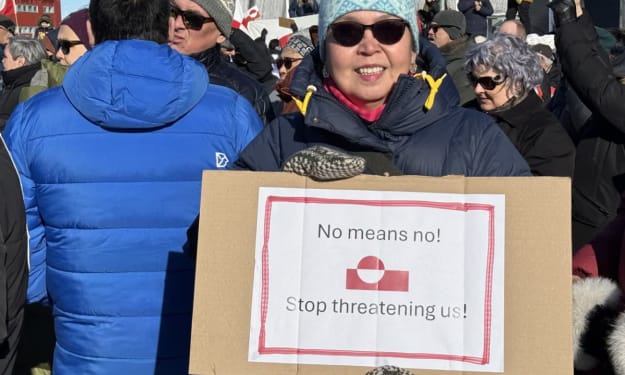
Greenlanders Say “We Don’t Want to Be Americans” as Trump’s Threats Rekindle Arctic Tensions
When former U.S. President Donald Trump once again raised the idea of asserting American control over Greenland, the response from the Arctic island was swift, united, and unequivocal. Greenlanders, through their political leaders, made one message clear to the world: they do not want to be Americans. The renewed rhetoric from Trump has not only revived an old controversy but also exposed deeper questions about sovereignty, identity, and the rights of small nations in an era of aggressive geopolitics. Greenland, the world’s largest island, may be sparsely populated, but its strategic importance has grown dramatically in recent years. Melting ice due to climate change has opened new shipping routes and access to vast reserves of rare-earth minerals, oil, and gas. These developments have turned the Arctic into a focal point of global power competition, drawing interest from the United States, China, and Russia alike. Yet for Greenlanders themselves, the conversation is not about global dominance — it is about dignity, autonomy, and the right to decide their own future. A United Political Front in Greenland One of the most striking aspects of the current moment is the rare unity displayed by Greenland’s political leadership. All major parties in the Inatsisartut, Greenland’s parliament, issued a joint statement rejecting any suggestion that Greenland could or should become part of the United States. Their words were firm and symbolic: “We don’t want to be Americans. We don’t want to be Danish. We want to be Greenlanders.” This statement was more than a reaction to Trump’s remarks; it was a declaration of identity. Greenland has spent decades gradually moving away from colonial dependence on Denmark. Since gaining home rule in 1979 and expanded self-government in 2009, the island has taken control of most domestic affairs, while Denmark still manages defense and foreign policy. Many Greenlanders view eventual independence as a long-term goal, but one that must come through democratic choice — not external pressure. Public opinion strongly supports this stance. Surveys consistently show that the overwhelming majority of Greenland’s population opposes becoming part of the United States. The idea of being “bought” or absorbed by another country is widely seen as outdated, disrespectful, and incompatible with modern principles of self-determination. Trump’s Renewed Interest and Strategic Arguments Donald Trump’s fascination with Greenland is not new. During his presidency, he openly floated the idea of purchasing the island, reportedly seeing it as a strategic asset that could strengthen U.S. military positioning in the Arctic and counter rival powers. His latest comments, which hinted that America might take Greenland “one way or another,” reignited fears about coercive diplomacy. From Washington’s perspective, Greenland’s location makes it invaluable. The U.S. already maintains a military presence at Pituffik Space Base (formerly Thule Air Base), a key component of missile defense and space surveillance. Trump and his allies argue that greater U.S. control would enhance security, prevent Chinese investment, and limit Russian influence in the Arctic. However, Greenlandic leaders strongly dispute the notion that their island is vulnerable or incapable of managing foreign partnerships responsibly. They argue that security concerns should be addressed through cooperation with Denmark and NATO, not through threats or unilateral ambitions. To many in Greenland, Trump’s rhetoric feels less like a security strategy and more like a return to 19th-century power politics. Identity, Culture, and the Fear of Losing Control Beyond geopolitics, Greenlanders’ resistance is deeply rooted in cultural and social concerns. Greenland’s population, predominantly Inuit, has a distinct language, traditions, and worldview shaped by Arctic life. The island’s social model prioritizes community welfare, public healthcare, and local decision-making tailored to its harsh environment. Many fear that becoming part of the United States would fundamentally alter these systems. Questions arise about healthcare access, land rights, environmental protection, and the preservation of Indigenous culture. For a society that has already experienced the long-term impacts of colonial rule, the idea of exchanging one external authority for another is deeply unsettling. Local voices have repeatedly emphasized that Greenland is “not for sale.” This sentiment reflects a broader rejection of being treated as a commodity rather than a community. The frustration is not only with Trump personally but with the mindset that assumes powerful nations can redraw borders without the consent of the people who live there. Denmark, NATO, and International Concerns Denmark has firmly backed Greenland’s position, warning that any attempt to force a change in the island’s status would violate international law and strain alliances. Danish leaders have stressed that Greenland’s future can only be decided by Greenlanders themselves, in accordance with existing self-rule agreements. The controversy has also raised concerns within NATO. If a leading alliance member were to threaten the territorial integrity of another member’s realm, it could undermine trust and cooperation at a time when unity is already under pressure from global crises. Allies worry that such disputes weaken the moral authority of democratic nations that claim to uphold international norms. A Defining Moment for Greenland’s Future Ironically, Trump’s threats may have accelerated conversations within Greenland about full independence. While economic challenges remain — including reliance on Danish subsidies — the current situation has strengthened national consciousness and political solidarity. Many Greenlanders now see greater autonomy not just as an aspiration, but as a safeguard against external interference. This moment is a reminder that in the modern world, power should not override principle. Greenland’s leaders are not denying the island’s strategic importance; they are insisting that strategic value does not cancel human agency. Their message resonates far beyond the Arctic, echoing the struggles of small nations everywhere that find themselves caught between competing global powers. Conclusion: Sovereignty Is Not Negotiable As tensions simmer, one truth stands out: Greenlanders are determined to speak for themselves. They reject the idea of becoming Americans not out of hostility, but out of a profound commitment to self-identity and self-rule. In doing so, they challenge a world order that too often prioritizes strategy over sovereignty. Whether Greenland eventually becomes fully independent or continues its partnership with Denmark, its future will be shaped by the will of its people — not by threats, deals, or geopolitical ambition. And in asserting that right so clearly, Greenland has delivered a powerful message: in the 21st century, nations are not possessions, and people are not bargaining chips.
By Muhammad Hassana day ago in The Swamp



Comments
There are no comments for this story
Be the first to respond and start the conversation.