
Exposing Power: The Trump and Epstein Statue Controversy
Story Of Epstein File

Introduction
In modern politics, art has increasingly become a powerful tool for criticism and public debate. Satirical sculptures, murals, and installations often challenge political leaders and expose controversial relationships. One such artwork that captured widespread attention appeared in Washington, D.C., featuring two highly controversial figures: Donald Trump and Jeffrey Epstein. The statue sparked intense discussions about power, accountability, and the role of public art in political expression.
The Appearance of the Statue
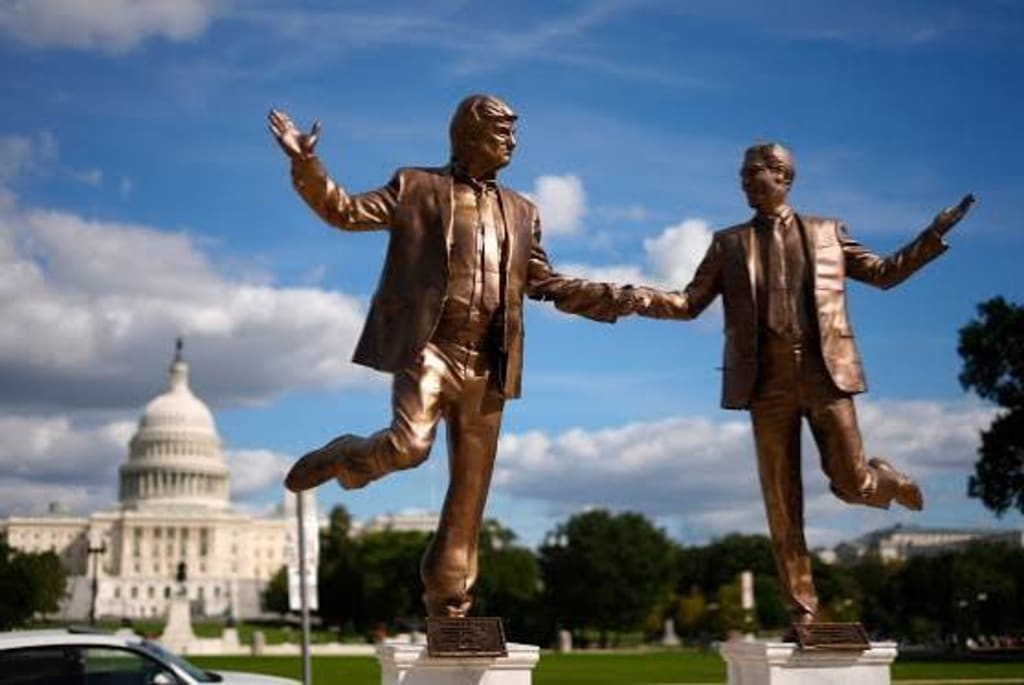
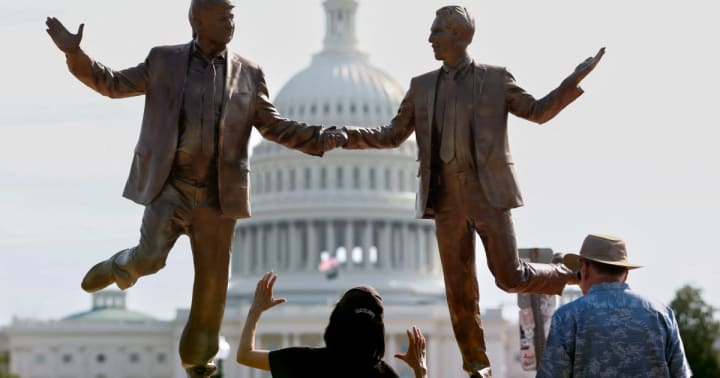
The sculpture appeared near the National Mall, one of the most symbolic public spaces in the United States. The statue portrayed Trump and Epstein standing together in a playful, exaggerated pose that appeared almost theatrical. The figures were shown smiling and holding hands, a visual style clearly designed to attract attention and provoke reaction.
The artwork was reportedly created by an anonymous group of activist artists. Their goal, according to statements shared with journalists, was to use satire to highlight the past social connections between Trump and Epstein. By placing the sculpture in such a prominent political location, the artists ensured that tourists, reporters, and government officials would immediately notice it.
The Message Behind the Artwork
The statue was not meant to celebrate the two figures but rather to criticize what the artists viewed as a troubling history of elite power and influence. Epstein, a wealthy financier who was convicted of sex-related crimes, had connections with numerous powerful individuals in politics, business, and entertainment.
Trump and Epstein were known to have moved in similar social circles during the 1990s and early 2000s, often attending the same parties and events in places like New York City and Palm Beach. Although Trump has repeatedly said he cut ties with Epstein years before Epstein’s legal troubles became widely known, the association has remained a subject of public debate and media scrutiny.
Through exaggerated imagery and humor, the statue aimed to remind the public of these past connections and raise broader questions about the influence of wealthy elites in politics.
Public Reaction and Controversy
As soon as the statue appeared, it generated strong reactions from the public. Some visitors viewed the sculpture as an important example of political satire and free expression. They argued that art has always been used to criticize powerful leaders and highlight uncomfortable truths.
Others strongly criticized the installation, calling it disrespectful or politically motivated. Supporters of Trump argued that the statue unfairly linked him to Epstein’s crimes and misrepresented the nature of their relationship.
Because of the growing controversy, authorities quickly removed the statue after it appeared. Officials stated that the installation did not fully comply with permit regulations for displays on federal land. However, the rapid removal only increased public interest, leading to widespread discussion across news media and social networks.
Art as Political Protest
The Trump–Epstein statue is part of a long tradition of protest art in democratic societies. Throughout history, artists have used humor, exaggeration, and symbolism to challenge political leaders and question authority. Satirical sculptures and public installations can sometimes provoke stronger reactions than speeches or articles because they visually represent controversial ideas.
In this case, the statue forced people to confront uncomfortable questions about political relationships, wealth, and influence. Whether viewers agreed with the message or not, the artwork succeeded in capturing global attention.
The Role of Public Spaces
The decision to place the statue near the National Mall was especially significant. The area is surrounded by monuments honoring presidents, historical figures, and national ideals. By placing a satirical statue in such a respected space, the artists created a sharp contrast between traditional monuments and modern political criticism.
This contrast raised questions about who deserves to be represented in public monuments and how societies should remember controversial figures.
Conclusion
The Trump and Epstein statue controversy demonstrates how art can ignite powerful debates about politics and accountability. While the sculpture itself was temporary, its impact on public discussion was significant. By combining satire with symbolism, the artists created a moment that forced people to reconsider the relationship between power, influence, and public perception.
About the Creator
Sk
"I am a passionate writer, crafting books and articles on Vocal Media, exploring human experiences, stories, and creative reflections."
Parallel Protests
I haven't written for quite some time, but I have A LOT of thoughts about yesterday's protest rally against our government's involvement and complicity in America's war on Iran, on the harbourside of my home city Bristol, and I need to put them somewhere. My gorgeous girlfriend is always a loving and listening ear and sharing it all with her will always be a healthy and happy way of processing the mental and emotional weight, but getting it straight in my brain to share means writing it all down in straight lines, so, here we are and thanks for being here.
By Steph Cole9 days ago in The Swamp


Comments
There are no comments for this story
Be the first to respond and start the conversation.