
What’s Wrong with Title 10 U.S. Code Plenary Authority These Days for the U.S.?
US under the pressure how to deal with such situation!


In recent months, the phrase “Title 10 plenary authority” has echoed across social media, political commentary, and legal circles in America. Influencers, ex-military figures, and conspiracy theorists alike have begun invoking it — some suggesting that it grants the President unlimited power over the military, even in domestic affairs.
But what is Title 10 really? And why has a once-obscure legal term suddenly become a tool for misinformation, political tension, and constitutional confusion? Let’s peel back the layers of myth and reality to see what’s actually wrong with Title 10 U.S. Code plenary authority in the modern United States.
The Real Meaning of Title 10
The United States Code (USC) is divided into sections called “Titles,” each governing a major area of federal law.
Title 10 deals with the Armed Forces — the Army, Navy, Air Force, Marine Corps, and Space Force. It defines how these forces are structured, funded, commanded, and deployed. It gives the President certain powers as Commander in Chief, but also binds him under congressional oversight and constitutional limits. In short, Title 10 doesn’t give the President a blank check — it gives him a framework.
What “Plenary Authority” Means
The word plenary comes from Latin planus, meaning full or complete. When used in law, “plenary authority” refers to complete power within a specific domain — but only where the law grants it.
So, while the President does have plenary authority to direct military operations outside the U.S. or in defense of national security, that authority isn’t limitless. It is bounded by:
The Constitution (especially the separation of powers), Congressional statutes, and Judicial interpretations. The misunderstanding begins when people think “plenary” means “absolute.” In American law, there is no such thing as absolute power — every authority exists under checks and balances.
Where the Confusion Began
In the last few years, the concept of “Title 10 plenary authority” has been weaponized by certain groups, especially during politically charged moments.
Some online commentators have claimed that the military, under Title 10, could “take control” of elections, enforce martial law, or overturn results — a dangerous distortion of the law. These theories ignore a simple legal truth: Title 10 governs the external use of the U.S. military, while Title 32 governs the National Guard under state control. Neither grants the President or any general the right to deploy troops internally without congressional or constitutional authorization. This confusion reveals a deeper issue — the erosion of civic literacy. Americans are increasingly consuming legal-sounding information without understanding its context, leading to panic, division, and distrust.
The Balance Between Power and Oversight
At its core, the debate over Title 10 is about balance — the delicate equilibrium between security and liberty. Title 10 gives the President the tools to defend the nation. Yet it also relies on Congress to regulate how and when those tools can be used. The Founding Fathers feared concentrated military power, which is why the U.S. military operates under civilian control; not independent rule. However, in recent decades, executive power has grown steadily. Presidents from both parties have used military authority in ways Congress never formally approved — from drone strikes to foreign interventions. This gradual expansion of “plenary authority” has blurred the lines between constitutional power and political expedience.
What’s Wrong Today
The modern problem with Title 10 isn’t the law itself — it’s how it’s being interpreted and used.
Political Manipulation:
Certain factions portray Title 10 as a tool for political enforcement, implying the military can act domestically to “restore order.” This dangerously undermines democracy and invites authoritarian thinking.
Misinformation:
Viral videos, social media posts, and podcasts simplify complex law into conspiracies. “Plenary authority” becomes a buzzword for fear, rather than a discussion of responsibility.
Lack of Public Understanding:
Most Americans couldn’t explain the difference between Title 10 and Title 32 — yet they share, post, and argue about it daily. Civic ignorance allows myths to thrive.
Overreach and Erosion:
The executive branch’s gradual overuse of Title 10 powers — especially in covert or foreign actions — risks eroding congressional oversight, setting dangerous precedents for unchecked militarization.
A Legal Tool in Need of Clarity
What America needs isn’t to abolish Title 10 — but to clarify and reinforce its boundaries. Lawmakers should:
Modernize the code to address cyber warfare, AI weapons, and private military contractors, which didn’t exist when many sections were written. Define domestic use limitations more explicitly to prevent political misuse. Strengthen congressional review of military actions, ensuring that “plenary authority” cannot bypass democracy. The goal should be transparency, not secrecy; balance, not blind trust.
A Final Reflection
The United States military remains one of the most respected institutions in the nation — disciplined, apolitical, and loyal to the Constitution. But when political actors twist the meaning of legal authority to serve ideological narratives, they threaten that integrity.
Title 10 U.S. Code was written to protect democracy; not to override it.
“Plenary authority” was meant to empower defense, not domination.
Today, the challenge is not the law itself, but how easily it can be misused when the public stops understanding what it truly means.
In an age of viral misinformation, clarity is the new patriotism. And perhaps, defending democracy now begins not with soldiers — but with informed citizens who understand the laws written in their name.
About the Creator
Keramatullah Wardak
I write practical, science-backed content on health, productivity, and self-improvement. Passionate about helping you eat smarter, think clearer, and live better—one article at a time.
Keep reading
More stories from Keramatullah Wardak and writers in The Swamp and other communities.
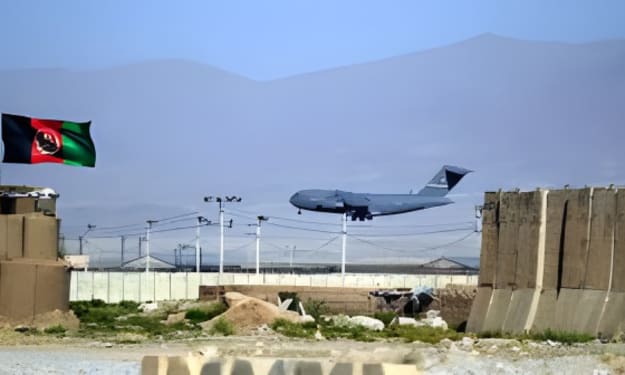
Who is Controlling Bagram Airbase in Afghanistan Now?
When you hear the name Bagram Airbase, you probably imagine the thundering sound of military jets, convoys of armored vehicles, and rows of barracks that once hosted thousands of troops. For two decades, Bagram was not just a military outpost in Afghanistan—it was the beating heart of U.S. and NATO operations across the region.
By Keramatullah Wardak5 months ago in The Swamp
The Saddest Thing - The Billionaires Who Rule America Aren't Even Enjoying Themselves
This single post says more about our ruling class than a thousand policy papers. The saddest thing about today's system is that the men robbing the rest of us - sabotaging our economic prospects, our pensions, our access to affordable healthcare - are not even happy.
By Scott Christenson🌴24 days ago in The Swamp
Trickle Them Down, But Not Out
The thing about smart people is that they should know better, but alas, intelligence is not the same as wisdom. Not only do the mistakes of experts too short on vision—when they are not corrected—have the potential to do great and far-reaching damage, but they also undermine public confidence in the very notion of expertise. This is particularly so when expertise is wielded in defence of the rich and powerful as a cudgel against those laid low. As an academic, this lack of faith in “so-called experts” is painful to see as it plays out in the spread of dis-/misinformation, conspiracy theories, and anti-intellectualism writ large. But it is also an understandable impulse given the catastrophic failure of an economic ideology pushed by certain economic experts. Supply-side economics has shaped a broken system for the last half-century and has arguably done more to undermine the fabric of the American Dream than any policy framework of the past century.
By Cory Wright-Maley6 days ago in Humans



Comments
There are no comments for this story
Be the first to respond and start the conversation.