
Weather, War, and Protests: Major Challenges Loom Over Trump’s Proposed Military Parade
Storm clouds, global conflicts, and rising domestic unrest could derail Donald Trump’s vision of a grand military celebration.

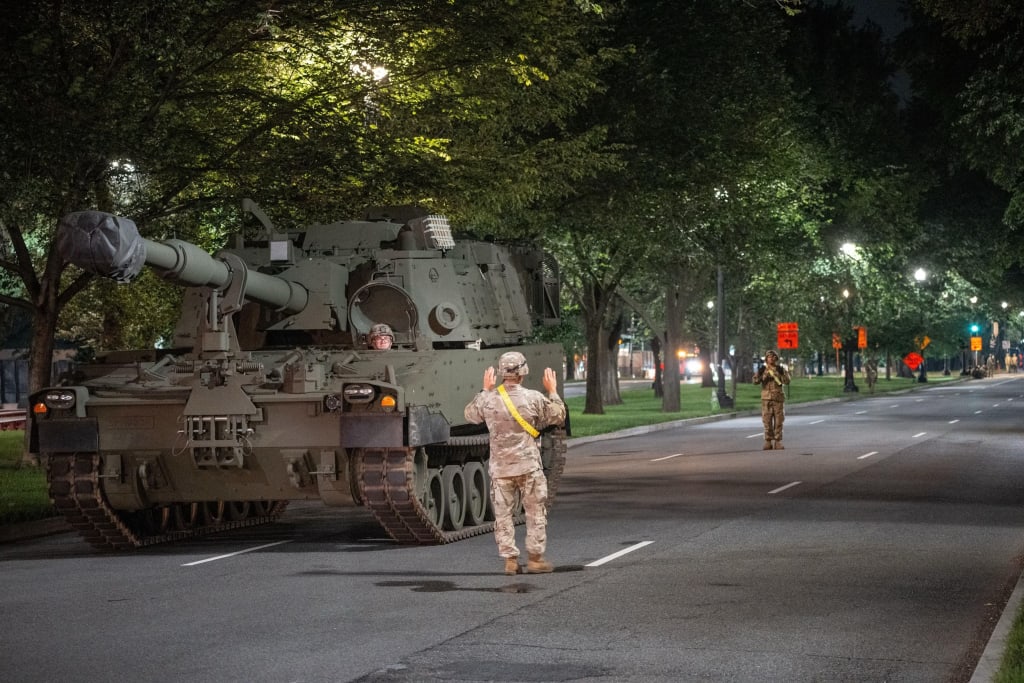
Weather, War, and Protests Threaten to Rain on Trump’s Military Parade
Former U.S. President Donald Trump is once again pushing for a grand military parade — a vision he has held since his presidency began. Inspired by France’s Bastille Day celebration, Trump has long admired the display of tanks, troops, and national pride. But this time, his dream faces three major obstacles: unpredictable weather, growing global military conflicts, and a sharp increase in political protests across the country.
The plan to revive the idea of a military parade has sparked intense debate across political and public circles. Supporters view it as a show of strength and patriotism. Critics, however, argue it could lead to unnecessary spending, encourage authoritarian imagery, and deepen the political divide. With the current political climate in the U.S. already tense, adding a grand military spectacle may do more harm than good.
A Parade Under Stormy Skies
One of the most immediate threats to Trump’s proposed parade is simple: the weather. If held in Washington, D.C., the capital’s summer and fall months often bring storms, heatwaves, and unexpected rain. Planning a massive outdoor event that involves troops, military vehicles, and large crowds requires stable conditions.
Military experts also note that some equipment, including heavy tanks, can damage city roads if used during wet weather. During Trump’s earlier presidency, a similar parade idea was postponed partly due to high projected costs and concerns over infrastructure damage — many of which were weather-related.
Global Conflicts Complicate the Message
Currently, the world faces multiple military flashpoints. The ongoing war between Israel and Iran, Russia’s war in Ukraine, and tensions in the South China Sea have kept global leaders on edge. Hosting a large-scale military parade during such times might send the wrong signal to allies and adversaries alike.
Critics argue that displaying military might while international conflicts rage on could worsen diplomatic tensions. Some foreign policy analysts believe it could appear as if the U.S. is preparing for or promoting war — a message that contradicts America’s diplomatic efforts in these regions. Military parades are often linked with countries like North Korea or Russia, where they are used to project strength. In the U.S., where military power is rarely showcased in parades, the message may not be well received.
Rising Protests and Political Divisions
Perhaps the biggest challenge comes from inside the country itself. The U.S. is currently experiencing a wave of political protests, many of which target Trump directly. From immigration policies to abortion rights, police reform, and recent Supreme Court rulings, Americans are divided on many issues. Organizing a parade in such an environment could spark massive counter-protests.
In cities like Washington, D.C., where anti-Trump sentiments are high, any event in his name is likely to face public backlash. Law enforcement would have to spend extra resources to manage crowds, secure parade routes, and prevent violence. Trump’s past events, including campaign rallies and public speeches, have drawn both supporters and opponents in large numbers — sometimes leading to clashes.
There are also concerns about how veterans and military families will react. Some view parades as respectful honors for service members, while others see them as political tools. If the parade appears to be more about Trump than the troops, it may lose support from military communities.
Funding and Political Support Remain Uncertain
The cost of a full-scale military parade can be massive. During Trump’s first attempt, the estimated cost reached over $90 million, leading to its cancellation. With inflation still high and the federal budget under pressure, convincing lawmakers to approve such spending could be difficult.
Many politicians — even within the Republican Party — are cautious about backing Trump’s parade plan. They fear public backlash or association with a spectacle that could be seen as divisive.
Conclusion: A Parade or a Political Risk?
While Donald Trump may still want to showcase America’s military with a grand parade, the current situation makes it a risky move. Weather issues, global conflicts, rising protests, and political opposition all create major roadblocks.
At a time when the country is already deeply divided, critics argue that focusing on unity and recovery might be more beneficial than a show of strength. Whether Trump’s military parade ever becomes a reality remains to be seen — but for now, it looks like storm clouds, both literal and political, are gathering overhead.
About the Creator
Saad
I’m Saad. I’m a passionate writer who loves exploring trending news topics, sharing insights, and keeping readers updated on what’s happening around the world.
WEF: Donald Trump Set to Dominate Davos 2026
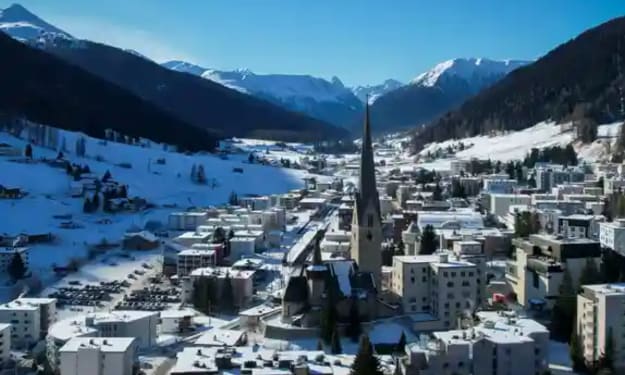
When world leaders, billionaires, CEOs, and policy architects gather in the Swiss Alps for the World Economic Forum (WEF) in Davos, they usually arrive with carefully balanced messages about cooperation, stability, and long-term planning. But in 2026, one figure is expected to overshadow all others—Donald J. Trump. According to analysts and political observers, Trump’s influence is set to dominate Davos 2026, whether he appears in person or not. His policies, rhetoric, and potential return to the White House are already shaping conversations about trade, security, globalization, and the future of Western democracies. For an event traditionally associated with liberal internationalism, Trump’s looming presence marks a dramatic shift. Why Trump Matters at Davos The World Economic Forum has long been a symbol of elite global consensus—an annual meeting where governments, multinational corporations, and international institutions attempt to align their visions. Donald Trump, by contrast, has consistently positioned himself as an outsider to that system. During his previous presidency, Trump openly criticized global institutions, questioned NATO commitments, challenged free-trade agreements, and promoted a fiercely nationalist “America First” agenda. Those policies reshaped global markets and alliances, making Trump impossible to ignore—even for the very elites he often criticized. As Davos 2026 approaches, Trump’s political comeback has forced attendees to confront an uncomfortable reality: global decision-making may once again revolve around a leader who rejects many of the forum’s foundational ideas. A Forum Forced to Adapt Unlike past years, Davos 2026 is expected to focus less on long-term climate targets and more on immediate geopolitical uncertainty. Trump’s potential return to power has triggered renewed debate over tariffs, defense spending, and global supply chains. Executives attending the forum are reportedly recalculating investment strategies in anticipation of stricter U.S. trade policies. Trump’s past willingness to impose tariffs—even on allies—has made corporations wary of overreliance on globalized production networks. At the same time, European leaders are preparing for the possibility of reduced U.S. commitment to multilateral agreements. Trump’s skepticism toward institutions like the World Trade Organization and the Paris Climate Agreement remains a central concern at Davos. Trade, Tariffs, and Economic Nationalism Few topics are expected to dominate Davos discussions more than trade protectionism. Trump’s previous presidency saw aggressive tariff policies aimed at China, the European Union, and even Canada. Those moves disrupted global markets but also appealed to voters who felt left behind by globalization. At Davos 2026, business leaders are expected to debate whether the era of unrestricted global trade is permanently over. Trump’s influence has legitimized economic nationalism in ways that many global elites once dismissed. For emerging economies, this shift raises difficult questions. Should they continue betting on export-driven growth, or pivot toward regional self-sufficiency? Trump’s worldview has forced Davos attendees to reconsider assumptions that defined the post-Cold War global economy. Security and NATO Back on the Agenda Trump’s approach to security alliances is another reason his presence looms so large. His past criticism of NATO—especially his insistence that European allies increase defense spending—changed the alliance’s internal dynamics. At Davos 2026, security experts are expected to openly discuss whether the U.S. would remain a reliable security guarantor under another Trump administration. This uncertainty has already pushed European nations to rethink military budgets and strategic autonomy. For global investors, geopolitical instability is no longer an abstract risk. Trump’s unpredictability, supporters argue, brings leverage; critics say it introduces dangerous volatility. Either way, Davos cannot ignore the impact. Climate Policy in Trump’s Shadow Climate change has traditionally been a centerpiece of the World Economic Forum. However, Trump’s skepticism toward international climate agreements has complicated that narrative. While global corporations continue to promote sustainability goals, there is growing concern that political momentum may shift away from aggressive climate regulation if Trump regains power. At Davos 2026, climate discussions are expected to reflect a more cautious tone—focused on market-driven solutions rather than binding international commitments. This represents a significant shift for a forum that once championed ambitious global climate action as inevitable. Why Trump Dominates Even Without Attending What makes Trump’s influence unique is that he doesn’t need to attend Davos to dominate it. His policies, rhetoric, and political movement have reshaped the global conversation. Panels discussing China, supply chains, AI regulation, defense spending, and even democracy itself are all framed by a single question: How would a Trump-led America respond? In many ways, Trump has forced the World Economic Forum to confront its own limitations. The assumption that global elites can guide the world toward consensus no longer holds. Political polarization, nationalist movements, and voter backlash against globalization have changed the rules. A Divided Reaction Among Davos Attendees Reactions to Trump’s looming dominance are deeply divided. Some executives privately welcome his transactional approach, arguing that it brings clarity and decisive action. Others fear that his unpredictability undermines stability and long-term planning. For policymakers, Trump represents both a challenge and a reality check. His rise exposed a disconnect between elite institutions and large segments of the global population—an issue Davos has struggled to address convincingly. What Davos 2026 Represents Davos 2026 may go down as a turning point—not because of any single announcement, but because of what it symbolizes. The forum is no longer setting the global agenda; it is reacting to political forces it once underestimated. Donald Trump’s dominance of the conversation reflects a broader transformation in global politics. Power is shifting away from consensus-driven institutions toward leaders who thrive on disruption and national interest. Whether one views Trump as a destabilizing force or a corrective to global overreach, his shadow over Davos 2026 is undeniable. Conclusion The World Economic Forum was designed as a place where the world’s most powerful actors could shape the future together. In 2026, that future is being shaped elsewhere—by elections, populist movements, and leaders like Donald Trump. Davos 2026 will still host speeches, panels, and promises. But the most influential presence may be the one challenging its very foundations.
By Muhammad Hassana day ago in The Swamp


Comments
There are no comments for this story
Be the first to respond and start the conversation.