
Iran and Israel Conflict Escalates: Global Risks Grow
The recent attacks between Iran and Israel raise fears of a wider war affecting the Middle East, South Asia, and Europe

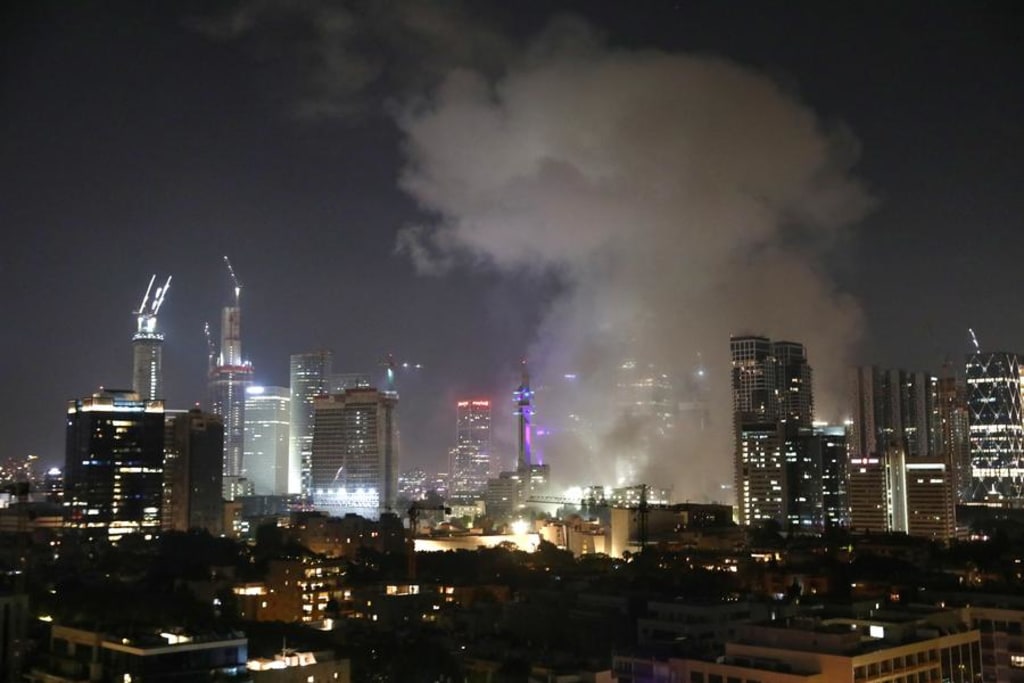
In recent weeks, the world has watched as tensions between Iran and Israel reached a dangerous new level. For decades, the two countries have been enemies. But now, their conflict is no longer hidden or fought through smaller groups. Instead, both nations have directly attacked each other. These events are serious, and the effects may reach far beyond Iran and Israel’s borders.
The situation began when Israel launched airstrikes inside Iran. The targets were military centers and possible nuclear sites. Iran responded by firing drones and missiles toward Israeli cities. Some of the missiles were stopped by Israel’s defense system, but others caused damage and fear. Both countries blamed each other for starting the violence, and both promised to continue defending themselves.
Rising Danger in the Middle East
The Middle East is already a very unstable region. Many countries are struggling with war, poverty, and political problems. The Iran-Israel conflict now adds to that tension. Countries like Lebanon, Syria, and Iraq are directly affected because of their connections to Iran or Israel. Armed groups like Hezbollah in Lebanon support Iran and have fired rockets at Israel in response to the attacks.
Other countries in the Gulf, such as Saudi Arabia and the United Arab Emirates, are worried about their own safety. They fear that oil production may be targeted or disrupted. Oil prices have already gone up in global markets. If the war continues, the region’s economy could suffer deeply. This would hurt not just the Middle East, but many countries that depend on oil from this area.
The South Asian Response
South Asia is also watching the Iran-Israel crisis closely. Pakistan, for example, has always had friendly relations with Iran. But it also has ties with Arab countries like Saudi Arabia. This puts Pakistan in a difficult position. If the conflict gets worse, Pakistan may have to choose sides, which could hurt its relationships and economy.
India also finds itself in a tough spot. It buys oil from Iran but also has a strong defense partnership with Israel. Any war could affect India's energy supply and trade. India has called for peace and asked both sides to show restraint. However, the country is preparing for any possible fallout, including rising oil prices and changes in international alliances.
In Afghanistan, there is concern that the fighting might encourage more violence by extremist groups. The country is still rebuilding after years of war. If foreign fighters return or terrorist groups grow stronger, peace in Afghanistan could be at risk again.
Europe’s Growing Concerns
Even though Europe is far from the battlefield, the Iran-Israel conflict is already creating problems. First, energy prices are rising. Europe depends on oil and gas from the Middle East. Any disruption could affect millions of people, especially in countries already struggling with inflation.
Second, European governments worry about terrorism. In past Middle Eastern wars, some extremist groups carried out attacks in cities like Paris, London, and Berlin. Police and security services in Europe are now on high alert.
Europe also played a major role in the Iran nuclear deal. That deal tried to prevent Iran from developing nuclear weapons. But the recent attacks have made the situation worse. It now seems unlikely that Iran will return to that agreement. This weakens Europe’s ability to stop nuclear threats through diplomacy.
What Are the Global Powers Doing?
The United States supports Israel and has promised to help defend it. However, it also wants to avoid a large-scale war in the region. American officials have called for peace but have also sent warships to the area. On the other hand, countries like Russia and China are supporting Iran’s position in some ways. These global powers are now involved either directly or indirectly.
This creates a dangerous situation. If the fighting continues, there is a real chance that other nations could get pulled in. A wider war could include cyberattacks, economic sanctions, and even the use of dangerous weapons. The United Nations has called for calm, but so far, no real peace plan has been accepted.
Final Thoughts
The direct conflict between Iran and Israel is a warning to the world. It shows how quickly a regional problem can become a global crisis. The Middle East, South Asia, and Europe are all at risk. People everywhere may feel the effects—through high prices, fear of war, or weakened security.
Leaders around the world must work together to stop this conflict from growing. Diplomacy, peace talks, and cooperation are the only way forward. If peace does not come soon, the cost for everyone may be far too high.
About the Creator
Saad
I’m Saad. I’m a passionate writer who loves exploring trending news topics, sharing insights, and keeping readers updated on what’s happening around the world.
No Escape Room: Trapped in a Game That Never Lets You Leave
The story begins with a man who goes on a weekend trip with his daughter to spend some time together. He wants to make her happy. However, his daughter Karen is upset with her dad about something and remains silent throughout the journey, staring out of the window. Her dad tries to lighten the mood. He talks to her, cracks jokes, and makes efforts so her mood improves and the short trip becomes memorable. While they are on the way, their car suddenly breaks down. Due to this, they are forced to stop in a nearby small town. They leave the car at an old garage to get it repaired and, while waiting, they sit in a hotel across the road and order food. Karen’s dad suggests that since the car will take time to be fixed, they should look for some place nearby where they can have a little fun. He picks up a large newspaper lying there and starts looking at tourist activities. He suggests several options to Karen one by one, but she refuses every idea. Then his dad notices an advertisement for an escape room. He explains to her that it is a game where a group of people is locked inside a room. Inside, they are given puzzles, riddles, and tasks, and until they solve everything correctly, they are not allowed to leave the room. Hearing this, a slight spark appears in Karen’s eyes. She says that her friends have played such a game before and really enjoyed it, so she also wants to try it. Her dad immediately calls the waitress and asks her about the escape room. The waitress suddenly becomes serious and says that they should not go there, because whoever has gone there has never come back. Hearing this, both of them look at each other nervously. The atmosphere suddenly becomes heavy. Then, the very next moment, the waitress laughs and says she was just joking. She says it is very fun and people really enjoy it. Hearing this, they relax a little and decide to go to the escape room. Meanwhile, Karen goes to the washroom because something has spilled on her clothes. As soon as she enters, the lights start flickering. The entire washroom falls into an eerie silence. Suddenly, she hears strange noises coming from the adjacent cabin, as if someone inside is trying to open the door. Karen’s heart starts pounding. Out of fear, she slowly walks toward that cabin and is about to open the door when the waitress suddenly comes out from the same cabin. At that moment, Karen’s dad calls out to her, and she quickly leaves the place. However, the strange fear that settles in her heart does not fade away easily. After that, they rent a car and head toward the location of the escape room. As they move forward, the liveliness around them slowly disappears. Eventually, they reach a place where there is complete silence all around. Just looking at the building gives off a strange feeling. The walls have old cracks, the paint is peeling off, and it feels as if the building has seen many dark things. They enter inside. Karen’s dad calls out loudly, “Is anyone here?” After a few seconds of silence, a girl appears and, with a faint smile, says, “Welcome, I am the host of this game.” She takes them into a room where three other people are already sitting, who have also come to participate in the game. A woman introduces herself and says, “My name is Melanie, and I came here with my husband. He didn’t want to come, but I insisted and brought him along.” There is also another man who introduces himself as a doctor. After a while, the host brings a strange kind of tea for everyone. Steam rises strongly from the tea, and its smell feels unusual. Karen’s dad feels something is not right about it, so he hesitates and stops Karen from drinking it as well. But when he sees that everyone else is drinking it calmly, he eventually drinks it too. After that, the host places some agreement papers in front of them and asks them to sign. It is written that all of them have come here willingly, and if anything happens to anyone, they themselves will be responsible. Once the papers are signed, the host takes everyone’s mobile phones and explains that it is a rule of the game. No one will contact the outside world, and no videos are allowed to be recorded. Then she turns on a projector and plays a video. The video explains the story of an inventor who used to conduct strange experiments and create unusual things. He was the one who built this mysterious house. But after that, strange incidents started happening there. Some people came to uncover the secret of the house, but they all got trapped inside and disappeared without leaving any trace. After this, the host explains the rules of the game. Each room’s door will open only when the key for that room is found. Every key is hidden inside the same room, and to find it, puzzles and riddles must be solved. The total time for the game is one hour. If anyone feels they cannot handle the mental pressure and everything becomes too overwhelming, they only need to say the word “Wake up,” and they will be taken out immediately. As soon as she finishes saying this, the lights suddenly go out… (The story continues in the same word-by-word sequence with fear, suspense, time loops, death, and consequences, and in the end it becomes clear that this is the “No Escape Room” — a trap from which no one truly escapes. It was a deadly experiment created by a mad inventor, and even the souls of those who die there remain trapped inside the house forever.)
By Filmon Ke Raaz | Movie Mysteries Explainedabout 21 hours ago in The Swamp
Wild Card Weekend Recap: What Happens Now?
I think I figured out why I love Wild Card Weekend so much. It's because it's the first playoff anything of the calendar year. The NFL season starts in the fall, and once upon a time, the champion was crowned either on or slightly before New Year's. The evolution of the NFL schedule has resulted in the playoffs starting just into the New Year, and currently, the final week of the season falls on the first weekend of the New Year, with Wild Card Weekend coming a week after that. So yes, chronologically, the NFL's Wild Card Weekend serves as the first playoff anything of the calendar year.
By Clyde E. Dawkins6 days ago in Unbalanced




Comments
There are no comments for this story
Be the first to respond and start the conversation.