
‘We Will Fight This War’: CM Bugti Says 145 Terrorists Killed in 40 Hours Across Balochistan
Security operations intensify amid escalating insurgency in the province
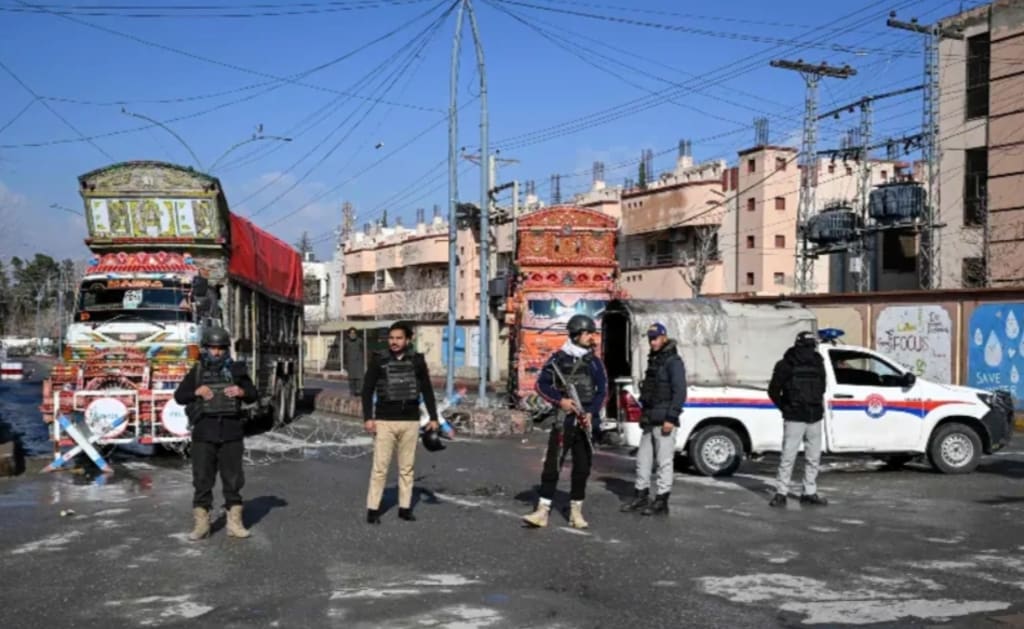
Balochistan Chief Minister (CM) Akhtar Bugti has declared that security forces killed 145 terrorists in just 40 hours, as counterterrorism operations intensified across the province. The announcement comes amid ongoing efforts by Pakistani authorities to restore stability in the region, which has faced insurgency, attacks on infrastructure, and sectarian violence for years.
CM Bugti emphasized the government’s commitment to eradicating militant networks, stating, “We will fight this war until peace and security are fully restored in Balochistan.” The recent surge in operations highlights both the capabilities of security forces and the scale of the challenges in the province.
The Security Situation in Balochistan
Balochistan, Pakistan’s largest province by area, has long been a focus of security concerns due to insurgent groups targeting government installations, security forces, and civilian infrastructure. In recent months, authorities reported a spike in militant activity, prompting a coordinated response by the military and provincial law enforcement.
Key security issues in Balochistan include:
Armed insurgency groups operating in remote areas
Attacks on roads, bridges, and energy infrastructure
Smuggling and organized crime linked to militant networks
Sectarian and ideological conflicts
The province’s strategic importance, bordering Iran and Afghanistan and hosting major ports, amplifies the impact of security threats on both domestic and regional stability.
Details of the Recent Operations
According to official statements, the security sweep conducted over 40 hours involved:
Combined operations by the army, paramilitary forces, and police
Air and ground surveillance in key districts
Targeted strikes on known militant hideouts
Arrests of suspected insurgents and seizure of weapons
The operations reportedly resulted in 145 terrorists neutralized, though officials have not disclosed the breakdown of casualties versus arrests. CM Bugti described the sweep as part of a broader crackdown on terror networks in Balochistan.
Government and Military Perspective
The provincial government has highlighted the need for decisive action, citing public safety and economic development as priorities. CM Bugti praised the coordination between military and law enforcement agencies, stating that “security forces are fully committed to eliminating threats to peace.”
From a military perspective, operations aim to:
Disrupt militant infrastructure
Prevent attacks on critical projects, including the China-Pakistan Economic Corridor (CPEC)
Enhance the mobility and security of civilians in affected areas
Strengthen intelligence-led counterterrorism measures
Authorities insist that sustained operations are necessary to send a clear message to insurgents that Balochistan will not tolerate violence.
Humanitarian Considerations
While the operations focus on militant networks, there are concerns about civilian safety. Security sweeps in conflict zones carry risks for residents, particularly in remote villages. Authorities have pledged:
Evacuation measures where needed
Communication with local leaders
Humanitarian aid for affected communities
Civilian casualties, if any, are being closely monitored, as public perception plays a crucial role in the legitimacy of counterterrorism campaigns.
Impact on Regional Stability
Balochistan’s security dynamics affect not only Pakistan but also the wider region. The province hosts major economic and strategic projects, including Gwadar Port, which is central to CPEC and regional trade. Ensuring stability is therefore critical to:
Protecting foreign investments
Maintaining uninterrupted trade and logistics
Preventing cross-border spillover of militant activity
Securing energy pipelines and infrastructure
Regional analysts emphasize that persistent insurgency threatens both economic growth and social development in the province.
Political Implications
CM Bugti’s announcement has political resonance as well. Demonstrating a strong stance against militancy is viewed as essential for:
Maintaining public confidence in the provincial government
Strengthening Pakistan’s national security narrative
Reinforcing international perceptions of counterterrorism effectiveness
Political commentators note that such operations, while necessary, must be balanced with long-term development and community engagement to prevent resurgence of militant activity.
Challenges Ahead
Despite the success reported, several challenges remain:
Insurgent groups are highly mobile and often operate in rugged terrain
Recruitment and radicalization in isolated communities continue
Securing economic projects and infrastructure remains difficult
Balancing aggressive operations with humanitarian considerations is delicate
Experts argue that sustained vigilance, intelligence sharing, and community cooperation will be key to maintaining long-term security in Balochistan.
Community and Civil Society Response
Public reaction has been mixed. Many residents express relief at the government’s decisive action, viewing it as a step toward safer communities. However, civil society groups urge caution, highlighting:
The importance of protecting civilian rights
The need for rehabilitation programs for former militants
Development initiatives alongside security operations
Building trust between authorities and local communities remains a critical component of lasting peace.
Conclusion
The announcement by CM Bugti that 145 terrorists were killed in 40 hours underscores the intensity of ongoing counterterrorism operations in Balochistan. While the province continues to face significant security challenges, coordinated efforts by military and law enforcement agencies demonstrate the government’s commitment to restoring stability.
Moving forward, balancing aggressive security measures with humanitarian and development initiatives will be essential to ensure that Balochistan not only survives current threats but also thrives as a peaceful and prosperous region.
About the Creator
Keep reading
More stories from Aarif Lashari and writers in The Swamp and other communities.
Talking Point: What Are You Playing This Weekend? – Issue 618
For millions of gamers around the world, weekends are more than just days off — they are prime time for gaming. Whether it’s diving into story-driven adventures, competing in online multiplayer matches, or relaxing with casual mobile games, weekend gaming has become a cultural ritual. The recurring question, “What are you playing this weekend?”, reflects not only personal preferences but also broader trends shaping the gaming industry.
By Aarif Lasharia day ago in The Swamp
US Warns It Could Deploy Fighter Jets Into Canadian Airspace if F-35 Deal Collapses
A sharp warning from Washington has thrust the long-running debate over Canada’s purchase of F-35 fighter jets back into the spotlight. US officials have cautioned that American fighter aircraft could be sent into Canadian airspace more frequently if Ottawa fails to follow through on its planned acquisition of the stealth jets. The message, unusually direct for two of the world’s closest allies, underscores how defence procurement decisions are increasingly being framed as national security imperatives rather than routine budgetary choices.
By Salaar Jamali6 days ago in The Swamp
Is America About to Attack Iran? A Look at Rising Tensions and Global Stakes
Amid rising geopolitical tensions, many around the world are asking a question with serious consequences: Is the United States preparing to attack Iran? The short answer is that while there is no confirmed imminent attack, developments over the past weeks suggest a heightened risk environment involving serious threats, military build‑ups, and diplomatic pressure that could, under certain conditions, escalate into conflict. The Economist Here’s a clear, informative breakdown of what’s happening — and what it might (or might not) mean for a U.S. strike on Tehran. What’s Fueling the Tension At the heart of the current crisis are escalating threats between the U.S. and Iran, particularly over Iran’s nuclear program and its internal political repression. Donald Trump — now back in the White House — has issued several warnings to Tehran, saying a large U.S. naval “armada” is heading toward the region and that Iran should agree to a nuclear deal or face a “far worse” attack. اnational In response, Iran has signaled strong resistance. Iranian leadership has declared that any military action would be treated as the beginning of a full‑scale war, with immediate and far‑reaching retaliation. TASS These developments are accompanied by military deployments — including aircraft carriers and destroyers — and aggressive rhetoric on both sides. Financial Times +1 What the U.S. Has Actually Done To understand whether a major attack is imminent, it helps to look at what the U.S. has already done: 1. Naval and Military Buildup The U.S. has sent significant naval assets to the Middle East, including the USS Abraham Lincoln and accompanying strike group. Military analysts note this is the largest U.S. deployment in the region in years, signaling seriousness but not necessarily intent to strike immediately. Fina2. Past Strikes on Nuclear Sites In June 2025, U.S. forces, alongside or in support of Israeli operations, bombed three Iranian nuclear facilities as part of efforts to curb nuclear development. At the time, U.S. officials insisted they did not want full war, characterizing the mission as a necessary action to check nuclear escalation. Military.com This prior strike is relevant because it shows the U.S. is capable of acting militarily against Iran — but it also said it was not seeking a broader war. Military.com Tehran’s Response Iranian officials have issued stark warnings about the consequences of any U.S. attack: Iran will treat any U.S. military action as a start of war, promising immediate retaliation against the U.S., its allies, and potentially Israel. TASS Iran’s foreign minister has emphasized readiness to respond “powerfully” to any aggression, while also warning that threat‑based diplomacy undermines negotiations. Philstar.com These statements underscore that Iran is not sitting passively — and any attack could trigger a broader regional conflict. Are Diplomacy Efforts Still Alive? Despite the threats, diplomatic channels have not completely closed: Iran has reiterated that it is open to a “fair and equitable” nuclear deal that respects its right to peaceful nuclear technology, but it rejects negotiations under a cloud of military threat. Philstar.com Other global powers, including Russia, have urged the U.S. and Iran to pursue talks rather than force, warning that military action would destabilize the broader Middle East. Reuters This suggests that — even amid hostile rhetoric — there is still a space for negotiation. What Experts Say Security analysts caution that the current situation contains elements of warning, deterrence, and diplomacy rather than clear signs of imminent war: Some see recent rhetoric — like threats of bombardment — as part of pressure tactics meant to force Iran back to negotiations rather than a prelude to immediate conflict. ent of a large naval force could be interpreted as a deterrent posture, aimed both at signaling resolve and reassuring U.S. allies in the region, not solely preparing for an offensive strike. Financial Times Historical context matters: past interactions between the U.S. and Iran have included crises that did not escalate into full war, even when they appeared close. Experts note that both sides are aware of the high risks of a wider conflict. Could It Still Happen? Yes — but it is far from certain. A U.S. attack could occur under specific circumstances, such as: A sudden Iranian attack on U.S. forces or critical regional infrastructure Intelligence suggesting a imminent threat from Iran’s nuclear program Breakdown of diplomatic de‑escalation efforts However, many policymakers and analysts emphasize that the U.S. is not currently at war with Iran and that Washington continues to publicly claim it doesn’t want a broader war, even if it is prepared militarily. TIME What Would Be the Consequences? A direct American military strike on Iran could escalate dramatically: Iran has a wide range of ballistic missiles capable of striking U.S. bases and regional partners. Al Jazeera Iran could activate allied militias and regional forces, potentially spreading conflict across multiple Middle Eastern theaters. omic instability could follow, particularly if the Strait of Hormuz is affected. For these reasons, many diplomats and analysts argue that all-out war would be deeply dangerous — and is not something either side would choose lightly. Bottom Line So, is America about to attack Iran? Not imminently — at least not based on confirmed evidence — but the risk environment is serious and volatile. The U.S. has bolstered its military presence and ramped up rhetoric, while Iran has responded with warnings of severe retaliation. A conflict could occur if diplomatic channels fail or if violent engagement erupts first — but military analysts still see deterrence and negotiation as significant factors in preventing an outright war. Conditions are tense, and global observers are watching closely — because the stakes extend far beyond Iran and the U.S. themselves. The Economist
By Aqib Hussain4 days ago in The Swamp



Comments
There are no comments for this story
Be the first to respond and start the conversation.