
US to Withdraw from Dozens of UN, International Organisations: Implications for Global Diplomacy
A bold withdrawal from global institutions raises questions about America’s role on the world stage"

In a bold and controversial move, the United States government has announced its intention to withdraw from dozens of United Nations and other international organisations, marking a significant shift in its approach to global diplomacy. Officials describe the decision as part of a broader effort to prioritise American interests and reduce financial contributions to multilateral bodies. However, critics warn that this strategy could have far-reaching consequences for international cooperation, global governance, and the US’s standing on the world stage.
The Scope of the Withdrawal
According to statements from the State Department, the withdrawal will affect multiple UN agencies, including specialised organisations dealing with health, trade, and development, as well as a variety of international bodies outside the UN framework. The exact list of organisations has not been fully disclosed, but insiders suggest that it could involve entities responsible for global humanitarian aid, environmental monitoring, and human rights oversight.
The move signals a clear pivot away from multilateralism, echoing past trends where US administrations have questioned the value of international institutions and sought to recalibrate engagement based on national interests. Proponents argue that the United States has been disproportionately burdened with funding and compliance obligations while receiving limited tangible benefits.
Reasons Behind the Decision
Officials have framed the withdrawals as a strategic recalibration. The US contributes billions of dollars annually to international organisations, and critics within the administration argue that these contributions do not always align with American priorities. By reducing involvement, the government hopes to redirect funds toward domestic priorities, including infrastructure, defence, and public welfare programs.
Additionally, some policymakers have expressed frustration with what they perceive as inefficiencies, bureaucracy, and politicisation within these organisations. By stepping back, the United States aims to exert greater control over how its resources are allocated and ensure that international engagements serve concrete national interests.
Global Repercussions
The withdrawal has raised alarm among diplomats, experts, and allies worldwide. International organisations often rely heavily on US funding and influence to maintain operations. With the United States stepping away, several programs—particularly those in healthcare, humanitarian aid, and conflict mediation—may face funding shortfalls, potentially impacting millions globally.
Experts also warn that this move could embolden other nations to follow suit, weakening the effectiveness of international governance. “The US has historically been a cornerstone of global diplomacy,” said a former UN official. “A withdrawal of this scale sends a signal that multilateral cooperation is optional, which could undermine decades of collective progress on issues like climate change, peacekeeping, and human rights.”
Impact on US Influence
Beyond practical consequences, the withdrawal could also diminish the United States’ influence in shaping global policies. International organisations often serve as platforms for negotiation, consensus-building, and soft power projection. By retreating, the US may lose its ability to shape standards and norms on critical issues ranging from global health emergencies to arms control.
Allies in Europe, Asia, and Latin America have expressed concern about the US stepping back at a time of heightened geopolitical tensions. Critics argue that absence from international forums may allow rival powers to fill the vacuum, potentially reducing American leverage in key strategic regions.
Domestic Debate
Within the United States, the decision has sparked heated debate. Supporters view the move as a necessary assertion of sovereignty and fiscal responsibility, arguing that the country should not subsidise global programmes that do not directly benefit American citizens.Looking Ahead
As the world watches, questions remain about the exact timing, scope, and legal ramifications of the US withdrawal. Diplomatic channels are expected to be busy in the coming months as allies seek clarity and attempt to mitigate potential disruptions. Meanwhile, the US faces a delicate balancing act: asserting national interests while maintaining credibility and influence in a highly interconnected world.
The ultimate impact of this decision will depend not only on which organisations the US leaves but also on how effectively it engages with remaining international partners to address global challenges. Whether this move marks a shift toward isolationism or a strategic recalibration will likely shape US foreign policy for years to come.
About the Creator
Keep reading
More stories from Fiazahmedbrohi and writers in The Swamp and other communities.
Air India Takes Delivery of First Dreamliner After Privatisation: A New Chapter in Aviation History
Air India, India’s flagship carrier, has officially taken delivery of its first Boeing 787 Dreamliner, marking a significant milestone in the airline’s history and a pivotal moment following its privatisation. The arrival of this state-of-the-art aircraft represents not just a modernisation of the airline’s fleet but also a renewed vision for India’s aviation sector under private ownership. Privatisation and the New Era Air India was privatised in late 2022 after decades of government ownership, with Tata Group, India’s industrial conglomerate, taking over operations. The acquisition aimed to revive the airline’s fortunes, which had been plagued by financial losses, outdated fleets, and operational inefficiencies. Since then, the focus has been on modernisation, operational efficiency, and improving customer experience—a vision that the Dreamliner embodies. “The delivery of the first Dreamliner is more than just an addition to our fleet; it’s a statement of intent,” said Air India CEO. “We are committed to offering world-class service while connecting India to key global destinations with modern, efficient aircraft.” The Boeing 787 Dreamliner: Features and Significance The Boeing 787 Dreamliner is renowned for its cutting-edge technology, fuel efficiency, and passenger comfort. With a composite fuselage and advanced aerodynamics, it consumes significantly less fuel than older models, helping reduce operating costs and environmental impact. Passengers can expect a quieter cabin, larger windows, improved air quality, and better humidity control, which makes long-haul flights more comfortable. These features are crucial for Air India as it competes on international routes, particularly to Europe, North America, and East Asia. The Dreamliner also supports greater range and payload flexibility, enabling the airline to open new routes without the need for additional stops. This is particularly important as Air India seeks to strengthen India’s connectivity with global business hubs and leisure destinations. Economic and Strategic Impact The addition of the Dreamliner signals Air India’s ambitions to reclaim a prominent position in international aviation. Privatisation has provided the financial backing and strategic agility to invest in modern aircraft, expand operations, and improve customer experience—areas where government-run operations had historically struggled. Beyond the airline itself, this development has broader economic implications. Increased efficiency and expanded routes can boost tourism, facilitate business travel, and strengthen India’s global trade connections. Additionally, operating fuel-efficient aircraft aligns with India’s sustainability goals by reducing carbon emissions per passenger. Competitive Advantage Air India faces stiff competition from both domestic and international carriers. Airlines such as IndiGo, Vistara, Emirates, and Qatar Airways dominate various segments, particularly on premium international routes. The Dreamliner provides Air India with a competitive edge, offering passengers a superior travel experience while optimising operational costs. Experts note that the integration of such modern aircraft is crucial for Air India to shed its legacy image of being outdated and bureaucratic. “The Dreamliner is symbolic of the airline’s transformation,” said an aviation analyst. “It reflects Tata Group’s vision to modernise and compete globally.” Future Fleet Expansion The delivery of the first Dreamliner is just the beginning. Air India has placed orders for multiple Boeing 787s, which will gradually replace older aircraft in its fleet. This phased approach allows the airline to expand its international footprint while maintaining operational continuity. Moreover, the airline is exploring partnerships, codeshares, and new routes, particularly targeting underserved markets. These strategic moves, combined with a modern fleet, position Air India to emerge as a strong global competitor, improving both profitability and brand perception. Passenger Experience and Expectations For passengers, the Dreamliner offers a noticeable improvement in travel comfort. Wider seats, reduced cabin noise, and improved lighting create a more relaxing environment for long-haul flights. In addition, inflight connectivity and entertainment options are being upgraded to meet modern expectations, aligning Air India with international standards. This focus on passenger experience is part of a broader strategy to rebrand the airline. By prioritising comfort, efficiency, and reliability, Air India hopes to attract both business and leisure travelers, creating loyalty in a competitive global market. Conclusion The delivery of Air India’s first Boeing 787 Dreamliner represents a milestone in the airline’s post-privatisation journey. It embodies the airline’s renewed vision, combining operational efficiency, passenger comfort, and global connectivity. Privatisation under Tata Group has provided the financial backing and strategic vision necessary for modernisation, and the Dreamliner is the first tangible manifestation of this transformation. As Air India expands its fleet, opens new routes, and enhances passenger experience, the airline is poised to reclaim its status as a leading global carrier. For India, this is more than just an airline achievement—it is a symbol of ambition, progress, and a commitment to connecting the nation to the world efficiently and sustainably.
By Fiazahmedbrohi 3 days ago in The Swamp
Germany Sodium-ion Battery Market Size & Forecast 2025–2033
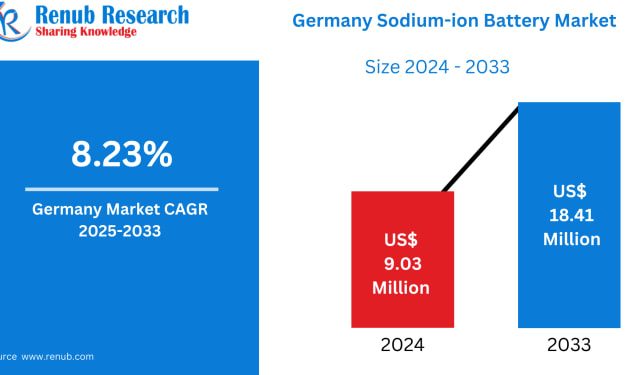
Market Overview Germany’s Sodium-ion Battery Market is poised for steady expansion as the country accelerates its transition toward clean energy and material-secure battery technologies. According to Renub Research, the market is projected to grow from US$ 9.03 million in 2024 to US$ 18.41 million by 2033, registering a Compound Annual Growth Rate (CAGR) of 8.23% during 2025–2033.
By jaiklin Fanandish4 days ago in The Swamp
Bruce Lee and The God of War: Kuan Ti
It starts with love.. The Power to the God Of War and Wealth Walk into a Chinese restaurant (even in Oklahoma, USA), a Chinese police station, a kung fu martial arts studio or even a Chinese temple and you often see a red faced warrior holding a heavy quan-do (spear like weapon).
By WILD WAYNE : The Dragon King4 days ago in Chapters



Comments
There are no comments for this story
Be the first to respond and start the conversation.