
US Says It Shot Down Iranian Drone Flying Towards Aircraft Carrier
Incident highlights rising tensions and growing role of drone warfare in modern conflicts
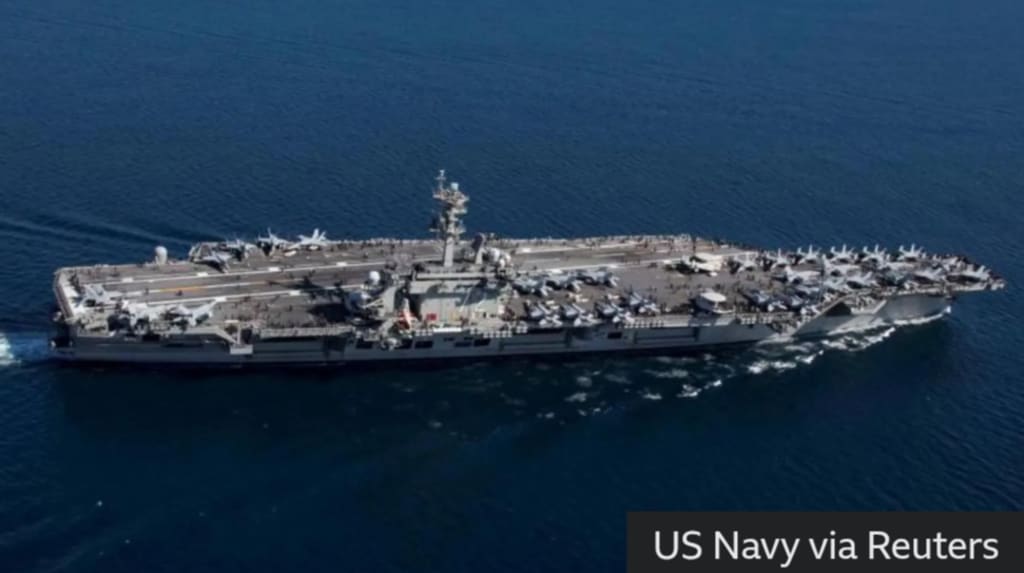
The United States military has reported that it shot down an Iranian drone that was allegedly flying toward a US aircraft carrier in a sensitive regional area. The incident has quickly drawn international attention, reflecting ongoing tensions between Washington and Tehran and highlighting the growing importance of unmanned aerial systems in modern military strategy.
While details about the exact location and timing remain limited, defense officials stated that the action was taken as a protective measure to ensure the safety of naval personnel and strategic military assets. The development has triggered renewed discussions about military escalation risks and the increasing role of drone technology in global security environments.
The Strategic Importance of Aircraft Carriers
Aircraft carriers are among the most valuable and strategically important assets in any navy. They serve as floating airbases, capable of launching fighter jets, surveillance aircraft, and defense operations far from home territory.
US aircraft carriers are used for:
Power projection
Air defense operations
Intelligence gathering
Rapid response to regional crises
Because of their strategic value, carriers are heavily protected by escort ships, advanced radar systems, and missile defense technology.
The Growing Role of Military Drones
Drones have become central to modern warfare. They are used for surveillance, intelligence gathering, and, in some cases, direct combat operations.
Military drones offer advantages such as:
Lower operational risk to pilots
Long-duration surveillance capability
Lower operating costs compared to manned aircraft
Precision targeting capabilities
However, drones also increase the complexity of military engagement rules and airspace monitoring.
US-Iran Military Tensions: A Long-Standing Rivalry
Tensions between the United States and Iran have existed for decades, shaped by political disagreements, regional influence competition, and security concerns.
Major points of tension often include:
Regional military presence
Nuclear program disputes
Maritime security in strategic waterways
Proxy conflicts in the Middle East
Incidents involving drones or naval forces often increase global concern about possible escalation.
How Military Interceptions Typically Work
When unidentified or potentially hostile aircraft or drones approach sensitive military assets, defense systems typically follow strict identification and response procedures.
These steps often include:
Radar tracking
Electronic signal monitoring
Communication warnings
Defensive action if necessary
Most military forces aim to avoid escalation while maintaining defensive readiness.
Why Drone Incidents Are Increasing Globally
Military experts note that drone-related incidents are becoming more common because drones are easier to deploy and harder to detect than traditional aircraft.
Global military trends include:
Increased drone production
Expansion of drone defense systems
Development of anti-drone technology
Integration of AI into drone operations
This has created a new era of aerial military competition.
International Reactions and Diplomatic Concerns
Military incidents involving major global powers often trigger diplomatic responses. Governments typically call for restraint and dialogue to prevent escalation.
International organizations may also monitor such incidents due to their potential impact on regional and global stability.
The Risk of Escalation
While many military encounters end without further conflict, analysts often watch such incidents closely. Miscommunication or misinterpretation can sometimes increase tensions.
Military analysts often study:
Flight patterns
Communication attempts
Military positioning changes
Regional military exercises
These factors help assess whether incidents are isolated or part of broader strategic signaling.
The Importance of Maritime Security
Aircraft carriers often operate in regions with major shipping routes. Ensuring maritime security is important for:
Global trade stability
Energy transport security
Regional military balance
Naval forces often conduct patrols to ensure safe navigation and deter potential threats.
The Future of Drone Warfare
Drone technology is expected to continue evolving rapidly. Future developments may include:
Fully autonomous drone systems
Swarm drone technology
Advanced stealth drones
Space-integrated drone communication systems
Military planners worldwide are preparing for these future developments.
Why This Incident Matters Globally
The reported incident reflects broader changes in global military strategy. Technology is making modern conflicts more complex and faster-moving.
Drone incidents also raise questions about:
Rules of engagement
International military law
Technology control agreements
Military escalation prevention
Conclusion
The reported downing of an Iranian drone by US forces near an aircraft carrier highlights the growing importance of drone technology in global military strategy and the ongoing tensions between major global powers. While such incidents are often handled through defensive protocols, they serve as reminders of the fragile balance that exists in many strategic regions.
As military technology evolves and geopolitical tensions continue, drone-related encounters may become more common. Managing these incidents through communication, diplomacy, and careful military planning will be essential to maintaining global stability.
About the Creator
Keep reading
More stories from Aarif Lashari and writers in The Swamp and other communities.
Deepfakes Spreading and More AI Companions: Seven Takeaways From the Latest Artificial Intelligence Safety Report
The latest artificial intelligence safety report has raised significant global discussion by highlighting key trends shaping the future of AI. Among the most notable findings are the rapid spread of deepfake technology and the growing popularity of AI companions designed to simulate emotional or social relationships with users.
By Aarif Lashari5 days ago in The Swamp
Why Black History Matters in America?
The United States of America is celebrating their 250th anniversary in 2026. I'm proud to be an American and as someone who was born here, I wouldn't imagine myself living anywhere else. This is a country where opportunities are possible. Where anyone can be successful in anything they desire to do. Equality, community, and togetherness are the backbones of what America is and should be about. However, we have an administration who wants to erase and disregard those who have made positive, meaningful impacts in our country, specifically Black figures, such as Martin Luther King, Jr., Rosa Parks, and Maya Angelou. President Trump and his administration have been constantly complaining and fighting against what they call the "Woke agenda". They use this excuse as a distraction from other issues they refuse to address, such as the high cost of living, climate change, and inflation. That equality is dividing America, when in reality, it's bringing us together. Being woke is not tied to a specific political party. No matter where you stand on the political spectrum, you can still care about other people and their plights. Compassion and empathy for others isn't tied to a political party, either. We were taught as children to treat others the way we want to be treated and not judge others because they're different from us. Caring about others isn't a personal attack on your beliefs. It doesn't make you any less of a person. People who are easily offended over African American figures, past or present, or anything related to it, are grasping at straws. Current and future generations need to know who people like Harriet Tubman and Shirley Chisholm were, especially in the classroom. Black History is part of American History. It should be recognized, not hidden or forgotten. Besides, you can't shield children from everything, just because your feelings are easily hurt.
By Mark Wesley Pritchard 7 days ago in The Swamp
Silver rate today: Silver price may correct 75% from peak in two years, say experts
Silver prices have been on a roller-coaster ride over the past few years, thrilling investors with sharp rallies while also reminding them of the metal’s notorious volatility. Now, market experts are sounding a stark warning: silver could correct as much as 75% from its recent peak within the next two years. This forecast has triggered intense debate among traders, long-term investors, and industrial users who rely on silver as both a financial asset and a critical raw material.
By Sadaqat Aliabout 24 hours ago in The Swamp




Comments
There are no comments for this story
Be the first to respond and start the conversation.