
US Says Canada Will Regret Decision to Allow Chinese EVs Into Their Market
Trade Tensions, Economic Strategy, and the Future of North American Auto Industry
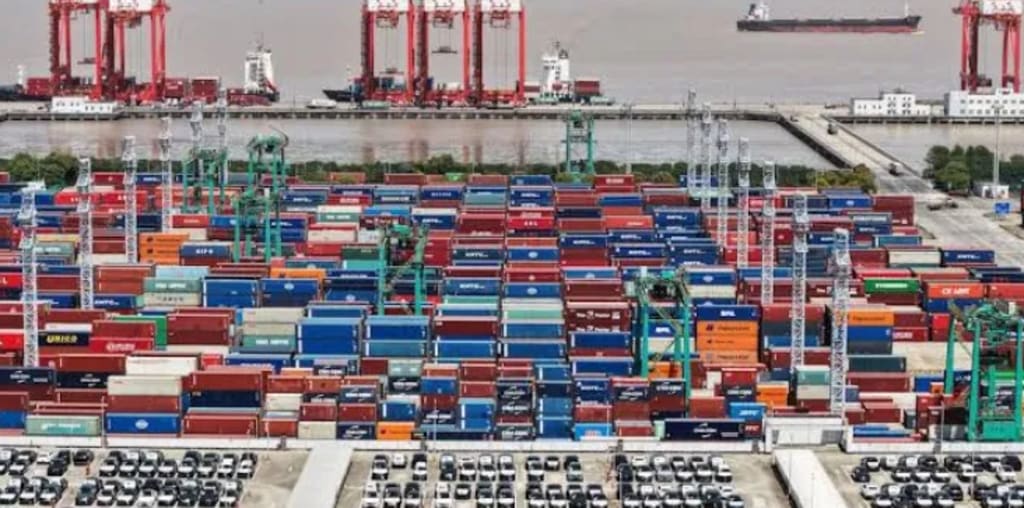
The global electric vehicle (EV) race is heating up, and Canada has just made a move that has caught the attention — and criticism — of its closest ally. The United States has warned that Canada may “regret” its decision to allow Chinese-made electric vehicles into its domestic market, a statement that underscores rising trade tensions, geopolitical rivalry, and fears over the future of North America’s auto industry.
At the heart of the controversy is Canada’s recent shift in trade policy toward China. Ottawa has eased restrictions on Chinese EV imports, significantly lowering tariffs and opening the door — albeit with limits — to some of the world’s most affordable electric cars. While Canadian officials frame the decision as a pragmatic move aimed at diversification and affordability, U.S. leaders see it as a strategic misstep with long-term consequences.
What Exactly Did Canada Do?
Canada’s new approach allows a set number of Chinese-manufactured electric vehicles to enter the country at much lower tariff rates than before. Previously, Ottawa imposed steep duties designed to protect domestic manufacturing and align closely with U.S. trade policy. Under the new arrangement, those tariffs have been sharply reduced for a capped number of vehicles each year.
In return, China has agreed to ease restrictions on Canadian agricultural exports, particularly canola — a vital product for Canadian farmers that has faced heavy tariffs in recent years. For Canada, the deal is being promoted as a win-win: more affordable EVs for consumers and improved access to one of the world’s largest markets for its agricultural sector.
Prime Minister Mark Carney has described the policy shift as a response to “new global realities,” signaling Canada’s intent to pursue a more independent and diversified trade strategy rather than relying almost exclusively on the United States.
Why the U.S. Is Alarmed
Washington’s response has been blunt. U.S. officials argue that allowing Chinese EVs into the Canadian market could undermine North American manufacturing, threaten jobs, and weaken the collective stance against China’s state-backed industrial expansion.
One of the biggest concerns is economic competition. Chinese automakers have become global leaders in EV production, offering vehicles that are often significantly cheaper than those made in North America or Europe. U.S. policymakers fear that this price advantage, backed by government subsidies, could overwhelm domestic producers if allowed to gain a foothold in neighboring markets.
Security concerns also play a role. American officials have repeatedly raised alarms about data privacy and cybersecurity risks associated with connected vehicles produced by Chinese companies. Modern EVs collect vast amounts of data — from location tracking to driver behavior — and Washington worries that such data could be vulnerable to foreign government access.
Finally, there’s a political dimension. The U.S. has taken a hardline stance against Chinese EV imports, maintaining high tariffs and restrictions. Canada’s divergence from this approach is seen as weakening a unified North American trade front.
Canada’s Counterargument
From Canada’s perspective, the criticism feels overly alarmist. Supporters of the decision argue that introducing Chinese EVs does not mean abandoning domestic industry — especially given the import caps — but rather giving consumers more choices at a time when affordability is a major concern.
Electric vehicles remain expensive for many Canadians, even with government incentives. Chinese EVs, known for competitive pricing and advanced features, could accelerate adoption and help Canada meet its climate goals faster.
There’s also the issue of economic sovereignty. Many analysts argue that Canada’s heavy reliance on the U.S. market leaves it vulnerable to policy shifts in Washington. Diversifying trade relationships, even with politically sensitive partners like China, is seen as a way to reduce that risk.
For farmers, the benefits are tangible. Reduced Chinese tariffs on Canadian canola and other agricultural goods could restore billions of dollars in exports, providing relief to rural economies that have struggled under previous trade disputes.
What This Means for the Auto Industry
The automotive sector is at a crossroads. Traditional North American manufacturers are investing heavily in EV production, but they face stiff competition from China, which dominates battery supply chains and EV manufacturing capacity.
If Chinese EVs gain popularity in Canada, even in limited numbers, it could pressure domestic automakers to lower prices, innovate faster, and rethink supply strategies. While that competition could be healthy for consumers, it also raises fears of job losses and plant closures if local manufacturers fail to keep up.
For the U.S., there’s an added concern that Canada could become a “back door” for Chinese vehicles and technology into North America, even if safeguards are in place.
A Broader Geopolitical Signal
Beyond cars and tariffs, this dispute reflects a larger shift in global power dynamics. China’s rise as a manufacturing and technology powerhouse is challenging long-standing trade relationships, forcing countries like Canada to balance economic opportunity against political alignment.
The U.S. warning that Canada will “regret” its decision is as much about influence as it is about economics. It signals Washington’s expectation that close allies align closely on China-related trade issues — and its discomfort when they do not.
Final Thoughts
Whether Canada will truly regret allowing Chinese EVs into its market remains an open question. The move could lead to cheaper electric cars, stronger agricultural exports, and greater trade independence. It could also provoke tension with the U.S. and expose vulnerabilities in domestic manufacturing.
About the Creator
Keep reading
More stories from Aqib Hussain and writers in The Swamp and other communities.
Trump Threatens Tariffs on Nations That ‘Don’t Go Along’ With Greenland Plans
When former President Donald Trump speaks about global politics, controversy often follows. His latest remarks are no exception. Trump has once again reignited international debate by threatening economic tariffs against countries that refuse to support his plans involving Greenland, a territory that has unexpectedly become a focal point in global geopolitics.
By Aqib Hussain2 days ago in The Swamp




Comments
There are no comments for this story
Be the first to respond and start the conversation.