
At Least 5,000 Killed in Iranian Unrest, Official Says, as Judiciary Hints at Executions
Rising death toll and hardline judicial signals deepen fears of a broader crackdown in Iran

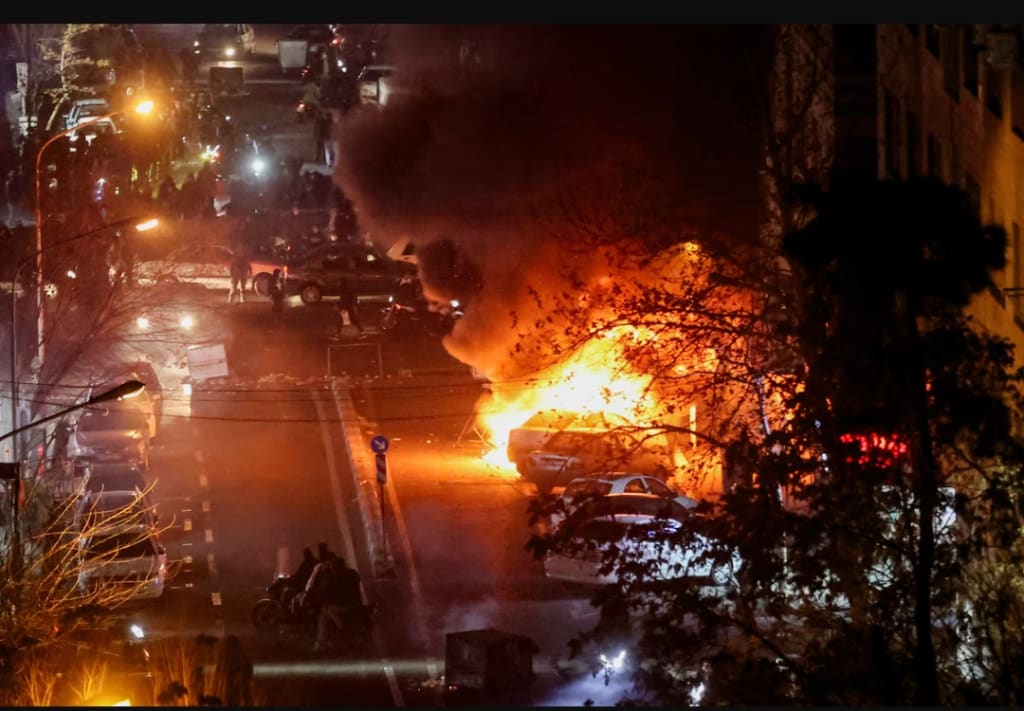
Iran is facing renewed international scrutiny after an official statement claimed that at least 5,000 people have been killed during ongoing unrest across the country. The disclosure, paired with indications from Iran’s judiciary that executions could follow, has intensified concerns over human rights, political repression, and the future stability of the Islamic Republic.
The unrest, which has flared intermittently over recent months, reflects deep public frustration over economic hardship, political restrictions, and social freedoms. While protests are not new in Iran, the scale of casualties suggested by the official figure marks one of the deadliest periods of internal unrest in the country’s recent history.
A Grim Official Acknowledgment
The reported death toll emerged from remarks attributed to an Iranian official, offering a rare acknowledgment of the scale of violence linked to protests and security operations. Iranian authorities have traditionally downplayed casualties during periods of unrest, making the figure particularly striking.
Although independent verification remains difficult due to media restrictions and limited access for international observers, human rights groups have long warned that the true number of deaths could be significantly higher than officially reported figures. The admission of at least 5,000 deaths suggests a conflict far more severe than previously acknowledged by the state.
What Sparked the Unrest?
The current wave of unrest is rooted in a combination of long-standing grievances. Iran’s economy has struggled under the weight of inflation, unemployment, and international sanctions. Rising living costs and reduced purchasing power have placed enormous strain on ordinary citizens.
At the same time, social and political restrictions have fueled anger among younger generations and women, who have increasingly challenged state-imposed limits on personal freedoms. Protests that began as localized demonstrations quickly spread, transforming into broader expressions of discontent with the ruling system.
Security Response and Escalation
Iranian authorities have responded to the unrest with a heavy security presence, deploying police, paramilitary forces, and intelligence services to quell demonstrations. Clashes between protesters and security forces have been reported in multiple cities, with accounts of live ammunition, mass arrests, and internet shutdowns.
The scale of force used has drawn sharp criticism from international organizations, which argue that the response has been disproportionate and aimed at silencing dissent rather than restoring calm. The reported death toll underscores how rapidly the situation escalated from protests to widespread violence.
Judiciary Signals Executions
Adding to the tension, Iran’s judiciary has hinted that executions may be carried out against individuals accused of involvement in the unrest. Officials have framed such measures as necessary to preserve order and deter further protests, describing demonstrators as threats to national security.
Human rights advocates fear that expedited trials and vague charges could lead to the execution of protesters without due process. Iran already has one of the world’s highest execution rates, and the prospect of using capital punishment in response to political unrest has alarmed both domestic critics and the international community.
Climate of Fear and Repression
The combination of a high death toll and the threat of executions has created a climate of fear within Iran. Families of those killed or detained face uncertainty, while activists report widespread intimidation aimed at preventing further mobilization.
Media restrictions have intensified, with journalists and social media users facing arrests for sharing protest-related content. Internet disruptions have made it difficult for Iranians to communicate internally and with the outside world, further isolating the population.
International Reaction and Pressure
The reports have prompted renewed condemnation from foreign governments and international human rights organizations. Calls have intensified for independent investigations into the killings and for Iran to halt executions linked to protest activity.
Some countries have urged diplomatic pressure, while others have raised the possibility of additional sanctions targeting individuals and institutions involved in repression. Tehran, however, has consistently rejected external criticism, framing unrest as the result of foreign interference and internal “rioters.”
The Government’s Narrative
Iranian officials maintain that security forces are responding to violent unrest rather than peaceful protest. State media often emphasizes attacks on public property and security personnel, portraying harsh measures as necessary for maintaining stability.
This narrative resonates with supporters of the government but does little to ease the anger of those who see the unrest as a legitimate expression of public frustration. The acknowledgment of thousands of deaths risks undermining official claims that the situation is under control.
A Turning Point for Iran?
The scale of the reported casualties and the judiciary’s stance suggest that Iran may be entering a more severe phase of internal repression. Analysts warn that while harsh crackdowns may suppress protests temporarily, they often deepen resentment and erode long-term legitimacy.
For many Iranians, the unrest has become about more than specific grievances; it reflects a broader struggle over governance, accountability, and the future direction of the country.
Conclusion
The claim that at least 5,000 people have been killed in Iranian unrest marks a sobering moment in the country’s modern history. Coupled with signals that executions may follow, it raises serious concerns about human rights, due process, and the government’s approach to dissent.
As Iran faces mounting internal and external pressure, the path it chooses will have lasting consequences. Whether the state doubles down on repression or seeks a way to address the root causes of unrest remains uncertain. What is clear is that the human cost of the crisis is already profound, and the world is watching closely as events continue to unfold.
About the Creator
Asad Ali
I'm Asad Ali, a passionate blogger with 3 years of experience creating engaging and informative content across various niches. I specialize in crafting SEO-friendly articles that drive traffic and deliver value to readers.
US Says Canada Will Regret Decision to Allow Chinese EVs Into Their Market
The global electric vehicle (EV) race is heating up, and Canada has just made a move that has caught the attention — and criticism — of its closest ally. The United States has warned that Canada may “regret” its decision to allow Chinese-made electric vehicles into its domestic market, a statement that underscores rising trade tensions, geopolitical rivalry, and fears over the future of North America’s auto industry.
By Aqib Hussain2 days ago in The Swamp


Comments
There are no comments for this story
Be the first to respond and start the conversation.