
US Sanctions Six More Ships After Seizing Oil Tanker Off Venezuela
Washington escalates pressure on Nicolás Maduro’s regime with expanded sanctions and maritime enforcement, drawing fierce condemnation from Caracas.
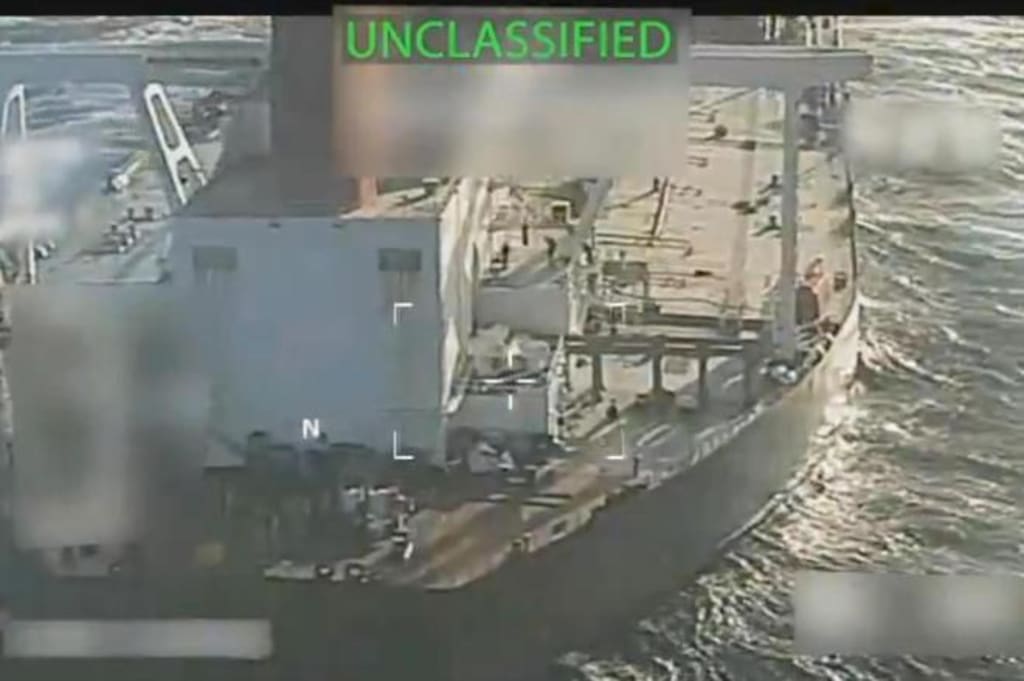
The United States has significantly intensified its pressure campaign on Venezuela’s government, sanctioning six additional oil tankers and their operators just a day after seizing a sanctioned oil tanker off the Venezuelan coast. The sweeping actions mark a dramatic escalation in U.S. attempts to choke off financial resources flowing to the administration of President Nicolás Maduro and allied networks alleged to aid sanctioned states like Iran and militant groups.
The sanctions, announced on Thursday by the U.S. Treasury Department’s Office of Foreign Assets Control (OFAC), target six vessels and their associated companies accused of transporting Venezuelan crude in violation of existing U.S. sanctions. The move follows the high-profile seizure of the tanker Skipper, which U.S. officials described as part of an illicit “shadow fleet” of oil carriers involved in sanction-evasion practices.
Tanker Seizure Signals New Phase in Sanctions Enforcement
On Wednesday, American forces executed a rare maritime operation off Venezuela’s coast to seize the oil tanker Skipper, which had previously been sanctioned for carrying oil linked to both Venezuela and Iran. U.S. authorities allege the vessel was involved in shipping sanctioned oil to markets including Cuba and Asia, despite restrictions meant to curb revenue flowing to the Maduro government and allied entities such as Iran’s Islamic Revolutionary Guard Corps and Hezbollah.
Video released by U.S. officials showed troops rappelling from helicopters onto the tanker’s deck to enforce a U.S. seizure warrant—an unprecedented action under longstanding sanctions programs. The White House has indicated it intends to take possession of the oil as part of a legal forfeiture process, although that process is still unfolding.
The United States describes the operation as a lawful enforcement of sanctions aimed at disrupting networks that undercut international rules and finance destabilizing activities. Washington insists that the vessels and their owners are evading sanctions, engaging in deceptive practices, and helping funnel oil revenue to regimes it considers corrupt or hostile.
However, Venezuela’s government has blasted the seizure as an act of “piracy” and theft, denouncing it as a breach of international law and a blatant attack on the country’s sovereignty. President Maduro and officials have vowed that Caracas will not allow its resources to be taken by force and have appealed to international sentiment against what they describe as U.S. aggression.
Expanded Sanctions and Broader Targets
In addition to the ship sanctions, U.S. authorities also struck individuals connected to Maduro’s inner circle. Among those named were three nephews of the Venezuelan president’s wife, reinforcing the administration’s aim to punish a wider network that it alleges has profited from sanction-evasion schemes.
The six newly sanctioned tankers and their affiliated companies are now subject to asset freezes in U.S. jurisdictions, and American firms and individuals are barred from engaging in business with them. While the identities of all the targeted vessels and companies vary by report, shipping data and watchdog groups indicate the tankers operate under opaque ownership structures typical of what analysts call the “shadow fleet”—vessels that turn off tracking systems, fly flags of convenience, and obscure their affiliations to evade sanctions.
Implications for Venezuela’s Oil Exports
Venezuela’s economy is overwhelmingly dependent on oil exports, which remain its principal revenue source despite years of economic contraction and Western sanctions. The U.S. campaign threatens to disrupt not only one ship but a wider network of tankers and operators that have enabled Caracas to keep crude flowing. According to tracking data, there are dozens of sanctioned vessels operating in and around Venezuelan waters, and the recent seizure has put many of them on notice that they could be next.
Industry sources tell Reuters that at least one shipper has already temporarily canceled or delayed voyages carrying millions of barrels of Venezuelan crude after the Skipper seizure, signaling anxiety within the maritime sector about the risks of continued sanction-evasion shipping.
Some analysts warn that if U.S. enforcement actions continue, Venezuelan oil exports could face substantial delays or further detentions of tankers en route to buyers—most notably in Asia, where a significant portion of Venezuelan crude has traditionally been sold through intermediaries willing to operate outside strict regulatory frameworks.
Regional and Global Backlash
Caracas’ reaction to the sanctions and the tanker seizure was swift and vociferous. Government officials condemned the actions as unlawful and provocative, accusing the United States of engaging in economic warfare. Some international observers have raised concerns about the legal basis for seizing foreign-flagged vessels in international waters, a debate that highlights the complex intersection of national sanction regimes and international maritime law.
Russia and other allies of Venezuela have publicly supported Maduro’s condemnation of U.S. actions, framing them as a dangerous precedent in international relations. Venezuela’s government has also sought reassurances from friendly states and called on regional blocs to speak out against what it labels U.S. aggression.
What Comes Next?
The U.S. appears poised to continue its sanctions and enforcement campaign. Officials have signaled that they may pursue additional tankers linked to sanction-evasion networks, and the Treasury has compiled lists of potential targets for further action. This suggests that the current moves may be only the beginning of a broader effort to constrict the movement of Venezuelan oil that benefits sanctioned entities.
For Venezuela, the stakes are high. A further tightening of sanctions and potential seizures could squeeze the oil-dependent economy even more, complicating Maduro’s efforts to stabilize his country and maintain political control.
As of now, the U.S. sanctions and maritime operations represent a significant escalation in pressure on Venezuela—one that could reshape energy trade patterns, heighten geopolitical tensions, and add a new chapter to the ongoing conflict between Washington and Caracas.
About the Creator
Keep reading
More stories from Zahid Hussain and writers in The Swamp and other communities.
Indiana Republicans Defy Trump in Stunning Rejection of Redistricting Map
For months, Indiana has been at the center of a political drama that almost felt scripted for prime-time television. Former President Donald Trump had his eyes set on the Hoosier State, pushing hard for a new congressional map that would have strengthened Republican control and squeezed out the last remaining Democratic districts.
By Zahid Hussain3 months ago in The Swamp
The Forsyth House Fire
Since 1851, Forsyth House has stood on the corner of Union Street and Gordon Street in the heart of Glasgow. Its iconic, or was... because on Sunday 8th of March, 2026, a fire broke out in a small, seemingly un-named shop in the building and tore all that history down. As I write, the rubble is still unsettled and the street is still blocked off. Central Station is quiet on the upper level, and around 30 small businesses have quite literally gone up in smoke.
By S. A. Crawford3 days ago in The Swamp
Trump and Rubio’s Vision of War: The Art of Destroy and Deal
In the evolving landscape of American foreign policy debates, few ideas have generated as much discussion as the strategic vision sometimes described by critics and supporters alike as the “destroy and deal” approach. The concept is often associated with the rhetoric and policy preferences of prominent U.S. political figures such as Donald Trump and Marco Rubio, who have both argued that strong military leverage can be a powerful tool in forcing adversaries to negotiate. Although the two leaders differ in tone and political background, their views on national security often intersect around the idea that diplomacy is most effective when backed by overwhelming power. Supporters describe the approach as pragmatic realism, while critics warn that it risks escalating conflicts before negotiations even begin. The Core Idea Behind “Destroy and Deal” At its core, the strategy emphasizes the use of decisive force or economic pressure to weaken an adversary’s position before engaging in negotiations. Advocates argue that demonstrating strength first forces opponents to recognize the costs of continued confrontation. The approach draws inspiration from historical examples where military pressure preceded diplomatic agreements. In such cases, leaders have believed that demonstrating battlefield or economic dominance creates the conditions for favorable negotiations. For Donald Trump, the concept aligns with his broader “America First” philosophy, which prioritizes national interests and direct negotiation with rivals. During his presidency, Trump frequently emphasized that strong sanctions, military readiness, and aggressive rhetoric could push adversaries toward diplomatic settlements. Rubio’s Strategic Perspective Marco Rubio, a long-time member of the United States Senate, has framed the strategy in terms of strategic deterrence and global power competition. Rubio has consistently argued that authoritarian rivals must believe the United States is willing to act decisively in order for diplomatic solutions to succeed. His approach reflects concerns about geopolitical competition with countries such as China, Russia, and Iran, where policymakers in Washington believe strong deterrence is necessary to prevent regional aggression. Rubio and like-minded lawmakers contend that negotiations without leverage often fail, especially when dealing with governments that see compromise as weakness. From this perspective, economic sanctions, military deployments, and strategic alliances are tools that create the leverage required for successful diplomacy. Military Pressure and Negotiation Critics describe the “destroy and deal” philosophy as a risky strategy that could escalate conflicts unnecessarily. They argue that relying on military pressure may provoke retaliation and increase instability in already fragile regions. Foreign policy analysts often note that while coercive diplomacy has occasionally succeeded, it has also led to prolonged conflicts when adversaries refuse to back down. The balance between deterrence and escalation remains one of the central challenges of modern international relations. Supporters counter that deterrence itself depends on credibility. If adversaries believe the United States lacks the will to use force, they argue, diplomatic negotiations lose much of their influence. Influence on Global Strategy The broader debate surrounding this strategy reflects a deeper shift in American foreign policy thinking. In recent years, policymakers across the political spectrum have become increasingly concerned about the return of great-power competition. Conflicts and tensions involving the North Atlantic Treaty Organization, rising competition in the Indo-Pacific region, and ongoing confrontations in the Middle East have all contributed to a more assertive strategic environment. Within this context, the idea of combining pressure with negotiation has gained traction among some policymakers who believe traditional diplomacy alone is insufficient to manage modern geopolitical rivalries. The Critics’ View Opponents argue that such strategies risk oversimplifying complex conflicts. They contend that international crises often require long-term diplomatic engagement, coalition-building, and economic cooperation rather than purely coercive tactics. Some analysts warn that a doctrine centered too heavily on force could undermine international institutions and alliances that have historically played key roles in maintaining stability. Human rights groups have also expressed concern that aggressive strategies may increase civilian suffering in conflict zones if military operations become the primary tool of foreign policy. The Future of the Debate The ongoing discussion surrounding the “destroy and deal” concept reflects broader disagreements about how the United States should navigate an increasingly competitive world. While some policymakers believe stronger military leverage is essential, others advocate for diplomacy and multilateral cooperation as the primary tools for resolving disputes. Ultimately, the effectiveness of any strategy will depend on how it is applied in specific situations. Military strength, economic influence, and diplomatic engagement are all components of modern statecraft, and balancing them remains one of the most difficult tasks for policymakers. As debates continue in Washington and beyond, the ideas associated with Donald Trump and Marco Rubio will likely remain part of the conversation about how the United States approaches war, negotiation, and the pursuit of national interests in an uncertain global landscape.
By Fiaz Ahmed 2 days ago in The Swamp
My First Time Skiing and I Got Lost, Alone, in the French Alps
Looking back, I can trace some of my life’s biggest adventures to a simple action from my sister. She’d introduced me to Tommy (a very long time ago), a colleague of hers, who had overshared his penchant for Italian-looking women, and I ticked that box.
By Chantal Christie Weiss3 days ago in Humans


Comments
There are no comments for this story
Be the first to respond and start the conversation.